#061 - Jim Garofalo - KINEXON Spotlight
In this episode of the Decoding Excellence Show, I'm speaking with Jim Garofalo, Executive Vice President of Sales and Marketing for KINEXON. This show is a first as we begin to spotlight innovative companies who are leading the sports performance industry.

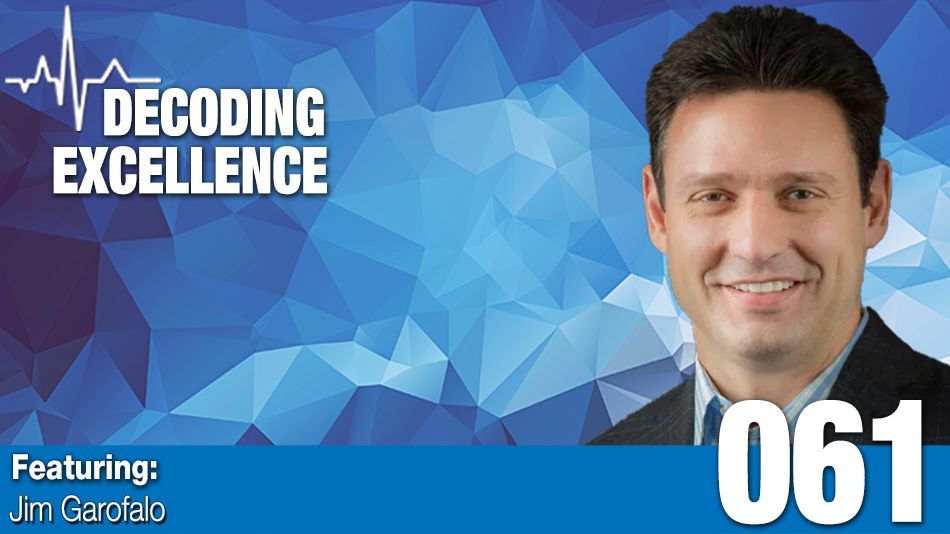
In this episode of the Decoding Excellence Show, I'm speaking with Jim Garofalo, Executive Vice President of Sales and Marketing for KINEXON. This show is a first as we begin to spotlight innovative companies who are leading the sports performance industry. On the show, we discuss Jim's background, his role at KINEXON, the specific company's vision and market scope for wearable technologies, the introduction of KINEXON's SafeZone, and speculation to where Jim believes the sports performance technology sector is heading.
This show was absolutely awesome! 🔥🔥🔥
More About Jim:
The accomplished sports marketing executive has spent his career building and managing successful partnerships with brands, teams and leagues in the U.S. and abroad. His experience in the sports marketing and sports performance landscape spans two decades with extensive experience in developing marketing strategies and executions that drive brand affinity and sales for some of the industry’s most trusted brands.
Jim Garofalo joined KINEXON on January 1, 2019 as Executive Vice President, Sales and Marketing. Jim leads the U.S. Sports & Media business from KINEXON’s North American headquarters in Chicago. As EVP, Jim has helped expand the company’s sports performance clientele to more than 75 percent of NBA teams, as well as teams in the NFL, NHL and NCAA. In 2020, Jim helped introduce KINEXON SafeZone to the market and played a key role in closing leaguewide deals with major U.S. professional and college sports leagues.
- Check out KINEXON & SafeZone at Kinexon.com
- Find out more information about Jim by visiting his LinkedIn Profile
As always, thank you for supporting The Decoding Excellence Show!
In addition to those social mediums, you can head over to AdamRingler.com/Newsletter and sign-up for my weekly newsletter. This is a newsletter for the curious. It's chalked full of interesting articles I've read through the week, things I'm exploring and finding fascinating through my week, and a collections of thought experiences and resources I've cultivated. It's essentially a Birchbox for performance-related articles and musings.

If you are looking to help grow and support the Decoding Excellence show, navigate over to Buy Me a Coffee. Buy Me A Coffee is a an easy & fun way to support the show. For the price of a Grande Latte ☕ you can support the show and help us maintain the quality of the content. One hundred percent of the contributions go directly to supporting the hosting fees associated with operating this podcast.
If any of the material resonates with you, I'd love for you engage with me at @AdamRingler
Thanks again for listening to the Decoding Excellence Show! I appreciate all the support growing this Sport Science, Strength & Conditioning, and High-Performance Coaching resource. If you have taken anything away from the show, please login to iTunes and navigate to Decoding Excellence page and leave us a FIVE STAR ⭐⭐⭐⭐⭐ review.
Key Takeaways
- KINEXON's wearable technology expanded to more than 75 percent of NBA teams, plus NFL, NHL, and NCAA programs, showing how fast athlete tracking moved from novelty to standard practice.
- The SafeZone product introduction in 2020 shows how performance tech companies adapted their platforms to solve new problems, in this case proximity and contact tracing, on short notice.
- Where the sports performance technology sector is heading depends on whether tools solve real coaching problems or just generate more data, a question this company-spotlight format was built to explore.
About the Guest
Jim Garofalo is Executive Vice President of Sales and Marketing for KINEXON, where he leads the U.S. Sports and Media business from the company's North American headquarters in Chicago. He is a sports marketing executive with two decades of experience building partnerships with brands, teams, and leagues, and he joined KINEXON on January 1, 2019. He helped introduce KINEXON SafeZone in 2020 and played a key role in closing leaguewide deals with major U.S. professional and college sports leagues.
Listen and Subscribe
Find this episode of the Decoding Excellence Show on Apple Podcasts and Spotify, or use the player above.
Go Further in This Episode
Enjoyed this conversation? Here is how to get more from it:
- Read the transcript below to revisit key ideas at your own pace.
- Share this episode with a coach or colleague who would benefit.
- Subscribe to the Decoding Excellence Show on Apple Podcasts, Spotify, or your favorite app.
- Join the newsletter at adamringler.com/newsletter for weekly insights on human performance.
Episode Transcript
This transcript was automatically generated. While we strive for accuracy, some words or phrases may be misheard.
[00:00:00] Sport science, strength conditioning, high performance coaching, welcome to the decoding excellence show. Hey everybody, I'm going to pause the show real quick and announce something brand new to the decoding excellence show. We've created an online community that has exclusive content that you will not be able to get just by navigating to the site alone.
[00:00:37] If you subscribe today, you will have access to our private podcasts, online video lecture series, brand new digital content that we are creating to help support you as a strength conditioning coach, a new practitioner in the high performance field. You do not want to miss this material. It's going to help you in every facet of your career. Get over to admringler.com and join the insiders today.
[00:01:01] Hey everybody, we have a great decoding excellence show for you today. Aren't I joined by executive vice president of sales and marketing for Kinexon Jim Garoflo? This was a fun and really interesting conversation to have with somebody that's been in the field in this space for a long time. Jim's worked at the Gatorade Sports Science Institute and then migrated over to Kinexon Sports. Kinexon is a wearable technology company, and they have been known just for not only
[00:01:31] Their sensors, but also for aiding not only in sports, but in the supply chain management field as well. This was really cool because we get into talking about the safe zone product that they released just recently during COVID, but we talk about technology in general, where the industry is going, what the evolution of wearable technologies looks like. You do not want to miss this show.
[00:01:53] This was really awesome and I appreciate Jim coming on. So without further ado, here we go. Jim, welcome to the decoding excellence show. How are you doing? I'm great. Adam, thanks for having me.
[00:02:04] Appreciate you reaching out and having us come on board. I am actually really excited to have you on the decoding excellence show because this has been long overdue. This has been something I've wanted to do, which is to bring technology companies. Those that exist within the performance technology space aren't you the decoding excellence show and just talk about what is the latest and greatest and the new evolution
[00:02:27] Of performance technologies. This has just been something that's been on my radar for a very long time. Thanks again for joining me on the show and discussing your technology and what your company does. But for the listening audience, that may be unfamiliar with what your technology does and just maybe the genesis, the company history leading up to the beginning and where you
[00:02:52] Guys are now. Can you provide just a little bit of an update and a bio for my audience? Absolutely. So my name is Jim Garafalo. I'm the Executive Vice President, Sales and Marketing here in North America for Connects on.
[00:03:04] I'm just finishing up my second year with the company. Have a background kind of been in the sports performance, sports science, sports medicine space for over 20 years now. My latest and before I joined here, I spent about 10 years on a Gatorade brand working in their sports marketing group. Heading up relationships with athletic trainer, strength coaches, individuals across the
[00:03:29] Country like that. All the professional organizations, whether it be the NATA, the NSCA, CSCCA, all those type of organizations, all the ad organizations, all the acronyms that we have out there. But then my last role there with them before I left was with the sports science institute and really working closely with our sports scientists that we had at Gatorade and GSSI and all that piece of it and had a passion for this side of the business.
[00:03:58] Being a son of an athletic trainer as well, kind of grew up around this and have an appreciation for the side of sports. So about two years ago, connected with Medi and the team at Connectson to come on board and really start to build out what our business looked like. Not only from, as you know, we were very strong in basketball, but we have a solution in the technology that could be utilized across sport, right?
[00:04:23] So how do we start to build what that expansion looks like? Not only in NCAA basketball and football and the NFL and sports and ice hockey as well. So that's kind of been my journey to get here. The company itself, about 2012, founded in Munich, Germany, you know, with a group of individuals that had a vision to bring this ultra wideband technology to industry and sport.
[00:04:51] And they've brought that they've started there and then brought it to the US here and, you know, here we are kind of on a trajectory today that's been pretty fantastic over the last couple years. No, that's awesome. And you know, like I think when you start to look across the global landscape of different technology companies, especially when it revolves around, like GPS and wearable technologies,
[00:05:12] You start to initially look at Australia and New Zealand and some of these other sort of places. But like to originate and come out of Munich and out of Germany, I think it was one of the first sort of, you know, at least wearable technology companies that's come there, you know, like and whether that's, you know, because of the ultra wideband or, you know, the less reliance on GPS, you know, like I'm not versed enough to be able to say that. But that's awesome.
[00:05:42] So, you know, with that, right, and you know, it sounded like, you know, son of an athletic trainer, you've been in this space, right, you've, I literally was doing GSSI continuing education yesterday. So, you spent time and worked in Gatorade Sports Science Institute. So, I'd be curious, you know, like you've found yourself in these multiple different roles. While the show is about, it's very practitioner-led.
[00:06:07] How, like, you know, what, what was it about the Sports Science Institute or athletic training, this envelope of, or intersection of technology and sports science and biology, that sort of led you from GSSI and from Gatorade to being really sort of wanting to pursue what this vision was or many sort of vision of what ConnectSign was doing, what interest you in at least in the initial pitch about like, oh, wow, you know, like this could be something. Yeah, so, so when I was first exposed to this side of it, you mentioned Australia and things
[00:06:45] Like that, you know, that I think probably my first exposure to sports, sports technology, the, you know, wearable space was in Australia around the AFL, right? So, I spent some time working on a project with the Aussie Rules Football League and really had a high interest in that side of it. And as I was, you know, after I left Gatorade for a little bit there, I was on the agency side of the world and working in the sports marketing space and just had an inch to get back to this.
[00:07:12] I know that this side of it is so important to what goes on on the field. And I just have a passion for being, you know, with the individuals are helping keep athletes at top performance, safe, all those pieces. And as I was going through and looking at different ways to kind of look at, I was kind of looking at what the market wanted to see. And, you know, you start to see a lot of players out there, you know, whether it be a GPS technology or an LPS solution. And, you know, there was, the market
[00:07:40] Got flooded there pretty quickly. And I think you probably saw that where you had a lot of companies coming out and playing in the space or we've got this, we've got that. And I started to think about what are people going to want to see in the future. And I think starting to see more accuracy, more precision, being very dialed in to, you know, what the metrics they are seeing and how they're delivered and where they're coming from. And, you know, instead of having something that was going to be, you know, kind of general areas, general facilities, you know, that kind of stuff
[00:08:09] Like that precision is where I saw kind of the trend starting to go. So, you know, as I was talking to different groups and different people and, and many in the team's vision of how they had a solution for sport, but also had a solution that could play on the industry side of things as well. And that was very intriguing to me because I think that businesses that have a couple of different avenues where they can be successful in just makes each part of the business that much more successful, right? So if we've got, if we've got an individual business that's focused on only sport,
[00:08:39] You know, you know, what happens if a year like this hits and you don't have the opportunity to, to continue to grow on the sports side of it, right? The traditional sports side of it. So now you have to have, you have to have other things that can help bring, bring that, the help prop up one side versus the other from time to time, right? So you want to make sure that you have, you know, there may be an unlock in the industry side that makes sense for the sports side and vice versa. So I just like the combination of the two together and where they were going, fantastic people,
[00:09:11] Like that was another thing that was for me. At this point in my career, I wasn't looking for, you know, kind of a, you know, kind of a flash in the pan type of company. I wanted to be where there was a future here and something that I could really help grow and establish. You're going forward. No, there's a couple of things I want to chew on with what you just said. And I'll probably do like reverse chronological orders. Like there's some fun with, you know, being involved in startups, right? It's sort of the highs and lows, the roller coaster ride. But again, you know, like in every
[00:09:42] Professional has been in it, sometimes you just want more stability and you want to be around people and a vision and a company that has some longevity and that has a little bit more, you know, emotional stability. But then at the same time, you talk about, you know, you've seen it, especially during this sort of COVID pandemic is that companies are being required to be agile and to be able to pivot and, you know, and whether it's at a large expense of capital to acquire a company that allows them to sort of plan a different space. You know, like I think there is, you know, when you start
[00:10:17] To look at company robustness, you know, those that have multiple products and multiple industries, you get to, you know, March 2020 and you're a little bit more insulated from a global collapse of a particular industry like what we saw with sport, right? Like, you know, I talk with AMS companies, athlete management, soft system companies all the time and different performance technologies. And when you have an entertainment industry like athletics, whether it's professional or amateur, you know, fans aren't in the seats and TV revenue deals aren't being sold, you know, it's very hard
[00:10:54] To continue to funnel finances into that space. So then what do you do, right? You have to sort of rely on perhaps like IOT, you know, industry sort of type of ways of doing something. So and this is something I want to talk about and we'll probably sort of segue back and forth between wearable technologies and so the performance piece, but you know, Kinexon has, I think, whether we call it a pivot or not or whether it's just another, you know, product among sort of the product line that you guys have, you guys have done something during this sort of COVID pandemic year
[00:11:30] With the introduction of your guys as safe zone. So, you know, like I think people are like, you know, initially when I thought of Kinexon as a company, I thought, okay, this is, you know, an impressive interface, UIUX when it came to the actual monitoring of athletes running up and down the basketball court, right? Like, you know, the ultra wide band, like we have a little bit more sensitivity, we have a much more better accuracy using the wide band. So, but not a lot of people might be familiar with what the safe zone is. So, could you spend a couple of minutes and talk about
[00:12:01] Sort of what this product is and sort of what the idea of this new addition to your guys' line? Absolutely. And you, you know, you did describe it in the right way. I absolutely say it was a pivot for us, right? So, you know, you referenced ultra wide band and the accuracy from an ultra wide band product is pretty well documented of how it delivers and how precise it can be. So, as we were going through this, we started to see an opportunity here where what could we do that was very turnkey for a program, right? We didn't want to have to have,
[00:12:37] You know, massive infrastructure cost in the environment we're in. That's a non-starter, right? So, what we did was we looked at the technology and we said, how can we take that ultra wide band and take it down to its simplest form, sensor to sensor activity? Like, we're not going to worry about where the contact takes place, how fast they were going when they took place in that contact place, took place. We just strictly wanted to say distance between two sensors and we started with that. And we had really good success. We started to see some results where we could change that technology
[00:13:11] To say, one sensor is here, one sensor is here, how far are they? If they get within six feet, well, we get a beat, an audible alert of visual cue, that type of thing. We started there. Then from there, we said, okay, now can we create memory on that device that's going to log those contacts? So, we went from just proximity device to proximity and contact tracing. So now, what we've created here with really no infrastructure and you've seen at CU, exactly how this happens here is that, you know, sensor A and sensor B, how long were they in
[00:13:43] Contact with each other? What distance and what time did it happen? That's it. So no physical locations captured from this. It's really just sensor to sensor activity. And once you take a sensor out of our charging tray and put it on an athlete, you're doing contact tracing information immediately. And then if you think about all that would go into that on the back end for performance individuals, athletic trainers, these new COVID response managers or whatever the different titles that everybody's had to take on during this time, it doesn't mean more headcount for schools.
[00:14:19] It just meant people were shifting and adding responsibilities. So we wanted to have something that they could at the end of the day easily look at information and identify who may be at risk based off of a positive test within the group. And, you know, thankfully, and I'm not that we've had really good success to this point and, you know, have, you know, anecdotally had people come to us and say, you know, you've helped keep, you know, 14 of our 17 guys on the court because we were able to contact trace exactly who was at risk and keep us playing. So, you know, we don't want to
[00:14:51] Take all the credit for it because there's a ton of people that are doing the right things by their athletes and athletes are making good decisions as well. But we feel like we're playing a little bit of a piece of that as guys have gone forward. So we're pretty proud of that pivot and pretty excited about how quickly it came together. I think like everybody, we were seeing it and like, yeah, this is going to be great. We're going to have a great response to this and then, but how long is this all going to last? You know, and then next thing, you know, you're into the summer and then
[00:15:17] You're in the fall and you've got college football and you get college basketball and, you know, NBA starting up again. So it's just, it's been something that we feel has added a ton of value to programs to help mitigate these issues that they're facing. No, yeah, I think there's a couple things in there. You know, obviously, as a company, as an organization, I take absolutely zero credit for the acquisition of it here. But like, you know, I get to see sort of on the ground floor of our practitioners and our coaches and our athletes and just the whether it is the visual sort
[00:15:54] Of notifications or if it's the audible notifications from a change management piece, it's changed behaviors for us, right? Like, we get a very strong, a very visual sort of idea of, oh, you know, we're flashing red, we need to move back a little bit. And, you know, I think too, you know, not only has it changed the behaviors of the people that are equipped with the devices, at least in our organization, when I start to go and look at the job demands and I credit and you probably know, our athletic trainers are working double triple quadruple over time with being not only an
[00:16:31] Athletic trainer, not only traveling with teams, but also being lab technicians essentially, right, with COVID testing and screening, whether it's antigens, whether it's PCRs and trying to try to coordinate that piece, the medical piece of it. But then they got into that sort of position where, okay, well, now you guys need to be private investigators. You guys need to be contact racers. So you're like, okay, this person tested positive. Let's bring them in. Let's talk about it. Where were you the last 48 hours? Who do you have in contact with? And it's 21 questions,
[00:17:01] Where you were in a mass, where you're not wearing a mass, where you're six feet apart. All of these different things, right, that people would be. So, you know, to have a technology that can accurately monitor distance between two people and be able to ping sort of who they were with, it takes that aspect out. And now they can just be the great practitioners that they came to do the organization to be, right? They get to have one less job duty of being that sort of professional contact racer, which is amazing for them. Yeah, something you said in certain
[00:17:33] Interrupt. I think one thing that you said that really kind of brings with me too is that, you know, they, we want to make their jobs as easy as possible. And we know that this is out of the ton of everything that they're doing around these COVID responses has added a lot of work to everybody's point, right? Then we empathize with that. And I think something that resonated with us was, you know, it may have been neighboring talking to Miguel and Dr. Ockerman. When we were originally starting this whole thing with the Pac-12, it was somebody referenced it may have been Dr. Ockerman
[00:18:04] Said that, you know, we had a group that was looking at video and spent hours looking at video with stopwatches and trying to get an accurate depiction there. And that just was the kind of unlocked for me that said, you know, we have a real opportunity to help, you know, not to ease that process a little bit and make it a lot a little bit more flexible and automated and all those pieces there. And I think that's the part that I like about it the most is that we've, you know, we've given them a tool that's going to, you know, take a little bit of a workload off of them. I know it's
[00:18:38] Still there's pieces that they have to do a part of this. But if we can help just ease a little bit of that, I think that's a, that's a big win for us for sure as a company. Yeah, and no doubt. And I think, you know, when you start to look across people that have jumped on board, you got 32 NFL teams, 140, you know, men's and women's basketball programs, at least at that count, 30, some division one football programs, 200 businesses. I particularly think about industry as well because, you know, you work on the shop floor, you might not have a medical director or
[00:19:11] You know, seven athletic trainers that are equipped to be able to contact Trace and, and test, you know, I think some of these industries, I, man, like they're just surviving. I don't know they're testing protocols. I know ours, right? And they're really, really robust to even get through the doors, but to try to mitigate COVID risks and the spread of it is, is crazy for businesses. So businesses that can quickly adopt a technology that allows them to better contact Trace and better diagnostic, you know, diagnostically intervene when they need to is really, I think,
[00:19:47] Innovative for those companies, but also allows for connects on to not only be involved in just one space, again, another product that can cross different industries and different segments of, of, yeah, industry. Yeah, you're, you're exactly right. I mean, you think about the specialty, I mean, you get into some of these manufacturing facilities where you have two or three people that can operate a specific piece of machinery and they're together all the time, right? If you have an outbreak on that, on that line and everybody on that line is exposed to it, you have to,
[00:20:21] You know, protocols say you got to shut them all down for 14 days, right? And that's, that could be millions and millions of dollars in productivity. And I think the ability now to not only help them, hey, this is going to give you an audible cue to stay distance, but then also to be able to contact their trace, contact trace their way out of it. If there is a positive test, I think saves a lot of people, a lot of hardhiking in facilities like that. So, yeah, it's a, it's a great point that you mentioned there of being able to, to help in that environment has been a,
[00:20:53] Has been a definite plus as well. So, I'm curious and it will be maybe challenging to answer this in some respects because it requires you to be nocturnumist and predict the future a little bit, which, you know, if anybody sitting in 2019 could try to do that, we would be stocking up on toilet paper and working from home for a year. I didn't see that one coming, but, you know, what do you think some of the challenges for, you know, tech, like tech acquisition or tech adoption for this particular, this particular technology? Like, what are the limitations? What are
[00:21:30] The barriers? What do you think is stopping more companies, more leagues, more sport organizations, more teachers, whatever it might be? Like, what are some of the limitations that might be restricting more usage? Because it clearly sounds like to me, like, this is applicable across industries, across professions, across vocations, across wherever. Yeah, I mean, I think, I think there's probably a couple things. I think one is, you know, the sports environment, the industry environment is very regular, is very regimented, right? Like, when you have your athletes in the building,
[00:22:04] When they're coming in, who's around them, those type of things, you have a lot of, you have a lot of control over that environment, right? When they're with you. So I think that's one thing that that lends itself well to the areas that we've focused in on. I think the other thing too is that there's, that the cost, you know, comes into these things, right? I mean, while this is not an expensive solution by any means, like, but it's still, it's an investment, right? And being able to have that with all the other things people have had to think about, it adds to it, it's taxing
[00:22:38] To them, right? So we've tried to do things that continue to drive those costs down to make sure that it's an affordable solution because we know that it can help them. I think those are probably the things that resonate in, to top of mind right now. I also think too that, you know, there's also the stigma that were, that something like this is tracking every movement somebody makes and every, every place that they go. And I, we've been very vocal about anything that we've done, that we don't, we don't know where you're moving. We don't know where you're at. We don't know if this,
[00:23:11] If this contact took place in the locker room, the training room on the court on the shop floor, we, we can't tell you that. All we can tell you is who it was with, what time it took place, at what distance and for how long, right? That's, that's really the core of this whole thing. And I think when people look at it and understand that it's going to help keep you safe, if, if something where to happen in your environment or in that group, that's, that's the big piece of it too. So I think there's just like some big brother type of things that people get concerned about.
[00:23:41] But, you know, once we get over those barriers, I think if you start to look at it, that's, that's been a big part. And, you know, rolling to schools and, you know, you know, all those things like we, we would love to be able to do that. I think there's just a, you know, there's just some things that have to be figured out from a school side of it and how they implement those process. And, you know, I'd love nothing more than have my kids school have something like that that they could, you know, that you could put them and have that sense of feeling that
[00:24:08] They were safe and distance from people. But I think sometimes the logistics of those things probably overrun some of the other pieces of it as well. But, you know, most of these environments are doing a great job with the resources they have and how they're trying to mitigate these, these outbreaks. And, you know, if we can play a little role in that and in some different environments, we're certainly we're certainly excited to be able to do that. We can negate the fact that cost is a barrier for for everybody, right? For any industry, especially when you look
[00:24:38] Across, you know, restaurants and commerce and sports and educational systems, like everybody is sort of crippled with this economic collapse that COVID has sort of sprung on a lot of people outside of Amazon. That's a factor to it. But, like, as you said, you know, like if you've got specialty professions and people that are really, really honed in or operating a machine or doing this specialty or a surgeon, whatever it might be, that the cost of shutting down operations for a quarantine or isolation period can greatly exceed the investment that one would make. And that
[00:25:19] Is on the small scale. That's on the individual scale. And then you start to look at this virus certainly as yes, vaccines are rolling out. But, like, we are far away from the finish line by any stretch of the imagination, I think. So, like, we're still going to be battling with this. And, you know, like, so you start to roll that out of operation shutdown across two people, four people, eight people, 16 people. And you can start to see that the investment early on, the initial investment could greatly exceed what the shutdown operation costs could be towards the end of it.
[00:25:54] And then, you know, you talked about, you know, school systems and things like that contact tracing and big brother, if you will, you know, like, I know a lot of our athletes initially and people felt like, you know, they were reporting to the parole officer with their tether. And, you know, but like, very quickly, as I already said in the show, as like, it does having it in a visible place where you can see it and you get that sort of visual or audible feedback allows for you as a practitioner as a person to be able to facilitate change management. You can know, like,
[00:26:25] You know, look at, look at American football. We still have, you know, get back coaches, bowling coaches off the sidelines. And, you know, like, you would think that people are mature, responsible adults and can handle, you know, don't be closer than six foot together or apart. But, like, we are, we are creatures of habit and we flock together. And like, yes, this is a challenging moment. But like any type of technology that can help facilitate some of the basics of what we know through CDC and through COVID and, you know, spread of this mitigation is helpful,
[00:26:56] Right? So, you know, what I was really surprised at is that how much it, you mentioned change behavior. And for me, I, when it first came out, I thought it would be a good tool for, you know, the medical professionals would be looking at it. But now we've got coaching staffs that want to say, like, I ran this practice for two hours today. I want to see what it did to my numbers. Like, where am I guys all over 15 minutes? Like, were there things that I can go back and look at and and change and change how I do things? You know, game day, how were my seats set up on a bench? Like,
[00:27:27] Was, were we all six feet apart? When time outs happened where all my guys stand next to the same people all the time? Because, you know, in the environment we're in, whether it's the 10th guy on the bench or the first guy on the bench, like, over that number and, you know, a positive test is going to impact everybody, right? So, I think that was the one that was the most pleasant surprise for us is that we had some, you know, some pretty prominent coaches that were like, I want to see this every day. And I want this for my program. And I'm going to, it's going to help us in the long run
[00:27:55] Here. So, I'm going to invest now. And I was, that was a part that really was, for me, was a, was, was a big unlock too, is that these guys, we, we created a new use case, really. Like, if we, at its simplest form, it was meant to look at one athlete, who they were exposed, who they had exposure to and kind of go from there. Now you got coaches that are looking at it from an entire perspective of practice and what that looks like. And it's changing their behavior and how they want practices, how they do timeouts, how they set up benches, like all those things are coming
[00:28:26] Into play, which I think was a, a big, a big piece for me to kind of say, like, wow, we've really created a use case that some of the, you know, most reputable coaches in the space are looking at doing things differently based off of this information, which I think was, which was a, a nice, nice feather in our cap, if you will. I'm glad you brought that up because as a sports scientist, you know, for me, like, I look at, you know, intensity and high speed running and change direction excels, decels, you know, all of these different metrics that we can pull off, you know, your
[00:28:57] Conventional GPS. But one of the things that you don't necessarily look at and, you know, Premier League and soccer talks about like the relationship between people and, you know, like classical performance technology wearable tech can do that, right? Like, distance between two people. But like, just the, the construct of, okay, well, how do I formulate a practice? How do I organize from a director of ops standpoint team meals? How do I organize travel? How do I organize when we check into the hotel? Are we socially distance enough? You know, like, there's all these
[00:29:29] Other implications that a technology like this can actually start to say, oh, wow, like, we can use data now to inform other behavior change management that that goes off the football playing field, off the soccer pitch, off the baseball field, off the basketball court, and actually into the real world where we see, you know, like, as an industry, we, where we see COVID spreading because it's not always on the field. It's not always on the basketball court. It is more so likely in the, the 21 other hours of your day and how are we affecting change in that regard? So, yeah, I think it's going
[00:30:07] To make us better on the performance side of things too, right? Because I think there's, there's user flow, there's user experience, there's things that we're learning now that maybe there's even, you know, kind of components of the contact tracing piece of it that can start to become part of that. I think it's just going to make us stronger as a company as a whole, right? Because I think we've learned a lot about user experiences and interfaces and those type of things and simplicity, right? Like, that's one of the things, I think, from our performance side of it that, you know, we deliver a
[00:30:38] Lot of very precise information, but we wanted, we've always had the goal of kind of keeping that user experience that interface very simple, right? Like, it's, it's almost like when somebody says that that experience is very simple to, to look at, it's almost looked at as a negative connotation sometimes, but like, we want that, you know, that platform, what you guys see as practitioners very clean, very easy to identify and, you know, you have enough things to look at. So, like, having, you know, tough screens to read or where it's at, like, those are things that we, we kind of
[00:31:11] Pride ourselves on this whole thing as well. So, I just think that all of this is going to make us a stronger company as a whole and open doors that, you know, the people that may not have been exposed to us before, now see, hey, we use this. It was a steps in the process we had to do, but the user experience was good. The product worked well. I'm going to talk, I'm going to listen to these guys when they come and talk to us about a performance system or what that looks like. So, I think it's, it's going to help us in the long run, you know, once we get back to whatever this new
[00:31:40] Sense of normalcy starts to look like. Yeah, I think if, if aesthetics and UI usability, user interface, right, the experience of a, if that didn't matter from the practitioner and user standpoint, then, you know, companies that have base their entire, I won't say it entirety because there's a hardware component to it, like, the great debate between Android and Apple, like, if it didn't matter, then Steve Jobs probably would have gone that direction of, like, really caring about the aesthetics of things. And, you know, as a practitioner, whether you're trying to export CSV's
[00:32:14] Out or you're jumping into a, you know, a software as a sales type of platform and you're getting into the back end. And it is, you're, you're inundated with, you know, 800 different tabs and different components and, and buttons and complexity of these softwares that it can really be, really be challenging in some respects. Not challenging from, you know, like, well, I guess, maybe usability standpoint, but, you know, when you start to ask other practitioners and other people to use this technology, simple as often better in some regards, I do want to ask you, as we sort of
[00:32:50] Kind of get closer to the end of this, is, you know, what, again, maybe an impossible question to answer. But, like, where do you see this industry, whether it's Kinexon or just, you know, ultra-wide band or contact tracing or performance wearable technologies? Where do you see this industry involving? Yeah, I think there's, it's probably two layers to this. One, I think the contact tracing piece of it, you know, there's going to be, you know, for, for what we all see and what we've all heard, there's going to be a significant part of the, you know, the first half of next year that's
[00:33:23] Going to continue to play a role, that we're going to continue to play a role there, right? So, let's hope that, you know, vaccines and all those things start to come so we can start to see a transition away from that. So, so there was going to be some time where we're going to continue to work through that part of it first half of the year. I think from there, you know, now we've got to get back to an environment where, you know, this, these type of technologies in the past, I mean, we know that they're, they're vital to what you guys do day in and day out, you know,
[00:33:50] The performance technology. We, we understand that that's, that's a critical piece of your, of your daily routines. Sometimes it's not always viewed as a critical equipment, right? So, it's, it's something that, that is probably some institutions, some universities look at it as a luxury item, right? So, we have to kind of get back to that point now. We've kept athletes safe during this environment. Now, we need to continue to invest in how we're going to keep, keep them safe as they're getting back on the field, returning to competition, you know, all those things that,
[00:34:21] You know, you guys have been lucky to be able to play football and basketball and, and volleyball and, and they're all coming back, right? A little out of time here, but, you know, there's some sports that haven't been on for, for quite a while, right? So, now coming back safely from that side of it is going to be a big piece as well. So, I think that, you know, we hope that we start to see a transition back to, you know, where this, like, where people can start to invest into, and this part of it again. We know it's not going to be overnight, but we, we also know that there's, there's a chance for us
[00:34:53] To continue to help keep people safe, maybe in a different way, right? We're going to give you a good performance data that's going to help you manage your, your kind of guys coming back into competition, or, you know, return to play, protocols, whatever those may be, or just day in and, day out, managing load for, for athletes. I think, you know, that's become a hotter and hotter topic, not just in the NBA, but across all sport, I think. So, we see a real, a real opportunity for that to grow, you know, in us positioned in that space, I think we've, we've opened up a lot of doors that
[00:35:25] Probably weren't there for us before, and, you know, if, if, you know, if, if this, if this time and that taught us nothing else, it's like we, we had to kind of, you know, have the, a right solution at the right time, kind of really gives exposure to a lot of different people, and in some, maybe, hey, we've got our solutions. We're going to keep what we were doing before this. This was great for the, the timing, but there's a lot of others that, you know, that are going to look at this and say, hey, now I have something that they did a good job here. How can I bring this
[00:35:53] To my basketball program? How can I bring this to my football program and start to do that as well? So, I think those are all things that, that I'm, I see an opportunity for us to continue to be successful and, and drive value for a lot of, a lot of clients. No doubt. And, you know, I, I certainly feel like I'm the beneficiary of this technology and you certainly feel safer within the walls of the buildings that I operate within, and I've got similar feedback from our athletes and coaches and staff that are, are equipped with it. So, Jim, I want to thank you for giving up a
[00:36:23] Little bit of your morning and coming on the Decoding Excellence Show and talking, you know, about Kinexon and the company and the technology and the space and the industry, the evolution of it, the challenges of it, your background in this, for any of the listening audience who is interested or wants to learn more about you or your company, what's the easiest way for them to reach out or find some of this information? I think that, you know, obviously going to Kinexon.com is the first, first and foremost, but, you know, that would probably start there and you can get information
[00:36:56] About our performance technology, our safe zone technology as well. I'm an easy fellow on LinkedIn as well. So, if there's anybody that wants to connect that way to learn more, I'm happy to do that as well. I probably don't have the as good as social footprint as you do across all the different platforms, but LinkedIn's a good one for me to be able to connect with, you know, whether it's practitioners or coaches across the across the country has been a good platform for us as well. Awesome. We'll make sure in the show notes to include both those social media handles and
[00:37:28] Kinexon's company page and Twitter and elsewhere, but Jim, thanks so much again for coming on and look forward to chatting with you next time. Thanks, Adam. I appreciate you shining a light on what we've been working on. It was great to be with you. Thank you.
[00:37:45] Hey, everybody. That is going to be it for this episode of the Decoding Excellence Show. I want to thank my guest, Jim Garafalo for coming on the Decoding Excellence Show and talking about his work, his journey from GSSI to Kinexon Sports and discussing just the latest within innovation and technology and the safe zone product that they released and just generally wearable technologies. I know I took a lot away from this more company focused, less practitioner led interview and I just wanted to thank Jim for coming on and participating in sharing his wisdom, his lessons that he's learned
[00:38:19] And some of his insights and perspectives into where this performance technology field is going. As always, there's a number of different ways that you can support the Decoding Excellence Show that newest way you can support is by heading over to AdamRingler.com and joining the high performance insiders. This is an exclusive community that allows you access to the private articles, the private podcast feed and digital lecture series that's being hosted behind this community wall. Check it out by heading over to AdamRingler.com and subscribing today. The second way you could
[00:38:58] Support the show is simply by signing up for the newsletter. This is something I take a lot of pride in. I try to go out on the Internet, dig up research articles that are fascinating. I try to find the newest technologies, articles I'm reading, research publications, and just really cool things that I discover that sort of exist between performance science, biology and technology. I think you'll get a lot of value simply by signing up for the newsletter. I promise you I will never spam you. I will never sell your information or give this out. I cherish this little small community
[00:39:33] That I'm creating with this newsletter. The last way you can support the show is simply by heading over to buymeacoffee.com forward slash AdamRingler. Now, the name is a little misleading. You are actually not buying me a coffee. You're buying the show a coffee. It's a micro donation anywhere from $3, $4, $5. It's a latte, a cappuccino at Starbucks, essentially. You're buying and supporting the show's hosting fees and the ability to deliver great content to your ears weekly. So, head over to buymeacoffee.com forward slash AdamRingler and buy the decoding excellence show
[00:40:10] A coffee by two coffees, by five coffees if you're an espresso junkie. As always, I love you guys. Thanks so much for supporting the show. Stay safe, stay strong, until next time.