#067 - 10 Hard Truths About Coaching in the World of Athletics
In this episode of the Decoding Excellence Show, I'm discussing the recent article I wrote titled 10 Hard Truths for Coaching in the World of Athletics


In this episode of the Decoding Excellence Show, I'm discussing my recent article 10 Hard Truths for Coaching in the World of Athletics. This was an article I wrote off the backend of several conversations with young strength and conditioning interns. This show narrates the article while adding some author commentary.
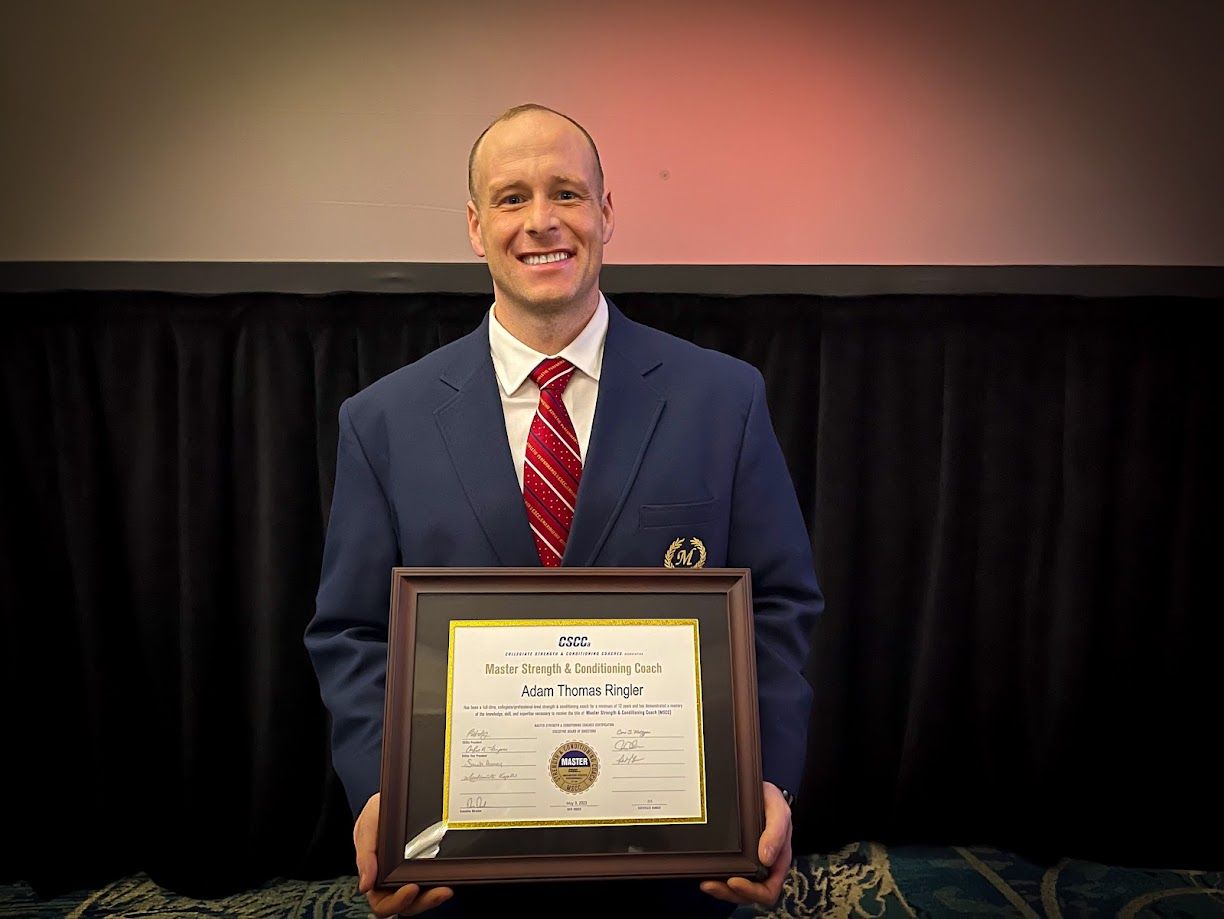
 Adam Ringler
As a reminder, our Random Shows shows are a quick 15-25 minute episode where I typically discuss current industry trends, research reads, current events, and occasionally offer my insights into the training process that we're undertaking each week.
I go into these random shows without notes but full of passion, insights, and opinions. I believe with conviction, you'll take away something interesting from this show and I hope it delivers you a little bit of value in your day.
In addition to those social mediums, you can head over to AdamRingler.com/Newsletter and sign-up for my weekly newsletter. This is a newsletter for the curious. It's chalked full of interesting articles I've read through the week, things I'm exploring and finding fascinating through my week, and a collections of thought experiences and resources I've cultivated.
It's essentially a Birchbox for performance articles and musings.

If you are looking to help grow and support the Decoding Excellence show, navigate over to Buy Me a Coffee. Buy Me A Coffee is a an easy & fun way to support the show. For the price of a Grande Latte ☕ you can support the show and help us maintain the quality of the content.
One hundred percent of the contributions go directly to supporting the hosting fees associated with operating this podcast.
If any of the material resonates with you, I'd love for you engage with me at @AdamRingler
Thanks again for listening to the Decoding Excellence Show! I appreciate all the support growing this Sport Science, Strength & Conditioning, and High-Performance Coaching resource. If you have taken anything away from the show, please login to iTunes and navigate to Decoding Excellence page and leave us a FIVE STAR ⭐⭐⭐⭐⭐ review.
Key Takeaways
- Many young coaches enter the profession with idealistic perceptions built around victories and accolades; the daily reality of collegiate coaching looks very different.
- The episode narrates his article on the 10 hard truths with added commentary, written after conversations with strength and conditioning interns revealed how wide that gap is.
- Facing those truths early, rather than after years of frustration, is what separates coaches who last from coaches who burn out.
Listen and Subscribe
Find this episode of the Decoding Excellence Show on Apple Podcasts and Spotify, or use the player above.
Go Further in This Episode
Enjoyed this conversation? Here is how to get more from it:
- Read the transcript below to revisit key ideas at your own pace.
- Share this episode with a coach or colleague who would benefit.
- Subscribe to the Decoding Excellence Show on Apple Podcasts, Spotify, or your favorite app.
- Join the newsletter at adamringler.com/newsletter for weekly insights on human performance.
Episode Transcript
This transcript was automatically generated. While we strive for accuracy, some words or phrases may be misheard.
[00:00:00] Sport science, strength conditioning, high performance coaching. Welcome to the Dakota excellence show. Everybody, I'm going to pause the show real quick and announce something brand new to the Dakota excellence show. We've created an online community that has exclusive content that you will not be able to get just by navigating to the site alone. If you subscribe today, you will have access to our private podcast, online video lecture series, brand new digital content
[00:00:44] That we are creating to help support you as a strength conditioning coach, a new practitioner in the high performance field. You do not want to miss this material. It's going to help you in every facet of your career. Head over to admringler.com and join the insiders today.
[00:01:04] Hey everybody, welcome to this week's episode of the Dakota excellence show. I have a fun podcast for you today. It is centered around an article that I wrote. The article is called Ten Hard Truths about coaching in the world of athletics. And this article came off the back end of having several conversations with some young interim strength conditioning coaches and just sort of gave a little bit of experience, a perspective from where I'm at into my career versus them on their sort of year one
[00:01:35] Journey into the internship world of strength conditioning. This is a little bit of a different format of a podcast for me because I'm essentially reading a little bit of this article. I'm throwing in some adlibs, some filler, some color radio, if you will, for the article. So hope you like this show. And as always, if you do share it with the friend, share it with a new intern, share it with one of your staff members. Otherwise, without further ado, let's get into this week's episode of the show.
[00:02:03] Thanks for tuning in to this episode. This episode is a little bit different. It is an episode where I'm discussing a blog post that I wrote. Got Ten Hard Truths about coaching in the world of athletics. If you haven't read it in the show notes here, you should be able to jump to the link. You can read it somewhat of this podcast that's going to me, me verbatim, but otherwise when I find it sensible, when I find it applicable, I'm going to to adlib a little bit and maybe discuss a little bit more in detail some of the things
[00:02:33] That I didn't include in the blog post that I think would add value to this application. Nonetheless, I'm going to jump into it. I'm going to read a little of this. And then I'll go off the cuff and just share a little bit of what I find valuable in it. As I recently had the opportunity to interact with several aspiring intern strength vision coaches, it became evident to me that many of them harbored idealistic perceptions of the collegiate coaching profession. Isn't this true? I mean, don't we all do this really? When we first started out, I remember when I first started
[00:03:02] At Michigan State. I thought I had an idea of what strength conditioning was and boy was I wrong. They envisioned a world filled with victory celebrations, accolades, and an undying passion for the coaching industry. However, the realities of coaching are far more complex and nuanced. Coaching by large is a multi-faceted field that goes beyond the glitz and the glamour. It's profession that demands hard work, dedication, the ability to navigate the challenging aspects of shaping athletics in this article or in this for what we're doing here in this podcast. I
[00:03:32] Delve deeper into the hard truths about strength conditioning coaching using examples from my nearly two decades. Oh my goodness, I can't even believe that it's almost been two decades for me. Feels like I just kind of got into it yesterday, but here I am, see graduated 2004. So two decades since I started getting into collegiate athletics, first as a wrestler at Michigan State University, but then quickly thereafter jumped into the world of coaching intern, graduate assistant, and then et cetera. But let's get back to the course here. Nearly two decades to shed light on the intricate
[00:04:03] Nature of this profession. So let's get into the 10 hard truths about coaching in the world of athletics. Hard truth number one, education sets the foundation, not the destination. That's true. Coaching education is a kin to learn in the basics of swimming. You can study theory, understand the difference, strokes, and even take swimming competency exams. However, true swimming skills are developed when you plunge into the water and coaching or more education programs lay the groundwork, but they fall short of preparing coaches for the intricacies of the profession.
[00:04:35] For instance, you might learn coaching principles, strategies, periodization concepts, basic anatomy from an NSCA textbook or the CCA, but you won't truly grasp the essence of coaching until you step into the weight room floor to illustrate. Consider a young coach fresh out of the college, like me, when I first got into this deal, they may have a solid theoretical foundation, but when faced with real athletes, the dynamics are completely different. The playbook rarely unfolds as expected, and the coach wants to adapt on the fly, dealing with diverse personalities, skill levels,
[00:05:09] And unexpected challenges. The transition from theory to practice can be as daunting as jumping into the deep end of a pool after years of studying swimming from the edge of the pool. So here's what I mean by that. Theory can take you so far. The textbooks and understanding it can only take you so far. To develop a real world knowledge of what it takes, you just simply have to begin, you have to do it, you have to get dirty, you have to make mistakes. That is how you will continue to get better as a practitioner as a coach. Let's move on to number two. Teams often come with their
[00:05:42] Own histories. Navis coaches might envision starting their coaching journey with a clean slate, coming into a program, establishing their own rules, boundaries, principles, but shaping a team, essentially shaping a team from scratch. However, the reality is that you're more likely to inherit an established team with its own histories, its own culture, its own dynamics. So think of this scenario as taking the helm of a battleship already mid voyage. The ship is on the ocean, it's going, it's moving, it's already heading to its destination. You need to come in and
[00:06:13] Learn about the crew, adapt to their existing routines, find your place as the captain. It's not a blank canvas, it's complex, it's evolving, it's a masterpiece that requires your own unique brushstrokes. Part truth number three, acknowledgement for good work is not always guaranteed. And here's a side thing. It's not even guaranteed that you'll get it when you're doing incredibly well. While your coaching peers may appreciate your technical and tactical coaching prowess, don't expect constant praise, recognition from the outside world. Oftentimes, the most valuable contributions go unnoticed
[00:06:47] By the public eye. And boy, when things go wrong, you'll get that, you'll get that attention. But when they go right, most times, you won't. For instance, consider the case of a strict conditioning coach who excels in designing effective training programs. And maybe these training programs lead to athlete improvements and team improvement, team success. While this might be evident to the athletes and their immediate circles, it doesn't necessarily translate into public accolades or media attention. Coaches often labor behind the scenes, crafting strategies that propel their team to victories
[00:07:17] Without any fanfare. And this runs counterculture to what we're seeing in strength conditioning right now where personalities and personas want, they want the smoke, they want the attention, they want the glitz, the glamour, the flash, the the aren't screen time. But I think about some of the legacies that's been left by past strength conditioning coaches. They're behind the scenes. They're behind the team. They're not in front of the camera. And so I often think about that. It's different. It's a different era than we live in between NIL and what
[00:07:48] We're doing from a camera and marketing and a promotional perspective. But the strength of coaches, strength conditioning coaches of past always put the athletes first and they put themselves second. And this reality can be disheartening for new coaches who expect that instant validation for their hard work. However, those of us who experience coaches, they understand that their primary objective is to foster athlete growth. Even if their efforts remain largely unnoticed. Number four, the fourth hard truth of this podcast. Working with diverse personalities is a given just as
[00:08:22] In the world of software development, data engineering, business development, whatever you may, where you collaborate with a spectrum of different personalities. Coaching requires managing athletes with varying temperaments, abilities, backgrounds, ethnicities, cultures, histories. In reality, it's a jigsaw puzzle of unique characters that coaches must piece together for a cohesive team. So for example, think of a sports team as a project team where each athlete represents a different team member. And just as in technology development, you'll encounter individuals with different skill
[00:08:57] Sets, attitudes, work ethics. Some might need more guidance and support while others may excel with minimal supervision. It's crucial for coaches to recognize these distinctions, tailor their coaching methods to suit each other's needs. And just as a skilled developer knows how to adapt their coding style to collaborate effectively with team members, strengthening conditioning coaches must adjust their strategies to unlock potential in every athlete. Hard truth. Number five, meetings are a necessary evil in the coaching world. Like any profession, any business that you operate in,
[00:09:33] Meetings are an unfortunate staple, while some meetings are essential for sharing critical information, lining team goals, others, oftentimes higher athletics, right, collegiate athletics. They feel like a time wasting formality, but consider this scenario. You're a coach conducting a team meeting. And just like a business team's daily standup, the aim of these meetings are to keep everyone informed, coordinated, and moving along a spectrum that allows everybody to achieve success. However, not all meetings serve a productive purpose. Some can actually quite often become
[00:10:08] Repetitive and unnecessary. And as a coach, you must strike a balance between conducting productive meetings that facilitate communication, allow avoiding meetings that merely add to the bureaucracy of things. It's a challenge that requires adept organizational skills and a discerning approach to meetings. Our truth number six, timelines are a balancing act. Estimates are a balancing act. And in this context, return to play timelines are a balancing act. Coaches, like data scientists, like data engineers, often find themselves in a predicament of estimating the time
[00:10:48] Required for athlete development. These estimations are akin to setting deadlines for developmental projects, but they come with a unique set of challenges. Let's talk about some of those challenges. Those of you strengthening conditioning coaches for scientists that are listening to this podcast, you guys recognize these challenges most likely already. For instance, imagine you're preparing an athlete returning from reconstructive ACL surgery. You need to predict how long it will take for them to reach, turn to play, or peak performance. And just like any data engineer providing time
[00:11:21] Estimates for a project, you have to consider various factors, such as the athlete's current capacities, potential setbacks, unforeseen challenges with a surgery or rehabilitation. However, the dynamic nature of sports make these accurate estimations even more challenging. Athletes may face setbacks, injuries, performance plateaus, or even unexpected obstacles along their journey. Strength conditioning coaches must learn to under-promise and over-deliver. And just as any seasoned developer knows the importance of setting realistic project deadlines,
[00:11:57] We too must understand setting these estimates is crucial. How often, as strength conditioning coaches, do we find ourselves over-promising and then failing to live up to the hype? Now, don't get me wrong. I love to set high expectations. I want us to set expectations that exceed all realities, if you will. We also need to understand that. Sometimes we need to under-promise. We need to set realistic expectations, realistic return-to-play guidelines, so that our athletes understand the trajectory of which they're going, but also administrators and
[00:12:31] Coaches understand that there is this realistic timeline that they can follow. I don't want to set them up and say, we can return from an ACO in four months, three months. That would be highly improbable. And it's going to make me look like a fool as a coach, even recommending that return-to-play. Let's talk about hard truth number seven. Bracing errors and setbacks. In both coaching and data science development, errors or bugs aren't an inherent part of the process. And just as an engineer anticipates bugs or errors in their code, the coach must prepare
[00:13:03] For athlete setbacks and challenges. And let me tell you, here's an example just from my work as a sports scientist. I have a literal bone yard of a band in R and Python code that is completely ugly, failed projects, things in my Git that I haven't even looked at in probably months if not years. That's just part of it. It becomes part of your errors, your setbacks, your abandoned code, your abandoned programs that you no longer write. Consider a strengthening coach working with a young athlete. This might be your freshman, your walk on, your red shirts,
[00:13:36] Despite meticulous training plans, that athlete might encounter unexpected performance drops or injuries. We don't want injuries, but this is the part of the nature of jumping from high school to college. These are a canned decoding bugs and they can emerge despite the rigorous testing that one does. A successful coach recognizes that errors setbacks all of these failures they're inevitable. They view these experiences as opportunities for growth and learning. Just as data engineers treat bugs as chances to improve their code, coaches too must look at these failures as opportunities
[00:14:09] To improve on their coaching qualities. Instead of dwelling on errors, us strengthening coaches need to focus on solutions and adapt our strategies to ensure that athletes progress continues. All right, here's the next hard truth number eight, navigating uncertainty. Uncertainty is a constant companion in strengthening conditioning coaching. And much like in data development, coaches must make decisions without complete information. And just as us that work with data science, we must navigate complex projects
[00:14:42] With evolving requirements. So think of this as a strict conditioning coach. Consider you're preparing your basketball team for a competition. And you must estimate the chances of success with a particular lineup. This is something that we do on a data analysis standpoint. To look at various contributions from teams, look at rotations, whether it's your bench or your starters or rotation players. While you might have data and experience to inform your decision, there are uncertainly veritable beyond your control. Maybe a readiness testing,
[00:15:12] Force plate data, conditions of your squad, and or the opponent strategies. You can't account for all of these things. Coaches, including, you know, those within front office and GMs, they must find themselves in situations where they must embrace uncertainty and adapt to ever changing circumstances. The next hard truth number nine, achieving work-life balance in a 24-7 world. Hey, boys, this one ever more relevant than today. Coaching often blurs the line between work and personal life, much like the demanding nature of business development. Strength conditioning coaches
[00:15:47] May find it challenging to disconnect from their work. That's me, especially when they're deeply invested in their athlete's success. We ought to primarily know the extreme highs of winning a close game and the lowly lows of arriving home after a tough defeat. For instance, a coach might spend the evenings reviewing workload data or planning training sessions, even when they should be relaxing. And this can be, this can lead to tensions and personal relationships and a sense of always being on the clock. Coaches have to develop strategies to maintain a healthy work-life balance.
[00:16:19] And just as any business executive must learn to disconnect from their screens, us too as coaches need to learn how to set boundaries and disconnect as well. This might include setting rigorous boundaries for work hours, engaging in activities that help us unwind, and practicing mindfulness to stay present in our personal moments. And here's our last number 10 hard truth about coaching. Soft skills are always your secret weapon. While technical skills are essential, both in coaching and business, soft skills play a crucial role in achieving success. And just as business leaders benefit
[00:16:52] From effective communication and teamwork, coaches rely on soft skills to build strong relationships with athletes and colleagues and other coaching staff. Consider the case of a coach who excels in communication. This coach can effectively convey strategies, motivate athletes, and create a positive team environment. Their ability to connect with athletes on a personal level enhances the coaching experience and fosters trust in coaching as in life, success hinges on the combination of technical proficiency and soft skills. And those coaches who prioritize emotional intelligence,
[00:17:20] Teamwork, approachability will often find themselves better equipped to navigate the intricacies of the profession. So let's wrap this up. These were my 10 hard truths about strength and conditioning coaching. In coaching in the world of athletics, it's a profession that demands a holistic understanding of the game that we operate in. It's not just about wins and losses, sets, reps, puritization, exercises. It's about nurturing athletes, managing diverse personalities, and navigating the ever-changing landscape of sports. By acknowledging and embracing these hard truths,
[00:17:48] Strength and conditioning coaches can become more resilient and effective in their roles. And just as business executives continue to adapt to new challenges and embrace change, us two coaches must navigate the dynamic world of athletics with an unravering dedication and a commitment to constant improvement. Hey everybody, that's going to be it for this episode of The Decoding Excellence Show. Hopefully you took away something from these 10 hard truths of strength conditioning and the coaching industry. Inside of this, there was some lessons to be
[00:18:18] Learned, and I hope that if you got any value from this episode, that you share it with any of your intern staff or young coaches that might be navigating this difficult industry. As always, there's a number of different ways that you can support The Decoding Excellence Show. The newest way you can support is by heading over to AdamRingler.com and joining the high performance insiders. This is an exclusive community that allows you access to the private articles, the private podcast feed, and digital lecture series that's being hosted behind this community wall.
[00:18:55] Check it out by heading over to AdamRingler.com and subscribing today. The second way you could support The Show is simply by signing up for the newsletter. This is something I take a lot of pride in. I try to go out on the internet, dig up research articles that are fascinating. I try to find the newest technologies, articles I'm reading, research publications, and just really cool things that I discover that sort of exists between performance science, biology, and technology. I think you'll get a lot of
[00:19:25] Values simply by signing up for the newsletter. I promise you, I will never spam you. I will never sell your information or give this out. I cherish this little small community that I'm creating with this newsletter. The last way you can support The Show is simply by heading over to buymeacoffee.com forward slash AdamRingler. Now, the name is a little misleading. You are actually not buying me a coffee. You're buying the show, a coffee. It's a micro donation anywhere from three, four, five dollars. There's a latte, a cappuccino at Starbucks, essentially, and you're buying and
[00:20:00] Supporting the show's hosting fees and the ability to deliver great content to your ears weekly. So head over to buymeacoffee.com forward slash AdamRingler. And by the decoding excellence show a coffee by two coffees, by five coffees, if you're an espresso junkie. So as always, I love you guys. Thanks so much for supporting The Show. And until next time, thanks for tuning in.