#060 - Dan Howells: High Performance Coaching
In this episode of the Decoding Excellence Show, I'm speaking with Industry Veteran and High Performance Practitioner, Dan Howells.

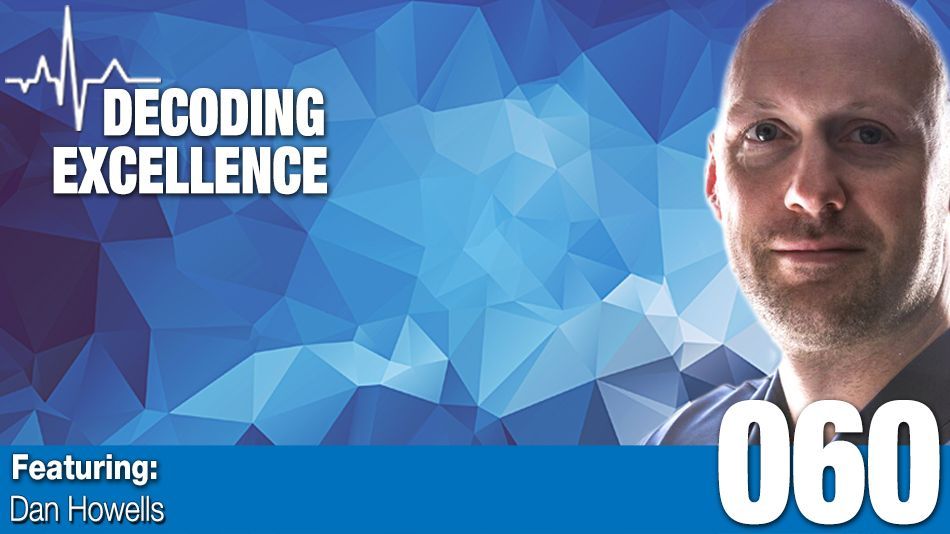
In this episode of the Decoding Excellence Show, I'm speaking with Industry Veteran and High Performance Practitioner, Dan Howells. Dan has experience at US Ski & Snowboard, the English Institute of Sport (EIS), Rugby Union and Rugby 7s, and most recently, in the Major League Baseball (MLB) Houston Astros organization. You do not want to miss this show!
Dan recently formed Collaborate Sports during the initial lockdowns through COVID as a means of connecting developing coaches and practitioners through a personal development focus. Since then, he has reached over 400 hundred practitioners from varying countries using the personal development platform he has created. He provides opportunities to others through Bespoke Coaching/Mentoring, Monthly Interactive Webinars with guest presenters, and the Interactive Personal Development (IPD) Programme.
The IPD was the main focus of building a platform to network other coaches together in a learning environment and make mentorship more affordable for younger and developing coaches. The IPD allows 10-12 coaches to partake in a 6-month course, focusing on specific content dependent on the Technical or Non Technical nature of the programmes.
Live attendance means interaction is central to the programme where attendees can take the information shared and navigate how to apply it to their own world through the help of Dan and others in the programme. The costs are more affordable due to the group nature of the programme, and the online platform provided to allow coaches to communicate between monthly meet ups means that attendees get to coach and help each other daily as required.
Currently, the S&C Technical IPD is open for enrollment with spaces still available for the commencement on January 31st 2021. The programmes reach coaches on all time zones based on running 2 cohorts at any one time. If interested in learning more about the course, you can visit collaboratesports.com for more info, or email Dan direct at info@collaboratesports.com to ask questions or arrange an informal discussion about the opportunities Collaborate Sports aims to provide.
Dan can be found on twitter as @howellsdan and on Instagram with @collaborate_sports
As always, thank you for supporting The Decoding Excellence Show!
In addition to those social mediums, you can head over to AdamRingler.com/Newsletter and sign-up for my weekly newsletter. This is a newsletter for the curious. It's chalked full of interesting articles I've read through the week, things I'm exploring and finding fascinating through my week, and a collections of thought experiences and resources I've cultivated. It's essentially a Birchbox for performance-related articles and musings.
If you are looking to help grow and support the Decoding Excellence show, navigate over to Buy Me a Coffee. Buy Me A Coffee is a an easy & fun way to support the show. For the price of a Grande Latte ☕ you can support the show and help us maintain the quality of the content. One hundred percent of the contributions go directly to supporting the hosting fees associated with operating this podcast.
If any of the material resonates with you, I'd love for you engage with me at @AdamRingler
Thanks again for listening to the Decoding Excellence Show! I appreciate all the support growing this Sport Science, Strength & Conditioning, and High-Performance Coaching resource. If you have taken anything away from the show, please login to iTunes and navigate to Decoding Excellence page and leave us a FIVE STAR ⭐⭐⭐⭐⭐ review.
Key Takeaways
- Howells brings experience across US Ski and Snowboard, the English Institute of Sport, Rugby Union and Rugby 7s, and the Houston Astros organization in Major League Baseball.
- He founded Collaborate Sports during the initial COVID lockdowns to connect developing coaches through personal development, and has since reached over 400 practitioners across countries.
- The Interactive Personal Development (IPD) Programme is a 6-month course for 10 to 12 coaches, built to make mentorship more affordable through group learning and daily peer coaching between monthly meetups.
About the Guest
Dan Howells is an industry veteran and high performance practitioner with experience at US Ski and Snowboard, the English Institute of Sport, Rugby Union and Rugby 7s, and most recently the Houston Astros organization in Major League Baseball. He founded Collaborate Sports to connect developing coaches through personal development, offering bespoke coaching and mentoring, monthly interactive webinars, and the Interactive Personal Development Programme. He can be found on Twitter at howellsdan and on Instagram at collaborate_sports.
Listen and Subscribe
Find this episode of the Decoding Excellence Show on Apple Podcasts and Spotify, or use the player above.
Go Further in This Episode
Enjoyed this conversation? Here is how to get more from it:
- Read the transcript below to revisit key ideas at your own pace.
- Share this episode with a coach or colleague who would benefit.
- Subscribe to the Decoding Excellence Show on Apple Podcasts, Spotify, or your favorite app.
- Join the newsletter at adamringler.com/newsletter for weekly insights on human performance.
Episode Transcript
This transcript was automatically generated. While we strive for accuracy, some words or phrases may be misheard.
[00:00:00] Sport science, strength conditioning, high performance coaching, welcome to the decoding excellence show. Hey everybody, I'm going to pause the show real quick and announce something brand new to the decoding excellence show. We've created an online community that has an exclusive content that you will not be able to get just by navigating to the site alone.
[00:00:37] If you subscribe today, you will have access to our private podcasts, online video lecture series, brand new digital content that we are creating to help support you as a strength conditioning coach, a new practitioner in the high performance field. You do not want to miss this material, it's going to help you in every facet of your career. To addemringler.com and join the insiders today.
[00:01:03] Hey everybody, we have a phenomenal show for you this week, aren't it? I'm joined with Dan Howles. This was a fun conversation and a really interesting one because we get into talking about his experiences at the England Institute of Sport, the London Watts. We talk about the England Rugby Sevens and his most recent snack at the Houston Astros and just lessons learned from every one of those stops.
[00:01:32] We talk about communication styles, how to deliver greater value through coaching the coaches and collaboration. This was an amazing conversation to have with a experience high performance practitioner. I'd also be remiss if I didn't mention a new way that he is giving back to the high performance industry by the work and interactive workshops that he's doing at collaborate sports without further ado.
[00:01:59] Here is my phenomenal conversation with experience high performance practitioner and coach Dan Howles. Dan, welcome to the decoding excellence podcast. How are you doing? I'm very well, thank you. I'm a little cold. It's winter in England at the moment and it's taken some adjusting from recently moving
[00:02:17] Back from Florida, but happy to be back amongst family and friends in this somewhat interesting and difficult conference. Oh, sorry. Thank you for having me. Yeah, no, I'm really excited to get this one on the books. I know we've had this scheduled or at least I've had this scheduled for a while and you know,
[00:02:33] I've got to see not only the work that you've done and sort of the history of your impact within high performance sport across multiple organizations and sports and just a diverse sort of population set and you know, it was excited to have you come on so that we can discuss a little bit about your journey and about some of the lessons that you've learned. So first and foremost, thank you for participating. But for the listening audience that might be less familiar with your organizational stops
[00:03:08] And your history and maybe just a little bit of your background, do you mind giving them just an introduction to who you are and some of the journey that you've undertaken as you've navigated your high performance career? Absolutely. Yeah, there's going to be plenty of people that probably haven't heard my name before. I come from a rugby background in terms of high performance prior to moving over to the
[00:03:31] States to work in baseball, which is a different jump. People are making it more and more often these days, but I guess the jump from one extreme sport to another, especially having not had experience myself as an athlete or coach in baseball is an interesting narrative. So that's the most recent organizational jump I've made and I'm back in the UK. I was working prior to rugby in Olympic Paralympic Sports in a big multi-sport environment,
[00:04:01] Which I think was fundamental for my development. I can't talk highly enough about those sort of five to six years as a developer and practitioner. And then just started to narrow my focus on some individual sports and that journey was to rugby and then into baseball most recently. No, that's awesome. And we're going to dive into a little bit of maybe not necessarily the details of each
[00:04:26] Organization, but just sort of that journey as you've navigated from a broad, diverse, multi-athlete skill set and population to navigating to more of the individual sport. I wanted to kind of maybe rewind the personal tape and start with the genesis, if you will, of everything, every vocation from engineering, from teaching to industry, what led you into coaching? What was maybe particular moments or the catalyst or the journey into that personal decision
[00:05:07] That we all make at some point along our young, whether academic career or personal sort of development that said, this would be really fascinating for me to kind of go into and jump into high-performance sport or whatever sort of interplay within athletics. Yeah, the turning point for me was going from wanting to be a physiologist to a strength and conditioning coach. I had an interest in training because I was a rugby player and so naturally I was in
[00:05:38] The gym and this was in the infancy of S&C, I guess, in the early 2000s, high performance in terms of professional S&C anyway in the UK. And so I was going through Bay Generic programs and thought of S&C was Bay Generic in Nature that you just picked up one program and applied it to other people in other sports most likely. But I wasn't curious enough at that point in my career, I was going through the formal
[00:06:06] Roots of academia and education and I guess I was letting the roots of academia define me and my thinking as opposed to stopping and looking outside that and being curious to other ways to do it. So it wasn't until I actually came to the States the first time around to do a post-grad internship with the US ski team and just saw the funky sort of, to me at the time, these sort of out there stuff that they were doing but it was just simply looking at eccentric
[00:06:36] Muscle action in different ways to strengthen eccentric muscle strength development, specific to skiing and then looking at Slalom skiers and so it was that moment I actually went as this sort of jack of all trades intern and got really curious about, wow, if we can do this in skiing then maybe I'm missing the point a little bit here from the strength education perspective. So that really got me curious about what you can do to influence the body.
[00:07:05] I started to think about, you know, stress and adaptation and then actually then everything in my academia has kind of made more sense to me, you know, I was interested in physiology because I was being taught physiology, underpinning physiology and at that point strength conditioning wasn't a mainstay of the academic room that I was in and suddenly I was like, wow, okay, that makes more sense. That, from a stimulus response or stimulus adaptation point of view, I can see that.
[00:07:30] And then, you know, I recognize, I guess, at the time that, you know, my self-awareness of fact that I was pretty good in group so I could take the lead in coaching and warm up quite well and I wasn't phased by that and I really enjoyed helping people. So all those things together really put me towards the passion of coaching. And I personally have a philosophy that coaching doesn't have to be about coach to athlete. It can be peer-to-peer, it can be that person who's next to you, it can be the physio that
[00:08:05] You work with other athletic trainers that you can inherently help influence their thought processes, all their actions and their decision making. Not manipulate, that would dictate that you were controlling, but influence in the sense of trying to help them to help you through a process. And so I'm very up late, especially taking to coaching being much more than just you and your athletes.
[00:08:31] I think it goes, you can coach up in an organization, for example, influence up and that was never more present than in an organization like the Astros or Baseball because it's so big and has such a front-off as present. So I'm really fascinated by coaching as a concept beyond just coaching. One thing I wanted to certainly poke on a little bit is that that moment of time that you spent at U.S. Snow and ski or ski and snow regarding just that intercollaborative
[00:09:05] Nature of essentially high performance. And I look back on the time and I know organizations were sort of leveraging not only data, but also this sort of interdisciplinary mindset of collaboration across different departments, both physiology, first coaching, technical, tactical. And I look at that organization, at least in America, and I know, again, internationally as well, but that looked like a very much like a genesis of beginning, that sort of what
[00:09:40] We now know, at least within America as sort of high performance sport where we start to have more interplay between different departments, both communication, between transparency of data sharing. And I look at a lot of practitioners in the field, professionally, collegially organizations, directors, and they seem to have some type of time, not necessarily just at U.S. Ski and snowboard, but that sort of opportunity where they're first exposed to a more of collaborative
[00:10:14] Nature across what they individually contribute to the system. And it's more about what we all contribute to it. So, you know, I know you did that sort of postgraduate SNC internship, but that lessons, are there any particular lessons from that opportunity that you carried forward into British ski and snowboard, or the English institute of sport, or any of the other organizations, Astros, or anything like that, that you particularly feel resonate with your coaching career?
[00:10:44] I think looking back to that particular organization, fantastic people, and you look at, you know, you've got the director now, full director, that was actually the physiologist with me at that time, he's gone full circle through, and he's come back now, and it's a great place to be, and I actually think that the remote nature of it forces communication and forces collaboration. So, not everybody could be in control of their athlete in the way that potentially you can
[00:11:15] Be in college systems or pro sports on the NFL, like day in day out, same people and same people all the time, you've got different skiers off on different calendars, you've got different coaches, and you've got to relinquish a little bit of control, and as coaches, we tend to have that streak, don't we, you know, that control freak element. So, I think that looking at that, I saw a group of individuals in the same office from physiology, nutritional, dietetics, physiology, biomechanics, strength conditioning, all in
[00:11:51] The same office, of which I was in as well, and that ability to share ideas across the office was paramount, and I just sort of sat there and observed the interplay of just casual questions, again, curiosity, what if we could do this, what do you think of that, and it was a growth orientated environment, and that was awesome to see. So, ever since that point, and kind of epitomized in an organization like the Institute of Sports, that was also remote in some senses of the word, because you had practitioners all over the country working
[00:12:28] For the same organization, but allocated to different sports, and even those sports at that time were somewhat decentralized, required communication, and required you to drop the ego quite early up. You needed to work together for the great good of an athlete, and I had, I remember being 23, really rookie, being asked by someone who's now working in the MBA, I was working for Cycling, GB Cycling, and he would ring me ten years, my senior as such, and ask my opinion on what I thought about the athlete that I was working with, because he knew I knew better than anyone,
[00:13:06] You know, and I didn't expect that, I expected to be told, and I think that that is something the ski team did very well, was that hierarchy didn't come into it, time spent in position didn't come into it, everyone was worth their weight involved, that's why they were employed, and so that to defuse that collaborative component is, it's just a misnomer for me, why would you do that, and you do tend to see that a little bit in some cultures around earning your stripes, and time spent in post, it takes your ability to speak up, and yeah, so ever since that point,
[00:13:43] I've always been collaborative, I've always been looking for opportunity to be comfortable sharing my thoughts, sharing my, not concerns, but ideas, and be open to having them shut down, because they are, they can be proven to be not the right course of action, and that it isn't held against me, you know, it's just trying to, to, you know, create the optimum outcome, basically, and we're basically operating in performance solutions environment, aren't we? People ask me about how did you find baseball, compared to rugby, was it not difficult?
[00:14:19] Well, actually it was probably easier, because I was totally unbiased, and I could just look at what it was, so yeah, that's, yeah, the whole multidisciplinary team of approach, the growth mindset, that everybody has value, was something that epitomized my experiences at the US Games start with. You know, I think that's, there's a number of different things that you shared, even within just that, that I want to at least discuss, right? And one of the things was that you talked about, obviously, those experiences, and the hierarchy on nature, or maybe a little bit
[00:14:56] Of the flat organization, nature that allows, you know, junior staff members to be able, not necessarily to question, but to feel like they have a voice at the table, and sort of that environmental constraint that allowed that collaborative nature, and with that said, you know, and not necessarily within your own organizational and professional sport stops, but what do you think are some of the barriers that are restricting, whether it's known, or whether it's unknown, whether it's environmental, that might be restricting some of that collaborative nature across
[00:15:32] Departments, and those barriers that might exist, that's preventing some of this interplay between different departments, practitioners, and people that you see come in across professional or amateurs for it. Yeah, and I won't need to ruffle feathers here, but some of it is traditional, and I see that from moving from two different cultural backgrounds, you know, like the UK to the US, and probably the traditional side of it is, yeah, I am your boss, and you are employed by me, and you need to follow instructions, and you need to prove to me that you're worthy of trust
[00:16:10] And responsibility. But for me, I step away from that and say, well, that's the interview process, that's the vetting process, that I wouldn't want to be bringing in somebody that I didn't feel on my gut instinct at least, that I could not trust at a certain level, because they need them to come in a new job, and a measure of me as a leader would be, if I was removed from the situation, could the team operate without me? And so I would say, if you look at some situations, if you remove a leader, could that program run without them, and if not, then they're a dictator, you know,
[00:16:46] They're for a facilitator of processes. So I think that's one of it, and the other one is then itself awareness, so if the individuals cannot understand that, you know, how they have come across maybe in the controlling sense or in the hierarchical sense, that's limiting, but you've got to you've got to make mistakes to create change or learn. So we go through this process as a coach, and we push our athletes to experience failure in movement to maximize their feeling of what success is or what what leads to success. They have to make some
[00:17:27] States yet. We're not necessarily doing that with our staff, right? We're just telling them how to operate, but they should do this this particular way every single day, and that doesn't lead to any growth. And then it comes down to questioning as well. So from a leadership point of using questions, okay, what do you think about this? Now, where, what am I missing? And showing vulnerability as a leader that also instills trust in the group below you, young practitioners, I think, okay, I can have a voice here. It may not be the answer or the final say, but I can at least contribute
[00:18:04] And have a shared value in the process or shared contribution to the process. So I mean, that definitely comes from the people in leadership roles. And, you know, I've stepped into environments where there's been all consequences because they're not comfortable being asked, and we get there of actually, but I'm persistent because I want them to collaborate with me. I won't, I recognize that I don't have all the answers. In fact, I don't, I think I have a curious mind. I definitely don't have to skill sets to find the answers at times, and I have to facilitate
[00:18:38] People into those positions. But, you know, I do think I'm pretty good at is bringing a team together, you know, and getting them to operate together and come up with optimal ideas. So yeah, I think in some of its tradition, and some of it is sort of maybe lack of self awareness about the way that you're controlling the situation limits growth. It definitely guarantees success in what you want, but that, what that success looks like will not change. That's the problem. And for me, I want people I work with and the environment I work with to be thinking about future, the foretold,
[00:19:10] Where can we get to? Where do we want to be going forward? And I'm willing to make some mistakes along the way. And have some small hours of judgment that aren't too impactful to guess them. It's very easy to follow a particular recipe for quote-unquote success or program design or implementation of whatever modality across practice, across the industry. But, you know, wow, that's replicable in some nature and delivers a consistent delivery of said modality or practice one of the things that it does is it absolves maybe not just originality but innovation, it absolves
[00:19:51] Ownership perhaps, you know, from junior coaches or those practitioners that might be delivering that. And what it also does is it, you know, absolves failure in some respects. And as we know, you know, in sort of wow, it's sport and it's driven through athletics like from a pedagogy standpoint, we need to have some of those lessons that you learn only through failure to really sort of evoke, okay, well, self questioning, right? Self-awareness of what do I need to do differently? How do I need to prepare differently? What went wrong? The debrief after a session or a failure event or whatever.
[00:20:28] So that, you know, there's some personal discovery, there's some professional discovery, there's that collaborative nature of of reaching both horizontally but also vertically to peers and saying how can I do this a little bit better? And that's that's an amazing sort of gem within what you shared. So you talked about your own personal sort of sense of bringing people together and, you know, some of this personal strength that self-awareness that you have about what you do exceptionally well. What do you think are some of the resources or, you know, your own lessons learned that allowed you
[00:21:08] And enabled you that drove you to feel like you had that ability to bring people together and it could be resources, it could be, you know, just personal lessons you've learned or industry or, you know, education, but what was some of the things that helped you actually develop that leadership ability? Yeah, I mean, you talk about saying I'm self-aware, it's difficult because I'm, I am, it's wrong, it's a false statement, isn't it? It just, I just mean basically I'm more self-aware than I was and I hope that in another five years I'm more self-aware and that that's never
[00:21:44] Ending because to say I have, I am self-aware, it's almost a full stop statement, so I need to, you know, I want to caveat that and say I know that I'm in a better position than I was five years ago which is better than I was prior to that and the only thing that really helps you along the way is being true to yourself in the set, in the sense of wanting to develop and therefore trying things and therefore being willing to make mistakes and so I was reasonably uncomfortable making mistakes in my early career in the first year because I felt like it was a bad reflection on me
[00:22:21] And you've got to make a pretty damn big mistake for it to be catastrophic if I'm honest in that in our field and so I was once I realized that as soon as I recognized something to go to plan or could have gone a bit better just what could I've done differently? That's it, right? Just what could I've done differently and if I'm asking that myself and I'm thinking about doing it differently next time, as long as I'm in the moment, coldness and that that situation's happening again and I need to try something different. Then I'm creating learning, it's the same as mode of patterning or
[00:22:54] You know movement quality of skill acquisition, it needs repetition but if you aren't focused and you're not in tune with the body and you're raising kinesthetic awareness, you're not going to retrain those mode patterns so or ingrain them and it's the same here, this is learning isn't it? So yeah, I'm on a journey of self-awareness and it's ever evolving, there is no particular moment other than the fact that when I was willing to make mistakes and willing to realize that my way of potentially at that point wasn't good enough or could be better, it's a better phrase
[00:23:26] Than I was able to try new things and recognize the best strategy that's at the right time. You're with that said, you know, and being on the journey of self-awareness, right? And never ending journey, never ending journey of personal development or continuing education or just, you know, development as a human being, not necessarily just as a practitioner in sport but just as a general evolving species. What are the things, techniques or habits that you found that allows you to have that reflection, if there are any, you know, personal habits or things that you've done
[00:24:05] That's really helped you better reflect or better learn or, you know, A, resources that you might have leaned towards, but even just the habits that one might possess that allows you to dig a little bit deeper and develop as a person as a whole. Yeah, I think the big thing I would say is feedback. I remember being part of the process of appraisals in one organization, very early on in my career and 360 reviews, peer reviews, and then being done very well to the sense that like I could I, in anticipation of that feedback was concerned because I felt not somewhat threatened
[00:24:49] In that sense. But once I got it, there was, again, some like all moments, but I didn't think about it like that, you know, I didn't think about that situation in that way. And so again, another moment of realizing that people perceive things in different ways and as coaches, just like we control the way somebody moves, we can control the situation in the sense of with the way people might think. So, you know, if I'm going to say to you, can I offer you some feedback? It's very different too. I need to give you feedback. Like, I may deliver the same detail,
[00:25:21] But your resistance on one of those situations is giving much more height and then another one, especially if I ask you for permission to mind if I give you some feedback. And you, you know, I offered you to say yes, and that's an easy situation. So same situation, different perceptions are with different types of devil in the detail of the words, but, you know, asking for feedback ever since that point. So obviously, that was forced on me somewhat, but recognizing that the feedback I was given hit me from a different perspective. I could see things from a different life,
[00:25:53] Was a bit of a lot of moments. And now, I'm actually seeking feedback from people who I manage or lie managed. Hey, tell me where I could have done that better. I come about meeting. What message did I deliver very well though? Or what things could I improve if I'm going to deliver that again next week? Now, even just being open by myself, I felt like I think I was well as planned. What, what do you think I felt sure? And equally like, you know, what am I doing well in a minute or where are you feeling comfortable in this situation? So, showing yourself or showing yourself to be vulnerable
[00:26:26] As the people that you're lying managing at, because it's a really critical trait and skill. Because it empowers trust, I think. So yeah, the feedback element, and I've just done some stuff with people I've been working with from a mentorship point of view, or coach development point of view, and a ton of it has been around asking for feedback. And they've fed back to me that some of the perspectives they're getting, they had never thought. And if they hadn't asked for that feedback, they'd be stuck in that same process. So I think it's really critical that we
[00:27:04] Ensure that we understand that we don't know what we don't know. And that's based on knowledge. But then even when we have that knowledge, we don't know what we don't know in terms of context around that information. And that the environment we step into, whether I mean a rugby environment, a baseball environment, or one-on-one environment, same information can hold true, knowledge can not hold true. It can be misconstrued. I could deliver it in the same way, but it could be misperceived because of the rugby culture versus the baseball culture, all of those things. And so,
[00:27:36] Feedback is for seeking clarity, basically. So that for me is the biggest resource that we can offer ourselves. And I like the fact that you said offer ourselves, because I feel like there's a perception, there's a number of things that you shared there, but there's a perception that when you give feedback that it's the recipient of said feedback is the beneficiary of it. But truly, if the recipient of that feedback absorbs it, acts on it, and takes that information the entire organization benefits from it as well, because there's a
[00:28:12] Greater outcome that's driven through that person. But I love the fact that you framed sort of your response in the nature of asking for permission to provide that feedback, and that that sense of ownership or autonomy, or the fact that if they were from a system standpoint, not ready to receive that feedback, that in theory they could decline the feedback offer, which would only be self-limiting in some respects. But there's a phenomenal book by Douglas Stone called Thanks for the Feedback. As you were talking about that, talked about thinking
[00:28:52] Of the recipient of said feedback before you as a mentor, as a leader, it provides that form, and it just gave me a little bit of a flashback of said book. You might have answered this within that response, but I just want to give a little bit of a catalyst, and I think, yeah, you've certainly dove down this. But outside of maybe asking or solicitating feedback, which is something that I think junior coach, or even to be honest, any coach should actively seek out throughout their career, what advice would you give to the young practitioner
[00:29:32] Just starting off? As they start their own personal journey, they look to somebody like you that's been at multiple organizations, have done this, have had what we might define as quote-unquote a successful career. However, one might want to define success. That means something different for everybody. But what advice should they active? What would you tell them if you were just on a one-on-one basis of saying, hey, let me help you in your career? This is the best piece of advice I could give you. I mean, I've been kind of doing that, I've laid anyway, with sort of the
[00:30:07] Spoke coaching of individuals, and only this morning I've got somebody who's in sports science and recognises that there's, you know, it's going to be jumping into some baseball environments that that there's not the sports science, I can potentially help them within this situation, but it's the coaching of his environment. So how can he coach his environment sports science into certain situations? And so he's an example of somebody that we're going to go and work on some profile, and some personality and mindset. For those that know me at the moment, well, I've probably heard
[00:30:43] Me talk about this numerous times recently, and think that what bandwagon is he jumping on? But this, for me, is something I was aware of at the age of 25. It's just that I haven't put it in a draw. I've been very aware of it ever since I did, you know, profile myself because of the impact it had. And I have to recognise that different people receive information in different ways. So we talk about coaching as cues, right, extrinsic or external cues and internal cues. And we talk about different ways of learning, you know, visual learners or learning through experience. And we don't
[00:31:23] Think about the peer-to-peer as much in that. And also with our athletes, how do they, what's the best way to use communication? Is it that I want to stick to facts? Is it that I need to ask for their opinion of things? Is it that they want to feel part of the collaboration of this project, or do they just need to be told how to do it? Is it that certain people are going to have certain ways of thinking around mindset as well? They're going to be more risk-averse so they're good to highlight the barriers in a project. And some people are optimistic who are going to see opportunities
[00:31:58] That I may not. And so, therefore, how do I not only do I communicate those people, but how do I move my mindset and my thinking to those areas that I'm not preference towards? And so that's given me a real different perspective. So that's what I'm trying to do with coaches is start with yourself. I think, you know, one of the strap lines I've been using recently is, you know, personal development starts with yourself and raising self-awareness of where you're out at the moment on your journey. And that's a really great tool because everybody can have like
[00:32:30] A moment because it's so indicative or reflective of themselves. But we tend to just focus on our strengths being at strengths as opposed to potential blind spots. And, you know, I know that overplaying my preferences means that can be quite domineering and demanding when actually I just want to be efficient, I want to be direct with my work. So I tend to start there when you talk about resources and try and get people to to bind to the concept that you've got to look at yourself and look at some areas that you could move yourself and adapt or flex the styles because coaching
[00:33:07] Is is acting really, right? It's flicking a switch to be able to go from one type of preference or preferential style in behavior to another because if we're not, we're rigid, we're not going to be as somebody who's going to be seen as flexible and adaptable. And even approachable times because we're rigid in our ways. And that'll have strengths in some day on some days or some situations, but actually pitfall on others because if you can be somebody who can move and flex style, I think that's critical. And the same in coaching, do I need to raise my tone of flicking switch
[00:33:42] Of accountability to the group? Do I need to have an empathetic time and put my arm on some be shoulder and ask them how to do it? Do I need to pull someone aside and have a quiet word that behavior is not as expected against our values? And do they understand why? And nobody else ever hears about it? Or is that been the fourth time that's happened? So I need to make a situation here to set an example to the rest of the group because it's having a cascade of events on the team, all these different ways to approach the communication and expectation. So yeah, that's where I would
[00:34:15] Start. If it was possible, people had that at their disposal. I think that personality, rigidity will lend itself to applying a particular style of coaching or whatever vocation one might be in that limits the flexibility to apply communication styles, personality differences, styles of like delivery across different people. Because again, like as you talked about with education, about ways people receive feedback, what they particularly need in that sort of moment that it might be that quiet hand on a shoulder that they need or it might be the more of the
[00:34:58] Stern talking to that allows them to sort of be motivated. And that flexibility or communion like nature is really a necessity, but also a way that really exceptional practitioners can bend and mold and shape and shapeshift their personality into what the environment needs. Not necessarily just apply a one-size-fits-all approach. You know, we talk about that with program design that we really want to bespoke programs. So it's on a level of individuality that's specific for the physiology of each athlete, but what often goes missed is that we should also try to do that
[00:35:40] Within the personality demands of each individual athlete that as you have that development of a relationship and you know sort of some of the drivers of personality and what motivates people on how they learn that that becomes a tool that you can use within your own personal toolset to have a better delivery of the information you're trying to share with someone. And you said tooling, that's that's critical. It is just a tool, but like anything, whether it's a VBT device, all VBT is doing is giving you a reference point, right? If it's GPS, it's giving you
[00:36:16] A reference point. If it's any of that technology today, we're so consumed by it, but all they are, all it really is is a reference point for you to make a decision or judge something against. That's what it is. And each environment, that same bit of information is going to be something different within the context of that environment. And then, but it's the same here with understanding that the way you make decisions under pressure or the way you express yourself from a behavioral point of view. Understanding yourself, it's a tool to help you understand
[00:36:47] Yourself and give you a framework from which to move your mindset and control your behavior and influence and adapt, which is, which I think is critical because we would adapt that decision making based on that VBT information or GPS, all the same here. If somebody, if I'm presenting some information to an individual that maybe has changed, then maybe I need to change the way I'm delivering the information or the story behind it. So, yeah, it's a tool. It doesn't define what you do. And that's another thing with certifications from a technical point of view.
[00:37:25] Coaches are so consumed by the number of certifications that you can do. And it's not as prevalent in the UK. There's some courses, but a lot of people go on more bespoke things because they feel it's more real-world. I stepped into an environment in the US and the feeling of personal development was, can I have some money to go on this course? The problem with that is you're buying into a product which tends to be the answer for everything. That tool, that course, that product is going to answer everything that you throw at it, trying to sell itself. And there's not much real
[00:38:05] World to it. So, you have to then apply that for the real world. And remember, it's just a tool to resource at the right time, not every time. And I think that's a problem people have is I'm going to do this course, and it's going to become the mainstay of everything I'm doing, as opposed to contextualizing and going, okay, I'm going to apply that with that one athlete this one time, because that's the most appropriate modality to create impact and change. And that's coaching, right? Coaching is the ability to affect change. And if I'm affecting change, it doesn't just mean
[00:38:40] In motor patterns. It means in awareness or behavioural style, you know, behavioural, they're professions. I'd be remissed if I didn't sort of, again, poke on what you just shared there. For me, I recall a conversation I had with my mentor, or at least with, you know, a coach I was really, really influential to my development in my young career. And he spoke that we talked about impact, right? How do I have the largest impact on your athletes or your coaches? And he was very adamant about really trying to coach the coaches, you know, rather than just also the athletes,
[00:39:20] Right? There's the delivery that we have on the floor within our own, within our own practice, but he made it very much his personal mission to go and help the technical, technical sport coaches in navigating behaviours, navigating, not necessarily practice design or anything like that, but just helping coach the coaches so that they could, as a vehicle, I guess, deliver more value through them. And what I started with, I'd be remissed to not share or talk a little bit about that same impact that I think that you're having across our industry. You know, you very much have
[00:40:02] Your foot within professional sport and continuing it and pushing down sort of that line, but what I find fascinating, and that both both fascinating and also encouraging as an industry is how you're giving back to coaches, how you're providing additional value to our industry through what you're doing with collaborate sports. So with that said, if, you know, could you, for those that might be unfamiliar with it, could you provide a little bit of information about how you're helping coaches and what sort of you're giving, you're coaching the coaches,
[00:40:43] And what sort of value you're driving through that? Yeah, well, I mean, my step into baseball first and foremost, drove that hobby really, like the side hobby. So coming into baseball from a rugby background, in the rugby background, it was 25 players, five members of staff. And I put out a poster there about lines of communication that a friend had shared with me. And, you know, within five people, there's only if, you know, 10 lines of communication, cross over communication, but amplify that to 13 S&C coaches alone in a
[00:41:20] MLB organization, 15 ATs. Yeah, there's 150 player development staff including Scouts. So that's a ridiculous number of lines of communication. And so it wasn't that my coaches in that environment didn't have the technical knowledge. Yes, they were on a journey of development. They had lots to learn still, but they still had good, underpinning knowledge. But they just weren't being able to communicate it, sell what we were trying to do. And I guess my focus became, how do we create links between what you want to do from a process or a system or a method?
[00:41:58] And how do you either sell it, because of our salesmen as coaches, really, or how do you articulate it without it being a gut instinct or an opinion? Take out, be clever about it. Take out opinion and show objectivity to athletes, because essentially all they want to know is, is it going to help right? And as coaches inherently, we're the same. Is it going to help me be better as a coach? And so I started, as you've coined the phrase, actually coaching the coaches. And so some of that came from a personal skills perspective. That was where the big,
[00:42:31] Shortfall was, why is it that people who speak through and Spanish can't break through to Spanish players, but myself and a couple of others who are learning Spanish. And what I noticed, what learning Spanish was getting through it a little bit better, what I noticed was they valued the effort to try and communicate with them. And vulnerability of us making the joke about ourselves or laughing ourselves without an ability to communicate with them, to put them at ease, because of their cultural backgrounds of family and trust and
[00:43:03] Whereas the individuals who spoke to Spanish were just dictating in Spanish. And I sort of coined into that, honed into it quite quickly. I said, okay, the detail really, really does matter here, really does matter. And again, it's that switch. What style of communication do I need to switch to? So I started off on the personal skills side of it and moved it into coaching young coaches and put in them through a couple of programs now where they could share the burden of cost because I think that as an industry, we do a ton of stuff for free. Yeah, I'm happy to do
[00:43:36] Stuff for free for myself, but I've got people asking me to look at their resume and CVs and covering that as I've never met before. I'm like, look, I'll give you this one bit of advice, but it would be a disservice to the people I do work with, yeah, from a paid point of view, if I was to give you this information, like if you want more than I'm willing to help you, but at this point, this is my basic advice. And people do reach out for something, but nothing. And I don't think we help ourselves in that sense. So I wanted to create a platform that allowed
[00:44:08] Developing practitioners something where they could share the cost, but actually get more than just me. So we do group sessions and whether it's the interactive webbin hours where we have 20 people online. Everything has a collaborative theme. And that collaborative theme is to network, share thoughts, share perspective, experiences, and get more minds in the room, basically. And it started on the personal skills journey, and now it's moved into the technical focus as well. So we have multiple streams of support that I'm trying to push towards.
[00:44:43] Both young and experienced coaches now at different people have different needs, so different levels of support. But it's become a nice hobby. Yeah, people are talking about side hustles through COVID, but essentially, it was a coping mechanism for me. I went from coaching coaches and coaching athletes to not coaching coaches anymore, because there was no reference point anymore. We'd exhausted it. We were just sitting there waiting. And so I was like, okay, how can I help some other people with some of this detail that we've really pushed on in the baseball world in our
[00:45:17] Organization? And yeah, it just sort of took off. So I'm really interested in performance sport, and having a real big impact in performance sport. And this for me is, can I help my young practitioners in ways like this? And yeah, I mean, I'm enjoying it, to be honest. I think spoken like a true coach, I don't think what we do is often binary. There's so much of what we can offer that is in conjunction with what we are currently doing. Like you're very much has his foot within the organizations and professional sport. And it's a lot of people that sometimes
[00:45:51] Think it's one or the other that you're doing this or working on something else. And it's like, no, we can run a podcast, we can work on creating a side hobby, we can work on creating an ecosystem or a platform that offers value to young coaches. And even experience coaches through technical delivery of skill sets or these things, but it's not one or the other. Like a lot of the times this efforts can can be expanded across time. In transparency, one of the coaches I communicate with daily is a beneficiary of those interactive workshops. And in Slack, which is a primary
[00:46:26] Communication tool that I use to, you know, continue to communicate with coaches that I've worked with that's still part of sort of my network. He spoke incredibly highly of the opportunity of what he learned from global practitioners and sort of that workshop. And I just think it's a tremendous value to bring people's diverse, not only knowledge, but just shared experiences across what they've learned, what they found successful, the failures. But something that you've shared all across the show is that shared vulnerability that we need to have as practitioners that
[00:47:05] Release of ego of saying, saying that, you know, I'm human, I'm going to make mistakes. I'm going to be vulnerable and share those mistakes. And we all benefit when we learn from people's failures. Like you talked about earlier in the show that, you know, just being able to learn from others' failures is a way and your own failures is a way that you can grow and really jumpstart your personal development throughout this. So again, thanks for, thanks for sharing that little piece. So if somebody was interested in learning more about that work, particularly that sort of side
[00:47:43] Hobby that you have, that you're, you know, delivering that value to our industry, where would be the best place for them to find out more information? Yeah, the website, the primary place, it's www.collaborateasports.com. I'm running monthly interactive webinars. So when I say interactive, I'm trying to get away from the theme of I talk you listen as a presenter. Like it's typically conference or online conference style and create some interactive components. So those are listed on there. We've got the next three to four months lined up and some good practitioners
[00:48:21] On there. And I'm just starting to release the highlights packages as well, which will start in January. So people can do a sort of a pay-per-view option in the sense of, you know, watch back some of the highlights. They miss out on the interactive component because they're not live and that really does bring the networking and the meeting of other practitioners together, which is great, which is the main theme. But also not everyone can make a live event because of the time constraints and I understand that. So I'm trying to make all those past events accessible as well.
[00:48:52] And that website's got different personal development options on there as well. And I'm very approachable, you know, LinkedIn. You can find me as Dan Hells on there. And I think ever since coming back to the UK, I've needed to be in quarantine for 10 days. So I've set myself the task of having people reach out to me. So I've actually, I think I've got through this morning was number 28 of the last 10 days of young practitioners who reached out to me on Twitter on LinkedIn. So I'm very approachable and I always try and reply to people with some advice or some impact where possible.
[00:49:28] So yeah, but the website would be the first time place. Awesome. One thing that we'll do is we'll make sure to include that website and links to social media so that any of coaches that might be listening to this show in our audience that they're interested, they can navigate to that or invoke a conversation and begin that sort of process of just learning about some of the resources that you're putting out or just sharing a conversation between a coach and another. So Dan, I can't thank you enough for coming on the show and just sharing not only the lessons
[00:49:59] That you've learned from your various professional sports stops and different organizations that you've been on, but talking about some of the ways that coaches can continue to get better through this ever-never-ending process of self-discovery and learning and vulnerability and delivery of messaging. It's been a phenomenal insights from you, Dan. So just thank you so, so much for coming on the show. No, thank you. I really appreciate it. Hey, everybody, that is going to be it for this episode of the Decoding Excellence Show.
[00:50:41] I want to thank my guest, Dan Howell, for coming on the show and sharing some of the lessons that he's learned and some of the wisdom that he's accrued from his various stops at the England Institute of Sport, London Was, England Rugby Sevens, and then crossing the Atlantic Ocean and joining us in the United States at the Houston Astros. I also wanted to thank him for sharing some of the things and ways that he's delivering value to the high-performance industry as a whole through the work that he's doing also with collaborate sports. If you are interested in learning more about
[00:51:19] The work that he's doing, head over to collaborate sports.com. You can also email info at collaborate sports.com and you can find his contact information and social media handles at Howell's Dan, on Twitter and most likely everywhere else. As always, there's a number of different ways that you can support the Decoding Excellence Show. The newest way you can support is by heading over to AdamRingler.com and joining the high-performance insiders. This is an exclusive community that allows you access to the private articles, the private podcast feed, and digital lecture series
[00:52:02] That's being hosted behind this community wall. Check it out by heading over to AdamRingler.com and subscribing today. The second way you could support the show is simply by signing up for the newsletter. This is something I take a lot of pride in. I try to go out on the internet, dig up research articles that are fascinating. I try to find the newest technologies, articles I'm reading, research publications, and just really cool things that I discover that sort of exist between performance science, biology, and technology. I think you'll get a
[00:52:35] Lot of value simply by signing up for the newsletter. I promise you I will never spam you. I will never sell your information or give this out. I cherish this little small community that I'm creating with this newsletter. The last way you can support the show is simply by heading over to buymeacoffee.com forward slash AdamRingler. Now, the name is a little misleading. You are actually not buying me a coffee. You're buying the show, a coffee. It's a micro donation anywhere from $3, $4, $5, so it's a latte, a cappuccino at Starbucks, essentially. You're buying and supporting the show's
[00:53:12] Hosting fees and the ability to deliver great content to your ears weekly. So head over to buymeacoffee.com forward slash AdamRingler and buy the decoding excellence show a coffee by two coffees by five coffees if you're an espresso junkie. As always, I love you guys. Thanks so much for supporting the show. Stay safe, stay strong, until next time.