#029 Eduardo Fiallos
In this episode of the Decoding Excellence Show, I am interviewing my good friend, coach & fellow data-junkie, and University of Colorado's Volleyball Technical Coordinator, Eduardo Fiallos.

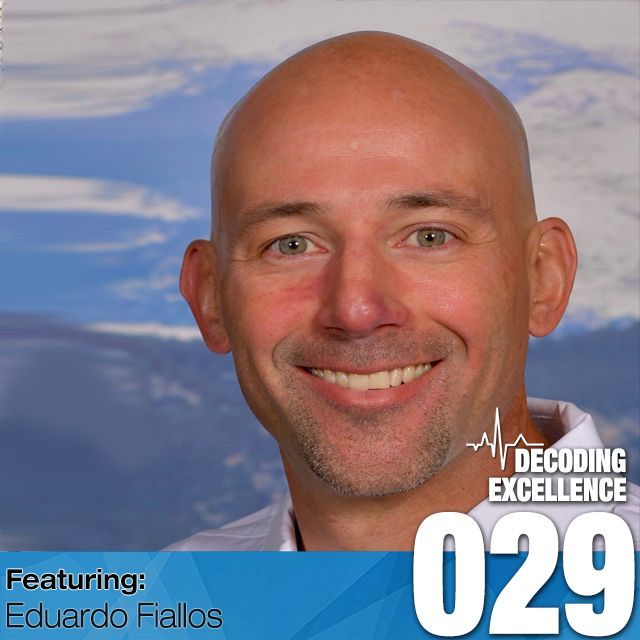
In this episode of the Decoding Excellence Show, I'm interviewing my good friend, fellow data-junkie, and University of Colorado's Volleyball Technical Coordinator, Eduardo Fiallos.
Outside coaching, Eduardo works as a Technical Coordinator in women's college volleyball, which means he spends a great deal of time collecting and analyzing data about the game at a high level. This experience has provided Eduardo tremendous insight on how coaches and athletes view statistics - as well as how both use those statistics to inform training and competition.
Eduardo joined the Buffs after spending four seasons at the University of Denver. In 2016, he served as the director of operations and from 2013-16, he was a volunteer assistant coach. Eduardo, who coached three seasons at Denver, was part of three straight Summit League Championship teams and three consecutive NCAA Tournament appearances for the Pioneers. Eduardo has been a coach at the collegiate level since 1997, spending time at five different universities. Eduardo was at Arizona (1997), Cal State-Dominguez Hills (1997-98), Louisiana-Lafayette (1998-99), North Carolina State (2006) and Denver (2013-16).
This was a really fun show to record and I know you'll get many good things out of it. We discuss his journey into coaching, the relationship coaches (and athletes) have with data and statistics, his role and responsibilities as Colorado's Technical Coordinator, some of his favorite data/statistic resources, great and impactful books, and MUCH MORE!
This was also THE VERY FIRST show I have ever recorded LIVE & IN PERSON. I am looking forward to doing a lot more live shows (and if you happen to be around the Boulder, Colorado area, lets hop on the microphone together and record a show). With this being the first live show in the Decoding Excellence Show history, I had a bit of audio difficulties with the dual microphones being too close together.
Live & Learn.
You can catch up with Eduardo on Twitter at @EduardoCoaches or at his website at EduardoCoaches.com
In addition to those social mediums, you can head over to AdamRingler.com/Newsletter and sign-up for my weekly newsletter. This is a newsletter for the curious. It's chalked full of interesting articles I've read through the week, things I'm exploring and finding fascinating through my week, and a collections of thought experiences and resources I've cultivated. It's essentially a Birchbox for performance-related articles and musings.
If you are looking to help grow and support the Decoding Excellence Show, navigate over to Buy Me a Coffee. Buy Me A Coffee is a an easy & fun way to support the show. For the price of a Grande Latte ☕ you can support the show and help us maintain the quality of the content.
One hundred percent of the contributions go directly to supporting the hosting fees associated with operating this podcast. As always, thank you for supporting the Decoding Excellence Show!
If any of the material resonates with you, I'd love for you engage with me at @AdamRingler
Thanks again for listening to the Decoding Excellence Show! I appreciate all the support growing this Sport Science, Strength & Conditioning, and High-Performance Coaching resource. If you have taken anything away from the show, please login to iTunes and navigate to Decoding Excellence page and leave us a review.
Key Takeaways
- How coaches and athletes view statistics shapes everything: data only informs training and competition when both sides trust and understand it.
- A technical coordinator lives between the numbers and the court: collecting and analyzing game data at a high level means translating statistics into decisions coaches will actually use.
- Two decades across five universities teaches perspective: Eduardo's path from Arizona to Denver to Colorado shows how varied environments sharpen a coach's eye for what matters.
About the Guest
Eduardo Fiallos is the Volleyball Technical Coordinator at the University of Colorado, where he collects and analyzes data about the game to inform training and competition. He has coached at the collegiate level since 1997 with stops at Arizona, Cal State-Dominguez Hills, Louisiana-Lafayette, North Carolina State, and Denver, where he was part of three straight Summit League championship teams.
Listen and Subscribe
Find this episode of the Decoding Excellence Show on Apple Podcasts and Spotify, or use the player above.
Go Further in This Episode
Enjoyed this conversation? Here is how to get more from it:
- Read the transcript below to revisit key ideas at your own pace.
- Share this episode with a coach or colleague who would benefit.
- Subscribe to the Decoding Excellence Show on Apple Podcasts, Spotify, or your favorite app.
- Join the newsletter at adamringler.com/newsletter for weekly insights on human performance.
Episode Transcript
This transcript was automatically generated. While we strive for accuracy, some words or phrases may be misheard.
[00:00:00] Sport science, strength and conditioning, high performance coaching, welcome to the Decoding Excellence Show! Hey everybody it's your host Adam Ringer and today for this episode rather than advertising for some sport performance technology company about whatever latest gizmo that they may have, I want to remind you of two things, number one, I have a monthly newsletter that goes out, Chocked Full of Grey, research articles, interesting tidbits, quotes, books I'm
[00:00:52] Reading, things I'm finding fascinating, it is essentially the birch box of newsletters, you don't know exactly what you're going to get week to week, month to month, but what you can guarantee is that it's going to be Chocked Full of Good Things, head over to AdamRinger.com, forward slash newsletter, pop in your email and sign up today, you will not regret it and I won't spam you with 8 million different emails every week, every day, every month, so check it out AdamRinger.com, forward slash newsletter, secondly, I get emails and messages
[00:01:27] Every single publication talking about how can we support the Decoding Excellence Show and the mission that you're bringing to us, and the easiest way is buy me a coffee, no, don't actually physically buy me a coffee, head over to buymeacoffee.com, forward slash Adam Ringer. And there you can find in an easy donation way, you can pop in your information and you could essentially buy the show a coffee, a $5 latte if you will, and what we'll do with that is those proceeds from that donation will go immediately into the hosting fees for both the
[00:02:03] Website and the Decoding Excellence Show, so we can continue to bring this show to you via iTunes, Spotify, whatever podcast player of your choice, so check it out, buymeacoffee.com, forward slash Adam Ringer. Hey everybody, welcome to the Decoding Excellence Show, I'm your host Adam Ringer, and today we have a great episode I am honored to have my good friend and technical coordinator here at University of Colorado, Eduardo Fialos, join me on the Decoding Excellence Show, and this was a show that was well overdue. Ednais had conversations over the last two years that have spanned hours,
[00:02:45] And I just know that his take and his experience and his viewpoint aren't teaching and coaching and education and his role as a technical coordinator here and his involvement with statistics and technology will bring a really cool and unique aspect to the Decoding Excellence Show. We get right into it, we talk about everything from coaching, we talk a little bit about technology, but it's it's really heavy on the philosophical aspects of education, pedagogy, teaching. But before all of that, let's talk a little bit about Ed's background. He is Colorado's volleyball technical coordinator,
[00:03:24] He has coordinated film, video statistical analysis efforts, and practice competition, and he does it incredibly well. Eduardo has been at University of Colorado since 2016, his prior stop before that was at University of Denver. This was again an awesome show, you will really take a lot away from it, I took a bunch away from it as you probably can see in the timestamp, this thing goes about over an hour and a half. So without any further ado, let's get to the show, let's get to the talk about education coaching, how to use statistics, and ultimately try to decode excellence
[00:04:02] In my good friend and technical coordinator, University of Colorado's volleyball program, Mr. Eduardo Fialos. Ed, welcome to the Decoding Excellence Show, it's been a long time coming, but but welcome, how are you? I'm doing well, thanks for having me, I'm looking forward to being excellent and then having you decode it. I'll try, I'll break it down, I'll make some notes and see if it's actually, if it is excellent, but I imagine that it will be, I know this is going to be a great show because you're a guy that I've resonated with, the ideas, the thoughts,
[00:04:42] The conversations we've had, we've shared a room together. So we have, and so we've been roommates in some respects, some travel, travel trips, if you will, I was a little unfortunate, a little disappointed that you weren't my roommate for the last in CWAs, but hey, two years in a row in CWAs, so I'll take that even if you're not my roommate. That's right, yeah, no, that was, that was a lot of fun, I mean, because that, that to me, it's like when I think about like how, like how we met, you know, the first thing I think of is just like, well, we hired you and you came from Wichita State
[00:05:19] And you worked with the volleyball team there and I've known the head coach at Wichita State, Chris Lam, for ever it seems like, and so it was automatic that there was a connection there because we both knew Lam and we could start telling Lam stories, but it really felt like last year when we roomed together, that was really like when, when we got to know each other and we're, we're really made sense that like, oh man, like we're on the same page with a whole bunch of stuff and we've got a lot of the same like, like things in our background about like how we think about stuff,
[00:05:53] You know, so it was, it was a lot of fun to like entertain that. Yeah, no, I think that's what, you know, by the, I knew you in sort of a professional manner and then I think that proximity is certainly and anytime you get into a room and you're forced to stay with each other for a while, you know, you start talking about other things and you start seeing what those interests are, whether it's books or podcasts or movies or common language or shit, whatever it might be, and it's like, isn't that what MTV premise, the real world of our collection of strangers,
[00:06:25] Or whatever. Yeah. But we had a lot of crossover, our Venn diagrams sort of like, more relapsed quite a bit and so I think that gave us a natural sort of jumping off point and then the more that we started to talk about whether it's statistics or coaching or sort of our own journeys, it was, there was a lot of similarities there as well that I felt like, damn, like this guy's the, it's just a lot of interests that, you know, just scratch my own edge. I'm like, I want to know more about you a little bit. Yeah, and I have to, like, I have to give you credit
[00:06:57] And thank you again. And anyway, I can't just say and again, like, you helping me with my presentation for the AVCA convention this winter was awesome. I so appreciate the feedback that you gave me, but also that you were, you were so invested in it that, like, you really cared that, that, like, not just about me presenting and doing that well, but also about the material that I was presenting, like, that really made sense and to you, it seemed like, and you were really interested in what I had to say. And so thanks again. Oh, yeah, no, I think, especially about
[00:07:34] That presentation and the material and for those that missed at the AVCA is, it's needed right now, especially in the world statistics and what you do in your role, not only here, but at various stops that you've been at, but there's such a huge disconnect between statistics. And I'm sure at some point in time in the show, we'll talk about sort of responsibilities. What sort of got you into the position that you're at now here at Colorado, but I guess maybe for those that don't know a little bit about your background or your history or your story, can you provide just a little
[00:08:12] Bit of a snapshot of what your story is, your background for those that are, you know, the three people that are listening to the show. Yeah, so I am currently the technical coordinator for women's volleyball at the University of Colorado. What that basically means is I am the nerd with the laptop. I am sitting on the sideline typing stuff while other people are sweating. So it's strange in the sense that it's not, it doesn't look a lot like coaching, but I think one of the things that makes me really good at what I do is that I have a lot of coaching in my background. I've got a lot of
[00:08:52] Teaching in my background. And so collecting the data doesn't require much of a, much of a background like that, but then filtering it, analyzing it, recognizing what's important and what isn't. I think that's where the teaching and the coaching really comes in. So before I was doing this, I was, I was teaching and coaching. I was, I was the volunteer assistant at the University of Denver before this where I was working for the same head coach that I work for now. And my, he brought me in because I had a coaching background, but wanted me to learn data volley, which is
[00:09:40] The, the stat program that that you use in the upper, in the upper levels of volleyball.
[00:09:48] So he knew that I was a good coach and he valued that part of me and wanted to leverage that further. I would, I've coached a ton of club volleyball. So like high school age mainly, but also like middle schoolers. I, I taught high school, high school science for about six years total in Colorado, in California. I've coached the division two and division one level at North Carolina State at Cal State, Dominguez Hills. I volunteered at the University of Arizona where I, yeah, my, where I got my undergraduate degree. Yeah, yeah. A little bit. It's a little greater. It is a
[00:10:31] Little bit weird because I'm like, I pay attention to Arizona athletics a little bit. But obviously, I'm a little bit more invested in Colorado right now. Nice man. So you know, I always start this show off with, you know, so much of the show is about each individual journey. And that's the premise of the show when we first started it was just really getting down to understanding the person behind the practitioner, right? Their own sort of personal journey, what got them involved into coaching. And I think as, as we've done
[00:11:07] 25 or 26 of these shows, it seems like each, on the superficial level, each person sort of got into coaching for one reason. But as we start to go deeper into everybody's journey and background of why everybody has sort of a different unique entry point into coaching or into their profession of what they do. And I'd be curious about your own. I mean, like, you know, you've had these various stops, whether it's, you know, club volleyball or teaching or, you know, at University of Arizona or at Denver. And now here at Colorado, what was it or how, I mean, why, why coaching of all
[00:11:48] Professions, right? Like, why coaching? Why teaching? Why? Why this? So I think for me, like the, like the best anecdote that I have is about teaching. I was working as a camp counselor, Catalina Island Marine Institute on Catalina Island, up Coast, California, several of the best summers ever for me. But as a camp counselor, basically was, it was my, it was my job to like be a semi-responsible semi-adult for young children. And just like, I was just responsible for like hurting them from one place to another, you know, just making sure that they
[00:12:32] Didn't do anything remarkably stupid. You know, and, and then there were teachers at the places where I took them, you know, so that there was somebody there. There was, like, I was responsible for hurting the cats into a classroom. And then there was a teacher there who was going to teach them for the next couple of hours, you know, and then I would hurt them to some place else so we could go on a nature walk. And there would be somebody leading them. And all I had to do was just like be the goalie, you know? And there was one day, one session where I heard it all the kids to the
[00:13:11] Place they needed to be and our instructor for some reason was running late. And so like, I've got like this group of 12-year-old boys. And it's like, they're like, this is going to go bad very quickly if we don't have something structured for them to do. You know, so like, I had already heard the stuff that was being taught several times because this was not the first group of 12-year olds that I had led here. So I just started teaching them. Like, I started just going through the stuff that I knew the instructor was going to do. And, and all of a sudden, it was like, I was just
[00:13:54] Rolling. And I was just teaching, you know? Like, yeah, now that I understand the profession a lot better, it's like, was I really teaching maybe, maybe not? But it was the fact that like, I had these kids attention. They were not just listening to me because I was talking, but they were listening to me because of what I was talking about. In this case, it was sharks. Good entry point. It's not quite dinosaurs, but it's closed, you know? So like, and so I always remember that if there's a moment that I can pick, that's it where where I'm like, wow, like sharing this
[00:14:39] Information, sharing something that I'm passionate and interested in. Like, like, there's something to that. I feel really good. They feel really good. Like, that's cool. And then, um, to me, coaching is just teaching and sweatpants. Yeah, right. You know, so like, if if I was really into teaching, if that was something that felt really good to me, then, then like, I also really liked athletics, you know, like, I was, um, I was playing a lot of volleyball at the time. So coaching volleyball was just sort of like this mashup of things that I really am passionate and spending a lot of time
[00:15:22] Doing in my life. So it made a ton of sense from that standpoint. No, I think that's fascinating. You know, and that's, you know, there's, there's one other piece that about that too that it doesn't have like a neat way that it that it folds into the rest of the story. But I went to a Jesuit high school and one of the mantras of the Jesuits, um, in educating boys, that that's how it all started, um, is, uh, is the concept of being a man for others. Yeah. And that's, that concept has always stayed somewhere within me. And, and so to me, a lot of things about teaching and coaching,
[00:16:12] Especially the way I view it now, is about me being a man for others, about me being able to help others to be, um, better at being themselves, uh, better at whatever it is that they are pursuing. Um, and so like, I guess that I don't have a story that goes with that, but I just see that thread of me wanting to help other people coming through in how I teach and the fact that I do teach in coaching. One of the things that I think is interesting about what you shared was, you know, just that not only are they getting something out of the interaction, right? They are learning about
[00:16:53] Sharks in this example, but, you know, what that does for you. And I think there's something notable about teaching and my mother was a teacher for 40 some years and she wouldn't have done it if she didn't love it. But there's, there's something that teaching and sharing and educating does for you. And I would be curious, you know, if you were to dive in deeper when that first experience was, and I recall my own first experience coaching, but like, what, what was the feelings you were feeling? Like when they were watching you, can, is it easy to put in words? Like what that did for you outside
[00:17:30] Of like, you know, maybe just feeling like, man, I got the attention and they're, they're listening because they're passionate about this subject. But at some level, like in our bodies and our minds, they ask, like, what, what triggered, what sparked, what feelings did it invoke? Yeah, I mean, for sure, there's, there's like the dopamine part of it, you know, like there, there is the ego part of it that is just sort of thriving on that attention, you know? Like, but to it was that, I was, I was being seen as an expert, you know, someone who knew what they
[00:18:11] Were talking about, you know? And someone that, that, that had something that they wanted, you know, even, even if they didn't know they wanted it, you know, that, that I was, I was the possessor of knowledge, you know? And, and so that, that just sort of makes me want to, like, like, I, like I feel that in my chest, like, it makes me want to like stand up tall and, and, and like, that's written on my chest or something, you know, that, that that's, that, that there's, that I have something that you want and I can help you get it, you know? It's sort of the,
[00:18:50] The idea that, um, uh, that, uh, a butterfly can't explain to the caterpillar what it's like to be a butterfly. You can just, just go be a butterfly for them and, and just sort of, this is what you're going for, you know, like, this is where you're headed, just keep, keep going, you know, like that, that's just, that's a, uh, a really cool thing, like, um, one of the, one of my favorite favorite quotations, um, that I discovered fairly recently, but really resonates is, um, Bob Dylan said, um, the highest purpose of art is to inspire. What else can you do? What
[00:19:37] Else can you do for anyone else, but inspire them? Um, you know, and, and that's just the way I feel about it now, where it's less about the knowledge that I am communicating with you, but more about that I can inspire you to want to learn it, you know, that whatever it is that I, that I'm teaching you, um, that I'm inspiring you to want to learn it, to want to get better at it. I want to find not necessarily rare about that, but you see it all the time, I think in coaching and probably other professions, the set, people get involved in coaching because they're really
[00:20:18] Good at a particular sport, right? I was the all-star, I was this, you know, maybe I, I exhausted all my options and now what do I, what do I do? Maybe I do, I do what I'm good at. I'll coach, you know, basketball, tennis, golf, whatever it might be, volleyball or whatever. And I think what's pure about your journey so far is that it is, it's rooted out of the love of coaching and education and it's using the vehicle of volleyball to actually impact or inspire change that probably as much further than just volleyball. And I just don't see that all the time with practitioners or
[00:20:58] Coaches or other people. And you know, it makes me start to think like, what, what was it in your background or your upbringing? Because that's, that's rare I think to have. I mean, was there any events or, you know, episodes that maybe actors as a catalyst that allowed you to sort of pursue education or this sort of profession in sort of this way that you have? Yeah, I don't know. I think that it does, to me, still sit in that concept of the man for others. You know, I have so much love and respect for my parents, but at the same time, I don't look at
[00:21:47] At them and say like, I'm doing this because there's something that they did that inspired me, you know, or that there's something that, like, there was some teacher that I had that made me really want to teach. I don't feel like that's there, but I don't think that that makes my my passion any less genuine, you know, they think it just so happens that this is what I want to do, you know, it's just like, hey, you know, two really short parents can have a really tall kid, you know, it's like, you don't know why, but it's there, it's within them, you know, and so I
[00:22:28] Kind of look at it that way where it's like, it wasn't, it wasn't that my parents were a poor example or a great example or no example at all, it's just that they, this is the thing, these are the things that I just happened upon throughout my journey. And I just sort of recognized a little bit that this clicks, this resonates. And so like, let's run this down, like, let's just go down this road as far as it'll go. And I don't know, maybe I'll have to do some bushwhacking at the end of it, but we're going to go for it, you know, like, that's, that's just been fun, like, that exploration of
[00:23:07] Of these, of these things that interest me, you know, like, that's just been cool for me. Now, I, you know, I think over the last two years I've gotten to know you with my own transition out here to Colorado, you know, I've seen you in a various role, which is this sort of data, data volley, you know, technical role. And I know that's just not, you know, your entire career of who you are and the experiences and the background that you have. But I think that's a good starting off point, because I know you and I have shared many conversations about statistics and data,
[00:23:44] The interpretation of it. I'm a data nerd in my own respects. And as much of, you know, this audience has probably heard before. So I mean, maybe, maybe, you know, when you took this role and this responsibility, was it rooted out of, you know, an already pre-existing sort of interest in data and connecting the objective to the subjective? Or is this something that you've sort of gravitated to over the last couple of years? I mean, where did this sort of data aspect come in? I think there's a quotation which I'm, I'll probably butcher a little bit, but the sentiment will be
[00:24:27] There. There was a scientist that said, I first got into science because I craved certainty, which is saying that you became a bishop because you really like talking to women. You know, it was like my, I got my degree in biology. And so I, I spent a lot of time in college studying hard science. And so there, there's a lot of, there's a lot of data that underpins research. And, and so then to, to always have that part of my background, but then be spending all this time teaching and coaching, how do, you know, how do I sort of incorporate that part of me into it as
[00:25:17] Well, that, that part of me that likes the certainty that likes having proof or being able to prove things, you know, just being able to harness the information that is inherent in research. And that, that kind of stuff is, I think, really got tapped into when, when I started coaching club volleyball out here in, after I moved to Denver, it was the front range volleyball club. That, that club when I, when I started working there was the best club in Colorado, one of the best clubs in the nation. And I was lucky to be able to, to come in and start working there.
[00:26:06] And, one of the things that I learned a lot about there was incorporating statistics into what we do as coaches, being able to, to say that I'm trying really hard not to fool myself as a coach, that if I'm going to make decisions, then I need to make those decisions from the, the best place that I can. And the best place that I can involves looking at statistics. They don't have to be super in depth the way that I look at statistics now, but they are, there are ways that we can measure performances that will, one, help us make better decisions in competition, but to, it will help us
[00:26:57] Make better decisions about how we train our athletes and how we train our teams. You know, that, that what the statistics are telling me isn't just about I should sub Betty and for Susie, but it's about, well, Betty and Susie both have things that they need to work on. And the stats are great ways for me to get insight into what they need to work on and how we should attack those problems. Yeah, I think, you know, being the beneficiary of hearing your, your presentation, it gives me a whole avenue of routes that I can go down and questions that I can ask you. But
[00:27:41] What is, you know, with, with your experience that you have with data and the interpretation of it, what's the biggest misconception or biggest error that you see people using data and using it, whether well or poorly. The, the quotation that opened that, that presentation talks about, I will, I will strive to use statistics not as a drunk uses a lamp post for support rather than illumination. We're very good at having a story in our minds and then looking for or being attracted to the data that supports that story that we're already telling. And I really, I really
[00:28:31] Want to move away from using statistics to support this story and using it to eliminate the place where I am. I talk about letting the stats tell me what the story is. You know, so that, that I think is probably the biggest thing that I see is without recognizing about realizing it, we have these biases that are built in. We have these stories that we're telling ourselves. And those stories a lot of times are going to get in the way of what the data is actually trying to tell us. And, and so I think it's our jobs to look at that data as objectively as possible,
[00:29:18] Which means muting those stories. And, and I think that's a really hard thing to do if you're coming more from the coaching standpoint where where that's one of the things that I think is great about my role on staff as a as the NCAA refers to it as a non coaching staff member is that I get to come like it's sort of my job to to tell the story of the stats versus telling the story with the stats. I think that's a subtle but a really important difference. Yeah, no doubt. With that said, I mean, what, so just to illuminate maybe some of the
[00:30:03] Dangers of the the way that data can be misused. I mean, what are some of the strategies that you found successful trying to use data in a more meaningful way to create relationships between what is actually happening with the athletes interpreting with the coaches seeing how how how do you route? How do you just combat the biases that we all have? I mean, what sort of recommendations might you have there? Yeah, so something something that I tried a little bit in this last season was when when kids start asking me for stats, it's really easy for me to just give them the numbers and
[00:30:49] What I realize now is that me handing them the numbers is playing into whatever story they're all they they walked up to me with and and so what I've started doing is before I hand out the numbers, I ask them, well, what did it feel like? You know, so if they if they're asking me like, what what was my attack efficiency today? Well, what did it what did it feel like? And I'm not looking for them to guess as to what their attack efficiency was. I'm looking for them to tell me like I thought I had a good practice. I thought I had a bad practice. I thought I struggled in this game
[00:31:30] Or I thought I was really good in that game. Something that gives me a sense of the story that they're telling themselves because that's giving me a little bit of context. So that way now I can I can then in turn give them numbers back with context and saying so you felt like you had a rough day today. Tell me more about that. Well, I I just felt like I got blocked a ton and so I probably didn't hit very well. Okay, well, let's take a look and see how many times did you get blocked? How many swings did you take? How many just straight-up errors
[00:32:10] Did you have? You know, so like how do those percentages break down? So does does what you feel match with what the numbers say? Because then now I'm creating this tension between what the numbers are saying and what you're trying to tell yourself. Because ideally I want I want us to be able to look at the numbers as a place to start. As a way to say we can learn from this. As opposed to allowing the numbers to just be like, well, I felt crappy and here are the numbers that prove it. You know, so I get a little bit of context from them
[00:32:56] Which allows me to give them what they wanted but then give them some context to go with it that hopefully gives them a more complete understanding of what their performance really was. To help them spend less time judging it and spend a little bit more time evaluating it. Do you think you could do all of what you just said if you were not available
[00:33:26] At practice or in that environment or devoid of context? Do you think you can still have, and this isn't a trick question, I mean like do you still think you can have a authentic and real and valid aspect of what the data is saying without contextual awareness? Or is it harder or is it more challenging? Well, let me see because when you say that I start thinking of like could I, like if you handed me a stat sheet and then asked me for feedback about your performance based on the stat
[00:34:07] Sheet, so like I didn't see anything. Like that's how I'm interpreting that question but I'm not sure, but I can think of other ways to interpret that that aren't that. So is that what you're that? Yes, right. I'm not great with words.
[00:34:30] Well, no, but I just think that there are other things too where it's also saying like like is it possible to just evaluate numbers without context? Can we just, are there cases for just cut and dried? This number says this and that's all there is. So it's less about can I do it without witnessing the performance? But I think there's also like, is it possible to look at numbers in just a black and white way? So that's kind of different ways that I see that that question can go. In terms of being able to just sort of look at things blind, I think it is. I think it's very
[00:35:10] Possible, just because my understanding of what are common sources of errors, what are common sources of success? If you're going to have a performance that looks a certain way on paper, what sort of inferences can I make about that performance? What do I need to know about what position you play or the level of the opponent that you played? Some of that stuff is important to find out but some of it's going to be a hierarchy there. So yeah, I think that if you just emailed me a stat sheet and then asked for my opinion, I can give you some stuff.
[00:36:03] But with that said, I just recently read this article in Scientific American about some research that a couple of people have been doing about giving and taking advice. One of the main takeaways they had was that before you just hand out advice, it's important to ask questions about why are you seeking advice from me? And how can I best help you? What is it that you're looking for from me? Because again, that context then helps me to connect better with you. Because otherwise, what we tend to do as advice givers is just sort of share our experiences, tell you,
[00:36:58] This was good and that was bad and just sort of like throw all of our experience right on top of your experience. And it makes it really easy for you to just throw it away and say, well, that's not my experience without me doing any work to find the commonalities, to look for ways to connect so that I can share the parts of my experience that will actually make sense within this context. I asked that because one of the themes I feel like I've been hearing when I go to sports science conference lately has been the need for sports scientists to
[00:37:42] Form a connection with the student athlete or the athlete, right? To view them as a human rather than a, you know, a test number if you will. So I see that there's, you know, there's merit in looking at data in a very sort of black and white objective and inferring something out of it. But if you're using that to affect behavior change or to affect outcomes in one particular way or another, right? When we deal with humans, we need to form a human connection and that's that's where that context comes in. Is this good or bad or is this optimal or suboptimal
[00:38:20] Under these various conditions that we have that is hard to be able to tell aren't just a stat sheet. So that's that's the reason I wanted to ask you and get your opinion about that because, you know, as an educator, you know, I think you have done, as I've gotten to know, you're such a great job about connecting the dots of, this is what that data says. I want to know what your opinions are. Like before I just blindly hand you the bullet, the metaphorical bullets to the gun so that you can use this in a way to actually make actionable change.
[00:38:54] Yeah, and one of the things that I talk about a lot is I talk about a dichotomy of brains versus bodies. What am I coaching? Am I coaching brains or am I coaching bodies? And so, you know, when you were talking about like am I looking at athletes as cases? Or am I looking at them as athletes? Am I looking at them as people? And the way I look at or one of the ways that I look at that when I talk about brains versus bodies is how am I coaching them? Am I coaching them as simply a body that I am just telling them like put your left foot there, put your right elbow there,
[00:39:40] You know, or am I coaching a brain where I'm saying what did you feel? You know, physically we can get into emotions at another time, you know, there are times when that's valid, but like what did you feel your left foot doing? Because then we can have a conversation about what we would like the left foot to do to be optimal. But if I just tell them, if I just coach the brain, if I just coach the body and say put your left foot there at this time, then what happens when I'm not there to say it? You know, what sort of athlete have I created? You know, and so I want
[00:40:23] To coach the brain. I want to make them be the ones that are authoring the story. I want them to be in control of what's happening to them. You know, so where was your left foot at that moment? Where did you want it to be? Okay, let's go work on that, you know, and so that to me is really, really important is that yeah, I can view them as just little walking numbers. And what do I gain by doing so? And what do I lose by doing so? So what I find different about you as I've gotten to know you, right, is that you are you borrow from so many different sort of resources. It's not just an
[00:41:15] Educational background. It's not just a data background. Yeah, you're tied in with the sort of the pedagogy of education and sort of how athletes or people or humans or, you know, students learn best, how can you bring out the best of your own coaching ability so that what you say and the behaviors and what you're teaching ultimately or coaching you so sort of interchangeably is best received by the athlete or the student. So with that said, I just would be curious about what resources do you borrow from? What books do you read? What's been some of the best things that you've sort of borrowed or
[00:41:57] Read or gained some experience from in the last couple of years as you've continued to go on your own coaching journey? Oh, man. So many books. So many books. It's interesting though. There is a fairly well-known quotation from an old Japanese poet. He said, do not seek the footsteps of the wise. Seek what they sought. And I've I've always looked at that as saying like I can I can talk to a lot of coaches or educators that are, you know, like one or two links removed from me and I can get opinions, I can get ideas. But I found that that makes me want to go looking for source material
[00:42:47] That I want to seek what they sought that those people learn that those ideas from somewhere else. So I'm looking for that somewhere else. So like what what book did that come from or what, you know, where did that idea originate? And so that's sort of what contributed to my coaching framework, my learning framework. And so the the big ideas that I think that are in there are looking at mindfulness, just creating an aware an internal awareness of the of the things that we do, how how we think like metacognition. How do I think? What am I thinking about? You know,
[00:43:30] What's my body doing? And so my mindfulness training, there's all sorts of great resources for that. One of my favorite as far as applying it to sport is this awesome book W Timothy Galway, the inner game of tennis. I love that so much. There's a couple of different ways and I've I've so far in the show, I've elected not to do it, right? Some some people say don't interrupt, never interrupt. And then some people say the best off like the best conversations are when you interrupt, but like that so I don't know where I fall. Sometimes it depends on the day.
[00:44:09] But that was what one of the the major books that Pete Carroll really referenced in his sort of coaching sort of philosophy change, if you will, was the inner game of tennis set him on a pathway. So I find that fascinating. That's one of the book that during my undergraduate degree, I read that significantly changed my own course. Yeah. And and then just learning about self-determination theory, Dici and Ryan. It's the idea, the ideas that people want to be self-authored, which self-authorship is another thing that is more prevalent in education, the idea of self-authorship.
[00:44:56] I think it's Marsha Baxter-Magolda did a lot of research in self-authorship theory. That that has a lot of prevalence in the education field. In sport, we tend to see Dici and Ryan's self-determination theory, but I think there's a lot of overlap. Those two are another for me, primary sources, things that I look at to figure out, how should I be treating the people that I want to work with that I want to teach? How can I help them learn the best? It's buying into those ideas that from self-determination, people want to be in control of what they do. They want to feel
[00:45:44] Competent. They want to feel that they have control over their own environments. I think those things are very important, and so them as sources for research on that has been really big. And then I think one book that we've talked about, thanks for the feedback. Yeah, Douglas Stone, Sheila Hien. I became interested in that book because I had one of their previous books recommended to me. It's called Difficult Conversations. And so when thanks for the feedback came out, I was like, I love difficult conversations. I'm going to love this book too,
[00:46:31] And yep, I took so many notes, so many notes on that book. It's incredible just in terms of there's so many books you can find about how we give feedback, and there's not a lot that is written about how to accept feedback. And that has been very influential for me as someone who gives a lot of feedback to recognize that I can tailor how I give feedback so that it's better accepted. But also it's recognizing that everything that I'm doing, it is a feedback loop. All the teaching that I do is a loop that I'm giving feedback and then how you interpret that feedback and what
[00:47:18] You do with it is feedback for me. And I need to be paying attention to that because that's ultimately telling me, are you learning? Because there's the old cliche of, you haven't taught it until they've learned it. And so if I'm not paying attention to how you're struggling with what I'm teaching, then I'm missing out on a lot of really valuable feedback. There's another book, I don't know if I've shared it with you that I find in a similar sort of context as, thanks for the feedback, but I think it was Doug Lamov, maybe. And the two books
[00:47:58] That I think are particularly really good, I'll put them in the show notes at some point in time are teach like a champion and better practice like the 42 or 49 rules of coaching. And why I find these these two books particularly great is that the first one is literally the organization and the setup of how to create a better environment and the conditions that lead to better sort of education or teaching. And so I read that first one and I was like, man, there's a lot of carryover to what we're talking about in a classroom that you could apply to any educational setting. And if you view
[00:48:35] Coaching as an educational platform, then I'm like, this makes, you know, almost perfect sense. Yeah, maybe some minor details of, you know, configurations of what you might do differently for a classroom setting versus a learning laboratory that is a practice or competitive sport. But then a couple of years later, it came out and wrote one that was specifically tailored to coaching and athletics and borrowed from so many other great coaches and really broke it down to how coaches can better organize their curriculum of what they're trying to teach the environment
[00:49:12] And which they're teaching in the feedback loops that we get as coaches to make better decisions and to make, you know, to essentially have the information that they're trying to teach actually stick with their athletes. And later when we were chatting about things for the feedback, that's that's was a book. I'm like, ah, these are two great resources to also add to a library. Oh, and I have to, I've got to throw it in here too, just a book that I just started reading. But having listened to a podcast with the author, I hopefully got a good insight into the book.
[00:49:47] I think it's going to be awesome. I started highlighting stuff in the introduction. That's when you know it's good. I'm kind of like a vacationed of like what I'm going to think of this. It's called Thinking in Betts by Annie Duke. Because this one to me is a little bit more to about like, how do we deal with statistics? And because it's about thinking probabilistically, Annie Duke was a professional poker player
[00:50:17] And her experience. But she also has this incredible educational background in psychology. And so when she said, when she started playing poker professionally, that she wasn't really leaving behind everything that she had learned in psychology, she was just learning a lot more about decision making theory and just looking at how we make decisions. And that poker was a great forum for that. And so she talks about thinking probabilistically and how thinking probabilistically is a much better place to be in terms of how it helps us see
[00:51:02] The world better. And by better we mean more accurately. How can we more accurately describe the world that we're in? So that is, I'm going to say that it's going to be very influential on how I think based on the fact that I'm only like 40 pages into it. I can't say it's a great book yet, but it's been great the 40 pages that I've read completely through it. Yeah. I'll come back and let you know if it just crashes and burns. First 40 pages were phenomenal. The rest absolutely terrible. No.
[00:51:39] I think to kind of jumping around a little bit as we're talking about some resources of books and things where you borrowed from and sort of that maybe helped formulate your philosophy, if you will, or sort of the background in which you view the lens and which you view coaching and education. I'd be curious as we go through this, I talk so much on the show about how you do that do, right? This is my show. No. That there's episodes and people's careers that really set them up for where they're at. And it could be a particular catalyst that got them involved in
[00:52:21] Coaching, but one of the things I'm really fascinated about when people come onto this is asking about some of the things that don't go well, or some of the failures because so much of coaching is, hey, go out there, execute the skill. You're going to fail. I'm going to coach you. I'm going to give you feedback. You're going to try to execute the skill again. Maybe you get marginally better. Maybe you don't. And we'll continue to go down this sort of pathway of refinement and teaching and coaching to get people to learn better from it and hopefully prosper as they go through
[00:52:52] This journey. And I'd be curious if you're comfortable with it. Number one is, was there anything in your own sort of journey through this coaching profession where you hit a setback, you hit a hardship, you hit a failure, hit something that provided a little adversity that gave you an opportunity to recommit or to use feedback in a way to, you know, circle back and do things differently? Sort of. That's it next question. No, so first of all, I'm really glad that we just talked about thinking in bets because this is one of the things that Duke talks about in those first
[00:53:36] Pages that I have read where she said when she goes and talks in front of groups, she asks them to think about bad decisions they've made and then think about good decisions they've made and then reflect back, was it was it that the decision was bad or was it that the outcome of the decision was bad? And that's something that in poker they call resulting where we get hung up on the outcome determining the worth of all the work that went into the decision prior to the outcome. And so that's one thing like having read that, it makes me really hesitant about looking back on any bad
[00:54:24] Outcome that I see or any failure because like do I really think it's a failure because of because it like I did everything right in terms of how I made the decision. But the outcome just didn't work out like it unlucky whatever the case may be like a quick anecdote on that one was I mean me moving to Denver. I love Colorado so much. This is by far the best place that I've lived. But I moved out here chasing a girl. And I did not marry that girl. I married a different one. And it was so much better because of that. But that's the sort of
[00:55:12] Thing where like there are lenses where I could look at that moving out here and not staying together with that girl where that was that was a bad outcome. That was a failure of some sort. But I don't think it was. And not just because well Colorado so awesome. And I knew I was going to love it here all along. Like I can frame that however I want. So I don't know that that's the best story to tell. But when I think about failure and how it affects what I do, I think that there's a case of like almost low stakes failure for me that was a lot more impactful
[00:55:58] For how I approach teaching and coaching. I wrote a blog post about it a couple of years ago. But the story is like I'm in my mid 40s. Call it a midlife crisis if you want. But like I grew up skateboarding. I wasn't great at it, but I loved doing it and had a good time. And so when when powerful are all to release the the bones brigade DVDs like going back through all their history and like and then recapping and like where are where is the bones brigade now in all this and like you reach all those original members and looking at the house like oh my god this is so
[00:56:47] Awesome. I need to buy a skateboard. So I did and you know and and I'm and I'm out there like trying to recapture these things that I could do. And so like I'm like out on the street in front of my house like just skating around trying to relearn how to Ollie. Yeah. And at one point while I was out there doing it like it was like the it was in afternoon during the school year and all of a sudden like this group of like middle schoolers from a nearby school. This is like the walking by down the street like the other end of the street. They're not even like walking past me.
[00:57:26] And I found myself being like phenomenally self conscious. And like to the point where I was ready to go back in the house because I didn't want them to see me doing this. And I recognize that I didn't want them to see me doing it because I didn't want them to see me doing it poorly. Yeah. Like I wouldn't care if I was good at it. I would have been fine. Like they they could look at me and and be like oh check that guy out. That's pretty rad. Yeah. Like no like they were going to see me fumbling around failing being like being below average and I was not okay with that. Yeah.
[00:58:07] And I reflected back on the idea that that's what we're asking our athletes to do every day. We are putting them in situations to fail because we as educators we as coaches know that like that that being on the edge of what we can control. That's where the learning happens. That's where the improvement happens. I get better not by being comfortable but by being uncomfortable. I get better by testing my limits and by expanding those limits. And that means failing. I recognize that I was asking my athletes to fail in front of me every day. And that was an
[00:58:51] Extremely vulnerable place for them to be. Think about how important their self image is. How important their image is amongst their peers. When you're working with teens or kids in their 20s. That that is so important to them how they are viewed. And so to be put in a place where they can be seen as a failure on a daily basis is brutal. So if I don't acknowledge that. If I don't if I don't acknowledge that you're going to fail and it's okay. Then I am I'm creating a learning environment that where fear is a substantial part. And I don't think that's where the best learning
[00:59:45] Happens. Like yeah, I do think the best learning happens on that edge of what we can control. But the more that I can abate that fear, the better position I'm putting them in. You know, so it's being able to embrace a growth mindset is a product of being okay with failure. And so that was the lesson that I took away from from that was I need to acknowledge that we are failing in the presence of others. And how we how we manage that failure is going to play a huge part in how well we learn. Right. So not knowing that story about your background.
[01:00:32] Also sort of it's similar to my own right. So a couple of years at which just stay, you go in and then I had this similar idea that I've you know, the nostalgia of skateboarding again. I walked into a skate shop and I felt like I was my old teenage self and needless to say I ended up getting a complete deck and I would find myself just riding around a little bit. And then it very quickly in my mornings before teams. I'd say, you know what? Let me go to a skate park. I'm going to drive out to a skate park. There's one near my house that I drive by all the time and I
[01:01:09] Still haven't gone and I really want to just to like just go like play with gravity for a while. But I would do it. I would go early in the mornings because I knew nobody would be there. Right. And then there was several times where I would go and there would be like two or three people already at the skate park. And I would drive and then I would turn around and I would go back to work. Right. And it was it was that I didn't want to fail in front of them at something I thought that I was good at before. And you know when you were sharing that I was trying to think of my
[01:01:42] Head. I'm like, man, but I remember the first time I went and did Brazilian Jichitsu and I never felt any expectation to be good at it. And that's and that's something that I commented on in the in the blog post was that as adults, we are very rarely in a position to fail at anything because we're very rarely in a position to try anything new anymore. And I think the the rare cases where we put ourselves in position to try something new, it's almost to do so ironically. Like I'm going to go play dodgeball because there's going to be beer and similarly unathletic friends involved.
[01:02:23] You know, so like if I suck at it, that's okay because I'm too busy laughing at you sucking at it to, you know, and so like to be in that position where you're going and taking Brazilian Jichitsu with zero experience, like that's a really vulnerable place to be. So I think that's super cool that you that you were like, nope, I'm going to do it and that you didn't like back away from that. Like an old friend of mine talked he framed it for me as embracing uncomfortable. It's it's going to be weird. It's going to be uncomfortable, but I'm going to do it because I just
[01:02:59] Want to do it. Yeah, you know, I just didn't have any of that that expectation going in to be good. And it's it's all self-imposed, I think, right? Like I go in and and I fail at it. I expected to be it, but when we have athletes that come into our environments and they come in, there's an expectation that they're going to be okay at their sport, right? So I think it's all about maybe some of the background, the baggage that we carry in, the expectations that we have for ourselves. And then to, you know, commit and have failures along the way. And, you know, we're almost, you know, our
[01:03:38] Own worst enemies in that point as far as when you have to deal with failure. It's kind of switching gears a little bit. You know, I have a lot of the reasons why I think I find similarities with you. And I resonate with you as that we have some, some similar sort of viewpoints of things. But I'd love to sort of ask and explore as we go through this. You know, where do some of the things that you have found worthwhile, whether it's a mental investment in a physical investment in an app, not we've already sort of talked about books and resources. But are there things that you
[01:04:15] Are doing in your day to day that allows you to either disconnect or to recharge or repurpose so that when you are reconnected back into coaching, back into your responsibilities that you can do so with more energy, more focus, more, an attitude of where you feel you are rested and refreshed and ready to go. So one of the things that I've been doing for about a year now is I've been using the headspace app. Yeah, I have found like there are some packs in there that I like more than others. But just the mindfulness there, I continually hope to bring more of that into my everyday
[01:05:04] Life, especially places where things start getting more pressure filled. So I don't know how well I'm doing that yet because I haven't been put in a lot of places where I feel like the pressure is super high. But that's something that I really, really like doing because it helps me feel more grounded, more balanced, more introspectful. Or yeah, if that's a word or not. Hey, no, I, you know, I say that only because there's a couple of apps I've used. Headspace was probably my first foray into guided meditation and some mindfulness training. And then I've used
[01:05:50] Kevin Rose's Oak meditation, which is a good app. It's also free, which might be more economical for some people. But then I just discovered literally two days ago that Sam Harris has a way. He's got a guided meditation. I downloaded it. I heard that you can do like a free 55 day or something money back on that. But I might explore that. Although I really like Oak and a really like headspace. There's a lot of competition in that vendor, if you will, which I think is good for the consumer, right? Good for people to choose some things. And then other other stuff that
[01:06:29] That's more like a big picture or long term stuff, you know, that doesn't have like a simple thing that I can point at. I started, I started my masters last year. I am like that is really invigorating to me to be in a in a formal education setting. Not just because, you know, like I get grades and stuff like that, but because I am I am learning like the program that I'm that I'm in is learning science and human development. So I'm learning about learning. And so getting getting more resources for for just fields of thought in terms of education, in terms of learning, things like that.
[01:07:20] That's been awesome. Starting my blog last year, because it's been an opportunity for me to explore my voice and explore my framework. You know, what impacts me, what do I have thoughts about that I want to express? And how do I want to express them? You know, they get, I feel like it's helped me be able to better understand other experiences that go on around me. You know, it gives me a framework to plug everything else into for us so I can decide better how I want to respond to things or how I want to treat them, how important I might think they might be.
[01:08:05] And then, I mean, I've mentioned how much I love living in Colorado. A lot of that is just because being outdoors here is so awesome. Like there's such a great variety. You know, nobody told me when I moved here to budget in an extra several thousand dollars just for like all the toys you need so that you can like really. Yeah, you know, like road bike mountain bikes, no board, you know, like all that stuff later, you know, like, but like being able to go out and exercise, like running in general, but I really like to go trail run when I can. I'll ride my bike or
[01:08:44] I'll mountain bike when I can because it puts me out there. And sometimes I think about stuff and sometimes the stuff that I think about is just wow, I'm breathing really heavy and I need to back it off, you know, but like, but that for me has been, you know, a place where I can go to recognize and and get more data points built up on just how physically and mentally strong I can be and also see the limitations of that strength, both physical and mental strength. And it's a place, it's not so much an escape, but it is a place, it is something for me to do
[01:09:32] That that says stop working, go, go do this, go, go run, go ride, go do something else, just because I feel like it makes me a little bit more deficient later on when I come back. I think for for people that maybe are outside, I don't know how many, you know, people listen to this show that are outside of. I hope you're running right now. I'll listen to this. But you know, it's it might be counterintuitive to think that a run or something physical can actually reinvigorate you, right? But I think that the two things I've, you know, take away from
[01:10:15] That is that number one, that running or physical activity can be therapeutic in some respects. You know, sometimes when you need to get out of your head, get into your body and then, you know, when you're in your body, you can get back into your head if you want to and start kind of taking the pieces out and thinking and reconfiguring them and it can be very therapeutic in that regard. And then I also think that in particular bad advice that I heard a long time ago is that you really shouldn't put pen to paper or, you know, digital ink or whatever to a blog, unless
[01:10:51] You're in a position where you, you know, you have authority to share something, right? And I think that's bad advice because so much of writing down ideas, whether it's on medium or blog or wherever can also be therapeutic in that you sort of make sense of your own world that you live in. And, you know, and it might not be perfect and it might change every year to year or every, you know, quarter or a couple of years, but, you know what, that should be expected that as you learn and you mature and you learn new things that your opinions and your thoughts will change.
[01:11:25] And, you know, for somebody that maybe was, you know, reading your blog present day, reading old posts or whatever, maybe that's where they're in there in that thought process. And they get to sort of experience the change that you've made in the course of, you know, they've two years or three years that you've gone on and wrote different opinion pieces or whatever. I think it's it's worthwhile to put pen to paper and share ideas and share beliefs and you're not speaking like I am speaking with this opinion of as an authority, authority position or an
[01:11:59] Ex-topic. It's like, hey, man, this is this is my thoughts and this is where I'm at right now and it's going to be wrong. If I nodded my head any harder, you know, the microphone would pick it up, I think, but like that, that was one of the big, uh, inspirations to start the blog, um, was I, I put it as, um, I got tired of yelling at the mirror. Um, you know, where, where it's like, I don't consider myself to be the best coach or or anything like that, but I do have a lot of experience and, and I think I've learned a lot of valuable lessons from that and to watch people,
[01:12:35] You know, as an educator, as, as someone who wants to inspire others to be better than, you know, to watch people, um, you know, to watch other people make what I think are mistakes, you know, and, and I don't think that they necessarily mean to. I try to give people credit for coming from a good place, um, you know, but, but I, I just, why am I asking rhetorical questions? You know, that, that was sort of what it became, um, was that recognizing that, you know, the, the rhetorical questions aren't helping anybody. You know, if I'm just sitting there yelling
[01:13:13] At the bathroom mirror going, like, why don't people understand this? Well, then why aren't I helping them to understand it? Yeah. You know, so like, if, if people read, read my blog and get something out of it, cool, then hopefully I'm, I'm shifting things, just a, a tiny, insignificant bit, but if we get enough of that, then, then I can affect some sort of change on some level, you know, I, I just, I want, I want coaching and teaching to be better. Yeah, I think, you know, I, one of the conversations I had with somebody when I first started this, uh, uh, this endeavor,
[01:13:54] Right? This podcast show was, you know, like, what, why, why would you do it? You know, like, what, what are you going to get out of it if, you know, or how are you going to monetize it? Or, you know, why would you do it? If you're only going to get 20 listeners, 40 listeners, 100 listeners, or whatever. And it's like, it doesn't matter if it's a thousand or a tipping point of a million, or if it's one, right? Like, if you, I've, I, maybe it's wrong and maybe it's a poor approach. I don't know, but I'm like, I'm going to change the world one person at a time. And if there's a young
[01:14:28] Strength coach or sports scientist or something that is going through, you know, struggles or they, they take something away from this show and it helps them out, then it was worthwhile. And it doesn't matter if it's, you know, you know, the audience numbers or what the analytics say. And attention is not success. Yeah. You know, I get to define success however I want. And, and I, I heard that on a podcast of all places, attention is not success. And that's sort of what social media has been teaching us is that like, if I get likes, then, then that makes me successful.
[01:15:09] And, and that's, that's not how I look at it. You know, so like, yeah, I would love for more people to read it. And, and again, I get the dopamine hits when somebody comments on my blog or someone retweets something that I tweet, something like that, you know, but ultimately, like, I wrote it because I felt, I felt it was valuable. And it's almost like, it's almost like a reminder to myself, you know, that, that like this, this matters to me. This is important to me. You know, and if you think it's important, that's cool. But ultimately, this is a summation of things that are important to
[01:15:47] Me. Yeah. You know, I think a lot of the, the reception and the feedback I got regarding sort of Decoding Excellence show is that we're really trying to refine what it is that makes people excellent, right? Or decoded or whatever language we want to put. And so much of that is starting to recognize people's strengths and what their weaknesses are, put in yourselves in positions for the next wave to be in a position where you can be successful for it. And I think a lot of that sometimes comes down to really understanding what your purpose is and what you're calling is,
[01:16:25] What your mission is, but then also having the wherewithal and the fortitude to say no to things that maybe don't align with what is in your sort of strategic task. So I'd be curious, you know, as you have gone through your own sort of journey, maybe within the last year, are there, are there things that you've had to say no to, right? And this is something I've personally struggled to of of continuing to try to overextend myself and say yes to everything. Are there things where you've gotten either better, maybe you've gotten worse, I don't know, but have you
[01:17:02] Gotten better at saying no to things that you don't find valuable to your own calling or your mission? And if so, are there things or strategies that you've adopted to be able to do that better? Yeah, I think I think one of the things that we look at, you know, like, oh, work life balance, gotta get better at work life balance somehow. And that to me is sort of an expression of, you know, I've got to learn how to say no to some things like I've got to learn how to like leave the office when I say I'm going to leave the office, things like that. But when as I listen to you ask that
[01:17:37] Question though, I start thinking about ways that I need to say no to myself more that I need to say no to my need to be right. One of my coaching mentors and one of my best friends, I remember years ago, he very pointed, very pointedly said to me, why do you feel like you have to be right all the time? And that has become sort of a more overarching question for me like, am I just trying to be right? Am I am I really just, you know, am I trying to be an expert? And like if somebody's asking me, if somebody's asking me for advice, am I just, am I running them over with what I think
[01:18:40] They need to hear versus what they're asking me for? Because well, you're just asking a bad question. So I'm going to answer the question that you really should be asking. Yeah. You know, like that's
[01:18:54] Like that's a bad dynamic, you know, it allows people to very easily dismiss any advice that I might give. And they probably should because it to me, like that's not coming from a place like like a sincere place. Now I have to crack open my notebook because I have this written down and I this is something that I was doing but I learned that it has a name from Ryan Holiday and that is a commonplace book. Like every time he reads stuff or he encounters ideas that he wants to remember, he has a way that he incorporates that into a book to allow him to be able to
[01:19:35] Recall those ideas and be able to reflect on them. And so this is one of my books and I've got to find that. So you, here it is. This comes from hip hop artist, Immortal Technique. He said, unless you're willing to help them in what they need, you're not really there for them. You're there for you. And I found that I found that very impactful. Like that was a really cool way of saying that like if I'm giving advice in a way that I feel it should be given, then I'm doing it for me. And so I'm, what do I need to get better at saying no to? I need to get
[01:20:25] Better at saying no to that need. Like that ego part of me that wants to be right. That part of me that is really ultimately doing it for me. And I need to listen more. I need to say, I see, I need to
[01:20:44] Be better at getting feedback from others. Not just like, well, what did you think of me? But getting feedback, meaning like, listen, watch for the cues that are being given to me by the people that I'm working with so that I can, I can connect better. That that's the way I look at what do I need to say no to? You know, there's, I wish I knew the source of where this came from. But it's either some book or some material I read something about, you know, that incessant need of being right. And I find myself battling that. And one of the exercises
[01:21:29] I've done over the last couple of years is that, and mostly to the unawareness of my wife, right, when she would say something like, hey, I read this great book. It's called Thanks for the Info, right? My need is to correct her, say, actually, it's, you know, thanks for the feedback. But it's like, what good does that do for her or what whomever I'm using her as an example outside of saying, hey, you know, like my first thought, Trana thought, is like, hey, you're saying that wrong. I want to help you by, you know, correcting the title. But at the same time, it's
[01:22:09] The unintended consequences. It's like, hey, I was just trying to share some info with you about something. You didn't need to have to correct me. So all mistakes don't need to be corrected. And that, I think that's a worthwhile sort of pursuit in trying to say no to that incessant need that we all have of trying to be right or be, you know, correct others or whatever. You know, I want to be respectful of your time because I've monopolized, you know, a good portion of it today. And I, you know, I guess what I want to kind of wrap the show up with is that, you know, we've talked about
[01:22:52] Coaching and your journey and your background and, you know, the, the lens in which that you've, you view the world and your responsibilities at Colorado and some of the ways that you've been able to, you know, disconnect away from things. But, you know, ultimately, I'd love to return back and because the information that you've shared, I think will give a lot of value to people that are in similar positions that are going through similar things. Are there anything, is there anything that you would have the audience do or ways that they could, let me redo that. Don't worry.
[01:23:33] It's been a while since I've done this. Okay. All right. Added that out. I'll edit our silence out too. Don't worry. But in return for all the information that you've given and shared in your experiences and what you've, you know, ultimately provided for the audience here, are there any requests of this audience? Yeah. I mean, to, to me, it's sort of an opportunity to sum up a lot of what we've been talking about. I go back to that Dylan quotation. I, again, that has been very inspirational for me is recognizing that even though he's talking
[01:24:18] About art, I mean, I, in a lot of ways, that's what we do, you know, like we talk about there's, there is a science to coaching, but there is an art to coaching, you know, and, and I look at it again as all I can do is inspire people. So how can I be inspirational? How can, how can I be inspirational to the athletes that I work with? To the, the other people that I come in contact with? How can, how can I affirm who you are in, in a lot of ways is sort of that? Like, how can I, how can I help you feel like what you're after is worth pursuing and you're going to, you're going
[01:25:09] To get there. You, you are going to catch it, you know, there's, I, I think that the better I can be at listening, that the more, the more I can learn, there's a, another quotation. I love quotes. Yeah, William Corbett said, learning consists of ideas, not the noise that is made by the mouth.
[01:25:39] That the, the more I can listen, then the more I can, I can pay attention, the more I can gather information so that what I give back as feedback can be better heard and can be better fitting. Now that it just, it works better. And then the last piece of that one, it was, it has now been two years since I, since I saw this, there was a, a Spanish political cartoonist that he, his, first cartoon of the year were, were these two little characters and one says to the other, well, what do you think, what do you think this year is going to bring? And the second character
[01:26:42] Replies, I think it's going to bring flowers. Why do you think it's going to be going to bring flowers because I'm going to plant flowers? And it was like that, that made me look and say, I will plant flowers that I can be inspirational by, by saying and doing things that are planting seeds that are working to create the, the world that I want to be a part of. You know, that, I, if I can plant flowers, then, then the future will bring me flowers. And if anybody does want flowers from you, what's the, what's the easiest way for them to reach out?
[01:27:35] Receive said flowers. You can, you can find me on Twitter at Eduardo Coaches. I do not apologize for making you figure out how to spell my name, but I'm going to spell it for you. It's EDU-ARDO. So at Eduardo Coaches on Twitter, also on Instagram, my, my blog is at EduardoCoaches.com. Those are places where you can go to reach out to make contact with me or you can just read the stuff that I've been writing. I have my video there from my presentation at the ABCA convention last month. I, I, I love being able to have conversations like this even when people don't record
[01:28:28] Them. So like, I wasn't going to put you on the spot, but I was like, we should do more shows. We could do more shows. Here's this article. We both read it. Let's do a mini show. Because we clearly already have a backlog of things that we have both read. But yeah, so yeah, I am, I, again, it comes back to, I want to inspire. And so that means that it's, it's less about, I didn't say I want to monetize, I want to inspire. Like I, so that means connecting with people, that means talking, that means building relationships. So that's, that's what I want to do.
[01:29:08] I'll make sure in our show notes that we link to your website and your socials in the event that's something in this hour and 50 minutes or so will resonate. If it does resonate, that they can reach out to you or they just happen to be in Boulder, Colorado, around the Denver area, that they can swing up and, and they can sit in another chair in my office and we can wrap lots of places where we can sit and talk and we can wrap. But Ed, I want to thank you for coming on the show, man, it's been a lot of fun and it's been well, well overdue. Yeah. Thanks so much for having me. I,
[01:29:46] I love being a part of what you do as well. Appreciate you, man. Thank you.
[01:29:53] Hey, everybody. That's going to be a wrap for this episode of the Decoding Excellence Show with my good friend Eduardo Fialos. This was a really fun episode of record and I was so excited to get behind the microphone and actually have another person to talk to. The last couple weeks, it seems like we have been doing monologues where it's just myself sharing some ideas, some thoughts around coaching education and sports science. So when I think my good friend for coming on the show and sharing his wisdom from the coaching journey that he has undertook various
[01:30:27] Stops like University of Denver and now University of Colorado. And hopefully you took a lot away from the show. We talked quite a bit about different philosophies around statistics and how to use them and how to defeat some of the biases that we have when we look at data and we try to make sense of it and for some, some, some actionable decisions from it. So I want to again