#016 Michael Minnis

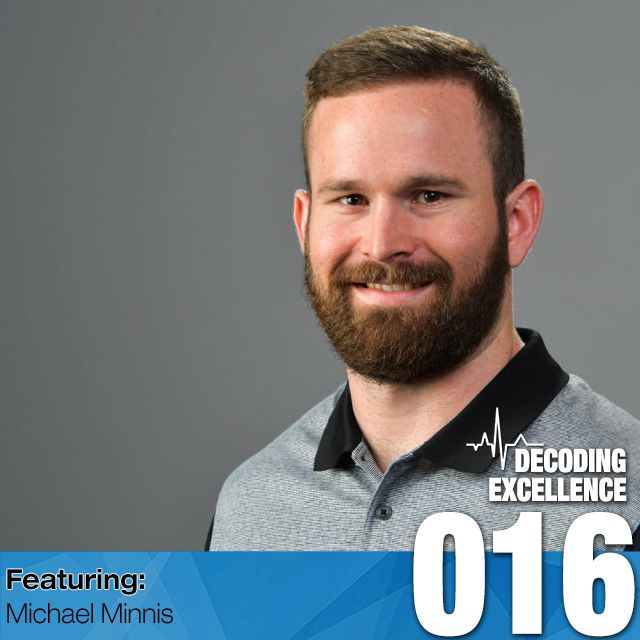
In this episode of the Decoding Excellence Show, I am again speaking with Coordinator of Performance Nutrition for the Philadelphia Eagles, Michael Minnis.
This was such a great episode and I walked away with several pages of notes from Michael. He shares many stories and lessons learned from his journey into the world of performance nutrition. Michael had stops at Kansas State University, EXOS, University of Oklahoma, University of Texas at Austin, University of Southern California, to his eventual and current role at the Philadelphia Eagles.
Michael and I discuss:
- The architecture of a Performance Nutrition program
- What Michael Learned as a S&C Coach
- Conscious Coaching within Performance Nutrition
- Hybrid roles between S&C and Nutrition
- Challenges between collegiate and professional sports
- Advice for future performance nutritionists
You can catch up with Michael on Twitter at @MMinnis89. You can also navigate to to his Instagram at @MMinnis89 and browse the many great resources he's posted.
This episode of the Decoding Excellence show is brought to you by Vald Performance, the makers of the NordBord, DashBord, and the GroinBar.
They can be found at ValdPerformance.com
Stay updated with the podcast by following me on Twitter via @AdamRingler
In addition to those social mediums, you can head over to AdamRingler.com/Newsletter and sign-up for my weekly newsletter. This is a newsletter for the curious. It's chalked full of interesting articles I've read through the week, things I'm exploring and finding fascinating through my week, and a collections of thought experiences and resources I've cultivated.
It's essentially a Birchbox newsletter for performance-related articles, research, and daily musings.
Thanks again for listening to the Decoding Excellence Show! I appreciate all the support growing this Sport Science, Strength & Conditioning, and High-Performance Coaching resource. If you have taken anything away from the show, please login to iTunes and navigate to the Decoding Excellence page and leave us a review.
Key Takeaways
- Building a performance nutrition program is architecture, not meal plans: systems, staffing, and communication matter as much as the science.
- Time as a strength coach made him a better nutritionist, because understanding the training floor changes how you deliver nutrition support.
- Conscious coaching applies inside nutrition too: buy-in, communication, and relationships determine whether the fueling plan actually gets followed.
- Collegiate and professional settings create different challenges, from resources to athlete autonomy, and the practitioner has to adapt the approach to the environment.
About the Guest
Michael Minnis is the Coordinator of Performance Nutrition for the Philadelphia Eagles. His path ran through Kansas State, EXOS, Oklahoma, Texas, and USC, giving him stops in both collegiate and professional settings before reaching the NFL.
Listen and Subscribe
Find this episode of the Decoding Excellence Show on Apple Podcasts and Spotify, or use the player above.
Go Further in This Episode
Enjoyed this conversation? Here is how to get more from it:
- Read the transcript below to revisit key ideas at your own pace.
- Share this episode with a coach or colleague who would benefit.
- Subscribe to the Decoding Excellence Show on Apple Podcasts, Spotify, or your favorite app.
- Join the newsletter at adamringler.com/newsletter for weekly insights on human performance.
Episode Transcript
This transcript was automatically generated. While we strive for accuracy, some words or phrases may be misheard.
[00:00:00] My biggest piece of advice that I always give is don't limit yourself geographically. I think what really helped me, you know, how the family that was supportive of me going wherever I needed to go. And I could literally, at the drop of a dime move, I could get in my car and just go somewhere. And I mean, I was, I always had that mindset.
[00:00:15] I was never a man. I just, I really want to stay in Kansas or hey, I like Los Angeles. I really just want to stay in LA. I always have a mindset of, I'll go wherever it takes. Sports Science, Strength and Conditioning, High Performance Coaching. Welcome to the Decoding Excellence Show.
[00:00:35] Today's episode of the Decoding Excellence Show is brought to you by VOD Performance, the makers of, the Nordboard, the Dashboard and the Growing Bar. Whether it's Return to Play, Rehabilitation or Performance Testing and Training, VOD Performance has the tools you need. So who's actually using VOD Performance Technology? I don't know, something like 14 NFL, 19 NCAA, 15 English Premier League,
[00:01:03] Seven English championship, five NBA teams and six MLB teams. They have the tools you need to get the best out of your athletes. Check them out at VODPerformance.com. Hey everyone, welcome to or welcome back to the Decoding Excellence Show. We have a monster of an episode for you today and it features Mike Minnes, the coordinator of Performance Nutrition for the Philadelphia Eagles in the National Football League.
[00:01:33] Michael spent a lot of time moving from place to place and his journey through the world of athletics through the world of nutrition and strengthening is a robust journey. He started out at Kansas State University, spent time at Exos, had a stop at University of Oklahoma to the University of Texas at Austin, to eventually an internship position in Philadelphia at Eagles before landing
[00:02:00] A position at University of Southern California. Michael shares his journey, his pathway, his ethos into the world of sports nutrition and why it's a fascinating one and why more athletes should pay closer attention to their nutrition as it affects their performance. This was a wide-ranging conversation with Michael and I took about three pages of notes and things that really resonate with me to this day.
[00:02:30] So I know you're going to take a lot away from this conversation, sit back, it's a fun conversation between Michael and I and enjoy. So without further ado, here is my conversation with coordinator of Performance Nutrition for the Philadelphia Eagles, Michael Minnes.
[00:02:52] Michael, welcome to the show, man. How are you? Great Adam, thanks for having me. Yeah, I have looked forward to this show for a number of weeks now. I know we were going back and forth on Twitter trying to set this thing up and just really, really excited to be able to find you on a free Sunday. And I know it's probably starting to get more and more rare as things start revving up for you here.
[00:03:17] But how are things going in your side of town? Great, man. So we're with some of the Eagles and we're with the off-season program right now. So we're about to move into our OTAs. So when we really start getting into practice and we have the rookies here now. So it's really fun kind of seeing the new faces in there as well. So we have about four more weeks of off-season program that we get into that little break
[00:03:43] And then Campbell start back up in July. So it's a fun time right now because from the performance size, rank conditioning side, nutrition side, we really get our hands on them now more than any other time in the season. Yeah, it's great. I can sort of relate to that just from a collegiate standpoint only because
[00:04:03] We are about, I have all of our local athletes still here and in about two weeks, we'll get the fresh batch of new incoming college freshmen rolling in for summer A and it's the touch point for us within NCAA regulations where coaches, staff will get two hours of skill work a week and we get the other six. So we are the eyes and the ears, the feelers of personalities, of work ethics and I feel like you're probably in that same camp as you're finishing up this off-season.
[00:04:38] OTA is just coming up and around the corner here. Yeah, absolutely. That's a great time. Yeah, the coaches, yeah, they're always down there in our ears, wondering about the eyes and stuff like that because we're around the guys more than they are, which is pretty unique.
[00:04:53] I think for the listening audience, because we have a wide range of a listening audience that listens to Decoding Excellence Shows, from East Coast to West Coast to International, I'd love for you to just sort of describe your background from an educational, from a home setting, to what led you to what is your current position at the Philadelphia Eagles, professional sports, coordinator, performance, nutrition, but there's so much that I would imagine goes into it.
[00:05:21] So I'd love to hear about your rich history and what brought you to where you're currently at. Yeah, absolutely. So I'm from a town called Buckland, Kansas, B-U-C-K-L-I-N. It's in Southwest Kansas. It's about, town about 700 people. So I graduated with 14 people in my class.
[00:05:39] So obviously a very, very small town. I mean, you know, you hear about, yeah, there's no stoplights. We had one grocery store. We had like a corner, a restaurant, corner bar that was open and closed. Every other week it felt like, you know, so when we had to go, go to groceries or go to the movie or do something like that,
[00:05:58] We actually had to go to Dot City, or, you know, it was even big time. If we went to Wichita, Wichita was like a getaway for the weekend. So we would go to Wichita for the weekend, stay in a hotel, go to the movies, go out to eat, and that was like a big deal for us. So, yeah, it was a little small town. I have two older sisters, and both of my parents are self-employed.
[00:06:18] So kind of, you know, saw that ethic of hard work growing up. And when it was raised really well, just very grateful to have a great support of family. Went to the University of Kansas at a high school. Had really no idea what I wanted to do. I always played sports. I played three sports in high school.
[00:06:34] It was always very active, but it was easy to be, because it was from such a small town. It's not like we had tryouts or anything like that. Everybody was involved in everything. I mean, we were in sports and band vocal and everything. So, which was kind of a cool, very unique aspect of being about from a small town.
[00:06:50] But went to the University of Kansas in Lawrence, Kansas. And really the only reason I went there is because my oldest sister went there. And I really liked the town. So that really is the only reason why I even went. And I decided to just do a business degree. I was there for a year feeling it out.
[00:07:09] Ended up doing business because that's what my sister did. So I just kind of wanted to follow in her footsteps. So decided to do a business degree. And it was in information systems. This is what I decided to put the emphasis on. And I really had no idea why or any rhyme or reason why I was doing that.
[00:07:25] So ended up going through at KU and about three and a half, about three years in when it started to get real. It started getting time to apply for internships and stuff like that. I was like applying for internships with software companies in Kansas City. And it just didn't feel right. I mean, I was like, I don't know if this is for me.
[00:07:44] I'm not, you know, I'm not really passionate about this. You know, there were jobs out there. And a lot of my friends were getting jobs and they were good jobs, good paying jobs right out of college. And, you know, I just kind of, you know, I really about my senior year of college there.
[00:07:59] I really started getting into just the nutrition aspect. So I always, like I said, I play sports. I always worked out in college. And I worked out pretty hard. I felt like, but I really wasn't seeing the progress that I felt like I should be seeing. And I was totally neglecting nutrition.
[00:08:15] I mean, I, but you know, as a senior in college, I had never thought about what I was putting into my body, why I was doing it when I was doing it, what it was doing. I mean, I literally didn't think about any of that stuff until I was 20, 20 years old, 21 years old. And when I was really, I picked a book up and, you know,
[00:08:33] Then kind of just it kind of went from there. So about senior year at KU, I was like, you know what, I'll finish out my degree because I'm so close. But I want to do something when nutrition and exercise. That's what I'm passionate about. And really what drove me to that was there's so many things that we can't control in this world.
[00:08:51] But those nutrition and exercise are two things that we can control. And the fact that you can control what you put in your body and actually see tangible changes from that is pretty mind-blowing, in my opinion. So I think that's what really drove me to it. So I did a little investigation. And mind you, this was 2010, 2011.
[00:09:14] So sports nutrition, I mean, it's still a niche. But sports nutrition even six years ago was even more of a niche. I mean, when you look at the full-time RDs in college and the pros right now, I mean, they were, they was slim pickings. I mean, there weren't very many of them. I mean, there's still not very many of them now.
[00:09:33] But six years ago there was definitely not very many. So I did some research and I saw that Kansas State University had a dietetics program. And I didn't even know what dietetics meant. You know, I mean, I was like, I want to do nutrition. And they kind of explain what dietetics is, you know, essentially the same thing is nutrition. But then they started explaining, you know, you can become a registered dietitian.
[00:09:54] Registered dietitians usually work in, you know, clinical settings or community settings. That type of thing and that was not what I was interested in. You know, I was like, I want to be, this is, I want to do this whole sports nutrition today. I want to kind of marry exercise and nutrition. I want to work with athletes and that type of thing. And you know, they kind of was, they kind of looked at me funny,
[00:10:17] But there was a guy there that had been doing. He was also interested in, he had actually been working for Kansas State's basketball team. Like just as a consultant. So I knew it could be done. And so basically ended up transferring over to Kansas State. And I did a dual bachelor's master's degree.
[00:10:37] So for two years, I did an undergrad in dietetics. And again, you know, very scary because the whole time I was there, it was all management classes, clinical classes. So we're talking about managing diabetes and, you know, what do you do after this type of surgery and what types of foods can you do after this type of procedure? And stuff I wasn't necessarily interested in.
[00:11:00] Yeah. There was no sports nutrition classes through the two years. I mean, it was all food science and things like that. So, you know, there was a lot of doubt, obviously like over my course of time. Because you know, I had to pay for my schooling and that type of thing. And the loans were really piling up.
[00:11:17] And a lot of, you know, sometimes self-doubt on it. You know, am I doing the right thing? Should I have just went and got a job in business? You know, I could be living in Kansas City, making a salary right now. Now I'm back in school, not doing even what I want to do. So, so then after two years of the undergrad.
[00:11:35] So then there's an internship program. Basically that a national internship program that you apply for. And it's pretty competitive. It's about a 50% acceptance rate nationally. And so I applied to a few. I think I applied about four and it's expensive.
[00:11:53] You have to pay for each one. There's a ton of stuff that goes up to, you know, to make yourself competitive. Yeah. And I ended up not getting matched my first. So I applied and I had this whole thing set up. I was going to go do my dietetic internship.
[00:12:09] I was going to, you know, get through the clinicals, get through all that stuff. Just to get my RD and then to do sports nutrition. So it was still a long haul because I knew I didn't even have any sports nutrition background yet. And so I applied for it didn't get matched. So then I had to wait six months to reapply. And I mean, you can imagine the doubt.
[00:12:30] That came over me during that time. So I went back again and I just did the master's part of it. So I just stayed in school, did the master's thing. And then funny, I was doing an internship at the dining hall. So I was like, I mean, I was wearing a hair net. Wow.
[00:12:51] On a daily basis. I was doing basically food service. I was basically managing cooks and chefs that I'd been there for 30, 40 years. And they were looking at me like I was insane. Yeah. Because I was this young kid.
[00:13:05] And, you know, they had been there. But it was the dining center that all the freshmen ate at. Okay. But the thing was that there was an athlete's line. So there's like the training table, quote unquote, where the athletes would come in. And so I kind of like squeezed my way into that.
[00:13:22] And I let them. I was like, can I manage that line? At least just to get around athletes. Yeah. And help with the menus and the menus were, I mean, you know, they weren't great by any means. And they let me create this education.
[00:13:37] So I created like a series of education, you know, on importance of carbohydrate and importance of hydration. And some really basic stuff. But it made me feel so good to be able to kind of get some materials out there and start educating the guy. Even though it was 100% passive education, I mean, they had to walk by the poster and look up at it for it to do the thing. And I'm not sure how, you know, maybe two guys looked at it. Maybe I have no idea.
[00:14:01] But it made me feel good and made me feel I was like, okay, this is like I'm in the right direction now. Yeah. And then a lady that I worked with there, she actually, she emailed me one night. I'll never forget it. And there was just another food service management woman there. And she, she sent me this internship at that was at exos or athlete's performance at that time.
[00:14:21] Yeah, right? So it was athlete's performance. Yep. And she said, hey, have you ever heard of this? And I said, no. And she's like, well, I think they look for nutrition in terms.
[00:14:29] And I was like, mind blown. I was like, oh my gosh, this is athlete athlete sports nutrition. All that type of stuff. So, yeah. So it was in Phoenix, Arizona. And I ended up applying.
[00:14:40] And I got an internship in Phoenix in the summer of 2013. So I went out to Phoenix. And with athlete's performance worked under Erica Winchewski as a dietician. But Brad Bartholomew, you know, he was there as a strength and conditioning coach. And that was my really true, my first true experience, really diving in to sports nutrition, really immersing myself in that culture.
[00:15:04] And I mean, I fell in love. I mean, it was kind of, you know, that was really the start for me. And I knew that's what I wanted to do. I mean, it was unpaid and all that type of stuff. And I just loved it. I couldn't get enough of it.
[00:15:16] So I did that in the summer of 2013 for three months. I'm working with every type of athlete you could imagine. And then when I went back to K state, I decided to reapply that next, you know, when the six months came up. And I applied to University of Oklahoma. And the reason I applied to University of Oklahoma was when I talked to their directors of the programs,
[00:15:37] I explicitly said, hey, I'll do all the clinical management, everything I need to do. But sports nutrition is my, that's what I want to do. Or how flexible are you, you know, and allowing me to kind of explore that. And they're like, well, you know what, Michael, we have a four-week elective rotation. And we'll let you go wherever you want. So they were like, we'll let you go out of state if you want.
[00:15:58] Wow. And that was a seller. I was like, I'm in. So I applied to that and then got into OU. So then I moved down to McAllister, Oklahoma. I lived in the, I lived in the happy days hotel.
[00:16:13] And I mean, it was, I mean, I had like a Elvis Presley theme room. It was pink. I mean, it was, it was crazy. But I stayed in the, I stayed in the stay hotel, did my clinical there at McAllister Regional Health Center. It worked with a really good dietitian, actually. I learned a lot through the clinical rotation.
[00:16:31] But when it came to my elective rotation, I reached out to a guy named Josh Hings, who's the head, the head strength coach for the Philadelphia Eagles. And I'd got linked up with Josh when he was with the Jacksville Jaguars as a assistant strength conditioning coach and a nutritionist. And so he was like the first, I think probably the one of the first first people to ever kind of wear those two hats and play a hybrid role full time. Especially for a professional team. Yeah.
[00:17:01] So I got linked up. It's kind of a long story. How I got linked up with him. But when he was in Jacksonville, I had a buddy that I met at KU. Had went and interned with the Jacksville Jaguars. I think community relations or PR or something like that and end up meeting Josh told me about Josh.
[00:17:16] And he's like, hey, this, this guy's doing what you want to do, right? And I said, yeah, send him my resume. So my buddy Garrett, that was intern in there, put my resume on Josh's desk. Josh emailed me, said, hey, you, you know, you sound like exactly like I did a few years ago. Kind of trying to figure this whole path out. Let me know if I can ever help have any questions.
[00:17:37] So I kind of followed Josh. And I knew he had got that job in Philadelphia. And I emailed Josh and said, hey, man, you have any internships? Like I got four weeks. I'll drive up there from here from OU and I'll do whatever. He's like, you know, we have an opportunity, but it's 11 weeks.
[00:17:54] So it was basically the off season program from April to June. And he's like, you know, I can't just have you for four. I need you for the whole time. And I said, I'll make it happen. So so I called my director and was like, hey, man, I got this once in a lifetime opportunity. And he's like, well, you have other rotations during that time.
[00:18:13] And you know, they were already pre planned. And I mean, I begged, begged him to kind of to let me do it. And we made it, we made it work. I mean, there was a, they had to basically get a contract, you know, with the Eagles. And OU had to get this contract set before I could go out there. And it was a long, I mean, it was a two month back and forth on language and stuff of the contract.
[00:18:35] And I didn't know what was going to happen, but I knew I had to report. I think it was like on April, you know, whatever day, April 10th or whatever day it was. So I actually drove to Philadelphia before the contract closed. And if my director from OU ever hears this, because I never told him this, but I had left already and went to Philadelphia. So he actually called me on my second day at work in Philadelphia.
[00:19:00] And was like, hey, the contract went through, you're good to go. You're like, thank goodness. Yeah, he's like, you can leave now. And I think, all right, cool. And I'm already like in in Philadelphia. So I mean, I wasn't going to take no from answering that.
[00:19:13] It was too good of an opportunity to pass up. So did that. And then so I was there from, you know, April to June. I had a great, you know, great, great experience. I just really got immersed in the sports nutrition. And at that time, you know, that was Chip Kelly's second season with the Eagles.
[00:19:30] And, you know, sports science was kind of at, it's really, it was really popping there. And so it could with all their success in 2013. And so, you know, we could do, you know, whatever we wanted. We have, we had all the support. It was, it was very fun. And then learned a ton, learned a lot about just the culture of the NFL.
[00:19:49] And, you know, decided it was definitely something I'd be interested in being a part of. And then went back to Oklahoma, how to go back to Oklahoma, finish my rotations. Then I went, you know, back to a WIC community rotation. Pricking, you know, little kids fingers and looking at their hemoglobin. I mean, it was a complete 180 of what I had been doing. But came back, finished it.
[00:20:11] And then, you know, the Eagles and Josh and them, you know, appreciated the work that I did. So they asked me to come back for the next season. So basically starting and training camp and going through the season as a paid intern. And obviously, I, you know, took that without any hesitation. So went back up there for the 2014 season as a, just a nutrition intern. And basically at, so I went through that whole season there with the Eagles.
[00:20:39] I mean, I got to see, you know, I got to travel. I was grateful enough as an intern to travel. And I was pretty cool just to see kind of what happens on the road. And, you know, he gave me a lot of responsibility as a nutrition. I mean, I felt like it was kind of my program, even as an intern. So did that.
[00:20:57] And then actually went to University of Texas after that season was over and did an internship there for about three months. So the season ended in January of 15. I went to Austin, Texas at the end of January and was there till April. And I got, you know, I did tennis, baseball. So that's really, I really got exposed to some different sports besides just football. And I did that through it.
[00:21:25] It's called Gatorade Sports Nutrition Immersion Program. Okay. So I mean, so many listeners, you know, that are interested in sports nutrition. Now it definitely is through the CPSDA organization, sports nutrition organization. Basically Gatorade, you know, pays a stipend to individuals. And they kind of, they link them up with different, there's colleges, professional teams that do it.
[00:21:47] So it's a pretty cool program. So I did it, did that through Texas because I didn't know what I want to do after the Eagles experience was over. I kind of are like, all right. Now what? And so that's what came up. He was paid a stipend.
[00:21:59] So I was like, you know, that sounds great. So went to Texas. And then when I was at Texas, you know, Josh at the Eagles reached back out and said, Hey, you know, would you want to come back again? And I was like, man, I'd love to, but, you know, I kind of talked about, you know, is there could any type of different experience that I could acquire? And he said, well, I want you to come back as a strength and conditioning in turn. Because I had you really, through my time coming up, you know, I did personal training and stuff like that in college.
[00:22:30] And then when I was even at exos and sorry, at least performance and Phoenix, I had tried to immerse myself in the strength and conditioning side as well. Side of what's been interested in that. Yeah. So when I was with the Eagles in 14, you know, I'd, I'd been a part of their beatings when they're planning training blocks and that type of thing. And Josh really knew I was interested. So I went back as a strength conditioning in turn in the off season of 2015.
[00:22:55] That was a whole different experience from me, you know, no nutrition, all strength, conditioning, and really got to see that. That's side of it. And that's really where I started to learn about just relationship building and what that takes. And we'll get into that later. Finish that. That summer of 2015, I got a call from the University of Southern California.
[00:23:15] And they were looking for a director of nutrition for football. And that was their first time they had ever wanted somebody for, you know, just football and ended up taking that. So when I moved, moved back up to Southern California in 2015 and was with USC football for a year as director. So that was my first full time job. Okay. Going out there and man, it was a, I had so much support from the head strength edition coach Ivan Lewis there.
[00:23:40] I mean, he really set the tone for me to be successful. And it was a great experience and with, you know, pretty good season. Again, it was my first full time job. So I learned a lot about myself during that time, kind of building a program, a little bit from scratch. So it was cool. So it was a great experience there.
[00:24:00] And then after that season, the Eagles reached back out and offered me with the new coaching staff and everybody coming in. They offered me to come back as their coordinator nutrition, so full time gig as well. So it was, it was a tough, tough to leave USC. It was obviously a beautiful place and a great school. But I just knew with, you know, in the NFL, it really hard. You know, there's only 32 positions for nutrition at this point in time.
[00:24:27] And so it was tough to turn that down. So, and I really liked all the staff. Like Josh was still there, Sean holes. He was the coordinator of sports science. He was still there. I love the guys there.
[00:24:38] So decided to go back to Philadelphia. And so I came back to Philadelphia here as coordinator of performance nutrition last spring. So March 2016. And just about to go into my second season full time with the Eagles. So that's, I know it's kind of confusing. And that's a lot of dates and jumping around.
[00:24:56] But that's kind of my path. No, I think what's really fascinating about that. And I'm going to dig into quite a bit of this here. But what's fascinating about all of this is that I hear conversations with other coaches that sometimes, especially sometimes with my own staff of interns that are starting to cut their teeth out in the sort of sport performance world.
[00:25:19] And sometimes I think they expect that that position will come up overnight. And your history as you just laid it out there, I mean, you've been one that had a relentless pursuit to find your way into this profession and to build a program and be the coordinator of performance nutrition. And damn it, you weren't going to take no for an answer. And I think that's replicated or at least exemplified in sort of your pursuit, whether it's at KU, to K-states, to the diatetics, to interning, to exos, to OU, and finding your way into it.
[00:26:01] You know, as I was listening to you lay that out there, I mean, what? I guess my question would be, what gave you the courage or the confidence to unabashedly embrace and pursue this to the way that you did? I mean, is there anything that really resonates in your mind when I ask you say, like, how did you have the courage to do all of this? Yeah, and that's a great question. I mean, I think it starts, the first thing that comes in my mind when I hear you ask that question, I think it's just my family. I feel like, you know, they gave me so much support just my whole life that it was almost like one of those things where I just couldn't let them down. And so there was always like, it was always more than just me.
[00:26:50] It was about them and just making them proud. You know, being from a small town, it was just kind of a cool, I don't know. I always knew, you know, I wanted to make them proud and kind of get out there in the quote-unquote, real world and show them what I could do. And I think, you know, I don't know, it was, I just had so much support from them. So every time I was, I mean, I remember specifically a conversation, when I was at K-state and I was doing all the clinical stuff, and, you know, I called my brother-in-law Brian and, you know, me and Brian are really close. And I said, hey, man, I think I'm going to drop out of this dietetics thing. I think I'm just going to do exercise science instead and just kind of see what happens.
[00:27:27] You know, maybe go do personal training or do something like that. I was like, I don't know if I'm really interested in the dietetics type stuff anymore. And, you know, we had this, you know, two-hour conversation and he talked me to stay into the program and then, you know, this is, you know, I am where I am now. But, again, I think it was honestly just a conversation with family and just really just not being able to let them let them down. So it was always, there's always more about just more than just about me through the whole process. Yeah, and I think that's, you know, I think one of the things that is really powerful about that is that, you know, so many of us, the more that I talked to other coaches and practitioners and whatever feel that they chose to pursue, that there's always some sort of support, whether it's from family, from friends, from mentors, from other people, that help guide the path a little bit, if you will.
[00:28:22] And, you know, like, here you were at sort of a crossroads of whether to continue with this dietetics program, thinking maybe I'm going to leave, maybe I'm going to stay in it, I don't know where I'm at. And, you know, fast forward, you know, years down the road and you're one of 32 directors or coordinators of performance nutrition for the NFL. And like that's, that's way, it's, I know it's hard to mentally think, well, I wonder what would happen if I did decide to go and pursue exercise science instead of, but what a test of, of both courage and resilience to stay in it. And obviously it's been fruitful and it's led you to where you're at today. Yeah, absolutely. I think the system makes a patience and, you know, there's definitely a little bit of luck in there too. You know, like I said in my story with me, my friend, a KU who then went to Jacksonville, you know, randomly to do an internship and then that's all linked up with Josh.
[00:29:19] And it's just crazy in life, man, how sometimes things just kind of fall in place. I'm a really big believer of that. Yeah. For sure. No doubt. Now, I, you know, and you provided me a lot of a framework to kind of start to pick through a little bit. And I would love to. So you got out to USC and you're, you're now coordinating or directing their performance nutrition. And it's this first sort of full time job and, and you're responsible for the football team and building this nutritional program. The thing I wrote down that I'm just fascinated about is that this was your opportunity. And while you had great support from Ivan, this was essentially you had to build this thing from scratch. And I'd love to hear about sort of maybe some of the things that that went really, really well that you maybe expected would be harder that that you navigated much faster than what you, you, you did. But, but maybe also importantly, maybe some of the lessons that you've learned or some of the struggles that you match that many of us will match when you're building anything.
[00:30:27] I'd love to hear kind of juxtaposed those things that went really well and the, the things that you learned along the process of building a program. Right. Well, I mean, I think first it starts, let's, we'll start with the things that really went well. And I already, I told you this and you just reiterated that, but I think this is a great message for really. You know, any strength and conditioning coaches, really anybody that's ahead of their program, bringing in whether it's strength, conditioning coaches, sports nutritionists, the support that you show from day one makes all the difference from the head strength coach, because I remember the day one I got there, you know, also nervous and we were, I think I moved up there about seven days before we started training camp. And I remember the first team meeting, you know, Ivan got up there, the coach Sarku was there. They said, listen fellas, like whatever Mike says goes, like we fully support what he has to say, what, you know, what he wants to do. And I mean, I feel like if that doesn't happen, I just don't know that that person is set up to succeed. And then this is any program.
[00:31:36] Yeah, I mean, you know, especially from a head strength conditioning coach, you have so much influence, especially in college. Yeah, that I mean, if you don't deliver that message day one, I think you're doing your people a little bit of a disservice. So I think I think I was set up to succeed from day one. I guess is my point. And so really anything I did do after that. And obviously I didn't do everything perfect, but felt like it was successful in a sense because the guys were bought in. Yeah, you know, and I think, you know, I just feel like I, you know, I took the time. I was, I was realistic about, you know, I took the time to really get to know guys. It was cool for me because there was no bias. I mean, I didn't know who the starting quarterback was from the starting punter from the long snapper from the linebacker. I mean, I wasn't a pack 12. I was a big 12 guy, you know, football sports. So I didn't know anything about, man, I remember Reggie Bush and those guys at USC, but I, you know, I, 2015, I didn't know who anybody was out there. So I went in with an open slate and I helped everybody the exact same gave everybody the resources they needed. I think the big thing was just a presence. I mean, I was, I made sure that I was around just around. Yeah, you know, all the time, you know, I tried to be one of the first ones in try to be the last ones to leave and just be around the guys.
[00:32:57] You know, it was tough. You're not being a, you know, not being the strengthy editioning piece there because, you know, that's where you spend a ton of time with guys on the floor. And so I kind of had to be a little bit strategic in the way where I spent times with the guys. Obviously, I had to go to the training table. It's been a lot of time with the guys, but it's a tough balance because I don't, I don't, everyone associated myself with being the food police. Yeah. So I don't, everyone would be the dietitian nutritionist that's just hanging out in the training table and it make it seem like you're overlooking their shoulder, you know what I mean? Yeah, looking over their shoulder a little bit. So it was a tough bounce for me. I didn't want to ever come off like that. So I think one of the biggest things that had an impact that very first year was that, you know, like I said, they started from scratch. During camp, I know they, they got a lot of go meals at night. So, you know, they get no practice. They practice in the evenings. And then, you know, they would get a box, you know, maybe Chick-fil-A or something like that, you know what I mean? There's nothing wrong with Chick-fil-A or anything like that. But I think it was repetitive. I think they were, you know, definitely could have some better options from a recovery standpoint.
[00:34:08] And so one major change that I did that I felt like the Eagles did really well was they fed their, you know, they gave, I love giving guys options of stuff to eat. So instead of getting boxed meals, we did a buffet. So we did a buffet at the hotel, the team hotel. So guys came over and then they had a, you know, so we had taco night or whatever so they could build their tacos or they could get rice and beef and they could build it. They could put sour cream on there if they wanted. They, you know, put cheese on there and wanted it. And like, it was such a huge, it sounds so silly, like small, but from going from like box lunches to like a build your own, like, man, I'm an adult. You know what I mean? Like, he's trusting me. He's given me all this stuff. Now it's up to me to decide what to get. So if I'm a weight loss guy, yeah, I probably don't need to add a bunch of cheese and sour cream. You know what I mean? But you can, if you want, it was kind of big boy rules. And that was kind of my way of explaining it. And I think I earned a ton of trust when they kind of saw that was my style. So that was a huge success. The whole training camp, we would have these buffet type meals at night and they loved it. I mean, it was so much more that they had had in the past.
[00:35:20] And I was so grateful for administration to give me that because that cost money. Yeah, yeah, that makes it. That was a thing a little easier. Yeah. So that was a huge increase in price. And I mean, I, you know, I got a little bit of eat for that from the, you know, exact is, but obviously, you know, they understood what I was trying to do. I had to explain the message of why, you know, and I also explain the message of camaraderie. You know, when you get it to go box, everybody just grabs it to go box and goes in the room and eats by themselves. Well, when you have a buffet, you're breaking bread with your brothers, you're in the same room, you're talking, you're having fun, you're kind of taking the load off a little bit. Yeah. So, so I thought that was really good. And then another one was just, you know, the nutrient timing standpoint there we always had, I kind of called pre post table. But as they every time, every single time that they'd walk off the way real floor walk off the practice field, there was nutrition. I mean, there was shakes, smoothies, fruit. I mean, you know, before, obviously, some carbohydrate stuff, jails, shoes, blah, blah, blah, blah, blah. It was just, it was a presence. I don't think they'd ever had before.
[00:36:26] And it was just really cool to kind of see guys buy in because it was in their face all the time. And I really like that. So that was something that we did really well. And just the things that probably, you know, mistakes or blah, blah, blah was really relationships with administration. I mean, out of good relationship with Ivan, but then it was tough to, you know, what kind of relationship do I need to have with the head coach? What kind of relationship do I need to have with the assistant coaches? Do I email them the body weights? Do I go talk to them in person about guys? Do they care? You know what I'm saying? Like, sometimes you're like, you know, do they care about this? And then I think I really learned a lesson, you know, I haven't kind of sat me down and was like, you know, you need to, you know, do you need to be present upstairs more, right? What don't quote up stairs? So you can't just be around the players. Like, you need to really go up and be around coaches and be around administration and that, you know, that type of thing. And that was something that it took me a little time because that's not my personality. Yeah, you know, I'm a little, I'm a little bit introverted, I would say at heart.
[00:37:35] So for me to be, you know, extremely extroverted at work, I can do it. But it, you know, that's not me naturally. So I really had to go out, get out of my comfort zone and go see assistant coaches and talk to them about players and, you know, hey, do you need any, you know, out of your position group, are there any guys that you're worried about that I need to get with and just kind of going that extra extra mile. So it took a little bit of time to really figure out the dynamic because it's very different in pros and colleges, you know, yeah, it's just different. I mean, it's just really understanding people how they want to be communicated with when they want to be communicated with what's important, what's not important. So that was probably my biggest because I was a director there. That was my first job. I didn't know it was tough for me to really figure out, you know, how much communication. I think that they want. Yeah, I think there's, there's a couple great things in there that I just want to reemphasize is that and you hit the nail on the top of the head when you talked about the one of the best things someone can do to set you up for success is really champion. You're important that being there and if that's a head strengthening coach, emphasizing or setting you up for success if you're an assistant or if you're an assistant setting up your graduate assistants, but also if you're a sport coach, if you're the head sport coach of X, then making sure that that message of the importance of strengthening the importance of nutrition, the importance of your allied health support team.
[00:39:04] That goes so, so long of a way because it's ultimately that's where the buck stops the head coach. So I think having that unified support and having that unified vision is really, really important. And I think one of the things you said about just increasing your availability through the proximity that you have with your athletes is really important. And I know that's, that's sort of a resounding theme I hear more and more being discussed about with sport science is just making sure that athletes feel your presence not through data collection, but in the support of you at a practice field or other environments, a training session so that just by proximity, just by being around the athletes that they can continue to feel more comfortable with you. Rather than, you know, you're just being a test subject and you're just collecting information from them. So I think there's a lot of really, really good, good pieces in that. And you know, I think you alluded to it. You talked about, you know, some of the things that I think are really resounding right now around strength conditioning, which is, you know, more of the soft skills, if you will. And I use that with air quotations around them, but the skills of communication, the skills of building trust, establishing trust, valuing that relationship piece.
[00:40:38] I know you talked a little bit about some of your time at athletes performance or now exos, and your interaction with Brett Bartholomew there. And I think that's certainly a name that sort of resonates in the strengthening world as, you know, conscious coaching and building buy-in, but was there any sort of particular lessons or mentors or things you've read or things that you experimented with to help you who is maybe already more naturally inclined to be a little bit more introverted? Was there things that helped you get outside that introvertiveness box to allow you to be more extroverted and more, you know, relationship building more around more vocal? I mean, is there anything that really resonates along that sort of narrative? Well, I think just, you know, for me, it was just maybe striding myself with people like Brett, you know, I think he said his name, but I always bring him up because he was kind of one of the first, you know, the first ones I kind of saw do it in real life, right, in action. I mean, he was all about relationships and building buy-in and things like that. So I think, you know, I surround myself whether it was that exos, university of Texas, just people that really did it well. And I think for me, I just, I started to just read more. So I remember I read the book, you know, how to win friends and influence people by Dale Carnegie. Now it's probably 2000. I think that was, I think it was a reading assignment at exos or athletes performance. But I just started really reading about just, you know, human nature and, you know, what drives people and things like that. And obviously, there's only so much you can get out of a book.
[00:42:22] But I think I really took it to heart and tried to practice some of those things in my, in my real life. And I think, I think obviously there's just a amount of confidence that comes with experience. And, you know, because, you know, like for me, you know, USC was my, that was my first full-time job. I was like, all right, we're about to find out if I can really do this or not. You know, when you have a positive influence and when you leave, you know, they don't want you to leave. And you know, they talk about how, you know, you left a lasting impression, legacy there for the guys and stuff like that. You're like, man, I can, I can really do this at a high level and start gaining, gaining confidence in yourself. That I think now drives me, you know, to get past the introvertness. And I think it's a little bit easier for me to do that. And then obviously just knowledge. I mean, I think knowledge, once the more knowledge you have, I think the more confidence you have. And I think that can lead to a little bit more extravertedness.
[00:43:20] You said it. You know, how to win friends and influence people, which is a book I certainly recommend to my own staff. And it was a reading assignment that I also gave. There's a number of books I'm going to list here because it's it's so the timing is right, but conscious coaching, the art of science, a building by and the charisma myth, how anyone can master the art and science of personal magnetism, just from a relationship standpoint, the like switch, never split the difference influence. I think that's Robert Chaudini's work, persuasion, 48 laws of power, Robert Green, I believe, wrote that one, but this was just a list of books that my staff was recommended only because the, I think they're great technicians, but one of the things I really wanted them to do a little bit better was have that sort of personal relationship that that presence about them as coaching coaches on the floor. And you know, as a segue to that, I think what also really, really helps you and you said it in your history and you certainly said it when you talked about the Jacksonville Jaguars and that particular person being in this sort of hybrid role. And maybe a point of influence or something that you aspire and you've seen, but you fit the hybrid role. I mean, you've done, you know, just the pure SNC aspect of it when you went back and now you're on the performance nutrition piece and I think that that gives someone a lot of confidence when you're sitting down and you know the physicality of OTAs.
[00:45:09] You know the travel demands and what that's going to look like on the practice field and the competitive environment during a season. And you can have that sort of understanding of how the physical and the technical tactical realms of performance and the demands that is to help dictate what you might need to do differently. I mean, do you feel the same way like that that gave you a lot of experience or confidence or knowledge to be able to execute what you do now at the Philadelphia Eagles even greater and even better. 100% and I'm actually, you know, grateful enough Josh, you know, he's a head strength coach here. He's actually, you know, so I'm the coordinator performance nutrition, but I do assist in the strength conditioning here as well, especially during the off season program where we have, you know, lifting groups, you know, two different lifting groups for an hour and a half each. We have the rookies in their own lifting group now. So there, you know, there's an opportunity for me to take a group in the weight room.
[00:46:08] And it's been awesome. I mean, it's been great. And I think, you know, I don't think that I could be successful. And I'm not saying I'm like ultra successful or anything like that by any means, I'm saying the success of my program here is driven a lot by the relationships I make in the weight room. Because, you know, as you know, you know, so, for example, the first, the first phase of OSP off season, you know, when they report in April, they're in the building for four hours. I mean, four hours and then they're out. And the four hours is essentially a meeting. They got some meetings that we got a weight room group for an hour and a half. Then we switch another weight room group for an hour and a half. They eat lunch and they're gone. Right. When the bell rings, they're going to leave. Because, you know, they got families and you know, they got stuff that's fine. Like they're going to get out of there.
[00:46:59] So as a nutritionist, you know, you got to be pretty realistic. You think a guy is going to stay after the bell rings to come to see you about nutrition. Like, I'm not that naive, you know what I mean? And but see, I first I was, I was like, I can't believe I was even was like, hey, what if we offered a education, like education class, like I'll do a presentation on Thursday after. You're right. Just and whoever comes comes, you know what I'm saying, nobody, nobody. And that's fine. And like, you know what I mean, I get it. So as a strength conditioning, to be able to help with that aspect and be in the weight room, and I'm not saying every R D, not every R D is going to be a strength coach and I'm not not every R D is even going to have any strength addition background. But that is really a unique thing for me that's really helped me to build these relationships because you have so many valuable.
[00:47:52] Conversations in the way room. Yeah, you know for, I mean, conversations that you couldn't have anywhere else because you can't catch a guy fast enough. So if you have something to talk about to somebody, you can go, hey, hey, what's up? Hey, how's that going? Hey, are you taking your vitamin D? Hey, this that, right? You can have a little small little check ins. It doesn't have to be an hour and a half consultation every time you talk to a guy. Yeah, it can just be really quick. Hey, how's that, how's that going? You need anything from me? Hey, I saw your weight was up a little bit over your goal. Today, you need me to do anything for you that type of thing because sometimes you can't even catch a guy to talk to him. I mean, it's crazy because they're so back like meetings and everything there on such a strict. They don't have a lot of downtime. Yeah, and the downtime they do have is a lunch breakfast and you know, I don't really like bothering guys. I don't like bother and athletes a lot at meal times because I think that's a time where they can really just kind of like shut it down and enjoy food.
[00:48:48] I don't want to make food like work. So I don't want to sit down and start drilling them with nutrition questions. I know it seems kind of crazy. But since you think that'd be a prime time, but I don't know, I feel like you got to catch them when you can and the strength conditioning piece has really helped me do that and just been just build the truck. I mean, I think just building the trust. I think obviously the relationship that athletes I will strengthen conditioning coaches, you know, are obviously huge for me to be able to kind of create those relationships and that setting is pretty special. So that's definitely been able to separate me a little bit and I feel like giving me a lot of my confidence and success of the program. I think what's really important about that is that, you know, so much of the conversation, so much of the personalities of each athlete comes out through the medium of strength conditioning and that sort of that environment aspect of it. And the things that I find really important is whether you are a applied sports psychologist, whether you're a coordinator of performance nutrition, whether you're a sports scientist, whether whatever you might be in your professional pursuit.
[00:49:59] And I know some organizations are different words. It's a little bit more siloed and the walls are up and everybody stays in their offices. But the more that people can come together and blend together and we start to have, you know, psychologists that are knowing what's happening in the weight room, is knowing what's going on in the practice field in the weight room, S&C, knowing what's going on in their other environments. I think that's ultimately better serves the athlete at the end of the day. It becomes more vertically integrated and that everybody can understand where the edges of what their personal professional pursuits are and when they need to defer. And I just think that's so incredibly important and I'm so glad that you shared that. Because I find that myself, including, is that you know, I pursued strength conditioning because I love the environment. I love the people aspect of it. And then it was only sports science, secondly, and that it still revolves around the weight room because there's just no other better vehicle to have these touch points in an athlete.
[00:51:02] Hey, how's your sleep? Hey, your weight's up or your weight's down? What do we need to do differently? How can I help? It's ultimately how can I help? And that might be nutrition, that might be sleep, that might be, you know, educational counseling or, you know, psychological counseling or second sessions or whatever, technical tactical sessions out there on the basketball court. It ultimately, a lot of the first line stuff, the red flags, the indicators that could be found in the weight room because it's just a different environment that I really, really enjoy. And I think it's just that environment of them kind of in their, you know, quote, unquote, grinding together and they see you in there with them. You're kind of a part of the camaraderie and I think that's really where you get a lot of the connectedness with them day in and day out. So it's important that, you know, for me, at least anyways, I feel like it's important that I'm in there with them.
[00:51:54] Yeah, I certainly agree, man. And, you know, I know with, you know, for, for people that might not be privy to sort of the, the interworkings of athletics at a high level and sort of the demands, the time demands. And they might be, maybe it's an international audience that is listening to this and they're thinking, okay, here we got American football and whatever their views of that might be in their respects. But I'd love for you, if you could just kind of give maybe those audience members what a typical day looks like for you. Because I think, you know, when you think professional sports, the highest level Philadelphia Eagles coordinator performance nutrition, you know, there's a lot of like a lore and flashing lights to it. But I'd love for you just to sort of vaguely or as detailed as you want to describe what that looks like a typical day. And I know that seasonal, but what it might look like for you.
[00:52:55] Yeah, I mean, you touched you touched on it's definitely seasonal because obviously right now at this point in time we're not traveling. We don't have games because you know, when games start up or traveling on, you know, airplanes and we're dealing with hotels and stadiums, you know, food service management becomes, you know, predominant. Yeah, influence. So I'll yeah, I'll try to kind of get a vague maybe touch on some of that stuff. But you know, really my, my responsibilities are one of my big ones is I work with our executive chefs and playing our menus. So we serve our guys breakfast and lunch and then dinner twice a week during the season. And so really working very closely with our executive chef and our kitchen staff to make sure that we're given, given guys a good balance of meals.
[00:53:38] You know, I'm never one to, you know, we're always just having chicken broccoli and rebound rice, you know, but I'm also never. It's also never going to always be fried chicken and chicken fingers and fries. Right. So, but I mean, you got to it's you got to kind of cut the guys that break sometimes, give them some balance and have some fun. But, you know, I try to explain kind of, you know, why we're doing what we do and I work well with them and just make sure we get some good. You know, my big like one of my biggest deals is have have something for everybody. So, if you're a weight and then it's up to them to choose.
[00:54:08] So, okay, maybe we do have grilled chicken and broccoli rice and maybe we do have some chicken fingers down there. Okay, you're a weight loss guy. What, what do you think you need to do? Because essentially it's big boy rules, right? You're grown, you're grown man in this, in this sport. I mean, you know, 21 to 35 years old is like, you know, it's a lot of you guys been eating longer than I have. So, I think you know, you know what you need to do, you know what I mean? And if you don't want to do what you think you need to do, that's on you.
[00:54:35] You know, it's big boy rules that can only help you as much as you want to be helped. So, I really am a big believer of just kind of, you know, making try to make everybody happy quote unquote, which is impossible. From a food side, but that's kind of my belief on that. So, we manage our fuel station. So, we have a little fuel bar fuel station outside of our weight room, we're outside of our locker room. It's really, really well placed.
[00:54:59] From a nutrient timing standpoint, guys walking by it on meetings, walking by it after lifts, after practice. That's where we do a lot of our nutrient timing stuff. What do we need to do right before the lift? What do we need to do before training? What do we have from a recovery standpoint after? So, I have a, you know, blessed enough to have the support to have an intern kind of manage that little space and kind of manage it. What do we, what do we offer in, you know, offering fresh fruit and yogurt and horrible days?
[00:55:26] What kind of snacks do we have in there for the guys? What kind of smoothies and that type of stuff are we doing for them after? So, that's a big, that's kind of a whole, you know, you kind of have two different silos there. You have your training table, which is a whole separate food service operation. And then you have your fuel station, which is a whole separate food service operation. So, you kind of have two things going at the same time there.
[00:55:46] And that's, it's a lot of food service and food service, probably as you know, I mean, you talk about ordering and inventory, managing expiration dates, best by dates. I mean, you know, can you imagine if somebody eats and expires something and gets sick or something like that? I mean, that's pretty serious stuff. Try explaining that to the head coach. Exactly. I mean, exactly, especially, yeah, I want to start on games and stuff. So, that's a whole, I mean, that's a full-time job right there is somebody managing.
[00:56:13] And it is, I have an intern that is literally, that's a full-time job managing that space, managing the food and ordering and inventory and all that type of stuff. I mean, you're feeding 90 grown men every day. So, and then, you know, I'm very grateful to be involved with the body weights, helping set the goal body weights. That differs kind of where you're at, what sports you're in, you know, sometimes the strength coach does it, sometimes the position coaches do it. But I have, I have a lot of, you know, they kind of give me a lot of rain on setting those goal body weights, which is awesome because I do the body composition analysis. Nice.
[00:56:52] So, we'll do a skinful, we do the skin folds, a seven-site, and I'll do those. And then when we have new guys come in, I'll set a goal body weight. And a lot of, a lot goes into that goal body weight, but we'll give them a little range that they need to stay in. And obviously, you start to get a little bit more serious when you get in season because there's fines involved and stuff like that when guys are over their goal ranges. But that's a big deal. You know, we right now, we weigh in once a week and in season, we'll have a mandatory weigh in.
[00:57:19] And, you know, obviously in a night-deal world, we weigh them every single day, but that's such a logistical challenge way more than you would ever believe trying to catch 90 guys to step on a scale for two seconds. It seems simple, but as you know, it's pretty challenging. So, that's, you know, that's kind of, you know, analyzing that every week. So, okay, this guy's trending up, this guy's trending down. What's going on? He's not in his goal weight.
[00:57:46] I'll go talk to him. We'll get something going. If it's maybe his body, so we just did body fat. You know, we do it, you know, at the beginning of the season, mid-off season, into off season. Well, you know, we got some guys going up, some guys going down. The guys that are going up want to know, hey, what can I do to get that back down?
[00:58:01] They're usually pretty good at kind of coming to me. So, hey, my body fat went down. Can you help me? Like, what do we need to do? Yeah. So, that's great because I'm, you know, it helps that I'm actually doing the analysis.
[00:58:13] So, it's not a second step for them to have to go find me then. I'm right there. And then, you know, so then from that kind of going off that, like, I'll do meal plans with guys. And that's usually what people think of when they think of, oh, so nutritionists, so you do meal plans. But that's such a small part, you know, really of what I do. But so, yeah, so if a guy is out of his range and he wants a nutrition plan, you know,
[00:58:36] We'll sit down and go full blown consult if he wants to. That's very rarely happens like that where a guy is going to give you 30 minutes of his time to give you a 24 hour recall and all the, all that cool stuff he learned about in school. Usually got to get like a few snippets out and give him what, you know, a couple nuggets to take home. Maybe a couple of goals. I like to give about three goals. Okay, for this, you know, the next couple of weeks, let's try to do this.
[00:59:01] Let's try to eat this at breakfast. Let's try to eat a little bit more protein here at this and et cetera, et cetera. Instead of having these full blown nutrition plans, because you get guys on all spectrums. Some guys want literally like a tip, just tell me what to do. And some guys want, you know, a full blown meal plan. Just tell me literally what I need to eat all day every day. So you kind of, again, that's relationships. That's where relationships are important and understanding.
[00:59:27] You know, where were that guys at? Where that athlete's at and you don't want to over bar him, you know, they'll come sit down and you don't want to give him 45 minute lecture on your principles of forced nutrition. And you'll lose them pretty fast. So you got to be pretty selective. And then from that, you know, education, obviously a lot of it's a passive education just through signage and things like that. It's really cool with the rookies coming in. We do some really good onboarding stuff where, you know, I just gave a presentation to the rookies.
[00:59:56] This last week, I'm going to give another one and two weeks. So that's a really good time to touch guys when they come in new guys about, hey, this is how we do things around here. This is the resources that we have available from nutrition side. The challenge for me is how do I get in front of the team like the active members? Yeah, I think that's probably one of my biggest challenges is education from a team wide standpoint. Because it's very hard to get that time, which is why you got to kind of be creative and hey, hey, Josh during the foam roll today.
[01:00:30] Can I get up and maybe talk about two points? Give me like two minutes type of thing and just being really creative with your time. Like what time do you have and how can you utilize it to educate? And then now we're even getting, I mean, now we're even getting a more to biochemical analysis. So, you know, I'm urine. So urine-specific gravity testing, looking at sweat testing. We do sweat testing during camp. You know, some of the blood stuff is new now. You know, obviously the vitamin D and things like that, but maybe looking more at performance markers, creating kinase and I L6 looking at inflammation and stuff like that. And you know, you got nutrients coming around the corner and you know, that's not ready for real time right now.
[01:01:10] But you know, five, 10 years, that might be something we're messing with too is looking at people's nutrients, pro file and do a meal plan. So I feel like the role is going to keep getting bigger and bigger and that's that part is huge. The individualization piece of it. And because I think that's where guys really buy in is when they see their blood workers, see their sweat results for their urine specific gravity and they know, okay, that's me. Like they intervention is for me. Yeah, it's not a team wide deal. So, so yeah, so then I mean, that's that's kind of there as well kind of managing that stuff. And then, you know, just when we do get in season, it becomes very food service dominant. So, all right, what do we eat on the airplane?
[01:01:49] You know, say we're going to Seattle. You know, what do we have on the airplane? Do we have enough from a hydration standpoint? Are they educated on what they need to do? Do we have snacks that kind of fit our goals from a hydration standpoint? Okay, when we get to Seattle, well, what do we have to eat at the hotel? What do we eat in that night? What do we eat in pre-game meal? What do we eat at the stadium? Like, what do we have within the locker room we're going to do from a nutrient timing standpoint? What are we doing at half time? To, you know, to kind of get the guys ready to go for the second half and then what are we doing post game meal to get a good recovery meal?
[01:02:21] What are we doing on the plane ride back? So, it becomes a ton of food service management when we get in season and just kind of planning, I mean, it's really just planning a ton of meals. But that's what you really do as a sports nutritionist. I mean, you're really just managing your managing food a lot of times. Yeah. You know, we're spending a ton of money on food as an organization and as a college or whatever it may be. Like, you need somebody there managing that. I think what's not to interrupt you at all, but what's really sort of challenging in that, especially when the travel demands start to come up.
[01:02:55] And there's a lot that I could bite into this at least the last couple of minutes here. But, you know, so often that responsibility from a food service management perspective gets passed on to director of operations at the collegiate level. That doesn't have a registered dietitian or a performance nutritionist that are working with them. And it's up to these individuals to work out logistics, flights, travel, team buses, busing from airport to hotel, bus from hotel to the stadium to play there. You know, 2 p.m. Basketball game or whatever game and they're having to coordinate nutritional training tables and meal planning for 15 to 20 to various team sizes. And it's, you know, they don't necessarily have the nutritional education to be able to support that or to facilitate the weight loss or weight gain goals for different position or individual groups.
[01:03:52] And I just think that's a challenge that sometimes smaller organizations has that maybe doesn't have the luxury of being able to have someone like yourself in their organization. But you set it in that sort of timeline of what a typical day looks like as far as just your early interactions with the new faces coming into your organization. And I'd love to just touch on that as we sort of get towards the end of this here. But you obviously intake, I mean, some of the best athletes in the world, you know, again, there's not that many NFL football teams, 32 football teams. So I'm just curious about, I mean, is the new batch of athletes that are entering into professional football league? Are they more versed about nutrition than maybe what they were, you know, a couple of years ago?
[01:04:48] Is that more do you find that they're coming in with a better nutritional foundation, if you will, from an education standpoint? And if not, I mean, what are just some of the general things that you have to touch upon that maybe the listening audience wouldn't anticipate? Yeah, I mean, to answer your question, I think I definitely think that there is a improvement in the nutrition exposure and nutrition knowledge that guys have coming in now because so many universities now have sports nutritionists. But at the same time, you know, a lot of colleges still, they just have, you know, maybe one director of nutrition for the whole university. Wow, I don't, I think there's only still a handful of people, a handful of universities and teams actually have a football only person. Yeah.
[01:05:38] You know, I mean, I could name a few off the top of my head, but it's not definitely not predominant. So yeah, guys have been, they're a little bit more exposed than maybe they were 10, 15 years ago. But I mean, they're still baseline nutrition knowledge that is not there in the majority of them. So I think the biggest challenge for me is, you know, before we, you know, I always like to jump ahead and start getting into these like all these, you know, really cool things that we're doing and all this stuff. And I'm like, I need to rewind sometimes with like Michael does.
[01:06:04] He even know what a car is. Yeah. And he, most of the time, he doesn't. Yeah. And so I mean, we're sitting here talking about principles and we're talking about biochemical analysis and we're talking about all this cool stuff. And it's like, we need to like seriously rewind and does he even understand like macro nutrients and energy balance and what that even means of why?
[01:06:28] Like why is that important? So I think during that, that onboarding process, I really tried it and I probably still could do better is really kind of rewind it. But the challenge is, you know, I only get like 220 minutes session. So you got to put like you can't just talk about carbohydrates for 20 minutes. You know what I mean? I wish you could.
[01:06:48] And the importance of that. But so that's a, it's still a challenge. I mean, that is probably my biggest challenge, low hanging fruit. You know, no pun intended is like, how do I continue to not just educate these guys for 20 minutes when they come in? How do I continue to educate them throughout the season? Throughout their careers and because all of it's so passive.
[01:07:07] And you know how much us, you know, they'll look at a sign once. Yeah. That's cool. You know what I mean? Like are they really learning? So it's difficult.
[01:07:17] I mean, it's really difficult. But I definitely think as more nutritionists are added in college, that will only get better. But you think about it's kind of crazy because even now when, you know, yeah, maybe there is a nutritionist for football. That's still one nutritionist for 90 eyes. Yeah. I mean, we still forget that we're like, you know, that's still, that's a lot of guys for one person.
[01:07:43] Like are you really touching? I mean, are you really able to teach like that? I mean, I don't, I doubt it. And you're not, yeah, I doubt that person's getting a ton of, you know, in front of them time too. Yeah. I mean, obviously, you know, USC, like I was grateful enough to be able to get in front of the team probably more than most people are.
[01:08:00] But still, I mean, really when you get in front of the team, you're pretty selective on what you're talking about. Hey guys, we're going into camp like hydration testing is going to be a big thing. This is what hydration testing is. This is why we do it. You know, you're not up there talking about macronutrients 101. Yeah.
[01:08:15] So it's usually pretty like specific to, hey, what do you need to talk about? Why do you need to talk about it? Why is that topical right now? Hey, you're about to be a little came back. You know, why is it important that you, we need to et cetera, et cetera? And so it's very selective. And it's like that baseline knowledge is so tough.
[01:08:33] That's so culturally driven like we're, you don't know where that came from. You know, what kind of belief he had growing up and it's crazy. Yeah, yeah, no doubt on that. Now, I think you would say and maybe, you know, I don't know if you would necessarily have said it, but I think you have been a beneficiary of the various stops along the way. And I know it might have seemed like hardships to go from one internship to the next internship
[01:09:02] To the next one to this opportunity, that opportunity, but like you said, sort of serendipitously, you never know who you're going to meet in the network that you'll make and who they might be and where there might be in some, and some facet of helping you professionally. I would love for you. I mean, do you, do you have any advice for, let's say this is a listening audience is saying, hey, you know, I want to get into performance nutrition.
[01:09:29] And I don't even know where to start. I'm a, I'm a dietetic student at X University or study in nutrition. This seems awesome. This is what I want to do. I love football. I love nutrition. I mean, what would be that sort of general advice you would give that, that aspiring intern? Yeah. I mean, I think my biggest, my biggest piece of advice that I always give is don't limit yourself geographically. I think what really helped me was, you know, I was, I was single.
[01:10:00] You know, I had a family that was supportive of me going wherever I needed to go. Literally at the drop of a dime move, I could get in my car and just go somewhere. And I mean, I was, I always had that mindset. I was never a man. I just, I really want to stay in Kansas or hey, I like Los Angeles. I really just want to stay in LA. I always have a mindset of I'll go wherever it takes. And I think, you know, sometimes I'll talk to interns like both send me an email or something on LinkedIn and they'll say, you know, there's a hey,
[01:10:28] I'm from New Jersey. I'm really, you know, I'm from here, Hugh Geagle's fan. Would, you know, love to kind of, would love to do an internship with you and, you know, I'll talk to a little more. And, you know, well, my family's around here. I'd really like to just stay here and, you know, in Jersey or Philly or whatever it may be. And I, you know, what's like, well, do you realize that you're okay? You want to be a professional RD, but well, there's 32 opportunities. And now you're limiting yourself even more by saying I just want to stay in this region.
[01:10:56] So now you've got like two or three. So now you literally have three opportunities. And so I just can't, it's for somebody trying to look into sports nutrition, whether it's that collegiate or professional. I think you just got to be flexible. You got to be flexible to move and do what it takes. And just really go, go wherever it takes.
[01:11:17] That's be my biggest, my biggest piece of advice is don't limit yourself. Don't feel like you got to stay in one area. I think, you know, and this is something I share with our staff, especially as they're, you know, growing and going through an internship program or graduate assistantship is that there is three different ways of looking at wealth. There's time, right? Having the actual time availability. Some people might work 18 hours a day and they don't have the time to do something. There is the money aspect of it. So you have all the money in the world.
[01:11:49] That's great. You're financially taken care of, but if you're still locked down by time, you still can't do what you want to do. And then what you just alluded to, the mobility piece, having the flexibility to do everything. So maybe, maybe you don't have the money, but you have a lot of time. You have the mobility to do it. I think the mobility piece, especially in sport, is so huge because the opportunity to do something is so few. And if you limit yourself geographically to only the northeastern part of the country, then you're significantly lowering your opportunity.
[01:12:25] And I know that's sort of echoed a lot in sports and collegiate world, you know, rent don't buy. Because you don't know your time, you don't know how long you'll be somewhere, you don't know if you'll be fired. But I just think that mobility piece is also so crucial. So I'm so glad that you said that. Mike, I think you've shared so much. Let me interrupt you real quick.
[01:12:51] Yeah, go ahead, man. I like the time, money. I love what you just said. And I just want to kind of back up my comments. Like, you know, me personally, I'm grateful. You know, I've been blessed to have the opportunity to do that.
[01:13:04] I completely understand if you don't. Yeah. If you have a family, you know, if this is a third career for you and this just doesn't, you don't have the money. I mean, I understand. You know what I'm saying? I think I think it's all context specific.
[01:13:18] Like, I don't want to say you say, yeah, you've got to move, like, you've got to be ready to move if that's what takes. I understand that some people, it just can't, you can't. So I think it's just, it depends on the person in the situation. And unfortunately, unfortunately, I guess that's just how, how this thing works. So. Yeah.
[01:13:35] I think that's important to, you know, I mean, context. It's hard to say like, absolutes and anything, right? Yeah. Never say never, never say always. You know, like, it's the context is so important to the dialogue and the conversation. Right.
[01:13:50] You know, I wanted to thank you for coming on. Obviously in the decoding excellence show and sharing, you know, whether your background, your history of what you've learned through your various stops. Some of what the day-to-day looks like for you as you're working in the Philadelphia Eagles organization. And sort of what performance nutrition entails. You can, you can find Mike on Twitter at MMINIS89. Is there any other good ways for anybody if they're passing through like Philadelphia area and they, you know, wanted this is their passion, this is their calling, this is what they wanted to do.
[01:14:28] Is there a good contact information or any other ways that can reach out or find your materials that you share? Yeah. Absolutely. I mean, you look me up on LinkedIn. It's just Michael Minnes or, you know, I don't mind, you know, share my email address because I don't mind. You know, honestly, I don't ever, you know, ignore people's emails.
[01:14:46] Anybody has a question? Interesting. Anything. I'm always willing to jump on a call and help people out. Because that's how, you know, I kind of got where I'm from as people were willing to help me and give me advice and stuff like that. Email is M as in Michael.
[01:15:00] My last name, M-I-N-N-I-S at eagles.nfl.com. Okay. Perfect. I'll make sure I won't share that on the show notes because I don't want you to get 17 million spam emails. But I will reward the listening audience for them to listening, you know, an hour and so into the, into the show with that information here. Mike, man, I want to thank you for coming on. This is awesome.
[01:15:29] This has been just a personal conversation that I've been really looking forward to and to talk to someone also in the Kansas area that's assumed, you know, a great professional responsibility and find their way in doing what they love and doing what they're calling is and doing at the highest level is really rewarding and awesome. So thank you so much for coming on, man. I really appreciate your time. Yeah, I appreciate your time, Adam. It was awesome. Appreciate it. And until next time, man, we'll touch base.
[01:15:57] Absolutely. I want to thank my guest today, Michael Minnes from the Philadelphia Eagles coordinator of performance nutrition for coming on the decoding excellence show today and sharing his wisdom and some of the stops and the experiences he's learned through his journey through athletics. One of the sole reasons I started the decoding excellence show was to show some of the similarities that we all have in different professional domains, whether it's strengthening performance enhancement, performance nutrition, physical therapy or any other part of this multi-disciplinary approach to elite athletics. And like always, if you've taken anything away from the decoding excellence show, I asked two things from you. Number one, please share this show on your favorite social media of choice, whether it's Twitter, Instagram, Facebook, whatever it might be, please retweet it, share it and allow for other people that might not be exposed to the show to navigate their way and find and identify that this show is a resource for them so they can continue their own pursuit in their coaching and practitioner career. Secondly, log on to iTunes and leave us a five star review.
[01:17:21] Your reviews help expose and move the decoding excellence show higher in the iTunes rankings. So again, at the end of the day, it just helps young practitioners and coaches be able to find this as a resource for them so they can continue to learn and grow from the experiences that we all share as practitioners and coaches. So like always, thank you so much for your continued support with supporting the decoding excellence show. I want to thank our show sponsors, VOD performance for their contribution. And like always, please tune in next week. Thank you.