#002 Brett Bartholomew

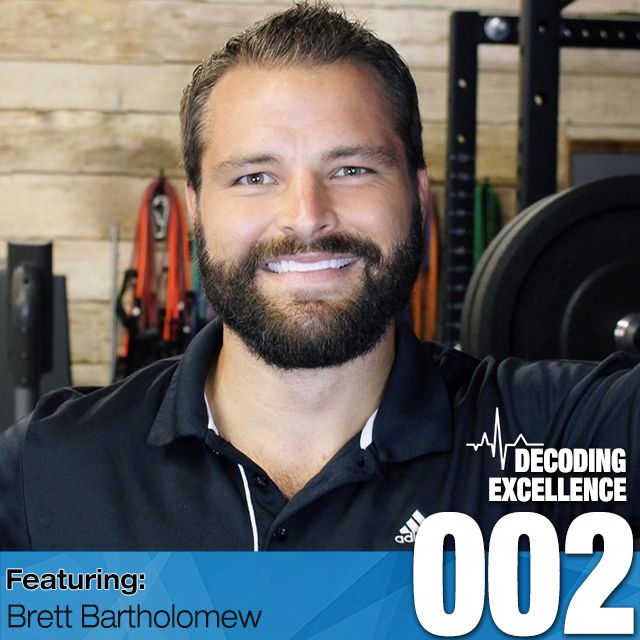
In this episode of the Decoding Excellence show I am speaking with Brett Bartholomew, Strength & Conditioning coach, Co-Founder of Unbreakable, and newly author of Conscious Coaching.
Brett and I discuss:
- What "Conscious Coaching" means
- How to increase athlete buy-in
- How to improve your influence and coaching IMPACT
- Strategies to improve communication
- Basics of human behavior
Key Takeaways
1. Buy-in beats programming. This is the hill I will die on, and it is the foundation of everything Brett teaches. If your athletes are not bought in, it does not matter how technically sound your periodization looks on paper. The best program in the world fails without belief. The simplest program in the world succeeds with it. Your first job is not to write the perfect plan. It is to earn the right to coach the people in front of you.
2. Coaching is about people, not just performance. Conscious coaching means understanding that you are coaching humans first and athletes second. Every athlete walks into your weight room carrying a life you know nothing about. The coach who takes time to understand that life will always outperform the coach who only understands the science. As the saying goes: Jills and Joes, not X's and O's.
3. Communication is a skill, not a gift. Great communicators are not born. They are built through deliberate practice. Learn to read the room. Develop what Brett calls your "socio-emotional feel." Some athletes need a fire lit under them. Some need a steady hand. Some need you to listen before you speak. The message does not change. The delivery must.
4. Trust is built in drops and lost in buckets. You cannot shortcut trust. You cannot microwave relationships. Every interaction with an athlete is either a deposit or a withdrawal. Show up consistently. Do what you say you will do. Care personally and challenge directly. Over time, those drops fill the bucket. One betrayal, one fake praise, one broken promise can empty it in a day.
5. Influence comes from connection, not position. Your title gives you authority. Only connection gives you influence. Athletes follow coaches they trust, not coaches they fear. Be a human, not a robot. Be where your feet are. Give a damn about the person, and the performer will follow.
6. Know thyself before thou coach. Conscious coaching starts with self-awareness. You cannot read the room if you cannot read yourself. Understand your triggers, your biases, your default reactions under stress. The coach who knows their own patterns can choose their response. The coach who does not is just reacting, and athletes can feel the difference immediately.
7. Adapt your archetype to the athlete. Not every athlete needs the same coach. Some need the commander. Some need the teacher. Some need the older brother. The art of coaching is diagnosing which version of you this athlete needs today, and having the range to deliver it authentically. That is not being fake. That is being professional.
8. Behavior is communication. When an athlete acts out, shuts down, or disengages, they are telling you something. The conscious coach asks what the behavior is communicating instead of just punishing it. Basics of human behavior: people move toward what feels safe and away from what feels threatening. Make your weight room feel safe enough for hard truths and hard work.
We discuss the process and history behind his book, Conscious Coaching, and why we need this book more than ever. You can find Brett on Twitter at @Coach_BrettB or at his website BartholomewStrength.com
This episode of the Decoding Excellence show is brought to you by Vald Performance, the makers of the NordBord. They can be found at ValdPerformance.com
Stay updated with the podcast by following me on Twitter via @AdamRingler or visiting AdamRingler.com or DecodingExellence.com
Key Takeaways
- Buy-in beats programming. If your athletes are not bought in, it does not matter how technically sound your periodization looks on paper. Your first job is to earn the right to coach the people in front of you.
- Coach humans first, athletes second. Every athlete walks into your weight room carrying a life you know nothing about. The coach who understands that life will always outperform the coach who only understands the science.
- Communication is a skill, not a gift. Learn to read the room and develop your socio-emotional feel. The message does not change, but the delivery must.
- Trust is built in drops and lost in buckets. Every interaction with an athlete is either a deposit or a withdrawal. Show up consistently and do what you say you will do.
- Know yourself before you coach. You cannot read the room if you cannot read yourself. Understand your triggers and biases so you can choose your response instead of just reacting.
About the Guest
Brett Bartholomew is a strength and conditioning coach, co-founder of Unbreakable, and author of Conscious Coaching. He and Adam discuss what conscious coaching means, how to increase athlete buy-in, and how to improve influence, communication, and impact.
Listen and Subscribe
Find this episode of the Decoding Excellence Show on Apple Podcasts and Spotify, or use the player above.
Go Further in This Episode
Enjoyed this conversation? Here is how to get more from it:
- Read the transcript below to revisit key ideas at your own pace.
- Share this episode with a coach or colleague who would benefit.
- Subscribe to the Decoding Excellence Show on Apple Podcasts, Spotify, or your favorite app.
- Join the newsletter at adamringler.com/newsletter for weekly insights on human performance.
Episode Transcript
This transcript was automatically generated. While we strive for accuracy, some words or phrases may be misheard.
[00:00:00] We're all apprentices in a craft in which none of us will ever become a master. I don't care who you are, how long you've coached, whether you've been in the NFL or MLB or NBA for 25 years, whether you've been at the collegiate level for 40 years, whether you own your own business, and you've done a really good job training and developing athletes on the private side. None of us are masters at what we do. Sport science, strength and additional, high performance coaching.
[00:00:27] Welcome to the Decoding Excellence show. Today's episode is brought to you by Fallant Performance, the makers of the Nordboard. If you haven't checked out the website yet, I highly suggest you head over there now. The Nordboard is a revolutionary performance technology that allows you as a practitioner to assess the hamstring strengths of your athletes you're working with. Whether it's rehabilitation, return to play or performance testing, ball performance has the tools you need.
[00:01:05] Today on the show, I talk with author and coach Brett Bartholomew. Brett is the co-founder of Unbreakable Performance, and also the author of Conscious Coaching, a book that's due out March 11, 2017. In the show today, we discuss everything from buy-in, influence, communication, human behavior, emotional intelligence. We get into discussing what the four components of what it takes to be a conscious coach. We dive into the idea of how to improve your buy-in, just the basics of social intelligence, and how to develop relationships, and how that's built
[00:01:45] With time. This is a wide range in conversation that should have immediate impact with your coaching abilities. I definitely believe you do not want to miss this show, and I look forward to hearing the response from you on social media. So without further ado, here's my conversation with Brett Bartholomew. Brett, welcome to the show. Yeah, thanks for having me. I appreciate it. I am just so excited to finally get you on the line and have an opportunity to not only steal an hour of your day, which I only imagine that you have some busy days ahead of you,
[00:02:24] But it's been nice to finally connect with you. How are things out in LA for you? Yeah, pretty crazy. No, absolutely great to connect. LA is LA, as you can imagine. LA is a fantastic town. There's a litany of athletes out here, and also unique opportunities that always present themselves. But that also comes with a unique amount of obstacles, right? So the idea of, again, just drawn from my past experience in the team setting where you have relatively clean scheduling, and then you could do some different things out here to survive in California,
[00:02:56] And especially LA, you have to be adaptable. You know, whether you're running a 6am group, a 9am group, I've learned that you basically have to kind of put it in bed so to speak a 30-minute leeway window, because of you never know what the traffic's going to be. You never know if there's a movie filming. You kind of never really know what's going on out here in terms of until it's already happened. So LA is fun. It keeps you on your toes, and the weather's always good, so you can't complain about that. Especially going from Phoenix, which is good weather by all accounts, but you know,
[00:03:29] A Midwest guy I only imagine, you're getting away from the negative 10-degree winners at this point that we've sort of survived through over the last couple months here in Kansas. Yeah, but it's kind of funny, right? Like as a Midwest guy, also, weather's never enough to keep me in one place. I've lived in places, I mean, this is my night state, and I'm fine coaching in the snow, I'm fine coaching in the sun, what have you, it just happens to be nice that, you know, when you do you have to do some field work or anything like that, it's never a negative thing to feel the
[00:04:00] Sun on your skin, and know that you're actually getting your own vitamin, vitamin D allotment, especially because us as coaches can spend so much time in the weight room in the facility that you see everybody else come in from outside, everybody else spent a good amount of time outside, and in Phoenix, you know, we coach pretty much any group of you coach, you spend a good amount out there because that was a big part of the facility, it was ingrained, whereas out here, oftentimes I have to split up my days from the field of work days, the strength training days,
[00:04:28] And what we do, just because of location issues, so it's not every day, I get to go outside and coach on the turf, I may hit that three, three days, three or four days, one week, and then the next week we may only be able to get out there three, because you also have to deal with local facilities out here, high schools, for example, one of the schools, I do a lot of our speed and agility training and what have you, it's a high school, right, and it's perfect facility, but there's certain times of day that you can get on the field unless you want to pay the school just a boatload of money,
[00:04:58] Right, so you have to get creative with a lot of your strategies, with integration, but you make it work. Adaptability is probably the key to anyone as far as from a strength and conditioning perspective, especially a schedule's change so often. The reason I wanted to have you on is because you're up to a couple of different things, and we're going to get into the neck of it and start talking a little bit about maybe some of the changes from going from Phoenix to LA and what you're role and what you're doing with Unbreakable out there, but for those that are, maybe this is
[00:05:33] The first podcast that they're listening to, or they're a 18-year-old high schooler that's interested in strength and conditioning and just started getting into it. I'd love to hear in your own words kind of your background. Tell the story that is Brett Bartholomew. Yeah, sure, so my background started really on with athletes performance after I had graduated from college, so initially I got my undergraduate degree in kinesiology at Kansas State. I grew up in Nebraska, so strength and conditioning was always a very strong interest of mine. I just
[00:06:08] Really never knew how to get into it. I remember asking my advisor how I could start training athletes when I was a freshman, and the irony is at the time he told me about this thing that was becoming really popular and poised to blow up in the future and that I should get into called CrossFit. I remember I'm like, well, that's not really my style, and I looked into it as a freshman in college, and it just didn't seem like anything that was along the lines what I wanted to do, but you know, he was a well-meaning guy, and just probably wasn't aware of the volunteer
[00:06:37] Opportunities that existed that we know are part of strength and conditioning, and neither was I. So it wasn't really until my junior or senior year that I found out about companies like athletes performance or internships at different universities because I just never really had any friends in the field or had gone that route. So after college I moved to Pensacola, Florida, down at the Andrews Institute, and did an internship there working with pro athletes, high school athletes, military, you'd get a lot of folks that came over from the Andrews Institute that
[00:07:07] Were looking for reintegration back into performance training after surgery or after being essentially put back together. After that I wanted experience in the team setting. So I volunteered at the University of Nebraska with their football team and did a six-month off-season volunteer role there, and time came when that ended, they actually needed to fill that role with a minority position, but the coaches were nice enough to connect me with a colleague at Southern Illinois. So I got a graduate assistant position at Southern Illinois where I went on to get my master's degree in exercise
[00:07:42] Science with an emphasis on motor learning and attentional focus. So to be a bit more specific, their attentional focus is essentially boiled down to how just how much what we say matters when coaching. So you look at external and internal queuing and the effects that has on people either psychologically, physiologically or both, which put a strong, I would say a strong kind of queue in there for what would become my later work with the book that I'm finishing up, conscious coaching now. Just looking at how unique it is that you get that manifestation when
[00:08:18] You're able to capitalize on both the physiological and psychological aspects of coaching, as opposed to just one or the other, just assuming that our athletes' minds go where we tell them to go, because that's not the case. When I was at Southern Illinois I served as the head strength coach for six to eight Olympic sports depending on the year that I was there, and then an assistant for football and basketball. So that was a great experience for me because it was 13 sports under one roof. And as you know, all too well, that not only challenges you from a programming standpoint,
[00:08:55] But also an implementation standpoint and administrative standpoint. So that was a really unique time in my life where I felt like, okay, I'd gotten some good team experience as far as getting a sense of the private sector. And once I graduated, I put my name out there for opportunities in both realms. So it ended up getting an opportunity to go back down to athletes' performance in Pensacola, and started taking over and working more hand in hand with the special forces and military endeavors there. So I'd work with five or six other coaches and a host of therapists
[00:09:28] Throughout the company. We'd go to different bases whether it's for Navy SEALs, Army Rangers, or folks coming in in-house. And we try to educate them on how to train more intelligently. No different than a college freshman, so to speak. You get these guys that live on energy drinks and uppers, and their body is riddled with injuries. And you're trying to teach them the concept of good rest periods and intelligent program design. And all they want to do is go, go, go, go, go, right? Their bodies are riddled not only from war, but from methods such as CrossFit and other things
[00:10:00] That match the intensity of their mindset and their job. So that was really interesting because, you know, at the time, I was 24, 25, and I'm having to look at Navy SEALs in the eye and tell them, hey, I know these workouts seem hard, but they're not as strategic as you think. And, you know, no offense to CrossFit, but for military servicemen and women, it's not the best option when they have to, you know, be prepared at all times for deployment or any number of tasks to not know where their body's physiological state is. And I'm having to try to tell these guys, oh, down,
[00:10:33] Foam roll, understand the importance of recovery, sleep. And I'll never forget the first time that a guy raises an and he goes, hey, kid, what you're saying is nice and all, but keep in mind that we run towards bullets, not away from them. And it became really clear to me that I had to speak in a different language in order to get these guys to care about this message and to care about understanding the importance of good training. Met ended up serving me well as I eventually moved on to the Phoenix location at API where I'd spearhead the pro sports side of things specifically football
[00:11:04] And then as a lead coach with the major league baseball side as well. So didn't really do the combine piece. That's admittedly not not a huge passion of mine. I'm a sucker for longer term programming. And I just I think maybe a little bit of my Midwest mindset is I like developing longer term relationships with guys. So not to take anything away from anybody that does do combine work or what have you. It just wasn't my cup of tea. So I worked primarily with NFL veterans that were in the off season. And so they'd come in anywhere from late January or early February
[00:11:35] And start phase one of their off season programming. Eventually that would lead to phase two, which was OTA prep where it would be my primary goal to intensify the programming, get them more callous so to speak from a physiological standpoint to send back to their team strength coaches at a higher state of preparation, especially because of all the limitations the CBA has. And then you know a good percentage of them would come back or a different crop entirely would come back in July for a training camp preparation. So bit of a misnomer that coaches in the private sector
[00:12:10] Don't program for more than two or three weeks as you know that that would oftentimes be anywhere from a 12 to 16 week process and beyond if they were free agents. You know when when we'd work with free agents I'd end up coaching guys and writing programs for an entire 12 month cycle. And these guys would basically have to be prepared at any time. You'd have to make sure and use a wide variety of modalities so that one you kept them at you know I'm not going to use the word peak but at a high level of physical preparation. But that if they got a call on a Monday from a team
[00:12:44] To go try out they weren't gassed. And that was valuable on its own right too right because all the discussions you have about which periodization models best what are you doing for monitoring all these pieces. It taught me that I had to get out of my kind of my bias real quick whatever model periodization I was following at the time which was you know at the time was just you know plain plain old simple linear periodization because you know elite athletes doesn't mean that they're elite trainees but I had to use concepts of modified conjugate undulating all these things are the same thing
[00:13:17] I had to use concepts of APRE I had to use all these different modalities because I didn't have clean situations where guys were just getting ready for this time of year unless it was with an MMA fighter that I was working with and we knew specifically when fight night was but to that standpoint and sorry to be verbose here to that standpoint you wouldn't even have control over their program and entirety there due to the fact that their fight team would alter the schedule and that's something I actually worked on a chapter that's finishing up with Greg Hoff and
[00:13:49] And Lacklin James on this right now about the realities of training mixed martial arts athletes where a lot of people will say yeah here's an eight to 12 week program that doesn't work in in fighting and that doesn't work in more sports than most people care to admit because you just have too many variables too many adjustments and the best programs I learned this as a graduate assistant I'd lay everything out as cleanly as I could in excel only to find out that I'd have to scratch a good percentage of it out with pen and start again and I used to think that was a failure on my part
[00:14:21] If I didn't consider every variable and then what you realize is no the best coaches are always adapt but that that is kind of a background not only of kind of experiential type things in those realms but also I think what really contributed to my mindset today my absolute disdain for absolutist type nomenclature statements people that kind of get on the high horse about what's wrong or what's right I think the more absolutist terms are the more contentious people try to make things the more they really kind of just are hiding or masking insecurities or trying to
[00:14:55] Gain a following of silent supporters that are kind of angry at the world and there's a number of different things you touched on this that I just want to revisit and I think the nature of this show is to explore the coach that's behind the whistle and there's no one else that I think does what you do as good as you and I know you're you're probably too humble to admit it but the the reason I wanted to have you on is I think at parallels very very close to maybe a labor of love that you've been doing and a project that you've been working on that kind of rings
[00:15:31] True and speaks to my heart here and that is the book the project conscious coaching what you've been working on for three years and I just want to dive into this because I think this is something that isn't explored nearly enough in collegiate professional high school strength and conditioning and frankly many other areas it's very tactical a technical exes of nose and and I don't think we get to the heart of communication and and just listening to your background at SIU and your major attentional focus and maybe the genesis for your passion and and your drive to improve
[00:16:11] Communication and human behavior I'd love to hear from you as we sort of dive down this rabbit hole for the next 20 30 minutes or so what is conscious coaching and why is it so important in this era this day that we live in now yeah I think simply put conscious coaching is just another way of saying that you know the balance to view on things as it pertains to the importance of the physiological aspects of of elite development the psychological aspects of it and the cultural aspects which of course comprises behavioral as well within those domains is best and the idea for the term just came
[00:16:49] From two points one people use the term master coach a lot and I say within the book that I think Hemingway says it best and you know we're all apprentices in a craft in which none of us will ever become a master I don't care who you are how long you've coach whether you've been in the NFL or MLB or NBA for 25 years whether you've been at the collegiate level for 40 years whether you own your own business and you've done a really good job training and developing athletes on the private side none of us are masters at what we do because we're always going to encounter situations
[00:17:21] That make us have to adjust go back to the drawing board and in alter our approach and that by nature is is you know you can't have in order to have mastery and essentially what is the skill of adapting you have to be conscious of all the variables and all the options that exist so conscious coaching became a term of saying hey don't try to be a master coach try to be a conscious coach like have a 360 degree awareness of everything see the big picture be able to balance the science and the art of coaching and understand that all the technical material as it pertains to
[00:17:57] Our physiology the biomechanics everything that matters incredibly right but you also have to be comfortable adapting it to give an athlete or group of athletes needs and I think it just happened to coincide well with one we're society and where our culture culture is at right now everything is so grandiose everything is so absolutist everything is so this way's best that way's wrong and not only that but it's become sexy to be those things and I think you've lost and you're seeing it in our profession as well where you have a lot of people that can spout off you know all the terminology
[00:18:34] They need to they can write a program that's fairly well done and periodized long term and has all the you know classic modalities of multi joint exercise that are multi planer right all these pieces in there but then you put them on a floor and tell them to interact with a group of athletes and they struggle and they struggle mightily or if they're not struggling they have a clipboard in front of their face the entire time that thing and that is just as bad as the coach or guru out there that's sitting there spouting about motivational and inspirational nonsense and when you
[00:19:05] Ask them about what you know what their periodization strategy is they just look at you like they're crazy you're crazy and say all we do is work and that sounds funny but I've had that experience I going to visit a facility a guy looked and said man like periodization we don't mess with that all we do is work then it just seems like there's two ends of the spectrum here that I don't understand how it's got that way I mean you see it on the questions and social media somebody will say hey do you like X or Y and I'm like well both it depends right like what research what research do you
[00:19:36] Suggest I should read to learn more about the nuances of agility right or tissue tissue tolerance or you know if I want to do velocity based training what's best well I can't just give you one article and then you're going to go know everything you can you've got to implement it you've got to talk to your athletes about it you've got to do it yourself on your own training but I think we just have people Adam and and probably to consolidate this I say it's an issue between exposure and experience exposure comes down to subjecting yourself to an influencing event right so studying
[00:20:11] Something observing something whereas experience is direct participation with an influencing event so that's leading directing managing actually interacting like being within that and there's right now the world of coaching has an exposure issue more than we have an experience issue and that's probably how I could consolidate that as I was browsing through your website and I was kind of researching some topics related to this book you touched on it already you talked about influence you've talked about the the the need for better communication why do you think we're
[00:20:52] At this point right now where we have this imbalance yeah this is one where I feel you know usually I'll try to think of an answer I'll say well you know I'm not sure any piece like this this one to me is pretty straightforward and I'd love to know if you agree or disagree because this is your show and I know I'm the guest but you know you have tremendous insight and you know especially on this topic and many others but to me it comes down to we have an absolute lack of great mentors or if somebody doesn't like the way that that's phrase I would say this we have
[00:21:27] Forgotten just how important mentoring is because if you have a great mentor right like think about when blacksmiths back in the day when you think of the classic mentor apprentice thing I always think of a guy coming into watch a blacksmith work right from from cooling the steel to hammering it out to smoothing the edges all of that you had somebody that taught somebody not just how to handle the tools but also how to handle the blade and now we have people that come in and immediately they want to see you know do you have gym aware or do you do this or what athletes you work with or
[00:22:01] What drills are we doing they're sitting there looking at the modalities and they're not paying attention to the conversations they're not paying attention to the silent things right I think Don Elbuche and the Citadel just posted a really good thing today on on Instagram it just showed the team huddled around each other and it said you know something along the lines of what we've built is is under the lights about thousand invisible mornings and the equivalent of invisible mornings is those invisible interactions or what becomes an invisible action to a lot of these young
[00:22:32] Coaches were they're just watching the training they're not watching the coaching I'll say that again they're just watching the training they're not watching the coaching and that's where you start to become an issue because they think that the magic is in just they think the magic is in the the served dish as opposed to the recipe and that becomes dangerous so I think I think we need to have you know better mentors and I don't think that's a matter of pay more certifications or or more of this nobody's focusing on coach development and that's a project that I'm working on right now like
[00:23:04] When I get spare time is I know that people can go to clinics and workshops and thank god for these things by the way because they contributed to my development people can go to all these courses and clinics and workshops where they can learn more about you know the x's and os of what we do but how many talks or lectures do actually see people give on how to develop as a coach how to be a better communicator how to be better at all these pieces and and I'm not talking about those talks where people just shout out quotes right or or the ones that say hey sit and talk with your
[00:23:33] Athletes and these warm and fuzzy kind of pieces I'm talking about literally the science of how to break down relationships and what they could do and that was a big purpose of how this book was constructed the skeleton of the book is meant to give people a road map so if you look at chapter one chapter one and I'll release a table of contents later either this week or next depending when this is released but chapter one is what I call maps and meanings and that is just re-identifying certain key terms why the term conscious coaching you know the idea of a coaching
[00:24:06] Compass and how that can lead us down a better path of coach development not just technical tactical development chapter two is is called know thyself to know the athletes and that is just about how you get a lot of these coaches that come in and want to re-vergitate science but the reality is they don't even know their own coaching identity and some of these people may not even know themselves as individuals in general they don't know what why do they get into this how do they think they're going to go about spreading this message or really developing athletes aside from
[00:24:35] Just a physical aspect you know what got you into this how does that affect your coaching style kind of that classic are you more of a John Wooden or Bobby Knight kind of thing right like understand different paradigms and archetypes that exist because you can't coach you can't coach well if you don't know what you're all about as an individual and it dies deep there into some ideas and tough questions for people to ask themselves chapter three is simply called seek to understand and that chapter goes deep into human nature and the science behind first impressions the science
[00:25:09] Behind conflict and conflict management and then it also goes into about depending on which ones make the final copy 14 to 16 different personality archetypes so the technician the royal the soldier the specialist the politician the novice the leader all names for for athlete archetypes that I have come up with that kind of classify them and again not tight casting I'm not profiling unfairly I'm not I make it very very well stated at the beginning of the chapter listen we're not we're not trying to say that everybody is just this or not trying to say that you can simply have a reductionist idea
[00:25:49] Of somebody's personality and put them in a box what I am saying is there are certain traits of behavior that go into some of these categories and whether somebody's a mix or just more predominantly one of these these are personality archetypes you'll have to deal with when I'm a coaching floor and just like we need to know you know from jump profiling or eccentric utilization ratio where where we need to focus our training efforts whether it's more on the elastic reactive end or more on the max strength characteristics we need to identify
[00:26:20] Those things within personalities that we're dealing with as well if we hope to manage that group dynamic so chapter three is the one that I think most people are are going to really dig into and the cool part of it Adam and I definitely want to get you on version two of this is that is broken up not only into an overview of the archetype right so their strengths weaknesses suggestions for how you can better connect or adapt to those styles but I've also brought in 15 coaches or in some instances even a therapist from around the world people like Dave Poloca from the Miami Dolphins
[00:26:52] People like David Joyce people like Ron McKeefery Barry Solan the coaches from all different avenues that have worked with a variety of populations that they all got to pick one archetype and they've told the story firsthand about how they interacted with that individual so that coaches reading this can say okay here are some suggestions from Brett here's key identifiers but what do I do and then there's always that person that's like well that's not really applicable well you know not to get defensive but good luck telling 15 coaches that are at pretty high level places in their
[00:27:27] Career and have dealt with a lot of stuff that this stuff isn't real one or applicable to or let's just say important three you know because if you think you're just going to go out there and spout your nonsense of saying hey guys we're working up to 90% of our one rm today make sure to do you know x y and z get your warm upsets do this make sure to sign out that last that we need to see it and then a bunch of 18 to 20 year old kids are going to be pumped at the same level that you are to go train right like that's the great that's the faint of ignorance right we think that just
[00:27:59] Because we've written this perfect program then it's not going to be done poorly or that these guys are like today I have to squat like I'm doing eccentric squats in my own program I'm excited about that because I like squatting right but my athletes are a fighter that I'm working with hate squatting like so I've got to help this guy understand how different the development of different contract title properties can benefit him in the octagon when he's applying jokes or trying to apply leverage at different angles and that's what this book you know helps people uncover is how do you speak in
[00:28:30] Their language chapter four is about constructing connections so it's just you know tools tenets and strategies so it's listed into about 12 to 13 common mistakes that most coaches make when trying to develop trusts create good atmospheres of you know I kind of collaborative and cohesive engagement and kind of you know almost as made so people could essentially rip them out of the book and pop them up on the wall and have that reminder of reminder of what not to do because I thought that was important to add in the book like if people just hear me spout about what I think it takes
[00:29:03] To be successful when in my mind I'm not I'm certainly no like glaring example of success but I know what failures have helped me improve you know and I always think that if you're not sharing failures then nobody should trust you anyway so there's things that people often fail at and then also then I break it down into uh 13 strategies based on science based on social science research that say if you do these things by and large people will react or behave or perceive what you're saying this way and then to close that out at um chapter five which goes back to the original
[00:29:40] Question is what are we lacking how did we get into this situation chapter five is about legacy so applying the ideas of conscious coaching to our craft in our lives whether that's how to be better mentors how to distance yourself from this kind of caveman uh you know if you have success or you become relatively well-known for something you're a sell out in our field if you want to provide a life for your family you know and and don't just want to be on the floor 24-7 until you're 65 years old you know are longer yeah you're you're not a sell out how we can actually be practicing
[00:30:17] Strength and conditioning coaches or performance professionals and have that be the bedrock of what we do always because that authenticity is important but still be conscious and feel okay with doing bigger things in our lives to actually live them and enjoy them and give back right because i think that we're a unique turning point in our community where and i told you before the podcast right complete transparency to the listeners i don't feel comfortable marketing a book i didn't feel comfortable getting on social media when i first did it
[00:30:49] Because there's a voice in all of our head that says this is wrong this is what sell out to do this is what gurus do this is what people that aren't actually coaching do when in the reality is all we're trying to do a share when do writers look at that do writers and authors say oh you know what so and so it's written in fifth book um and he's actually been able to help organizations or he's been able to do this uh man he's a sell out if a lawyer makes partner you know do they look at that as like oh man now he's got his name on the building right like he must be a really crappy lawyer
[00:31:19] And nobody strives to have their name on the building like at some point you've got to say i'd like to coach and be on the floor day to day but i'd also like to take a vacation with my wife i'd also like to provide a life for my kids and i'd also like to have an exit strategy and be coaching at 65 because i want to not because i have to and this is something that i'm passionate about because i've lived it at a relatively young age right like i i left a collegiate setting doesn't mean i wouldn't go back it just means that i had an opportunity to to get a full-time job in the private
[00:31:49] Sector i left api after six years to take a very big risk out here in la um to become part owner and director in a company called unbreakable and that was hard because four weeks later i had an NFL opportunity something that i had been wanting to do for a very long time but my wife and i had already started our move and we had already accepted a job so we came out here and decided to see it through only to have 11 months later the place essentially get uh get bought out and want a franchise which is something i'm not passionate about regardless of the money involved
[00:32:23] And step away from that in october so here i am in my eleventh year of strength and conditioning i've split with a business partner that i had philosophical differences with which is a part of life and i'm coaching athletes out of a spot here in Beverly Hills while we weigh our next options right and so i'm coaching four to six groups a day and you know that allowed me to still be able to write the book in the evenings and do those things and it allows me to literally sit here with my wife and say you know what the first move and first few moves were for development the second
[00:32:54] One was for experience kind of like we wanted to get the idea of what it took to run run a business and and and not only that will lead a staff of about 13 people and help from a managerial standpoint this next move is about us we want to have a kid we want to have two kids we want to be able to both be in careers that we're happy about and we see ourselves being in for about five to ten years before we consider doing something else so we have some conversations and some opportunities right now whether it's in the team setting a very unique organization or even doing our own thing and in the
[00:33:26] Meantime i'm coaching and writing and speaking and consulting and so i just i bring that up because it's one thing if you get these pieces of advice for these views from somebody that kind of has been comfortable in a career for a very long time but i've always viewed it as i don't want to speak on something unless i've lived and i've taken risks i've coached my butt off and i've tried to share everything the good and the bad and the ugly with people and so you know what it was time for this book to come out and and hopefully inspire others to do the same maybe a couple minutes ago when
[00:33:55] We were talking about why our industry might be in this sort of state that it's in right now you describe well it's you know thinking about mentorships and i just think if we were to replace the word mentorship for relationships and how we can't fast track a relationship especially a relationship of a quality standpoint and that's i think we're that's what we're kind of seeing right now in the industry with that the need for bigger and more robust programs is it's cheapening the relationship that a mentor could possibly have with a intern and i think anything that's built
[00:34:37] Of quality is built with time and i think this might be an interesting segue into maybe the the four sort of coaching uh compasses of your book when it talks about relationship and relationship building and the time that it takes and the the social intelligence but i would love for you if you could and i know we're we're getting maybe midway into the show here to just given a brief sort of idea of what this coaching compass is why you kind of made it maybe some strategies to improve in one of the four domains yeah no that's really so the the coaching compass right is just kind
[00:35:20] Of that that classic take on a we all we all can relate to a compass and that's something that social science talks about in general if you want to change behavior you have to put an image in people's mind's eye otherwise it's very hard for them to carry out relate to or even you know just adopt in in any kind of way so what i always say is you know the cardinal directions uh you know on our coaching compass so to speak is signified by four elements of what really makes that conscious coach a great teacher and communicator and you could even put in like manager
[00:35:52] Director or anything there right as well because those those qualities are inherent and that's buy-in which is essentially if people want to look at buy-in as trust and there's a whole you know piece as to why i call it buy-in and not just trust relationships social intelligence and time so those those replace those those cardinal directions right and so buy-in came from the idea that you know if you ask any coach at any level of sport or anybody in business about you know key determinants of of success when they first begin working with a group of athletes or individuals
[00:36:25] Within five minutes you're gonna get the term buy-in mentioned and if not buy-in trust they're they're interchangeable and that wasn't my attempt to like you know market some kind of frank in term and say isn't this cute that i'm calling trust buy-in i use it because it's a term that we're really all just gonna keep using right you're not gonna no matter how you feel about that term and how salesy the term sounds right because a lot of people think oh i'm trying to get buy-in i'm trying to sell somebody something well Dan Pink Dan Pink talks about that in his book you
[00:36:55] Know to sell his human he says we're all involved in non-sales selling i don't care who you are you know you you were all trying to get somebody to understand and adopt an idea it doesn't matter that you're trying to sell those things to somebody what matters is you know what's the context behind them right like are they actually gonna give them value or are you being snarky right are you like or how are you going about doing it so you know terms aside basically being able to develop buy-in is is something that is definitely at the forefront of
[00:37:27] What we do and i'm gonna list these out and then i'll go talk about you know strategies for them because that's essentially what the book is about it's about all these strategies relationships i mean that term right like an operational definition so to speak that includes the interdependence of two individuals or more working together to achieve common goals and the level of understanding between them right now and i give there's tons of references within the book so people can read about these things these aren't my definitions that one particulars by three researchers
[00:37:58] Nulls and then i usually mispronounce this shan mougam and mormer in a 2015 book that they did and that's reference so people hopefully have a wide range of resources to look at so you know i look at that in this in the sporting realm or in our world relationships is best described as kind of a social vehicle right for performance success if my athletes are the people that we're working with don't really care or feel like i care about them then they're not gonna trust me so you already see the integration there and the importance of buying and relationships is you can't
[00:38:30] The two are inextricably linked whether you do them well or whether you don't and you know i remember having a coach that i worked with at one point in time brilliant coach but like a lot of times if i feel like i'm losing my mind from a programming standpoint i go back and read some of the programs he put together and study them and it puts me right back on track of where i need to be because he just he knew the exes and i was very very well and it's humbling to go back and review some of his programs but he sucked at talking to guys right the only the weight room guys loved him
[00:39:03] He couldn't he couldn't relate to skill position players he couldn't relate to anybody that wasn't deeply passionate about lifting heavy and hard and he more importantly he didn't care too he didn't really work to try to get them to understand why those things were important it was just uh you know like lifting heavier soft so you saw all these great programs i'm not gonna say they went to waste right like they still help the guys but they weren't they weren't realized the adaptations weren't realized to the height of maybe what they could have been because guys knew that they knew that at the
[00:39:31] End of the day and part in my language that he didn't give a shit about it and and that's no different you know whether it's a business proposition or anything so you know when you look at evolutionary psychology that idea of of us collaborating and cooperating is what helped elevate us to the top of the food chain right if one person or tribe made a big kill they'd share it with others within that tribe because in the future they might depend on others to share their food with them so collaboration is literally a point of survival and what we do and that's based upon
[00:40:02] Relationships then you know if you follow sport culture that hasn't changed much despite not having to go any farther than the nearest Costco for a supersized surplus of food the success of an individual or coach athlete relationship in teams and even governing bodies that regulate them are largely largely largely dependent on relationships and so i give a whole framework it's what's called the three plus one C framework that's written about in depth in a in a text that i use in the appendix of the book that that kind of show how these things are manifested and developed
[00:40:38] In many different capacities social intelligence is probably my favorite term of the three the term that i use in the book was inspired by an internationally recognized social scientist and professor again right like tired of people calling this stuff the the art of coaching there is a science to the art and the science of communication and the science of social intelligence far surpasses the amount of research that we have on strength and conditioning far surpasses it right and it's just time for that not to be ignored any further and this individual that inspired my
[00:41:11] Definition and the book was Ross Honeywell doctor Ross Honeywell and social intelligence according to him referred to the exclusivity of humans to navigate and negotiate and most importantly influence these social relationships and environments right now you've had authors like Daniel Goldman Robert Greene EL form Dyke who was really kind of the originator the term in 1920 that have written about this and all these people have made amazing contributions far beyond anything i could do right i'm not reinventing the wheel but nobody's discussed how they can use that in the realm of performance
[00:41:47] Coaching or strength and conditioning and that that piece right there is essentially what this is a book is about people have written on this stuff no doubt but nobody's written from a performance coaching or strength and conditioning whatever term you want to use nobody's written on it in that capacity you want a Soviet translated manual and plyometrics we got it you want something on cluster training we got it you want something that teaches you how to navigate these these super complex power dynamics and hierarchies and and social environments that we have who's doing that right and
[00:42:20] So i i don't have many things that i think are original that i could contribute right like nobody needs me on twitter saying that getting a stronger posterior chain enhances uh can enhance speed development or the value of eccentric and possibly reducing hamstring strains and and hoping with tenon apathes and god knows nobody needs another person talking about the importance of like uh you know certain things on running speed or even squats or what have you we have those voices and they're valued what i looked at is essentially like where can i contribute and and admittedly that
[00:42:54] Comes at the risk of you getting pigeonholed in those things i mean i think if people follow me on these social networks like instagram or twitter and they look back um you know i've posted a litany of videos of me training my athletes you go to my website i put that front and center so there's no question about the things that i believe in and there's no hiding um but at the same time you've got to contribute a unique voice if you want to help you know i this this field saved my life and so i want to make sure i give something unique to that so social intelligence comes down to essentially
[00:43:25] People smarts and social agility so like the ability to recognize how one's social situation differs from another whether you're talking to a sport coach an athlete whether that athletes from East St. Louis or rural Iowa and how to adjust our behavior to match those changing demands right so i've always believed that one of the most overlooked signs of true intelligence is somebody's ability to avoid getting hung up on minor or relevant points now don't say that on twitter right because people will sit there and complain that people speak and abstract on social media which is
[00:43:58] Comedic in general could you have 140 characters to say something profound right like that's that that lends itself to abstraction so um yeah there's a hole i mean there's probably seven to fifteen different pages on things that reference social intelligence just out of the gate um time to go into the next part of the coaching compass and sorry to be long winded here Adam but i don't want people to get you know i don't want people to get brief responses i want them to feel like they understand what what this is about uh you know you can explore buy-in relationships social intelligence
[00:44:31] But the reality is is time it is always going to be the trump card so to speak it as you you can't rush this stuff you can't rush trust you can't rush influence if you do you're going to push people away from you know and you're going to come off as that snarky you know salesman or or more importantly kind of that desperate coach that's like hey man like let this thing play out right like everybody's had that overeager boyfriend or girlfriend in their past that like yeah you guys like each other here but they couldn't just let it sit right let's not rush this and as silly
[00:45:05] As that sounds that's not different than these kinds of relationships you have to let we slow cook our athletes in terms of their physical physiological development you have to do the same thing from a psychosocial standpoint right and and having that lack of patience and almost too much of an intense sense of urgency really on my career hurt me because i was in a position where i'm training navy seals or pro athletes at 24 or 25 and the first thing i thought i should do in order to get them to listen to me is prove how smart i was so i'd sit there and explain my training
[00:45:37] Methods i'd talk about how each exercise was doing this and that and and some of these guys were just like dude that's cool but like we got it like we just want to train you know and i realized that you know i i needed to quit doing that if i was ever going to develop true relationships because it came off it showed how really insecure i was as a young coach just trying to to spout how smart i was right like every five seconds i was trying to answer somebody some research i was trying to show somebody these things and and that's great in our field right if you have an awesome
[00:46:08] Paper atom like on stuff that you post like i'd love to see it but i had to learn that my athletes weren't motivated always by the same things and i had to balance that equation so those four pieces and how do you understand the background of them how to leverage them how to develop them and how to utilize them are all part of the very first chapter of the book and then specifics are teased out more as we dig deeper that that was a big piece i did not want this book to be something where people read and they felt like yeah there's some good stories in there there's some good quotes but
[00:46:40] Nothing i can use this book was centered around tools that people can hopefully use from day one so that's the coaching compass in a nutshell you know i i think that this book is probably this book is needed outside of just drink conditioning and i think the topics that you cover in this book easily transcends the the microcosm that is sport because everybody can get and become even a better communicator a better listener develop richer relationships spend more time and and as i think back on the the mentors in my professional life
[00:47:16] The people that spend closest to me are the ones without without knowing the four components here are the ones that navigated those four disciplines incredibly well they spent the time with me and rich time and and then you shared it earlier on just about it's it's the invisible moments it's the thousand invisible mornings where it's the time that you sit behind a desk at the end of a work day that you spend with your colleagues or close friends and tell stories or reminisce it's not what you might necessarily put up on on instagram or put on twitter that helps bond a relationship
[00:47:53] Together and you can't cheapen that by artificially creating those moments you can't rush it by trying to be over eager with trying to drive the relationship you know it takes time it takes that slow cooking nature i'd love to kind as we come towards an end of this i would love to hear from you about what you think you would have done differently if you could rewind the clock and you're a young coach you're just starting off your first internship what is that a piece of advice that you would give that 19 2021 year old coach as they're entering into this field that seems
[00:48:35] You know bombarded by the need of of mastery of microsoft excel by gps accelerometry data monitoring what would you be that piece of advice that you would tell that younger coach that's a really good question i think i know that i'll give them the same advice that i try to continually live by in my own development daily right because even though this is my 10th 11th year doing this there's times where i feel you know insecure about those things right like i can't get a bunch of gym awareness right like so i hear people talk about you know velocity-based measuring and i'll all
[00:49:10] Use push only to see people on twitter say well this isn't valid this isn't reliable this isn't this and it doesn't matter what you say like i have to use what i can use and i have to adapt it for my for my situation right or excel nobody taught me that usually when you come up under that undergraduate kind of setting you kind of see the template you grow up under that you learn how to adapt it i had to create and adjust and refine and and kind of learn excel on my own i admittedly didn't really have a mentor i had situational mentors people that taught me along the way what i did
[00:49:44] And what i didn't want to be but i didn't grow up under any one system despite my time at api and despite my time in the collegiate setting or what have you that really just showed me the way universally right so i felt that pressure i felt that pressure to constantly have to learn all the oh man how do you do a pivot table now i have to do this now i have to so i'd say there's three things that essentially it comes down to you have to remember one more than a third of the noise out there you just have to ignore there's so much information out there that you think that's a good
[00:50:17] Thing the reality is the vast majority of it is white noise and you know you get bombarded right think how much the think how often the research comes out now it seems like every week when early i get an email that the oh the January issue has dropped to the nsca journal now it's this now it's that and then there's then there's a research quarterly then there's all these other pieces and you know no matter who you are unless you're unless you're not unless you don't have a family unless you don't have a life unless you don't have any of those things you're not reading all of this
[00:50:49] Then i can say that because that's a distinct difference between me as a graduate assistant or or a younger apprentice coach and now i've gotten better at filtering filtering things right like i'll stay up with the research but i don't lose it in the same OCD mindset that i used to if i missed one of the one of the reviews because i know if it's good stuff one i'm going to hear about it from other smart people i surround myself with or it's going to be such a pervasive kind of topic that it's going to come up you know when i'm browsing social media or when i'm doing this
[00:51:19] And then i can review it so by nature like i've become better at using my environment to help me filter out what's real what's noise what's flashing the pan all that so one don't don't let your insecurities get the best of you everybody feels that oh my god am i still up to date kind of thing and by and large listen no matter what comes out the physiology of our body we're going to learn more about it no doubt and you've got to stay on top of it but there's not going to be any big paradigm shifting thing where we find out progressive overload stressing the system resting strategically
[00:51:51] You know the proper you know the benefits of good sleep as you espouse widely atom and nutrition by and large those pillars are staying right so don't worry if you didn't hear about the the most recent adaptation of floating uh periodization model that came out from you know god knows what country or what blogger what have you at this point in time so one ignore the noise to be good to people there are so many people that just based on where you work uh what school are you with what pro team who have you coach you know what you've written how many followers do you
[00:52:30] Have there are so many people that engage the importance of a relationship based on that kind of stuff as opposed to just true competence and somebody being a good person and i promise you if you step on somebody's toes now or you try to act high in mighty it will come back and bite you in the ass it absolutely will i've had people that threaten me in the past or did this and that that ended up asking for jobs i've had to rely on other relationships that i've built to you know uh vet whether a job was worth me taking or not or or if a young coach needed a reference he had to
[00:53:02] Reach out to people if you are not good to people in this field and if you are not humble in this field you are going to get outcasted in some way shaper form or another and it's sad i mean i've seen it to former interns of mine that i've gone on to coach in the NBA or NFL and immediately you know they they kind of get this big time persona that was at coach's conference uh just recently in january and was talking to a coach that that having trouble finding he was a young coach and he hasn't been able to find a really steady job the past two years despite having two master's degrees of CSCS
[00:53:35] And it is a very just good person and i watched him talk to two coaches you know in the collegiate setting and they were sitting there chopping it up and i was having a conversation with somebody else and the minute those coaches asked him where he was coaching and he told him a private facility and not you know Alabama or not southern miss or not Nebraska they they're like oh cool and that's that that was the conversation because apparently now this coach had nothing to offer them because he didn't have a long go behind it be good to people it will come back and bite you if you're not
[00:54:06] So uh the third one is that you you just got to stick true to what your identity is i think a lot of people can get caught up in trying to be this kind of you know the radio uh strength and conditioning is and and and strength and conditioning is like the radio now right where people every five seconds they want something new right you talk about speed development okay now they're sick of that you talk about strength and conditioning or or more strength power oriented stuff all right now they're sick of that you talk about psychosocial stuff well now
[00:54:37] They're sick of that no matter what you talk about somebody's going to criticize you because it's not the song they want to hear on the radio and what you've got to learn is don't worry about that share the information that you find valuable share the information that you think you would have liked to have known back in the day and hold true to your values that's a really Disney quote that i haven't described everywhere in my apartment is when your values are clear to you making decisions becomes easier and your values should be one of patience your values should be
[00:55:05] One of trust your values should should be one of relationships and your values should be one of just knowing how to communicate and and and benefit those around you in an adaptable way and the irony of that is those are the same values that comprise our coaching compass and being a better coach and being a good person are synergistically and inextricably linked in every way imaginable and people need to remember that first and foremost over everything else and what we do i think that's timeless advice that any coach any person should walk away from and start trying to
[00:55:40] Apply today brat i mean i'm not going to take much more of your time because i think you've you've dropped enough knowledge bombs and shared enough of your wisdom and and strategies and what you've learned over this labor of love over the last couple years as you're writing this book your book conscious coaching comes out March 11th if i was a CEO i'm a teacher i own my own business whatever whatever discipline and i am browsing let's say amazon right now and i come across your book and you got 30 seconds to say why should i click buy it now button to amazon what would you say to them
[00:56:20] I'll do it less than 10 seconds because no matter what you do or what profession you're in people are the ultimate performance variable i love it and leave it at that and you know that that's enough that states clearly the mission behind the book and also establishes some intrigues what the hell do you mean by that but it's pretty simple right it's it and it's not in my opinion it's not trite it's something that's true no matter what you're doing no matter what data you have just suggest anything any outcome the reality is people are the ultimate performance variable and if you don't understand
[00:56:52] Them you're not going to get the best benefits out of your business out of your performance programming out of your relationships you name it so that is uh that's that's that's it and i'll show Brett i want to thank you for spending your time and sharing what is otherwise probably a busy busy next couple weeks of your life as you're trying to launch this thing and get this thing out there thanks so much for for coming on today and sharing some of your wisdom and your path and and what you found to be resonating moments in your life that's sent you up for the success that
[00:57:26] You have and thank you so much thank you for everything you do Adam i appreciate man you you keep me sharp iron sharpens i am for sure and and in the multitude of voices out there yours is always refreshing valued and and you know just authentic so thanks again for having me on the pleasure is online Brett thank you so much and i look forward to touching uh touching base here soon yep absolutely
[00:57:56] I want to thank today's guest Brett Bartholomew for coming on the Decoding Excellence Show and investing his time with me and sharing some of the wisdoms that he has learned through his coaching career Brett has a book called conscious coaching coming out March 11th 2017 you can pick it up on amazon.com Brett is a good guy in this industry and i absolutely believe he deserves to get the recognition he has received so far i would encourage you if you're interested in any of the topics covered throughout this show to research his book go out and purchase it it's supporting a good
[00:58:33] Cause and supporting a good man and i cannot thank Brett enough for jumping on to this show you can find Brett on twitter and instagram at coach underscore bret b or his website bartholomewstrength.com and like always this is an exploration of the intangibles, the tactics, the tools, the strategies and techniques that goes into decoding excellence