#019 Mark Watts

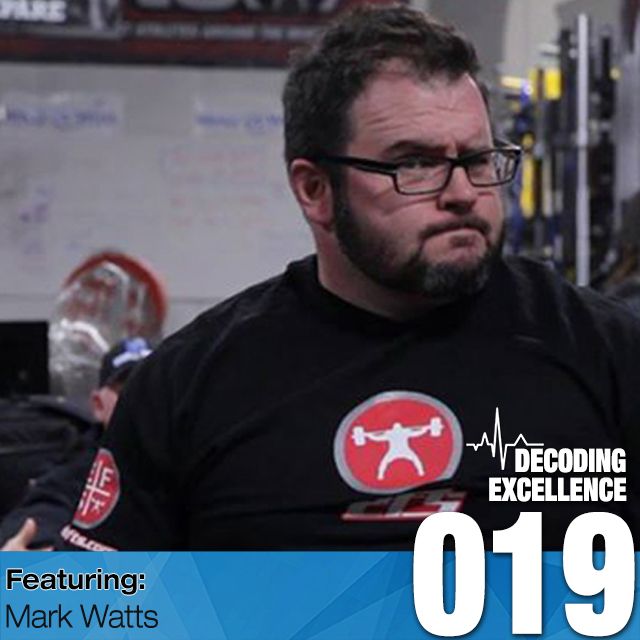
In this episode of the Decoding Excellence Show, I am joined with educator, former strength & conditioning coach, and frequent contributer at EliteFTS.com, Coach Mark Watts.
This episode was a great return of typical fireside conversations with phenomenal guests. I know you will enjoy many of the things we chat about throughout this episode.
Today on the show, Mark & I discuss:
- His background into coaching
- Strong influences in his life's path
- Successes & Failures within coaching
- "Real World" advice to young coaches
You can catch up with Coach Watts on Twitter at @Coach_MJDubs. You can also navigate to his many articles on the EliteFTS website at EliteFTS.com.
Key Takeaways From This Conversation
Mark Watts is an educator and a coach's coach, the kind of guest who makes you want to take notes. Here is what I carried out of this one.
1. Your Coaching Journey Is Your Credential.
Nobody cares where you started. They care what you learned along the way. Every stop, every mistake, every athlete who taught you something, that is the real resume. Embrace the struggle. It is the mechanism of growth, not the obstacle to it.
2. Borrow Brains Shamelessly.
The best coaches are synthesizers. They study mentors, steal frameworks, and blend wiser voices with their own field experience. Kim Scott taught me about candor. Iacocca taught me about tempo. Your influences compound. Name them, honor them, then become one for somebody else.
3. Successes And Failures Both Teach. Failures Teach Faster.
Every coach has a highlight reel and a blooper reel. The blooper reel is more valuable. Let young coaches make safe mistakes, because fear of a mistake should NEVER lead to a failure to take action. Run the post-mortem. Go again.
4. Leadership Is A Practiced Skill, Not A Gift.
Nobody is born knowing how to lead a room. It is taught, mentored, and maintained through deliberate reps. The weight room is a leadership laboratory. Give young coaches real responsibility, real feedback, and real room to grow into it.
5. Develop People As People.
The coaches who work for you want what your athletes want: to grow, to belong, and to be held to a standard worth meeting. Remember the details of their lives. Ask for their feedback. And never tolerate toxicity, because one bad egg ruins the rest.
That is what I took from my conversation with Mark. The full episode is at the top of this page. And if you are an educator or a young coach, do what Mark does: write, teach, and give it away. The profession gets better when the people in it share what they know.
This episode of the Decoding Excellence show is brought to you by Vald Performance, the makers of the NordBord, DashBord, and the GroinBar.
They can be found at ValdPerformance.com
Stay updated with the podcast by following me on Twitter via @AdamRingler or visiting AdamRingler.com.
In addition to those social mediums, you can head over to AdamRingler.com/Newsletter and sign-up for my weekly newsletter. This is a newsletter for the curious. It's chalked full of interesting articles I've read through the week, things I'm exploring and finding fascinating through my week, and a collections of thought experiences and resources I've cultivated.
It's essentially a Birchbox newsletter for performance-related articles, research, and daily musings.
Thanks again for listening to the Decoding Excellence Show! I appreciate all the support growing this Sport Science, Strength & Conditioning, and High-Performance Coaching resource. If you have taken anything away from the show, please login to iTunes and navigate to the Decoding Excellence page and leave us a review.
Key Takeaways
- Your coaching journey is your credential: every stop, mistake, and athlete who taught you something is the real resume, so embrace the struggle as the mechanism of growth.
- Borrow brains shamelessly: the best coaches are synthesizers who study mentors, steal frameworks, and blend wiser voices with their own field experience.
- Failures teach faster than successes: let young coaches make safe mistakes, run the post-mortem, and go again.
- Leadership is a practiced skill, not a gift: the weight room is a leadership laboratory, so give young coaches real responsibility, real feedback, and real room to grow.
- Develop people as people: coaches want what athletes want, to grow, to belong, and to be held to a standard worth meeting, and one bad egg ruins the rest.
About the Guest
Mark Watts is an educator, former strength and conditioning coach, and frequent contributor at EliteFTS.com. He is described as a coach's coach, someone who writes and teaches to give back to the profession.
Listen and Subscribe
Find this episode of the Decoding Excellence Show on Apple Podcasts and Spotify, or use the player above.
Go Further in This Episode
Enjoyed this conversation? Here is how to get more from it:
- Read the transcript below to revisit key ideas at your own pace.
- Share this episode with a coach or colleague who would benefit.
- Subscribe to the Decoding Excellence Show on Apple Podcasts, Spotify, or your favorite app.
- Join the newsletter at adamringler.com/newsletter for weekly insights on human performance.
Episode Transcript
This transcript was automatically generated. While we strive for accuracy, some words or phrases may be misheard.
[00:00:00] You take the blue pill, the story ends. You wake up in your bed and believe whatever you want. You take the red pill, you stay in Wonderland. And I show you how deep the rabbit hole goes. Sport Science, Strength and Condition, High Performance Coaching. Welcome to the Decoding Excellence Show.
[00:00:44] Today's episode of the Decoding Excellence Show is brought to you by VOD Performance, the makers of, the Nordboard, the Dashboard, and the Growing Bar. Whether it's Return to Play, Rehabilitation, or Performance Testing and Training, VOD Performance has the tools you need. On today's episode of the Decoding Excellence Show, I am joined with Mark Watts. I'm excited to have Mark Arn. Mark is a 5th grade school teacher and a UA Girl Soccer Coach in Columbus, Ohio. Formerly, Mark was the Director of Education at EliteFTS.com and the host of an Elite FTS Sport Performance Podcast, the Elite FTS Sports Performance Podcast was actually one of which that I listened to on the regular. He has a Master's degree in Exercise Science and Health Promotion from California University of PA and a Master's degree in Elementary Education from Cleary on University of PA.
[00:02:05] He has held professional certifications through the NSCA, the CSCCA, NASA and USAW, a whole host of professional certifications. Watts has worked with collegiate athletes in over 20 different sports at the Division 1, 2, and 3 levels for over 15 years as a Strength Conditioning and or Football Coach at Institutions, such as Denison University. United States Military Academy at West Point and Cleary in University. He has completed internships at Ohio State University and the University of TOTSA. Coach played college football at Cleary in University and has competed in Powerlifting, Strongman and Olympic Weightlifting. In part 1 of this interview, we get into Mark's background and the reason he got into Strength Conditioning, some of the successes, some of the failures and some of how he used both of those to really shape his coaching philosophy and what he's learned and how he's evolved over the course of his career. We talk about the industry of Strength Conditioning, what we can do better, how we can change and how we can be advocates for the next generation of Strength Conditioning.
[00:03:16] This is part 1 of a two-part episode with Coach Watts. I can't wait to bring it to you so without further ado, here's my conversation with Coach Mark Watts. Coach, welcome to the Decoding Excellence Show. How are you? Adam, thank you very much for having me on. I really appreciate things are well here. Man, I am so excited to have you on the show because as you might not know, I have listened to almost every single one of your L.E.F.D.S. Podcasts and some of the materials that you have wrote specifically about internships and the materials are surrounding that. I have shared with my performance staff at Stops at Wichita State and now here at Colorado. You are a treasure trove of information, my man, and I am excited to finally get you on the show and share some of your wisdoms with the listening audience. Well, the fact that you would say that I am a treasure, I don't know maybe you just don't know too many coaches or something, but I never thought that I would be that, but I really do appreciate it.
[00:04:24] It really means a lot to me that because especially once I stepped away from coaching, it was a way for me to kind of reflect and not to be cliché, but see the force through the trees and kind of give back. You know, it's one of those things where you can reflect, you don't have any thing invested so you can reflect a little more openly on some of your mistakes of what you could do. But like I said, that means a lot to me, you say that it's kind of surreal that people would kind of look at some of the bonehead things I've done in the past and what I've learned from them and be able to use it to your advantage. But it does mean a lot to me. Yeah, I mean, absolutely because the thing that I think really resonates to me about you, it's just the fact that you have such a willingness to share and to show your work of what you've done. And some of those successes and failures and you've been on platforms where you've been sort of critical of our industry, which is what we need sometimes some of the honesty and you've been really a great mouthpiece to share what I think so many of us say in private, but don't necessarily get the platform to share it on a public forum. And I think that you among others are leading the charge and really trying to create a better industry for us, shrink conditioning coaches.
[00:05:48] So I want to thank you, but to start with, I'd love to hear what you're currently up to and just give you an opportunity to sort of tell your own story and your own words. Well, I would probably have to give you the shortest version I can because I mean, it's been, you know, they always have those drawings of success and it's never a straight line. And it's never a straight line. It's as in my line has been just, you know, spiraling and encircles and so it just kind of, you know, the way that my path has gone has just been, you know, and no one can really replicate what you go through and what your situation is because there's so many other other aspects. And I think it's not just about, you know, who you are on the way or who you are on the field of a court. I think it's who you are as a person. And I think as much as we as coaches have been defined by what we do, it's not necessarily means that, you know, it's who we are. So, you know, for me, I think, you know, when I, when I got out of high school and I went to Marine Corps and I knew that there was something that I needed to do and for me, it was I wanted to try and walk on as a college football player.
[00:06:57] And that was the thing that kind of started everything because I was, you know, I walked on to Clarence University Division II school when I had no business really, you know, playing Division II football. And I was, I was way undersized and I played nose guard and, you know, most of my career, I was on a scout team. So, I think, you know, looking ahead, I think I, it helped me as a coach because I was able to relate to those players that had limited time. And I knew, you know, I had to learn firsthand that, you know, what you do on every day of the week except for Saturdays is probably more critical for everybody else around you. So, it was a good lesson for me to realize that, that what I was in charge of was my own actions, but it did affect everybody else on the team. And, you know, and that got me because I was, I was so passionate about football, but my habit of ability, you know, probably didn't match, you know, my passion for it.
[00:07:55] But I got me into student coaching and then once I was, you know, I had a love for training with weights and, you know, that kind of got me in a path where I was able to, you know, to coach football and to subsequently, you know, get involved in the strengthening aspect of it. So, after I was a student coaching and I, you know, did a, you know, did a, you know, did a GA and got my master's degree. I was kind of at that, that crossroads, whether he'd get into teaching because I had my, my master's who was in elementary education. But I had to make a decision and, and I ended up getting a, you know, a job offer at the Allegheny College and, you know, it's one of those things and, you know, this Adam as well as anybody, you know, like those introductory level positions. I mean, it was like, it was like 15 grand a year and I got housing, so I was like, it was big time because they gave me a, you know, a crappy apartment.
[00:08:49] But I was fortunate, you know, to have that, you know, and I was fortunate to have that, that, you know, that ability to, you know, continue to coach on people and learn some things. And, you know, I was, you know, one of the best lessons that I got when I first started out was when I was a clarion, I was a student coach. And as a student coach, I had my own position, which was unheard of. And I coached more, got more people on the defensive side of the ball. I coached all four D lineman. And none of the other coaches, you know, coached that many guys and I had a lot of responsibility. And then, you know, I was a GA and I was in the same situation. And when there was a full time position open, my head coach never hired me. And I was at the time. And this is back and basically 1999 2000.
[00:09:34] I was at the time I was, I was so disheartened by that I didn't get hired. I mean, I know the system, I know the school, I know recruiting, I know everything. And it was animals the best thing that could ever happen to me because I would have been a sub, you know, probably I would have been a below average coach because I didn't know anything except for that situation. And I think that's as this coach is we want to have something that's familiar to us because it's really hard to kind of step away to a position where, you know, and everybody knows that you don't grow without change. But that's what I needed. And I really got into a situation where which my strengths did not match up with my head coaches. And it was a really good learning experience for me. And, and then a position open at Denison University that would have been in 2002 and I stayed there. And it was one of the positions where I was a defensive coordinator. And I was still the head strength coach for all the sports at Denison at the time. And still teaching classes and a set, you know, that old, you know, basically that small school model where let's, you know, we can't pay that much.
[00:10:37] But we can give you as many different, you know, titles as we can. And hopefully that, you know, get you to kind of, you know, more prepared, I guess. And I was a way to, and I knew that at some point, you know, for me with coaching football. And I think a lot of sport coaches can understand this is that at some, there's never, there's never a time when you could say, OK, I've done enough of what I need to do for the day. There's always more film to watch. There's always one more recruiting call you can make. There's always something more that you can do. And I was never, I knew that at some point that there was just no, and I knew, you know, that's how I was able to get a little bit of success is because I was willing to stay, you know, to stay late every night because I didn't have anything else going on. And so I wanted to make that change into, and to strengthen the conditioning full time because, you know, at the end of the day, as hard as you work, there's still a limited time that you can be with your athletes is limited time that you can, you know, write programs and, you know, as long as you're not trying to overcomplicate things. And when I got up, you know, I did an internship at University of Tulsa. And I, they put me into dorm room and Sean Griswell, who was one of my mentors was, you know, he rusty Bernie, they took me in and it was one of those, just a summer, but I learned so much.
[00:11:53] And I was able to, I was still getting paid from Denison because we are on a 10 month contract. And I was able to kind of learn and I finished up my second master's degree at that time. And like, you know, it's kind of funny because you sit there and, you know, at that time, I mean, you know, people, you know, want a hashtag, you know, hustle and grind and all this stuff, they're working hard. And you know, and us is, you know, strength, the addition coaches at the college level, we just, we just understand that that's just, that's just the norm. So, you know, I think it's as important that people don't make a bigger deal out of themselves for how hard they work because everybody's working hard. You know, for me, that was, that was normal for me. I did my last season at Denison. We had a, we had one of our better years and a long time. And then I ended up getting a position at West Point and Scott's Lawson hired me on. My old D line coach was, you know, we talked about, and you and I know this, you know, we've been colleagues, you know, conversing at conferences and online for a long time.
[00:12:50] And we know that it is still about those connections that you make because my old D line coach, who also had to coach across, you know, that's a typical DVD three. You know, you're assistant across analysts and football and, you know, and, and, but he's now the head Mike Murphy, tremendous coach. He's now the head lacrosse coach at Colgate. And, you know, he, he got me, you know, he got me an interview and next, you know, it was one of the best positions I could ever had. You know, but we had some, we had some issues with, with, you know, had some, my brother-in-law had passed away and then my, my, my wife's family had some health issues. And we knew we had to get back closer to Central Ohio. So when people talk about money, what it was kind of funny, but I remember when it was a saddest thing, you know, telling Scott that I was going back and, you know, when we moved back to Ohio, and this would have been 2005. Actually, I'm sorry, it was a summer of 2006. And we moved back to Ohio with a combined income of $18,000. And when people talked to me, it was like, how did you, well, we just had faith, and we knew that it would work out and it did.
[00:14:03] But that's what, you know, that decision, you know, that you make, you make those for so many different factors other than your own. And when I went back to Denison, I was there from Denison University from 2006 until, until spring of 2013. And you know, when, when, in coaching that time, I was strengthening the conditioning again and still football. And I wasn't, I was only the, for a fence coordinator, I was a co-corded for one year as we were prepping a younger guy to take that position. And then I was, I was under a tremendous head coach, when that took over that I've learned so much from. And I learned a lot about myself by, because you have one of those coaches that can call you out. And the one thing that probably when I look back, I would, I would always blame the situation that I was in. This, it was a situations fault that I wasn't able to succeed. I wanted that position to split because I knew that, you know, and you know this, but when you have so many different positions, I think so many different coaches try to get into this.
[00:15:08] The more things you do, the worse you're going to be at each one of those. You cannot commit 100% to multiple things. It just doesn't work like that. And because of happening to do both of those positions, I became a, you know, I became a little bit of above average football coach and a little bit above that. For stretch coach, because I, I wasn't good enough to kind of do both. And I wasn't, I wasn't a position where I wanted, I had a model on my head. And I think a lot of coaches go through this, especially if the, hey, we need a strength program at this high school. And I want to start it. You know, I had to tell myself like, even if they were going to hire a full time strength edition coach, which I was fighting for for so long. I had to be honest with myself and say, you know what, even if I convinced them to create this position so that, so that I can have a normal life, I might not be the best person for that position.
[00:16:07] You know, and I always challenge coaches like that said, if you had to interview for your own job every single year, right. And of course this goes against kind of the two loyalty is a two a straight. But if you really had weren't a situation we had to interview for your own job every year, would you be the best candidate. And I think that's something really that, you know, that, that you kind of have to really take a hard look at. And what I would try to do at them, I try to create a situation that no one else wanted. But I felt my heart was the best thing. We had a full time strength edition coach and then added a football coach and everybody was happy and everybody was, the student asks you to benefit. But nobody else was, was willing to put the resources into it. And all of a sudden, my ego was was was was driving me to fight for what was right.
[00:16:51] Now, what was really right for all the student athletes? Maybe it would have been a better situation, but really it was because of me. And at some point I had to know that, you know, at that point. I mean, I'm working for the head football coach was my daughter's Godfather and he's still, you know, such a, such a positive influence on my life. And, you know, we got a new athletic director, but I just, it was one of those situations where I was my ego was driving me to make, you know, to, to put myself in a situation that wasn't going to be successful. And I end up, you know, writing an email to Dave Tate and he end up hiring me at a lead FTS. He created a position for me and, you know, that was kind of, and that's always a tough situation. You know, this anytime you go into a situation where it's a brand new position and they create a brand new position. There's no measuring stick. There's no one that you can compare to because it's never been done before.
[00:17:44] So as a director of education at a lead FTS, it was tremendous opportunity for me, but it was hard because, you know, it goes back to Lencioni, you know, three signs of a miserable job. And I'm not saying in any way that I was miserable, but, you know, you have that, you know, you have that irrelevance where you don't know of what you're doing is making a difference. You have in a measurement, which I don't know if, am I, how do I know if I'm doing a good job or not? And I think that goes back to do strength and conditioning in general. And that's a, that's a totally different topic. But, you know, so, but the good thing about that was was I was, you know, Dave let me kind of grow into the position. You let me kind of make mistakes and figure out and I learned a lot because I was involved in sales and involved in purchasing.
[00:18:28] And, you know, it was such a, it was the first time and we know this because as a strength and conditioning coach, regardless of the level, you don't necessarily have time to put the effort into writing articles and making training videos and doing all these things that are important. You know, it's social media has been a blessing because it's got, you know, people more involved, but now, especially with young coaches, you have to have kind of a filter and I thought, maybe I can be that filter. Maybe I can be, I made so many mistakes that I was lucky enough that I had people around me that told me, this is, you know, are you doing this for you? Is this decision, you know, are you, are you making, you know, you're putting yourself above your, above your, your athletes, you know, by the decisions you're making and how your conduct is. And, you know, I had some people, a lot of people that were able to call me out and thank goodness I did and everybody that I've ever worked for, I've been lucky because I've never been yes to and I've had people that were, gave me some tough love. And I was able to at least recognize, okay, this is what I don't know, this is what I need to figure out, this is what I learned the hard way and this is what might have worked and it may work for you.
[00:19:39] And then it gave me just kind of that play, like you said before, it gave me a platform to connect with some coaches that, you know, might not necessarily have the time. And not only just connect my knowledge, because my knowledge was just that was, that, that, you know, that knowledge plus experience that wisdom that I had was, that was just a small part of the total, you know, the total, you know, every time I, if I wrote an article, every time that I, if I had a podcast, the biggest thing that I thought was the most important was to have all these other coaches to be able to connect with each other through that media. And through that medium, so I think that was one of the things that I was most proud of. And then, you know, after, after about two years, for me, I just, I missed teaching, I missed, you know, I wouldn't say I missed coaching as much as I missed teaching. And I did some adjunct things with at Arbana University, and that was all good, but I just, for lack of better words, I think I had a calling. And, you know, two years ago, I had my principal that hired me his eighth grade football coach was my college football coach of, and I just got connected and now I'm a Catholic school fifth grade teacher. And I for the first time and, you know, I did the math.
[00:21:04] You know, I started teaching at age, what are that 43? So, you know, I'll be retiring at some time in my seventies or eighties or whatever, you know, I probably won't retire at all. But it was one of those things where you have to, I had to have the courage and say, okay, is this really who I am at the end of the day when someone says and asks you, like, you know, because honestly, Adam, and I think you know this, for me, I didn't think I'd ever want to be anything but a college strength coach because I just loved. I thought I connected with that age group, the college age group. And as everybody wants to be, you know, you know, everybody wants to be a college strength coach and it's like, well, do you want, you know, it's Adam fight, my good friend had said, you know, are you really, are you, you know, are you in love with the logos, you know, and just, you know, that logo on your shirt, is that what's really driving your decision because at the end of the day, it might not be, you know, don't be a college strength coach unless you, unless you feel your best attribute is to work with that age level. Because again, as you know, there's nothing really glamorous about it, you know, it really comes, you know, and if there is any glamour in it, it may be for, you know, a 1% of your total time that you're invested. But I just, I love strength edition because there was not as much, you know, subjectivity in it. And then, you know, like I said, I'm coaching is teaching and so I never thought I'd get out of it, but it just, it's one of those things where I finally just stopped. I listened to people I asked for advice where a lot of my former interns and former athletes, because I thought they knew me as well as anybody. And they basically, you know, anytime that you have any coaches in general, and you've gone through this too, I know Adam that you have these career decisions that you have to make.
[00:22:49] Okay, I'm going to uproot my family. I'm going to make this, I'm going to leave somewhere uncomfortable. I'm going to move across the country to do another position or who knows how long I'm going to be there because of job security in this profession. And, you know, the best thing you can do a lot of times is to talk to people. And even if they don't give you any advice, what I learned was because I had to articulate it out loud because I had to basically explain every side to whoever I was talking to, I didn't need any feedback. I gave myself the feedback because I was able to, you know, I would have never been able to make a good decision unless I was able to explain, you know, something to somebody who knew me pretty well. And that's how I end up in teaching. And like I said, this is kind of where I need to be now. And I think that, you know, I'm lucky to have this be in the situation that I'm in. There's so much in that that I would want to chew on. And I have like a page of notes that I have wrote down, but I want to start at this. Was there any particular moments if you can recall maybe in your most influential time, right? When you are mentors in your life, family in your life, coaches perhaps in your life.
[00:24:05] Was there any indication or experiences that that sort of led you down the road of coaching where you're like, yeah, I don't think I'm going to be a coach. But after looking back on your career, starting to say like, you know what, this was actually a very resonating moment that probably set me up to become a coach. Yeah, it's funny. I think that I don't know if there was anything that said, okay, this is the career for you. I think I was always knew that that was, you know, the direction I wanted to go. And I try to do both football and strength for the longest time. And I think I probably split up the strength because it was one of those things that, you know, like I talked about before, it was, you know, can I. What can I, can I get in a situation where I cannot work, you know, everybody says working out works somebody who knows like how do you, you know, that that's really not ever even true. But I knew I could, I could, I could, I could at least uphold my commitment to being as successful as possible and helping my athlete be as successful as possible.
[00:25:13] Maybe more so in strengthy conditioning. So that's what I thought at first. And the couple of things I realized is that a couple of things that stood out was and I was able to, you know, kind of. I came up, you know, I've been in some sort of situations. I was with a head coach and I remember driving in a car and I remember having him say, you know, Mark, why please give me a couple of reasons why I shouldn't fire you right now. And it was one of those things. And when I look back was just because I was, I was a mess. I, I, I winged it for so long at my old situation that, you know, no, I wasn't a good coach. And because I, because I thought one part of my job. I was pretty good at and now it overlap everything else. And that wasn't not true. And I wasn't willing to put the work in to, to get better all the things I needed to get better at. I was not a very good recruiter. I was not very organized and, you know, and it just hurt me as a coach because, you know, at the end of the day, you know, what you do as a coach, you know, there's only a small bit of, of, of, of that is actually on the field. And I think, you know, that was for me. I knew that I had to kind of work a little harder. But a couple of things like the one of the things that I had my, I realized that, you know, people that want to be strength coaches.
[00:26:34] Which is because they enjoy lifting weights. And I, I learned that pretty early. Like, you know, that may be the dumbest reason to ever get into strength conditioning because you enjoy being in the weight room. And I'm like, guess that's okay. If you enjoy being in the weight room. But you have to be enjoy being in the weight room, starting at, at, you know, 435, 530 AM, you know, eating all your meals on a pile box like, you know, surviving on supplements. And, you know, and, and, and really it, I don't think they understand. You know, I talked one of my first podcasts interviews with Tim Conto. So he said, like, you know, for, for an internship, they have to understand what it's really like with that, you know, that every day is really like. And I think sometimes those, you know, you're, you're, we used to have internships at, at, at, at Dennison. And I just didn't require enough time to really get to know those kids. And I did them a disservice because they didn't really understand what the industry was like because I couldn't have them for enough time.
[00:27:31] You know, so I knew that was a mistake. But I remember one of my interns had said that, you know, he was a strong kid. And he was, he was front squad like in a 400. And he had made a joke to, he had made a joke for our football coach. And who, you know, again, he's one of those guys that just he didn't pull any punches. And so he said to him, he goes, you know, coach, what do you think? Like, you got, you know, one of your, when you're strength insurance, front squad more than, you know, most are alive and, you know, back squad or something, you know, he was trying to be, you know, playful and just kind of, you know, trying it. And he says, and I remember Jack, Jack Hayden, the head football coach, he looked right at him and said, well, you're fired. And, and the kid, of course, the kid was put, put his, put his, you know, John, a floor. And of course, and Jack was half, you've never knew when Jack was getting, you know, and I, but I knew. And he just didn't, and this young man who's, who became one of the best, you know, interns that ever had, he was just, he was just, he was flabbergasted. And he says, well, why isn't your job to get my kids stronger?
[00:28:37] You know, and it's like, and he just, why don't I have any of my alignments squatting more than you've been, you know, and that your job. And I realized that, you know, and I, I, you know, of course, you, as soon as you get an idea, you're like, okay, I'll tweet this out. Maybe someone would, would understand it. But, you know, you know, basically, you know, being strong feature ego and getting other strong, you know, will feed your family because it doesn't matter. I understand you got to look the part and everything else, but that's the one thing I understood was it was really about, you had to, you know, don't steal the spotlight from kids you're trying to spotlight, you know, don't, you know, it's, it's not, these are not, these athletes are not for your highlight tape. These athletes are not for your YouTube page. These athletes are not to be models doing a video so you can get another job, you can get a job, you know, so that was one thing that I had to realize too is that, and again, a lot of things that, that, that, that, that came up and, you know, you continue to kind of progress as they've, as they've gone through. And I think the other thing that I didn't realize and, you know, for the longest time, we always thought, being in this profession, you know, the biggest mistake in strengthening, I think, is, and I wrote an article two years ago. And this was the biggest light bulb that came up for me, and it just came up, it was after I was done coaching, so I don't know if this answer answered your question because it was kind of like, but for me, I think that I get a little bit numb to some of these conversations. I think every strength coach, probably deserves more money. Yes, there's a handful that are going to make it into six digits and I understand that.
[00:30:18] And most of them, they all work too much, they don't make enough, and that is their, that is their complaint, so they feel that that is the end result. You know, that is the problem is, is that I don't make enough money, and I work too much, and we're not appreciated as a profession. And I was even on some of these, you know, that some of these letters from the NSCA to division three athletic directors to convince them to add a position and not knowing that, you know, and all these things that try to help the profession be, you know, creating more positions and, you know, and really we're trying to validate our own existence as strength conditioning coaches. And it did, it took me to after I was on coaching to realize is that, you know, the for me, the underlying problem with strength conditioning and the entire profession, and this can even go into the private sector. This can go into any kind of avenue, but the problem is, is that we as a profession have never figured out a way to objectively measure our own position. We had no idea how to, you know, basically quantify whether a program is successful or a coaches is successful or not.
[00:31:31] And every way, and it's the one article, the one of the last articles I written was every single way that you try to measure a strength coach doesn't match up because it's not directly reflected, you know, in what you do on a day to day basis. You know, we are a process based profession in an outcome based, you know, situation. And it was very frustrating because again, we don't have wins and losses. We don't have recruiting numbers. We don't have these things. I mean, you're not going to judge a strength coach on your record board. You're not going to, you know, because again, that doesn't have a, you know, that might not have a correlation at all. You're not going to judge them on, okay, these are my, because I have our injury rates, right? And it's, I think that's, that's a, that's a tough thing that I don't want to, I don't want to hang my hat on whether we get kids injured or not.
[00:32:18] And yeah, I guess you can go, you know, no, no, no contact or no contact, you know, soft tissue injuries for lower body and reducing those all thing. But there's so many other factors that we're not in control of. So all those things and wins and losses and, you know, games into fourth quarter and all those different things, you know, for me as a strength coach, you know, our kids may be more physical than other team. And we get a kid to drop the ball, you know, on fourth down or we get, you know, a kid misses a kick or a coach makes a bad call on a field or whatever it may be, you know, or kids don't make a free throws. Like at, at some point, like, you know, and that's why I always say like for a strength coach is like, you know, please don't take credit for your team winning games because, because I never hear a strength coach ever say, well, it was, you know, it was all, it was my fall or kids is more strong enough. I never hear him ever say that.
[00:33:11] So if it's, you know, it's just like an even in a private sector, like if you got a kid that goes, that's a division one prospect, you know, because he trained at your facility. Well, what about all the kids that didn't make a division one? Is it your fault that they didn't make division one? Right? So if it's your, it's because of the strength program that you won this because of the strength program if you lose, you can't have it both ways. And I think that's the one thing that. So here we are, we're in a profession that we want more, more money, we want more position, we want more recognition, we want. And right now we can't ever measure, there's no way to measure whether, you know, I was better than my predecessor, you know, when I went to, when I went to army, I was the fourth. When I went to Edison, the first time or in 2002, I was a fourth defensive coordinator in four years.
[00:33:58] And when I went to army in 2005, I was the fourth strength coach in four years. So to me, I'm thinking myself, okay, I would like to add some stability to this and that might just be giving me a little bit of an edge if I'm here more than one more than a year. But, you know, I'm, I'm a better strength coach because I'm here. But how was I supposed to know if I was better than the three coaches before me and the coach after me, how would I, how would I measure based on what based on programming based on, you know, I guess you can give some kind of a, you know, a player satisfaction. But again, that's that's kind of one of those, one of those things that, and I did learn that, you know, no matter how hard you make a kid work like, you know, they're not going to, you know, the harder you make them work, the more invested they're going to be. And I kind of, I got rid of trying to, trying to sell coaches on my program and sell athletes on, I think we do that too much as a profession.
[00:34:56] We try to sell these kids on what we're doing and what we're doing is, is, you know, and they don't care like coaches is going to jump higher. Like I interviewed Bob Haleo and it was excellent because you, one of the mistakes that strength coaches make is they don't speak coach. They speak, they speak human performance and it's not, we don't, you know, and, and I think that and, and Brett Bartholomew had a really good, really good post about, you know, these kids don't understand that they're in their transmutation phase and, you know, we're, you know, they don't understand those, those different terminal days want to be better. They want to stay healthy and I want to be better and coaches just want their athletes to be better. And I think that we try to, we try to convince them that we're so smart with all these different aspects of training and yes, that's part of it.
[00:35:43] But you're not doing anything with anybody else and doing someone else maybe just simplified it more and explains it better. You know, for me, I think that, you know, instead of justifying what we're doing or just, and I understand you got to get kids to work hard, but how was I supposed to, you know, say that I'm any better than my predecessor. And if you can't do that, why would an athletic director or a head football coach pay me more money than the guy replaced when I can't even pinpoint why I'm better than him. And, and again, that's the point, the people that hire strength and conditioning coaches, think about this, Adam, the people that hire strength and conditioning coaches, do they know anything about strength and conditioning? Know anything about sports performance? I mean, honestly, now, if you're, if you're an assistant director, your director knows what he wants, right? But from a knowledge standpoint and a wisdom standpoint, experience standpoint, you're most, most of those coaches are battle on the same level, right?
[00:36:39] When I had nowadays, because you have to have so many experience, you have to have a master's degree for an entry level, you know, you have to have a master's degree in internship nowadays, because that's one of those filtering all processes because it's a sublime demand thing with that's another part of it. So you have that a measurement and you have that, you know, they just have that, you know, that surplus of coaches, there's way more coaches in our coaching jobs, you know, but I think a lot of times, yes, they're on the same level. You're a director and I guarantee the reason why you were hired is because of your, because of your wisdom, your experience, your knowledge. But, you know, from, but if you're hiring strength coaches at the high school level or a small college level or most, you know, division one school that are hiring a head strength coach, the people that hire you have no idea how to evaluate you. Name someone that can tell you that can walk into the way room, right? I call her out and say, no, this, this person knows what he's doing. Coach Wrangler knows what he's doing. Is there anybody besides your immediate boss? Now, I guarantee some of the interns could probably help you and give you from better, better feedback that any minute administrators and a thing is the administrators are the ones that are paying the, they're the ones writing the checks are the ones that are creating these positions, right? Now, if you're in with a firestand is totally different than when you're in with a football coach and that's, that's what he controls. That's a different animal. Not many people are in that situation. And if they are, they got to attach on to somebody and just help they keep winning and hope they move on to the right position because, you know, there's a lot of coaches that got burned from that, you know, as much as there are coaches that have benefited financially from latching on to a football coach. And so that's that's the pipe dream.
[00:38:26] You know, yes, yes. And so for me, I think I think the only thing I think, if coaches really want, we can have, we can have discussions about how we appreciate each other, how we respect each other, how we need to get our profession to move forward. You can have all those discussions you want. But until we have the only way that things actually move forward is that if you get those in the positions, if you get those people in positions to actually do the hiring. So for example, if I move on in order for me to, to say, to actually be in a position where I can make money that is, you know, and again, I understand no coach does it for the money. I understand all that. But to make it so that I'm not looking for a job every week or that I'm not putting financial or family pressure on myself is that you have to get people with experience in administrative positions. So the people with strengthy conditioning sports performance experience in administrative positions in order for that to happen, you have to get really good strength coaches to not not talking about assistant athletic director for athletic performance. You're just a strength coach with and you don't have any teams. I mean, you know, I mean, like I'm not saying that I'm saying like literally get him into high end, you know, athletic director position, super intended positions.
[00:39:53] If you're looking at a high school level principles, everything, you know, anybody that is making those hires because now you have somebody that has the experience to evaluate and say, listen, I know for a 100% fact that have a full time strengthy conditioning coach, that's not going to leave next year because we're not paying them enough or her enough to have a full time strength coach at our high school, at our college, at our university is going to benefit every single student athlete. And that person had to we have to add another position because the student athlete to coach ratio is not good enough. But do people that are making to make those decisions are the athletic directors that actually have a sport performance background. And what it takes is going to take some some some high some qualified strengthy conditioning coaches to say, I'm done in strengthy conditioning, I'm going to be an administrator because I want to change how we do business here at this university. And all of a sudden now that you get enough of that the profession changes, but until that happens, there's nothing that you can do to change it. We can beat our chest all we want to about how important we are, but the people that are paying us as strength coaches don't see it.
[00:41:02] They don't even understand what we do let alone that we need to be compensated more because we're that important. And I think that's where we are, and I just went off on a tangent, I feel like I blacked out into sling, but that's that's kind of where we are. So until that changes, like just status quo, no, what you're getting into and and and continue to, you know, I think anybody that's getting into it, you know, I told in terms this and of course everybody's written some. There's been a lot of good articles about internships and I think everybody knows, you know, you have the. You know, and again, you have to prove yourself like jail holds worth it said like, why am I going to hire somebody that I have to teach how to coach, you know, so you have to enter and you have to do that to get the experience and I'm not saying it's fair, but. Or legal in some sense sense, but you have to work for free in order to get the experience that I think, you know, for any anybody that's trying to get into it, draw that circle.
[00:41:57] You know, that geographic circle and find all the universe is you can intern with and hopefully that will, you know, that can get you the least jump started into getting some experience, but you know, you basically have to save enough money to work. You basically have to find a coaching position that you can actually have another part time job to allow you to coach. I didn't turn ship said that I've done that I've had, you know, I've had to pay security costs on apartments and you know find some guys jobs at pizza shops and bars and stuff so they can, you know, they can work at night and they can be in and in the morning to help me, you know, train because that's the only thing that they can do to get ahead because. I mean, degrees and degrees fine, but you know, at the same time, you know, coaches cannot afford to hire people without experience and that's just where we are with the profession. Yeah, I think there's a couple of things on that that obviously the article and you wrote a number of great articles for a lead FTS, but just to cite sort of the last, you know, 10 minutes or so, what is really wrong with strength and conditioning and and that is something that I remembered reading back in the day as I sort of went through that same process of trying to figure out, well, what is the measurable, what's our key performance indicator to justify salary raises or, you know, just to be able to. Continue to keep your position and it's you hit really the nail on the top of the head it's very hard to measure is it wins losses is it maxes is it's people moving on and going to the league is it injury rates is it your coach approvals, I mean, I think you wrote in like eight or nine different metrics in which we could be, you know, essentially evaluated from if the administration wants to take that vantage point so.
[00:43:44] And like you said, I think it takes, it takes really highly qualified, shrinking conditioning professionals to be able to move on to administrative roles and I know coach Bob the layout talked about becoming much more active in doing that and and sort of advocating for SNC coaches to position ourselves in that sort of in that area so that we can sort of maybe lead the next generation of hires down the road. To set them up for a, you know, a future of success. I mean, one of the things and just to kind of as we cross this sort of halfway point and start to centralize a little bit on you as well is that one of the things I really appreciate about you is just the transparency in the honesty that you share on social media, which I think can very quickly become sort of a highlight real for all of your successes, but none of your failure. And you've, you've really sort of put yourself out there and shown some vulnerability and and because of that, I'd love to sort of ask this and you've, you've maybe answered a little bit of it, but was there any particular failures, like individual moments of your career, where you felt like, yep, this is, you came across this castle, this failure or apparent failure that just really set you up. For success down the road. Yeah, I think, you know, when it first happened, when you first get into coaching, I think that communication with athletes, I think young coaches try so hard. I tried so hard to make sure that that people like me that I, you know, I didn't do a great job of communicating. I think one of the things that happens is, you know, when you get into sports.
[00:45:39] That's the one thing about strength, the addition that helps is because, you know, it's that, you know, it's, it's, you know, the weight is the same for everybody. It was the same 10 years ago as it is, you know, 10 years from now, like there is some level of objectivity. You know, that, that, that really gets you away from because I think that's one of the best, I think every strength coach should, at some point, try to coach track and field, swimming. You know, one of the, you know, because again, those are the stopwatch sports and date that there's no, there's no lying in that. And I think that, you know, aside from a technical flaw that has, that has, you know, sprung up, you know, midseason or that, you know, that you can kind of track a little bit better because there's that objectivity. And then there's still some subjectivity, you know, some other sports, but at least, in from the weight room side, there's not.
[00:46:32] But when I was a, when I was a football coach, you know, coaching Dylan and Allegheny, and I think that, you know, I learned so much. I mean, Blair robot was my head coach and man, we did not see eye to eye when I coach for him, but once he was done coaching, I was, I, I don't think there was too many coaches that influenced me, you know, almost as much as he has because, you know, just because he was brutally honest. And, you know, I had, you know, when you're moving people up and down the depth chart, I think, you know, especially, you know, your division three level, high school level, some of those, you know, where it's not as, you know, maybe as, as known, you know, it's not quote unquote, big business type. But, you know, I remember moving to kid on a, on a depth chart, I told him because we're trying to, we're trying to see some different combinations of different kid, you know, we're just trying to see, we're trying to mix it up. And I give him some BS answer about why he was, you know, bumped down to second string. And I remember, you know, Blair, he said, you lied to that kid. And you tell him the truth. And I had to tell him, listen, you're not as good as this person. And I think that that was one of the things that, and I think if, if the, if the players are honest, and if you're, and if you're, if you're diligent about film, you're diligent about, you know, different things, especially even if you have interns.
[00:47:56] And you have, and you've created some measurable, you like to say, performance indicators from a coaching standpoint, if you're able to communicate with them and give them honest and timely feedback, you can say, listen, I'm, you know, this is why, you know, every day's a job interview, if you're an intern. And if you're a player, every day's a, every day, you're fighting for a position, it's the same basic parallel. And I think if you can, you know, provide that feedback, honestly and constructively, and making sure that those, know those athletes or interns know that you have their best interests in mind. You know, I learned that from Sean Griswald, it's like, these, you know, he told me that these kids will run through a wall for me if you know that, if they know that you care about them. And it doesn't matter what you tell them to do, they're going to do it if they know that you're not selfish and you're not doing it to put on an act. And I learned that, you know, from Gris as well.
[00:48:50] And I think that, you know, and that's another thing that I learned, you know, from, I saw from being honest, is that players, your assistants, your interns, it doesn't matter. They watch how you interact with your colleagues. And one of the things that I learned was that one of the reasons why I thought that the players at Tulsa, even though I was there for one summer, had treated with me respect, and that I had such a good relationship with all those guys, even though I wasn't there for that long, was because of how Sean had, Coach Gris had interacted with me in front of the players. I think it's such an important component that people don't understand. I mean, even in my fifth grade class, they see how my principal interacts with me. They see how I interact with other teachers, and they notice everything. And I think that that's one of the things that I made that mistake and, you know, treating, you know, every single person with respect and honesty, you know, they know.
[00:49:50] And I think that all of a sudden, it was, it's different when those players see how you are treated by your fellow coaches. I think it's a different ballgame. I really do. And I think that's, that's one of the things that has really helped with a, you know, everybody says bill report. And I get really, and this is one of the things too. I think I was the typical cliche coach. So my thing was, you know, what's the most important things? Well, we got to be, you know, you got to be trustworthy. Well, there's no such thing as being trustworthy, right? I can't determine that I'm trustworthy. I can't say that. I'll never say that because how am I going to say that? Because I'm not the one that's, that trust is given from someone else. That trust someone else has to trust me.
[00:50:34] So all I can do is live my life with integrity, be who I am and say what I, we don't say what I mean. And so that trust comes from somebody else. I can't say, well, I'm going to go ahead and be trustworthy. Well, that's, that's not, you don't get trust from yourself. You get trust from other people, you know, that's building a report. That's the other thing too. You know, build a report with your athletes. Well, how do you do that? I'm going to go build a relationship right now with this athlete. And I think that's BS cliche as well. Because again, how do you do that? What do you ask them, you know, well, you got to get to know them.
[00:51:06] And well, you do that by being a normal human being and actually care. Like if you don't care about the athlete, then it's going to be real struggle for you to ask them. So you have any brothers or sisters like, you know, like worries wrong. Like, they, you know, where they're from. Like, that's a, that's a, that's a made up cliche. Just interaction that's fabricated because you're trying too hard and they see right through that. So you be who you are and you make sure that you are able to interact in a way that that is, and that is authentic.
[00:51:43] And I think when you look at the three things that are, that are most important for coaches, you look at, you know, number one is humility. And you know that, you know, number number two is empathy and you have to be able to put yourself in other coaches shoes. Put yourself in that, you know, anytime, like for empathy, anytime you have a coach that comes in and, you know, we have an athlete that comes in and horrendous and aware of. You know, so the first thing we said, this kid's a turt. You can't squat, he can't, you know, he can't bend, he can't move, he's weak, he's, you know, on all of a sudden we just judge this kid. And you know, this kid might be, you know, the best lacrosse player or the best, you know, soccer player or this girl might be the best volleyball player that recruit that we've, that that school has ever had. And we don't understand the amount of time that has been put in to try to get that young person here from those sport coaches.
[00:52:31] We don't understand, you know, strength coaches, all the recruiting calls that will make, you know, and being someone that has coached both sports and strength in sobriety, I knew. So that was a big mistake. I was very dismissive over people's, you know, in the weight room. You know, and that was just, for me, it was judgmental. And I never put myself in that sport coaches position and say listen, they're recruiting these kids on how they're, they're, they're talent and their skill. And it was my job to get them to not to be a horrendous squad or whatever whatever the measure was. You know, so and then the third thing besides humility empathy, you know, is with authenticity, you know, being who you are. You know, so you have those those clichés where you're trying to, you know, build trust, build relationships.
[00:53:15] And yeah, that's, that's just part of it. That's to be a goal. That's a byproduct of you being someone that people will look to and say that person is, is, is, he's convicted. And what he believes in and what she believes in and they're going to make a difference because number one, we are more important than he is, you know, for himself. And I think, you know, for me, that was the biggest thing that, that I had to, you know, just get away from the clichés and get just be, be authentic because at the end of the day, whether you win all your games or lose all your games, you know, you, you have to be able to do it your way because that's, that's really, that's really the, that's really all you have. You can't go back and say, well, I wish I were to know and I would have done it differently. Well, you don't have an opportunity to do it differently. You have to do it the way that you, you know, it's best. You can't be anybody else except for you. And I know that sounds like kind of childish, but, you know, I think that that's, you know, that's, that's a maturity level. I think that that coaches have to go through. You know, you have those, those levels of maturity where, you know, you're first, you're always, you only worried about what you think about other people.
[00:54:28] And that's where we have those people that on social media that just they, they have an opinion, have an opinion, have an opinion. And there's no, you know, my opinion about someone else's strength program or my, or my opinion about some, another strength coach means nothing because I have an invested unless you invest time unless you have some empathy to those situations and you're able to put yourself and understand their point of view. You have an invested enough to have an have an opinion. Your opinion is not worth anything. So, you know, and like I said, that's, that's why that's Brunei Brown thing is empathy is the highest goal of communication and an opinion is the lowest. You know, and that's, that's, that's really, that's really true. And, you know, for me, I think, you know, that second level of maturity is, you know, you're worried about whatever else things. You know, you're trying to press them with your YouTube and everything else and, you know, and, and that third level is when you start to, you know, only feel, you, you care about what you think about yourself.
[00:55:30] You start to have some self-efficacy and you actualize, you know, what you are a person. And I think the fourth level is where most coaches have got to, where they're concerned with how those players feel about themselves or yours feel about themselves. And I think that's that level where all of a sudden you are totally out of the equation. You know, your efforts are so important and so involved, but you are completely out of that equation. The people that you have committed to mentor and coach and teach are both sides of that equation. And I think that's where people, you know, coaches I've got to and coaches I have to have to get to.
[00:56:09] So, you know, for me, those were the things that just, you know, and it took me, it took me way too long to, to, to realize that and learn that. But that's, you know, and that's why, you know, to me, anybody that I've ever coached, anybody that ever teach, anybody that, you know, anybody ever interact with, your assistant should be better coaches than you will ever be. Your men, your interns should be better full-time coaches, your assistance when they become, you know, head coaches when you're a director and your assistant director has become directors, they should be better than you ever was because they should have their experiences and their knowledge and all of your experiences and your knowledge on top of that. That's what, that's what this profession is and if it's not that then, you know, it's just, it's very shallow and it's not going to last as long because you're probably in for the wrong reasons. I know this at Colorado where we've had, you know, a number of our interns noses deep in NSEA textbooks and we got some that are doing, you know, CSCCA practicums and getting prepared for the national conference and their testing. And I thought it would be interesting because you've had various stops where you've been sort of the coordinator of internship programs but what advice or general advice or specific.
[00:57:30] I mean, whatever you sort of want to go down that you would give to a smart young passionate strength conditioning professional who is just about ready to get into the real world. They're just about ready to either accept their first GA position or their first entry position. Is there any sort of advice that you would sort of give to them to prepare them for what it's going to be like? That's, that's tough because again, every situation is different and every personality is different. But I think for, for me, I think you have to do the, you have to do the essentials. You know, people want to get away from that. People want to say that you don't need a degree in a degree.
[00:58:10] Doesn't mean you're going to be a good coach or degree doesn't mean you know you know anything. And I learned some from from some from Trevor Cashy who is a, you know, tremendously smart person, one of the smartest person I've ever interacted with. But one of the things he said when an exercise science degree is does not teach you how to exercise it teaches you how exercise works. So you, that's, you know, when you don't have that foundation, the bottom of your pyramid is very, is very narrow and it's, it's going to come back to you at some point. Same thing with certifications. Certification is never, it's meant, you know, it's never meant that a person is a good coach. A certification will never get you a job. Now it will keep you from getting a job if you're not certified.
[00:58:55] And most people that aren't certified are the ones that say that they don't need to be certified. That's all worth, but you have to, you have to kind of per se go through the hoops. Because now if you don't, you have to justify that I'm so much better than the thousands of other recent college graduates that I don't need, you know, I don't need that degree. And I don't need that certification because I'm that much better based on what, based on what, what have you done. And again, that's to, to me, that's what I think the experience, not to overplay that, but that is, that is a tremendous thing that you have to have. First of all, it, at least shows that I'm going to be in this and you can't, you can't get into strength, you can't say, well, I just, I can't do it.
[00:59:38] I can't afford, you know, that's not off money. Well, you knew that going into it. I can't stand it. I, you know, I can't stand any coach that, that goes through the gadgets, you know, I've been working as just the money is just not going to, not right for me. Well, you knew what the, what the thing paid when you took the job. So that's BS. It's just your expectations did not meet reality. And now you're, you're trying to bail. And as for me, I was someone that couldn't hang. I bailed. I got out of the profession because, and I had to make that decision. And I think that's something that a lot of people are, are going to be in. And I think for, for, for interns, you know, you, you know, for me, I think it's a lot of a two is, is that to, to find that right mentor. Someone that's going to go out of the way to, to teaching, put you in a situation where you're going to be, you know, you're going to be able to, to, to, to make those mistakes and gain that experience.
[01:00:30] There's a lot of, for NCAA rules, there's a lot of places that sometimes you'll intern and you're not even allowed to, you know, because they have a coaching limit, you know, that, I mean, that, that you're not even really going to coach or you're going to be in the way if they did let you coach. So that big school might not be the best, best situation. I think a lot of times going someplace where that mentor, you know, it has to think the same thing. This is maybe not advice for interns, but advice for people that take on internships. Another thing I learned is that don't ever have internships or interns because you need to coach more athletes or you need the help, if you need the help, find a way to hire somebody, hire an actual coach. I had interns because I just need teams covered. And I was like, wait a minute. This is, this is totally backwards. Like, I need to spend the time. The more interns I had, the harder it was because you have to teach them how to be coaches. And it took a tremendous amount of effort to do that. And I think too many times and even some of the private sector coaches are trying to model that, that D1 internship mode. And it's not really necessarily going to work because they don't necessarily have the time or they don't have kids that have the time to put in. There are some people to do it, but it's really tough because if you don't have time to teach them, I'm talking like some, you know, very comprehensive curriculum involved in the total aspect of coaching and get them exposed to some different people, it's not going to work.
[01:02:03] And so if I'm an intern trying to find a place to do that, I have to find a place where someone's going to be able to mentor me and be able to, I'm not saying, find me a job because that's not that meant it's, it's preparing you for finding the job, preparing you for interview for the job, preparing you for the next job. So you, so basically you, you narrow that gap between expectations and reality. So all of a sudden your expectations is closer to reality. And I think that's really, that's why you have to be exposed to those different things. And you might have to do an internship just to get an internship. That's just how it works. That's just a subheim the man right now. And if you do that, at least you know if it's right for you or not. If you never get into it, if you never volunteer, then you never know if this is what I want to do. You know that you have to love it. You have to, you have to be able to, you know, this, you have to live and breathe it because if not, because be honest with you, you're not going to make enough money and you're going to work way too many hours to be in a situation where you don't love it. You know, I mean like if you don't love it, find a job that pays a little more that you could pay your bills and you don't work, you know, 80 hours a week and don't love that job. Don't take a job that you have to work so hard for for, you know, for not a lot of money, at least at first, you know, that you don't love that's not the, that's not the right situation.
[01:03:26] But once you, and here's a situation too, once you start an internship, you got to finish, you got to finish because here's what happens. And I've been in a situation what happens if you quit an internship halfway through or you stop or you don't do very well. Well, all of a sudden you just volunteered, you just worked for free for, I don't know, six months, three months, nine months. And now you can't even put that on your resume and now you can't even use that head coach as a, as a reference. So you just work for free and you don't have anything out of it. So don't commit unless you know you can commit, you know, and, and again, you can't get your ego bruised up because you're, I remember Sean, you know, Gris was awesome because he let me do warm.
[01:04:11] He let me, you know, coach groups and everything else. But also I knew that when it was time to mix supplements, I took that paint mixer and mixed a, you know, five gallon jug of gatorade, a gatorade jug and I had, you know, seven pounds of, you know, it had to be the weight gainer, you know, for NCAA regulations. But I remember mixing that stuff and a paint mixer and putting it in there and cleaning it up that, you know, all that, you know, that, that, you know, the residue from the old, you know, protein drinks and stuff. You know, I remember loading a golf cart with, you know, with a bunch of, you know, sleds and prowlers on, on this, there's kids off days like, you gotta do that. Hey everybody, that's going to do it for part one of the interview on the Decoding Excellence Show with coach Mark Watts.
[01:05:03] I know you had to take a lot away from it because during the interview, I took about two pages worth of notes aren't everything about the industry, but how we can change it, what we can advocate for and how we can be the solution for the next generation of strength conditioning coaches getting into the profession. But this is just part one coach Watts and I are going to hop right back on the line and record part two of the Decoding Excellence Show and this will be a fun part of the episode two. Hopefully, during part one, you've gotten some background information about coach Watts and why you got into strength conditioning and sort of the genesis of his own career and journey. In part two, we're going to discuss some of the best recommendations and pieces of advice that coach Watts received. And what are some typical bad recommendations that he hears in the industry that is typically given out.
[01:06:01] We'll talk books, we'll talk about some of his new beliefs and behaviors and new habits that he is utilized to bring out the best in his life. Keep your eyes peeled for part two with coach Watts dropping here real soon. But like always, I wanted to thank you, the listener, the audience who is listening to the Decoding Excellence Show right now. Without you and the feedback that you've provided over the last several months, this show wouldn't exist. So thank you so much for your continued support with the Decoding Excellence Show. And please, if you like this show, do two things for me.
[01:06:37] Number one, share it on your favorite social media of choice, right? And this will allow the circulation of the show to new people who wouldn't otherwise have discovered or explored the Decoding Excellence Show. And simply by sharing it, you're helping the industry out. Secondly, please go into iTunes and leave us a five star review. This is the game of podcasting, right? Shows that have a higher review, find this way up through the podcast charts and are more discoverable.
[01:07:12] So if you log on to iTunes and leave us a five star review, the show can be discovered more. And therefore, you're helping the industry by putting this in the spotlight for other strength conditioning professionals who are getting into this industry. And like always, this is an exploration of the tools, the tactics, the habits and the intangibles that go into really decoding excellence performance. Thank you again. Hey, everybody. I wanted to remind you that today I'm sending out my weekly newsletter. And what this newsletter consists of is just a couple sentences, a few paragraphs that is describing some of my favorite things.
[01:07:55] Some of the things I've been finding interesting online could be research. It could be things I'm exploring, books I'm reading, things I'm listening to. I think you're going to get a lot of value out of it. It won't spam your inbox. It comes out once a week. And it's a great way to stay connected into the world of what I'm thinking and what I'm exploring. So head over to AdamRingler.com, pop in your email, and you'll begin receiving the weekly newsletter immediately.
[01:08:22] And if you haven't already, please pop over to Facebook.com, start to follow Adam Ringler, where you'll receive any of the updates and the latest podcast and decoding excellence show materials online. So check it out at facebook.com forward slash Adam Ringler.