#077 - Why the Beyond Power VOLTRA1 Is My Go-To Tool for Strength, Rehab, and Travel Training | Cardio Chats
In this Cardio Chats episode, I share why the Beyond Power VOLTRA1 is my go-to for strength, rehab, and travel training. From eccentric to isometric modes, custom force curves, and portable versatility, here’s how this tech is changing how I program, individualize, and train anywhere.


In this “Cardio Chats” edition of the Decoding Excellence Show, I’m sharing why I’m so fired up about using the Beyond Power VOLTRA1 strength equipment here in Boulder, Colorado,and why it’s quickly becoming one of my go-to tools for strength, rehab, and performance.
Recorded mid-Zone 2 ruck walk, this raw, unedited “Walk & Talk” dives into exactly how I’ve been leveraging the VOLTRA1. This is raw, unfiltered, and recorded mid-Zone 2 ruck walk,no studio, no edits,just me sharing what’s really happening.
- Advanced rehabilitation & prehabilitation leveraging their specific training modes
- Classical strength training applications for muscle and strength
- Custom force curve assignments for athlete-specific needs

During the Cardio Talk
I comprehensively break down the following topics:
- Why I travel with the VOLTRA1 anywhere we go,especially when hotel gyms lack equipment
- The different training modes and how I use them:Eccentric Mode – overload on the lowering phaseChain Mode – progressive loading through range of motionInverse Chain Mode – reverse strength curvesIsometric Mode – static strength at set joint anglesIsodynamic Mode – blending isometric with dynamic movementDamper Mode – resistance based on movement speed
- How the iOS app allows you to adjust force curves,front-loading, mid-loading, or end-range loading,and why that matters for targeted rehab and performance outcomes
Whether you’re a coach, clinician, or athlete, this episode offers a deep look into how modern, portable strength tech like the VOLTRA1 can open new doors in programming, athlete care, and travel-friendly training solutions.
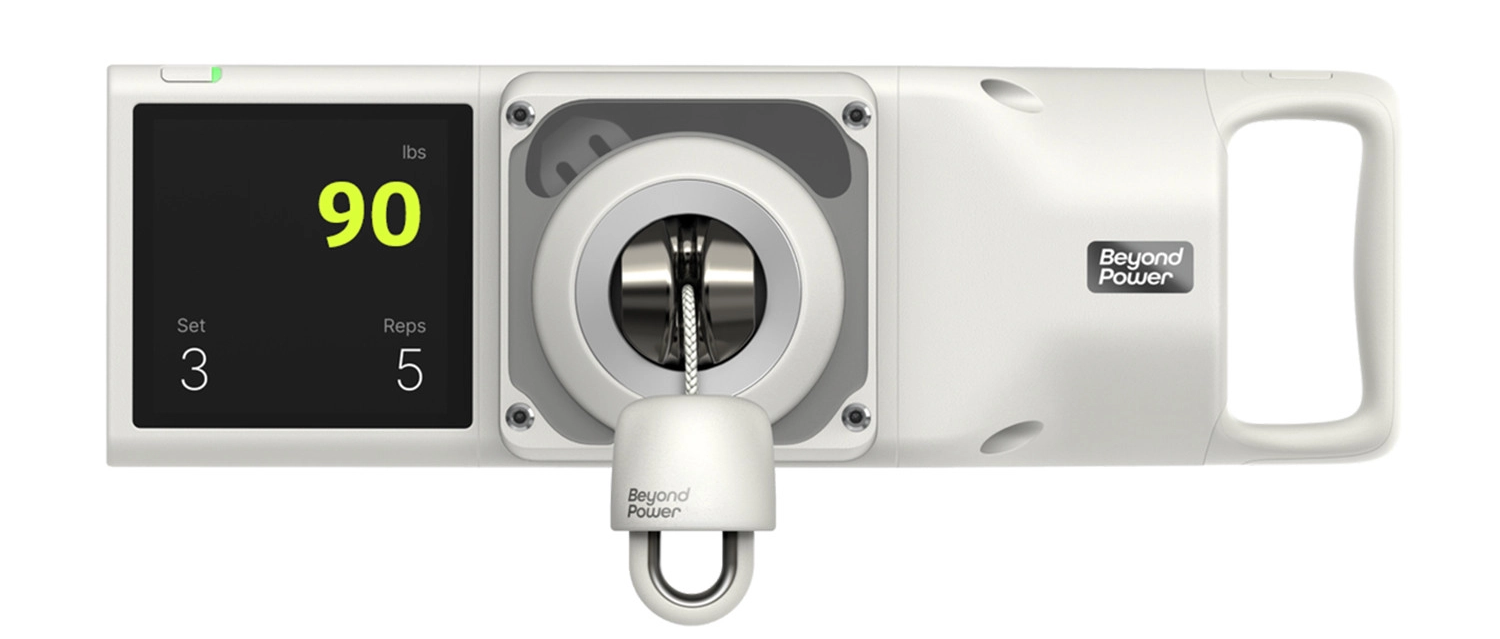
If you’re serious about training design, athlete monitoring, or building durable and explosive players, this one’s loaded with practical takeaways you can apply immediately.
Thanks again for listening to the Decoding Excellence Show! I appreciate all the support growing this Sport Science, Strength & Conditioning, and High-Performance Coaching resource. If you have taken anything away from the show, please login to iTunes and navigate to Decoding Excellence page and leave us a FIVE STAR ⭐⭐⭐⭐⭐ review.
If you haven't already, you can head over to AdamRingler.com/Newsletter and sign-up for my weekly newsletter. This is a newsletter for the curious. It's chalked full of interesting articles I've read through the week, things I'm exploring and finding fascinating through my week, and a collections of thought experiences and resources I've cultivated.
 Adam Ringler

If any of the material resonates with you, I'd love for you engage with me at @AdamRingler
Key Takeaways
- The VOLTRA1's training modes let you target specific qualities: eccentric overload on the lowering phase, isometrics at set joint angles, or damper resistance based on movement speed.
- Custom force curves through the iOS app allow front-loading, mid-loading, or end-range loading, which matters for targeted rehab and athlete-specific programming.
- Portability is the real unlock: a full strength and rehab tool that travels anywhere solves the hotel-gym problem and keeps training consistent on the road.
- One tool can span advanced rehab and prehab through classical strength work, which simplifies programming when you need eccentric, isometric, and dynamic options in one place.
Listen and Subscribe
Find this episode of the Decoding Excellence Show on Apple Podcasts and Spotify, or use the player above.
Go Further in This Episode
Enjoyed this conversation? Here is how to get more from it:
- Read the transcript below to revisit key ideas at your own pace.
- Share this episode with a coach or colleague who would benefit.
- Subscribe to the Decoding Excellence Show on Apple Podcasts, Spotify, or your favorite app.
- Join the newsletter at adamringler.com/newsletter for weekly insights on human performance.
Episode Transcript
This transcript was automatically generated. While we strive for accuracy, some words or phrases may be misheard.
[00:00:00] Sport science, strength and conditioning, high performance coaching, welcome to the Decoding Excellence Show. But he, welcome back to the Decoding Excellence Show. As always, I'm your host Adam Ringler, and this is another one of our walk-and-talk cardio sessions where I have a 45-pound rug right on my back, and I'm walking the neighborhood, getting my zone to, and just really trying to get my steps in. Now, if you've joined me in the past episodes, you know these are unedited,
[00:00:52] Unfiltered conversations straight from my brain to my phone. There's not a stage mic or a studio mic. There's very little processing in the background. I'm out of breath, so again, dogs are barking, I'm passing people, cars are whizzing by, so the audio quality might not be perfect. The idea of these is that you're walking along the side of me, right? So you might actually be on a treadmill right now, you might be in your car, you might be on your morning commute, but if you are leveraging podcasts the way that I do, which is normally during cardio sessions,
[00:01:35] It's dead time anyways, you and I are walking together essentially. So I wanted to take us on this journey today because I want to talk about something, and I don't use this word lightly, that has sort of revolutionized. There it is, that's a pretty buzzworthy type of word, but revolutionized the way that I approached some of the training that we do in our weight work. And I'll get into that a little bit more, but I just wanted to set the scene for this that we're gonna end up talking about a piece of technology, quote, software, quote, hardware
[00:02:20] That is a game changer for what we're doing. So without further ado, let's get into this episode where I dive deep into how I'm utilizing this cool new piece of weight room equipment for rehabs training and more. Hey, everybody, it's your host Adam Ringler, and as always, you are tuned in to the Decoding Excellence Show. And like the intro said, I'm gonna dive deep into a piece of hardware, weight room, rehab equipment that I've been absolutely loving. So without further ado, let's just go ahead and reveal what I'm gonna talk about. It is the Beyond Power
[00:03:04] Voltra One. Now, this thing is an absolute beast when it comes to resistance work, force, application, you know, from a wide degree of different pulling, pressing, rehab, and I'm gonna get into all of the applications and the way that we've been using it. I went out and purchased this bad boy specifically for a women's basketball program because I travel with it. That's what we're doing, right? Anywhere that the team goes, this Voltra One is also going, right? If I can travel with two, I'd buy another one I'd travel with two, right? Now, I'll talk
[00:03:48] About maybe some of the advantages of having two. Not only, yes, you can train multiple people, but twin mode on this where you synchronize both Voltras together. So now you're maybe putting in our each side of the barbell. So now you're getting two of them.
[00:04:09] Now, let's just talk about some logistics. This thing is easy to pack into a travel kit. I already travel with so much foam rollers, massage guns, warm up bands, trying to think of other weird sort of applications and equipment that I travel with, a bunch of soft tissue, instruments, a slack block, or essentially it's a kinesial board through nobussy, I think. I'm trying to think up the top of my head as I'm doing this cardio walk. But nonetheless, a lot of different sort of warm up, proprioceptive type equipment, activation bands through Mark Bell's hip circles,
[00:04:56] BJF, extended bands for more of like dynamic rotation work and tack pedals and TKEs and things like that. The Voltra fits right into my travel kit, right? Which is awesome. Now, it also packs little footprint and it weighs less than like 20 pounds. I forget specifically what it is, but I want to say it's like under 20 pounds. Now, it's a piece of equipment that you can anchor into almost anything. If you've checked out there, cable attachments, you have a rack attachment, you have a floor board, sort of more of a travel attachment that you can stand on,
[00:05:39] Which I'm probably going to acquire one of those. But nonetheless, like this thing weighs less than 20 pounds as a small footprint. And you can end up having resistance or eccentric resistance up to 200 pounds. Are you kidding me? Then you start to talk about the two to one pulley system where you essentially anchor the end of their essentially their cable attachment. Back into the same rack and now you realize a pulley and you can get up to 400 pounds of resistance. Dude, this thing is sick. Now, if you travel like, you know, most basketball string coaches do,
[00:06:26] You recognize that you walk into a facility and listen, a lot of the times we try to train at the host site. So again, great relationships with all of our string coaches, whether we're traveling through the big 12 or non-conference schedule. I love chopping it up with other coaches, see their facilities, see what they're doing incredibly well, steal, borrow their ideas. So we often learn from each other. However, other times you might just be in a hotel gym. You never know what you're going to get in a hotel gym. You might get dumbbells that go up to 30 pounds. You might get
[00:07:03] A lifetime fitness equipment. You might get some amazing equipment, but in a couple of gyms where I'm like, this hotel gym and fitness area is absolutely sick, but there's been a lot of times where you walk into it and you're like, this is depressing. And that is where the Voltra can come in. Now, we can utilize it for ankle rehab. So think you're inversion, flexion, extension, et cetera, for a way ankle. I've loved using it for like TKEs.
[00:07:39] Now, granted, you could use it for your classic pulling exercises, anti-rotation palofs or vertical palofs and course stability, pressing, pulling. I mean, it's a cable attachment that you can bring with you that has up to 200 pounds of concentric or eccentric force. Now, if that was all that this thing does, okay, that's kind of cool at them, but does it justify the expense there? I don't know, right? I think there's other uses of hardware or string equipment, if you will, that you could say, okay, this justifies the high price tag.
[00:08:22] Because listen, this thing is not cheap by any measure. It could be quite cost prohibitive for a lot of places. But this is where the Voltra one really shines. It is not just your standard set away and rip it and rip it, type of strength that equipment. What is cool about this is how it leverages the drive motor. What I mean by that is that not only is there an application, you can download, have it on my phone, have it on our iPads, add our facility, and it's sort of hardware interface, the little screen that is actually on the Voltra one. You can configure upwards to
[00:09:16] Five, six, seven, eight different settings right there to affect the force curse. And so this is completely rad, because now I can set up, let's just say a row, standing one arm, cable, row. Nothing fancy there, right? However, I can say, I want upwards to 80 pounds of concentric force. But I want an additional, let's say 30 pounds of eccentric. So now every single time I'm doing a row exercise, I'm getting 80 pounds of concentric and then 110 pounds of eccentric force on every single rep. That's super rad, right? So, hey, 80 pounds of the concentric
[00:10:15] Force, I want a plus 30 on the eccentric, now I'm getting 110 on the eccentric actions of this movement. And I can do that with about four seconds on the touch user face, user interface of the Voltra one. In addition to that, they have several customizable interface actions. And so if I just want to add eccentric, I could add a chain mode to this, which mimics, for all of you conjugate, west side barbell type people, now I could have that accommodating resistance. So as I'm getting further in the terminal in range of the movement, as you would imagine, much like a chain,
[00:11:09] Every chain link that lifts up off the floor adds additional sort of concentric force. It may start now, let's say 80 pounds, but as I get closer to that terminal in range, it's adding weight, it's adding force to it. So it's going to finish now at that 110 pounds when I'm completing my row exercise, my elbow is driven back at that terminal in range. But as I get my arm extended out into this row, it's going to be 80 pounds. So now it's mimicking the dynamics or the actions of having chains on it. And I can customize the chain weight, again,
[00:11:56] At a scroll of a jog wheel. I could say, hey, I want 80 pounds on the start, I want 50 pounds of chain. Now I have 130 pounds at the terminal in range, 150, sorry, pounds I'm walking here. And if you followed me on these walking talks before these cardio sessions, add about the 12-minute mark is where this hill gets inclined.
[00:12:25] My heart rate starts to jump, my breathing starts to get labored and it starts to get a little bit more real here. So nonetheless, the chain mode is awesome for resistance to work. Now, that's one way of doing it. How about if you just go ahead and slip into reverse chain mode? Oh, this is interesting. Tell me a little bit more about reverse chain. Well, reverse chain, now at the beginning of the motion, at the extended portion of our single arm cable row, you are now at, I'm going to continue to use, 80 pounds
[00:13:10] And the plus 50. Now as your arms extended out into the row, you're beginning the row at 130 pounds. But as you get into terminal in range, it's now taking weight off of it and you'll finish at 80 pounds. So again, the force curve is highly, highly configurable, right? So you could start at a heavier force, finish with lighter and that's the inverse chain mode. You could flip that whole thing, go into the conventional aspect and say, I want to start at a lighter weight and finish at a heavier weight, i.e. Mimicking what, what, uh, what chains typically feel like when you're power lifting,
[00:14:05] You could just go ahead and instead of having that accommodating resistance, you could set it to the eccentric mode, which is just when you hit that in range boom, throw on, full on, extra eccentric weight to the whole action. That's pretty rad. You can do things as far as what they call a damper mode, which is a little bit like a parachute, faster you pull it, the faster that eccentric force is applied. So now what's feeling a little bit like a parachute, if you will, just super cool.
[00:14:53] The beyond power crew also has another setting called isometric mode, which is again, you can set it, apply a isometric. So this thing's not moving but you'll get to actually see the force production in real time on their display screen. So now you can say, hey, we're going to do a knee extension and we're in this sort of seated 130 degree knee angle. And now I'm watching your left quad produce 400 new moves of force. And I'm watching your right quad only produce 350 new moves of force. What gives, right? So now you get to see some of the asymmetries left to right,
[00:15:46] Which is highly valuable when you're programming strength movements and rehab exercises. Oh my goodness, this incline's absolutely kicking my ass right now this morning while I'm trying to talk and walk with this rock. There's another setting in the boltra. And I want to say off the top my mind is I'm not looking at it, I'm just thinking about the ways that we've been playing with this, is sort of the isotonic. So you could set the speed. Hey, when you're going through these motions, the concentric action of this, let's say single arm row, I only want you to move the cable unit at
[00:16:37] Four meters per second. So now no matter how strong you are or weak, you are only going to move it at four meters per second. So if you're gripping and ripping and pulling this thing because your 260 pounds up here muscle mass, guess what, you're going to get a little bit more force. And it's going to limit the velocity of that cable coming out of that drive motor at four meters per second. If you are 125 pounds, a little bit more meek, still going to give you less force, still going to limit you pulling this thing at four meters per second. So the applications of utilizing this thing
[00:17:28] Is limitless, which is why for me, I just think it's such a powerful tool to have in your pre-hab, rehab, strength toolbox. That's why I travel with it. I can calves, I can do Achilles work, I can do knee tendonitis work, I can do conventional strength work, I can go to our post activation potentiation type of work, I could do defensive slides, I could do flyometric work with the cable belt around the hips. There's just literally your imagination is the only limitation to utilizing this. Now, with leveraging the app, you could in real time add a swipe literally my
[00:18:32] Nine year old, almost 10 year old could do this. I can affect the force curve in real time, I could say on the concentric, I want a little bit more, I'm going to swipe down on the eccentric on a little bit this. In the midpoint, I want it to be up a little bit. So you could do all the force curve with almost with the, you know, touch a tip of your finger. So just as you're drawing a smiley face with the tip of your finger, you can apply different forces along the force curve during this bit pattern. And that is just crazy when you're starting to look at
[00:19:19] Athlete and you're saying, this athlete is having difficulty in their starting strength aspect. So I'm going to take a little force off the starting movement, but I'm going to apply it more towards the terminal in range. Or contrary, vice versa, this athlete is actually really strong. What they're lock out of this motion is the rate limiting factor. So I'm going to flip it. I'm going to actually give a more force on the concentric starting strength, less force on the eccentric or not eccentric in the lockout, the terminal in range. Maybe they're limited by both
[00:20:03] Their starting and their terminal in range. So now that's going to look like almost like an inverted U. It's going to be less force on the start and the terminal in range, but high force during that midpoint. And then obviously you could flip that whole thing, make it look like a U, high force on the start, high force on the finish, less force on the midpoint of the motion. And you start thinking of the applications of how when you're working with the rehab patient and you're saying, boy, this person needs more force essentially in the start or the end or the
[00:20:52] Midpoint or unique component in between those. And you can highly individualize that force curve specific to their needs analysis. That is, that's crazy, right? You don't get to do that with, let's say a therapy or a therapist, you don't get to do that with a jump stretch band or an elite FDS band. This is where technology, innovation meets human performance. And I don't say that lightly like this is really one of those things that can change the way we approach how we program how we prescribe rehab, rehab and strength work to an athlete that might be joint
[00:21:49] Compromised, limb compromised, or have some level of pain that they're trying to navigate through in order to have a pain reduction through smart program exercise. So I just think this thing is such a powerful tool. And listen, I'm not getting paid to do this. I'm not saying, hey Adam, we're gonna give you a cheaper rate on your Vulture one if you share a podcast or publicize what, no, I'm not viewing anything. I'm literally saying this because I use it. I'm sharing this podcast because I love it. No, six months down the road, 12 months down the road, two years down the road.
[00:22:38] I might have to do another one and say, hey, guess what? My Vulture one broke. I paid a lot of money for it and it's, I didn't get support. I don't know, right? It's a new company. But for right now, for where on that, how I'm using it, what the value I'm getting out of it, I freaking love it, man. And I'm gonna sing from the rooftops when things are going well. And I'll do the exact same when things aren't going well. So you don't get to, you don't get to have all the good without the bad. So I'm hopeful that over the course of the long run and the company and the technology that it holds up.
[00:23:19] But for right now, I just think this is something if you're a PT athletic trainer, strength coach, you have to have this thing in your arsenal. It is just one of the, it's like showing up to a job site without a hammer or a tape measure. I just don't think at this rate, you can do
[00:23:42] The job well without having a lot. So check it out. I don't know their website off the top of my mind, like I said, I'm struggling to get this cardio done right now. But beyond power, a Voltra one, maybe there's a Voltra two someday. I don't know, right? And if it does, and it's half as bad as is what this thing is right now, you bet your butt, I'm gonna probably end up buying one of those too. So nonetheless, guys, I think it's something you need in your bag. Check it out, head over to the websites, they're socialists, or just DM me and I'll point you
[00:24:22] In the right direction. And then I don't know. Listen, I don't have any affiliate sales, but tell them Adam Ringler sent you on. Maybe they'll kick me back a couple of things, a whole dollar, zero there or something. I don't know, right? Nonetheless, everybody, I appreciate you. I got a lot in on this last 10 minutes of this walk or otherwise. I'm gonna run out of breath here. I appreciate every single one of you. Thanks for tuning into this. We're walking talk. This is a little bit of a shorter episode because it's a training day, it's leaving me. And
[00:24:54] Instead of doing 70 minutes of cardio, I know, sounds miserable. It really isn't that bad if you get a good podcast or YouTube video going 70 minutes straight of zone steps cardio work. But today's actually a weight room training day for me. It's upper body, so it's going to be chest, shoulders, triceps, horizontal, row, vertical pull, or vice versa. Maybe some abs in there. But nonetheless, on my training days, Monday, Wednesday, and Friday, I've talked about this. I'm bumping up my cardio to 40 minutes. Right now, looking at my watch, I'm about 27 minutes in, about 10 minutes
[00:25:39] Away from the house. I'll get about 40. And whatever I don't make up, when I get into the facility, I'll just have to do extra steps and cardio there. And maybe I'll round up to the closest 10 minute mark to make it. At least feel like I'm doing a dedicated session rather than just jumping on the treadmill for four or five minutes. But appreciate every single one of you guys. Until the next episode, check out beyond power, ultra one, check out AdamRingler.com. This is where you can sign up for my free membership, the insiders. You can jump into our premium tier,
[00:26:15] Which gives you access to some of the private articles I've wrote. And I've wrote a lot about my shirts and videos for the private premium level subscription tier. And then obviously the most exclusive tier, our former athlete society. This is for all former college athletes. If you have not learned what you needed to learn in your time with your strength conditioning coach program at your university, D1, D2, NAI, doesn't matter. The former athlete society is here to provide you the structure, the training, actually give complimentary training programs to every single one of you
[00:26:57] Guys that join the former athlete society, all delivered through bridge athletic, which is the application I use with our current team and athletes. It's also what I deliver all of my remote programming. So whether it's locked and loaded, whether it's foundations, whether it's jacked and strong, whether it's our basketball program at Leake Hoopers, our volleyball training program for club athletes, all of that's delivered through bridge athletic. So you can head over to AdamRingler.com. I want to say forward slash programs. You can see all the training programs that
[00:27:34] Are available. But nonetheless, former athlete society joined today and joined us for all of our accountability calls. That's on Tuesdays. Our question and answer calls. That's on Thursdays. I host on every single week. And you get first dibs to all of your questions being asked. And I ask, I answer them every single week. All of our accountability topics that we discuss in our private community discussion boards and free training complimentary of the former athlete society tier. So check it out AdamRingler.com forward slash former athlete. Appreciate every single one of your
[00:28:10] Thanks. Hey everybody, that's going to be it for this podcast. As always, if you missed any of the episodes here in the Decoding Excellence Show, you can go and explore the bat catalog. I host all of our episodes, not only on every sort of podcast hosting site, whether it's Spotify or whether it's a YouTube or anywhere else, but you can go to my website. It is AdamRingler.com forward slash podcast from there. You can listen to all of the interviews, whether it's other sport professionals, whether it's the monologues, whether it's the basketball discussions, or the sports science
[00:28:54] And tech. Go to the website, check it out, listen to the podcast. I'm telling you you will take something away from the bat catalog of the Decoding Excellence Show. Now, one of the ways that you can support this show. Now, there's two really. You could go to AdamRingler.com forward slash newsletter. You can sign up for my newsletter. And in this, you're going to get access to everything, the cool things that I discover from a monthly basis, new books I'm reading, things I'm discovering, articles that I've found related to sports science that's really cool
[00:29:32] And coaching. So pop in your email there. And that is just an easy way of supporting the show. And you'll get free behind the scenes access to all the cool things I'm discovering. If you took anything away from this episode, I would encourage you, no, I would beg you to share it with any of your friends, your coworkers, your family members, share it with somebody that could get a little bit of value from hearing what we discuss today. And as always, I appreciate you. I thank you. Until next time, stay strong, stay healthy, keep pushing on.