Samson Strength Coach Collective - Episode 086
In this episode of The Samson Strength Coach Collective, Adam Ringler, who is the Director of Sport Performance/Head of Sport Science at The University of Colorado.

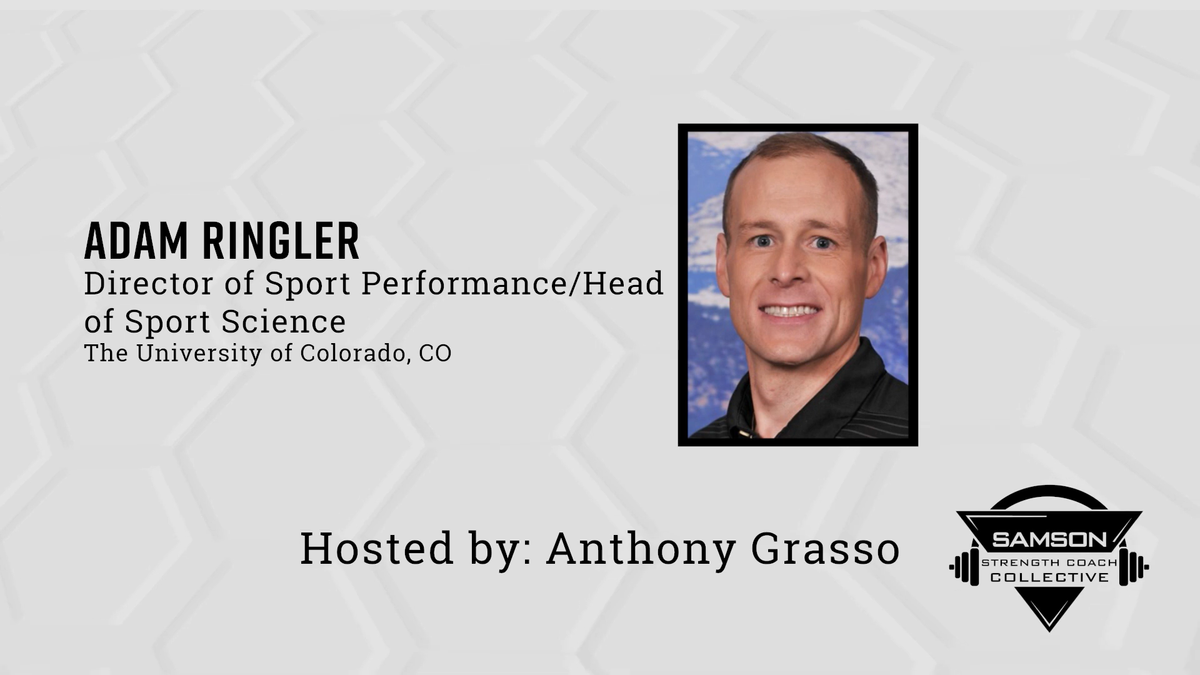
In this episode of The Samson Strength Coach Collective, Adam Ringler, who is the Director of Sport Performance/Head of Sport Science at The University of Colorado joins Anthony to share his thoughts around a variety of topics related to coaching, sport science, and creating more connectivity within your sport performance model.
Adam touches on what it means to create a sport science environment for young professionals, resources that have shaped his thought process, successes and lessons learned throughout his journey, mental health, and how to provide more quantifiable data around the qualities that you find important for athletic development.
Key Takeaways From The Conversation
Here are the principles behind the topics Anthony and I dug into. These are the ideas I keep coming back to after twenty years of coaching, and they apply whether you run a full sport science department or you are a one-person staff with a stopwatch and a notebook.
1. Build The Environment Before You Buy The Technology
Creating a sport science environment has almost nothing to do with which system you purchase. It has everything to do with the questions you ask, the people you hire, and the culture you build around curiosity.
Athlete development requires more than a program on paper or a dashboard full of numbers. Before you spend a dollar on technology, make sure you have practitioners who can ask better questions, communicate clearly, and make informed training decisions. The tool is the last ten percent. The environment is the other ninety.
2. Quantify The Qualities That Actually Matter
It is easy to measure what is convenient. It is harder to measure what matters. Start by defining the physical qualities your sport actually demands, then find the simplest reliable way to track them.
Chase clarity, not complexity. One force plate metric you act on beats twenty dashboard widgets nobody looks at. Data is only valuable insofar as it changes a coaching decision. If a number does not change what you do on Monday, stop collecting it or find a better question for it to answer.
3. Work The Objective And The Subjective Together
The best decisions come from blending what the numbers say with what your eyes, your ears, and your gut tell you. I have never seen a dashboard correctly read the room. Athletes are not spreadsheets. They are people having good days and bad days, carrying stress you cannot quantify.
Be where your feet are. Watch practice. Ask questions. Then let the data confirm, challenge, or refine what you observed. Neither side works alone.
4. Take Care Of The Humans, Including Yourself
Mental health is not a separate department from performance. It is the foundation everything else sits on. An athlete carrying invisible weight will not express the physical qualities you spent all off-season building, no matter what the readiness score says.
The same goes for coaches. This profession will take everything you give it. Set boundaries. Recover like you tell your athletes to recover. You cannot pour from an empty cup, and you cannot lead people well when you are running on fumes.
5. Connect The Model
Strength coaches, sport scientists, athletic trainers, dietitians, and sport coaches cannot work in silos and expect the athlete to assemble the pieces. Connectivity across the performance model is a leadership responsibility.
Do not work in a vacuum. Build reporting lines, shared language, and regular touchpoints so that every perspective becomes useful to the athlete. Organizational success is a team sport.