Inside The Drafting Table
What this room is
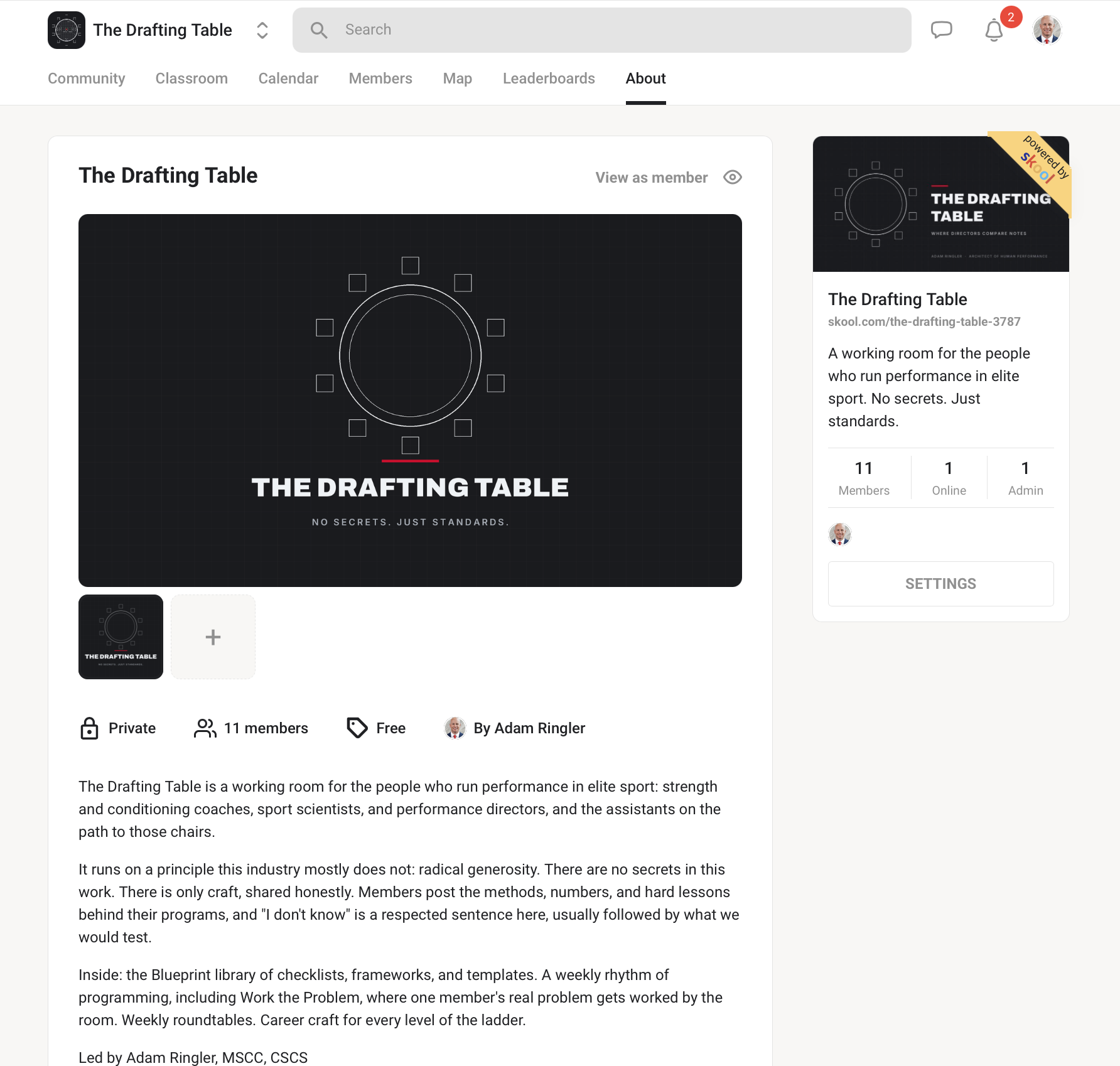
The Drafting Table is a working room for the people who run performance in elite sport: strength and conditioning coaches, sport scientists, performance directors, and the assistants coming up behind us.
It runs on one principle this industry mostly does not practice. We give the work away. Methods, numbers, templates, hard lessons. No secrets, no gatekeeping, no performing certainty we do not have.
The room is free to join. It is practitioner-only, and entry is request-gated: three quick questions about your role and what you could share, then approval. Athletes and vendors need not apply.
Below is a real look inside. Not a sales pitch. The actual first lesson every member reads, a real prompt from the November cohort, and the ladder that rewards participation.
Sample 1: Your first week
Every member starts here. This is the first lesson in Start Here, word for word.
Welcome to the Drafting Table. You are here because somebody whose judgment I trust said you belong in a room like this, or because you asked and your answers sounded like a practitioner. Either way, I am glad you are in it.
Here is how to get value out of your first week, in order.
First, read the house rules. They are short, and they are the whole culture of this place in six lines. Second, post your introduction in the Introductions category. There is a template in Lesson 5. It takes four minutes, and it is how the room learns who to ask about what. Third, take something from the Blueprint Library. The Force Plate Testing Checklist and the Preseason Conditioning Framework are free, they are the actual tools I use, and they are there to be used. Fourth, read one Work the Problem thread all the way through. That format is the heartbeat of this room: a real problem, worked in public, by people who do this work at a high level.
One promise from me. I will be in this room as a member, not a guru. I will share what we do, what it costs, and what I still do not know. Your first question is not an interruption here. It is the point.
Sample 2: A real week in the room
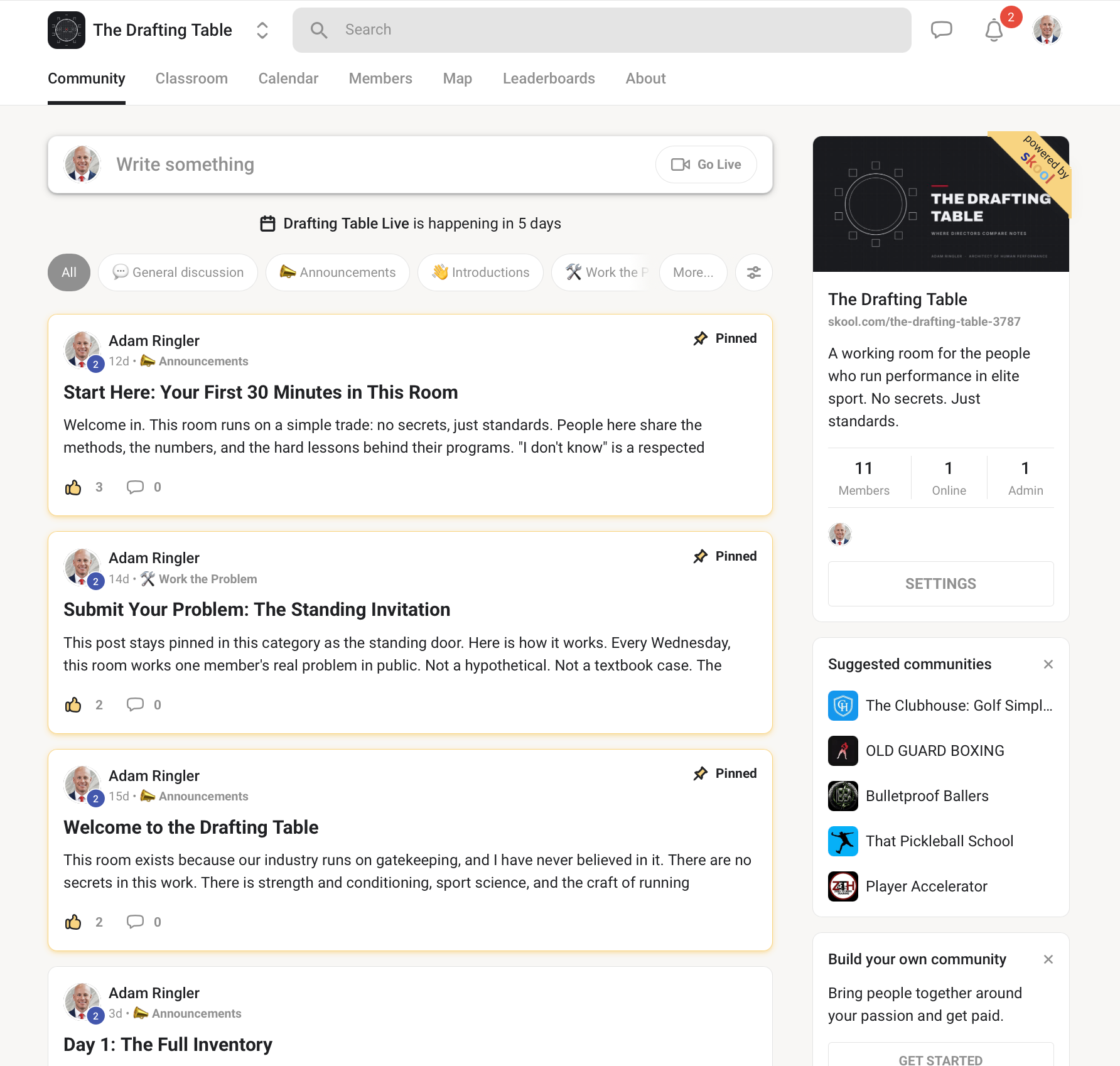
November's theme is monitoring and data. The cohort runs a 7-day monitoring audit challenge, and this is Day 1, exactly as it was posted to the room.
Day 1: The Full Inventory
List every metric you currently track across every system you use. Force plates, velocity, jumps, readiness surveys, session RPE, all of it. No filtering, no defending. The full list, posted here, today. The audit only works if the inventory is honest.
By Day 3, every member publicly cuts one metric and names the decision it never changed. By Day 5, they post a revised testing battery. Day 7 brings the results to the Tuesday live call. That is what a working room looks like: the audit, the argument, the decision.
Sample 3: The unlock ladder
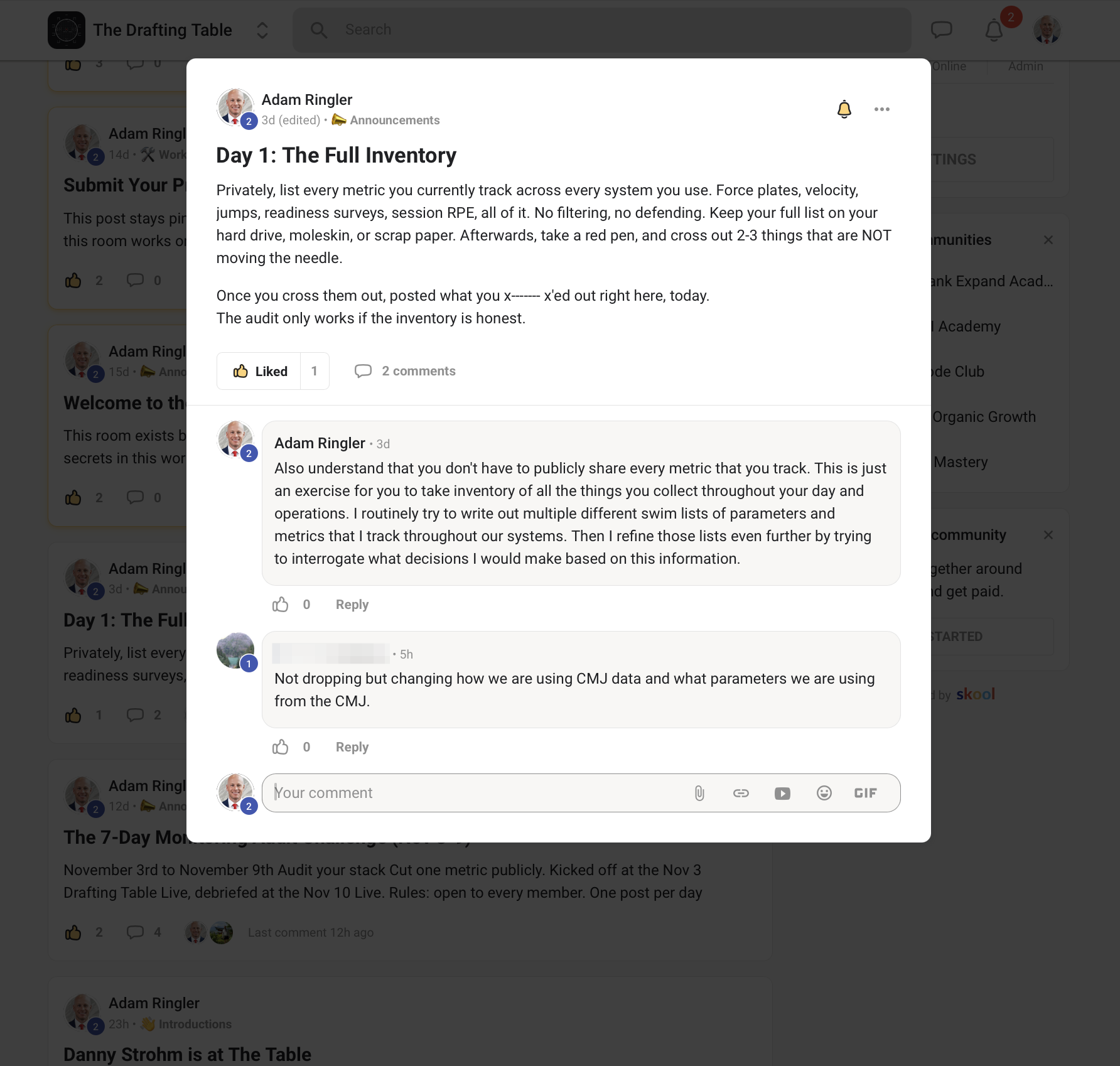
Participation is the currency here, and the room is explicit about what it buys.
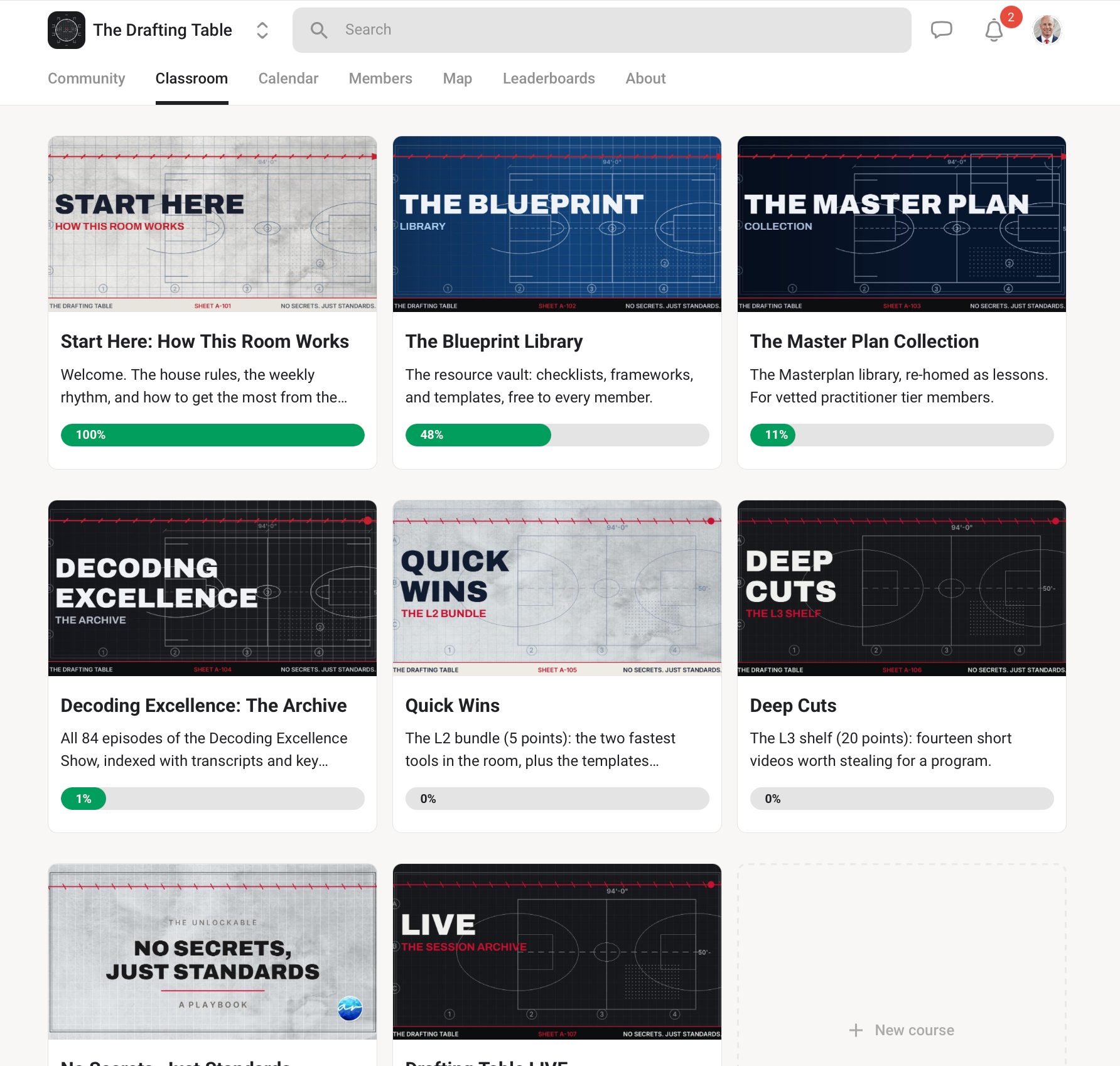
Open to everyone: Start Here, the Blueprint Library, and the full Decoding Excellence Archive. Eighty-four episodes, every one with a lesson.
Level 2 (Drafter) unlocks Quick Wins and the Drafting Table LIVE archive. Short lessons you can use the same day, plus the full recordings of every Tuesday working session.
Level 3 (Journeyman) unlocks Deep Cuts. The longer cuts. Worth the climb.
Level 4 (Designer) unlocks the playbook. No Secrets, Just Standards. Forty-five pages, fifteen chapters, thirty stories from twenty years on the floor. It is not for sale anywhere. The only way to get it is to earn it here.
Levels come from likes, and likes come from contributing. Post your work. Answer a question. Argue honestly. The room decides who climbs.

The fence at the top of the hill
A high school coach in Michigan is in the room now. He is a retired athletic trainer, and he runs performance for his school's athletes today.
His football team had one lost-time injury all season. One ACL in four years, on turf, in the playoffs.
He built the weight room from three classes to eight in five years. He trains with neurological concepts and triphasic methods. His rule is simple: it is better to be the fence at the top of the hill than the ambulance at the bottom.
He came into the room offering to answer questions. That is what the room is for. Coaches who have done the work, comparing notes with coaches doing the work.
Who this room is for
This is for you if you work in strength and conditioning, sport science, or performance leadership, you want the reasoning behind the method and not just the method, and you are willing to share what you know.
This is not for you if you are looking for training programs or coaching for athletes, you want shortcuts rather than standards, or you want to pitch something.
How joining works
Request to join at skool.adamringler.com. Answer three quick questions about your role and what you could share with the room. Get approved, then start in Start Here: Your First Week in This Room.