#013 Michael Mullin

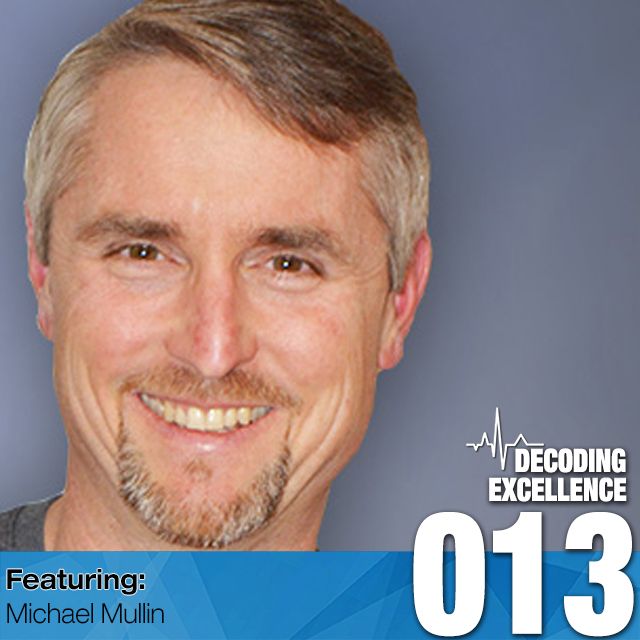
In this episode of the Decoding Excellence Show, I am speaking with Michael Mullin, the owner of Integrative Rehab Training LLC.
Michael is a clinically-based athletic trainer with over 25 years of experience in training and rehabilitation. He is the Owner/Clinician of Integrative Rehab Training LLC and sees clients out of Back Cove Personal Fitness in Portland and Beyond Strength in Falmouth. He is an NATA Certified Athletic Trainer and a registered Physical Therapy Assistant in California. He is on the adjunct faculty at the University of New England and is a Certified Clinician through the Postural Restoration Institute. Michael specializes in the treatment, rehabilitation and training of individuals and has worked with all levels of athletes. He has provided consultation, treatment and/or presentations to NFL teams, the US Ski Team, Mike Boyle Strength & Conditioning, Cressey Sports Performance, Perform Better seminars, Stars On Ice tour, national level rugby teams as well as numerous dance studios, sports teams, fitness facilities and running clubs.
Michael and I discuss:
- His journey into the rehabilitation profession
- Importance of proper breathing mechanics
- Integrative models of performance & rehabilitation
- Lessons learned applying Postural Restoration Institute concepts
You can catch up with Michael on Twitter at @MJMatc. You can also navigate to Michael's website, Integrative Rehab Training, and browse the many great resources he's created. Michael is also active on Facebook, where he links and post regular articles surrounding his rehabilitation and training programs.
This episode of the Decoding Excellence show is brought to you by Vald Performance, the makers of the NordBord, DashBord, and the GroinBar.
They can be found at ValdPerformance.com
Stay updated with the podcast by following me on Twitter via @AdamRingler
In addition to those social mediums, you can head over to AdamRingler.com/Newsletter and sign-up for my weekly newsletter. This is a newsletter for the curious. It's chalked full of interesting articles I've read through the week, things I'm exploring and finding fascinating through my week, and a collections of thought experiences and resources I've cultivated.
It's essentially a Birchbox newsletter for performance-related articles, research, and daily musings.
Thanks again for listening to the Decoding Excellence Show! I appreciate all the support growing this Sport Science, Strength & Conditioning, and High-Performance Coaching resource. If you have taken anything away from the show, please login to iTunes and navigate to the Decoding Excellence page and leave us a review.
Key Takeaways
- Mullin shares his journey into the rehabilitation profession and the lessons learned across twenty-five years of clinical practice.
- The conversation covers the importance of proper breathing mechanics and how they fit into an integrative model of performance and rehabilitation.
- Mullin discusses applying Postural Restoration Institute concepts and what they changed about his approach to treatment and training.
About the Guest
Michael Mullin is the owner of Integrative Rehab Training LLC, a clinically-based athletic trainer with over twenty-five years of experience, an NATA Certified Athletic Trainer, and a certified clinician through the Postural Restoration Institute. He has consulted with NFL teams, the US Ski Team, and national rugby teams. He and Adam discuss breathing mechanics, integrative rehab models, and PRI concepts.
Listen and Subscribe
Find this episode of the Decoding Excellence Show on Apple Podcasts and Spotify, or use the player above.
Go Further in This Episode
Enjoyed this conversation? Here is how to get more from it:
- Read the transcript below to revisit key ideas at your own pace.
- Share this episode with a coach or colleague who would benefit.
- Subscribe to the Decoding Excellence Show on Apple Podcasts, Spotify, or your favorite app.
- Join the newsletter at adamringler.com/newsletter for weekly insights on human performance.
Episode Transcript
This transcript was automatically generated. While we strive for accuracy, some words or phrases may be misheard.
[00:00:00] We've adapted societally into these higher levels of angst, if you would, just based upon the environment that we're in, but it's happened slowly over the course of time. But it's all that we know, do you know what I mean? So we don't know anything different than the house we live in and sitting in chairs and driving cars and the food we eat, but clearly we weren't put on the planet like this. And so as a result of that, we've just kind of had to develop these different adjustments
[00:00:26] And changes to the society we've been put in. Sports Science, Strength and Conditioning, High Performance Coaching, welcome to the Decoding Excellence Show. Today's episode of the Decoding Excellence Show is brought to you by VOD Performance, the makers of, the Nordboard, the Dashboard, and the Growing Bar, whether it's returned to play, rehabilitation, or performance testing and training, VOD Performance has the
[00:00:57] Tools you need. So who's actually using VOD Performance Technology? I don't know something like 14 NFL, 19 NCAA, 15 English Premier League, seven English championship, five NBA teams, and six MLB teams. They have the tools you need to get the best out of your athletes. Check them out at VODPerformance.com.
[00:01:21] And welcome back to the Decoding Excellence Show. And if this is your first time, welcome to the Decoding Excellence Show. Today we have a fantastic show for you. Today on the show we have Michael Mullin, who is a clinically based athletic trainer with over 25 years of experience in rehabilitation and performance training. This is a fantastic episode and you do not want to miss this.
[00:01:46] Michael is the owner of Integrated Rehab Training, which provides fitness rehab services, consulting, educational programming for a wide range of different athletes. He specializes in the treatment, rehabilitation, and training of individuals and groups, and has worked with all different types of athletes and of different age levels. This was a monster of an episode, and Michael is an incredibly smart practitioner, and we get into discussing breathing mechanics.
[00:02:17] We talk about rehab, training, integrative models of sport performance. He borrows from his clinical adjunct faculty position, the experiences that he had there at the University of New England. He borrows from the lessons that he's learned as a certified clinician through the Postural Restoration Institute. And ultimately, from all of the consultation and treatment and presentations that he's
[00:02:43] Done for NFL teams, the US ski team, Mike Boyle Strength Conditioning, Cressy Sports Performance, and the Perform Better seminar series. He just shares a tremendous amount of information, and I am humbled to have Michael on the show to discuss what he's learned through his career in sports performance and rehabilitation. And I think you're going to really, really love this episode. If you have any sort of focus on developmental kinesiology or just basic PRI concepts, then
[00:03:16] Michael does break it down and talks about those various concepts in this episode. So like always, I am stoked to have Michael Mullen on the show. And please, please, please, if you love this show, please share it on your social media of choice. But like always, here is my conversation with practitioner, an athletic trainer, Michael Mullen.
[00:03:46] Michael, welcome to the show. How are you? Great Adam. How are you? Man, I am good. I'm really, really excited to have you on the Decoding Excellence show.
[00:03:56] This has been a conversation that I've been looking forward to for a really, really long time. How are things going on in sort of your neck of the woods? Well, first I have to kind of backpedal just thank you very much for having me on. I just humbled and excited and it's really funny where you are such a good example of myself and you having met through social media and never having met in person.
[00:04:24] But yet, we clearly are like-minded. You know what I mean? We connect in a way that it's just such an awesome representation of how professionals can get together and do mutually professional things that we enjoy and you can kind of learn from each other and have an opportunity like this to be able to sit down and actually talk, which is fantastic.
[00:04:41] And that's kind of how I think of social media. I know sometimes it gets a bad rap. But really, for a lot of times, it's the intro. It's the first sort of exposure to seeing across different disciplines and the sort of transdisciplinary approach to sport performance being exposed to someone and then hopefully from there, from those 140 characters later, you can actually pick up the phone, break
[00:05:07] Bread, have a conversation with another person and get to know them on a different level. And I think this is the start of it and hopefully, at least in this sort of vehicle of the decoding excellence show, at least my sort of personal attempts to do so. So thank you, man. I certainly appreciate it as well. But I'm doing really well.
[00:05:28] Thank you. It's been a really, it's been a fun whirlwind. Well, I'll say career because we'll get into that, I think, a little bit. Yeah. You know, certainly the last year and a half with my pretty dramatic change in my business venture has been a really exciting time and has afforded a lot of opportunities and a
[00:05:45] Lot of really neat things to occur that I just don't know that I would have had the opportunity to be able to do prior, which is excellent. You know, I started out. Do I go right into the whole thing? Yeah, you know, that's, that's right into it because I want to, you know, I first sort of came across some of your very early work when you're doing some lecturing and presentations,
[00:06:09] Both whether it's at perform better or at Mike Boyle's drinking conditioning. And that's sort of, you know, and granted witchtaws, you know, directly south of Nebraska Omaha on the PRI and we'll get into a lot of that. Hopefully, throughout the show, however, that sort of was my first vehicle of getting introduced to you. And you were more so than Ron, the person that sort of articulated this for me of how these
[00:06:34] Concepts can be applied. So you were that sort of first exposure to all that and I would only imagine being, you know, several years from several years ago, rather, that a lot has changed both in this personal venture and elsewhere and professional pursuit. So I'd love to hear what you're currently up to and where this path has taken you over the course of, you know, your time and your activities within sport preparation and athletic
[00:07:03] Training and etc. And so on. Sure. No, absolutely. You know, my, my licenses as an athletic trainer and, and my first real job was working into Hampshire at an outpatient physical therapy facility because I realized during my training
[00:07:18] At college, they just reflect the rehabilitation side of things and I enjoyed the on field stuff and as the managing the athletes in the training room, but I also like the rehabilitative process and I like to be able to kind of help, you know, heal and recover and, and strategize ways to have, have athletes and people kind of improve and see that process from start to finish. So I worked in an outpatient facility for about five years and ran a walk in injury clinic
[00:07:43] And provided a lot of on the field coverage too for contact sports for, for an area in Manchester, in Hampshire and, and I had a really nice job opportunity in San Francisco and my wife and I didn't have children at the time and so I went out, we moved out there and I ran the rehab department for orthopedic surgeon's practice. And it was a really, uh, baptism by fire. It was a lot of really cutting edge stuff that the guy was doing, which was phenomenal.
[00:08:10] His name is Kevin Stone and it was a facility called the Stone Clinic and he had a very for, you know, mid 90s, a really unique practice in that, you know, athletic trainer was, you know, I'm in charge of the rehab and really worked hand in hand with a physician to develop post-op protocols and, you know, doing hands-on treatment. Every patient that came in to be seen by him would get a diagnosis. He'd bring him down to me and I'd give him something to work on and then it helped
[00:08:36] To kind of direct their care, whether they'd come back and see me for follow-up, whether they'd, you know, I'd refer him out to another physical therapy facility with people who we've developed good relationships with, who thought did good work and then during that time as I was there, so when he started kind of saying, oh, by the way, yeah, we do dryline training camps for the US ski team, so you're in charge of that and, oh, we work with a lot of dancers and so we do work with, you know, San Francisco Ballet and
[00:08:59] Marin Ballet. So you're in charge of that and so there's a lot of stuff that I had I like really learned about in terms of athlete development and, you know, different sports specificity and just the models that are necessary to be able to work with this, you know, elite group of athletes that are clearly skiing in Ballet or, you know, two opposite ends of what, you are, they're both phenomenal, but they're just clearly no real similarities in terms
[00:09:24] Of the training models. And so during that time, I just learned a lot and got a chance to travel a lot. I published a fair amount of things when I was out there and developing protocols for, you know, meniscal transplant surgeries and articular cartilage surgeries that he developed, you know, so it's like really, you know, there's, there's nothing out there. So you got to kind of based it on physiology and, you know, arthrokinematics and what makes
[00:09:48] Sense from a healing standpoint and, and then the, you know, my son was born out there and as phenomenal as an experience as it was and the exposure I got it, we just, my wife and I felt that the pace and the expense and being able to settle down into a lifestyle was a little less, a little less hurried, was really worthwhile. So I moved to Maine in 2000 and started working at an outpatient physical therapy facility and, and, you know, basically, you know, worked in outpatient rehab for the last, you know,
[00:10:15] 16 years at that facility as a large orthopedic practice with a number of surgeons and, you know, same type of thing. You know, we really kind of work in hand and hand with docs and really helping to develop some, you know, some injury prevention mechanisms and, you know, post-operative protocols and really helping to kind of guide patients after surgery and, and even walking people with regular injuries through their rehabilitative process.
[00:10:38] And I just had always kind of migrated towards that, but it's also during that time that I started, you know, I've been to a lot of continuing education courses over the years and really was, you know, very non-one specific approach and have always been that way because I respect the different models and systems that are out there. I'm, you know, I like hands-on stuff because I think it does a lot of really good things in many different ways, but I'm also really all about, you know, mechanics and movement
[00:11:06] And the bio of biomechanics and, you know, all of the stuff that gets all of the systems to be able to work most efficiently for the people that I saw, but also ways to kind of, you know, pool from all the different systems that I've learned from over the years and help to develop a style and a strategy that I was able to kind of morph depending upon what the client to the patient's individual needs were. You know, certainly with respect to some of the stuff that I was doing in early 2000,
[00:11:34] When I started taking some courses at the Posture Restoration Institute, you know, really helped to kind of fill in a lot of blanks of stuff that I just wasn't getting with a lot of the other models and a lot of the other teachings and courses that I had gone to. And so for me, it was very helpful in being able to really help to solidify an understanding of, you know, our human system and structure and help to kind of fill in some blanks
[00:11:58] That were really important ones to me. And over the course of time, it helped, you know, on top of all the other stuff that I learned to do, create a little opportunity to develop a little niche. So, you know, I left a year and a half ago with the practice under very good terms, because they're, you know, they're a great practice, but I just wanted to kind of spend more time with people.
[00:12:18] And I wanted to be able to kind of get out of the insurance model and offer services based upon, you know, what I want to be able to offer and not be limited based upon, you know, they're here to see me with a knee issue, but I'm telling you, they got this function all the way up that I want to be able to address that insurance company or physician, frankly, might not necessarily get or support. And as a result of that, it's been really, it's been really great.
[00:12:42] And I see people, anything from real chronic issues, real complicated cases that haven't responded to traditional models or typical Western medicine models and, you know, still have some issues. And I also see people that I train, you know, a couple of days a week and, you know, I'm managing stuff at the same time, they got a chronic hip issue, they've got, you know, DJD and they're whatever, they've got spine issues, but they want to exercise and be strong
[00:13:09] And they haven't had success doing it without getting hurt. And so I'm able to kind of throw my kind of rehab training hat on and be able to really kind of work with them to make them feel strong and fit and comfortable. And if they come in and something's a little flared up, I'm fortunate to have the skill set to be able to manage that as well. So it's really been a nice, nice mix.
[00:13:28] And it's also for the opportunity to do, you know, more lecturing and consulting and these types of great, great programs such as yours and, and use that as part of what it is that I do now from a, from a business model perspective, which has really been incredibly rewarding. Yeah, yeah, no doubt. And that, you know, just to kind of go through what you shared and, and this personal venture
[00:13:50] And then your time back in Maine from 2000 to 2016, and then, you know, I'm kind of going through it sort of backwards here, but then from there from San Francisco and then back to the New England area, what, you know, in that time that you were spent out in New England many, many, many years ago, what, what about sort of your, whether it's education or academia? I mean, what got you into sort of that ATC pursue, you know, whether through undergrad,
[00:14:23] Through graduate work? What led you down that road to pursue this from an educational standpoint? Was there anything early on youth before that, parents, mentors or anything like that that really sort of ignited the fire to pursue that as a professional pursuit? That's such a great question. You know, I have to be honest with you, I think it's just a number of different things.
[00:14:47] It's, I, I joke with my mom because I like, I feel very fortunate in that my, you know, I have, I have a good sense of touch, I think, pretty good. And my mom and I will joke, she's got one of five children, one of six children, and so each of us one day out of the week used to have to give my mom a back rub. We joke because you'd be like, yeah, I remember like, I always made you stay. Like you knew what to do, like you kind of even as a kid, really knew where to kind of
[00:15:09] Find stuff and work things out and, and we joke about that because I do feel like some of the manual stuff that, that I've developed over the years, that I was doing early on, frankly, a lot more, was really helped my interest and understanding of, of how the human system work and felt and how tissue responded, sort of a manual perspective, you know, back early on as well, I was just intrigued with human movements, like I would look at stuff and I would say, wow, that looks a little, you know, why is that do that? Why is, you know, why is that
[00:15:39] Knee tracking like that? Why does that ankle respond like that? You know, why those ribs in that position? And, you know, then trying to figure out being kind of a bit of a, you know, biomechanics junkie, you know, what, why does that occur and what's happening there? What's, why is there strategy in place to do that? What can I do to help to improve that? You know, what activity or intervention strategy can I give them to do that would help that? Helping people to me, like lights up all my dopamine centers, like to me, like I have, it's not
[00:16:10] An ego thing, it's just I feel so fortunate to feel like I'm able to offer something to help people and prove, recover, whether it's an athlete who wants to be able to get back to the topest highest level of athletics to, you know, the 78-year-old client that I have that, you know, at a time she leaves, like I just feel great for days, but otherwise, you know, so I mean, that's just incredibly rewarding to me. And so, you know, that path early on was, you know, what courses can I take to be better at what I do so I can offer the most
[00:16:43] Comprehensive strategies for the people that I see? Because not everybody responds to the same strategy, you know, you can look at your protocols and you can look at your, you know, your sequencing of activities with stuff and some people they just don't have the capability to be able to put things into place. Some people want a lot of explanation for stuff and so you're spending a lot of time, you know, tapping into your resources and your knowledge base to really be able to kind of give them explanations in a way that makes sense to them, but they want to know. And there's
[00:17:12] Other ones that just want to kind of do. And as they do that, you know, you try to make it as simple as possible, realizing, you know, what you're actually one of the more complicated people I have, though, you almost kind of have to know, you know, you almost have to kind of know what's going on. And so, you know, figuring out ways to manage it, you know, from a behavioral perspective is huge. It's actually funny because I was lecturing yesterday at, got to perform better down in Rhode Island at their functional training institute. And it was
[00:17:39] A great group and, you know, it was a fitness rehab, you know, an integrative model and rehab of training. And I like to know the audience early on. And so, you know, I ask, you know, okay, who was, you know, who was the therapist, who was the athletic trainers, performance coaches, all that stuff. And I said, okay, who practices behavioral therapy? And nobody raised their hand. I'm like, okay, everybody raise your hand. You're right. Who perhaps behavioral therapy? Because, you know, so much of what we see with people really is ingrained in what they know and what they
[00:18:07] Believe and what they think and creating that environment that allows them to heal and recover is a huge thing. And when you're, you know, when you're in rope memorization of protocol and progressions based upon, you know, some of the models that have been in place for a long period of time, you miss a lot of stuff. And to me early on, that was what I really wanted to figure out. Why are you back here with this problem? You shouldn't be, you know what I mean? Why, why are you here again with this other problem that's on the other side now when we gave you stuff to do to
[00:18:39] Manage both? You know, what else is going on that your body's, you know, navigating, compensating, you know, trying to figure out a way to deal with gravity that's making you, you know, back with this issue. And so that's where I continue to seek and search out and take more than more courses. And frankly, talk to a lot of colleagues about what they do to be able to kind of develop that skill set that let me have more answers for people. Yeah, I think, you know, what as you're sharing that the things that sort of resonate from your experiences, from educationally and even maybe
[00:19:13] Into you with this just that, that natural wonder when you talked about sort of taking different challenging courses and purposely sort of putting yourself out there on the ledge of trying to think maybe a little bit differently and looking at things from a holistic approach. What that sort of makes me think about is that, you know, it could have been very easy for you to sort of ride the insurance medical model and pursue, you know, ATC for a long career and, you know, retire and be done. Yeah, here you are as a, what I would consider as a progressive thinker. And I think this
[00:19:54] Is why I really resonate to your materials is because you're out there. I mean, you're one of the guys that is, is a, you know, a name is a stand still at, uh, ATC's continuing edge courses. And while it might not seem like it's connected, I mean, you'd go to a perform better. And there's wide-ranging presenters and, and topics and, and sort of things. But the more you, you become ingrained in the sort of the different sort of approaches of different things, you realize how interconnected we all are. And then you spoke of this sort of integrated performance model or integrative model
[00:20:30] And the holistic view of an athlete and how this new pursuit that you're in, you know, like, you, you want to treat the knee absolutely, but if insurance model doesn't say that you're clear to, to work up or down the kinetic chain to allow for that to happen, then, you know, like, you're, you're sort of damned if you, you can't do that. So, uh, what, you know, like, yeah. Go, I was just going to say like, what sort of, I mean, was there a particular turning point where, you know, a case and not necessarily individually, but like, a point where you just decided professionally,
[00:21:06] Man, I have to do something different. I have to get either out of this or I have to put myself out there on the ledge to go to these continuing education courses and clinics and, and speak and present and learn from all the various different professional pursuits. Anything of that resonate?
[00:21:26] That's good. I like that. So, I'll say a couple of things related to that. At number one is that, I had an incredibly complicated case when I was in San Francisco. It was a person who was a, we saw some very high-level people in terms of industry, business, whatever, uh, people, famous people, you know, I mean, it was just that was, it was just a very progressive practice. And, uh, you know, there was a case out there. I'll kind of give a short story of it, but a very, very driven type A person that was injured skiing. And, I mean, it's one of those things,
[00:22:03] Like, just basically dislocated her knee. You know, it was ACL, PCL, tubule plateau, fracture, fibula head fracture, MCL. Like, it was both cartilage, a mess. She essentially dislocated her knee and, you know, kind of came in and was just like, okay, when am I having surgery? Because I got to move on. I don't have time for this. And, you know, you know, you're a physiology model and you're rehab recovery thing. And, and I kind of pretty good idea about it, but, you know, certain, you'll, you'll always only know so much. Right. And I'm thinking my head, I'm like, this is a
[00:22:35] Long process. You know, this is a long process. It's just going to be quite some time before it's going to happen because the thing is not going to be ready for it, but it needs some something to hold it in place. You know what I mean? So it was a very complicated time of somebody pushing all the professionals and the professionals trying to make the best decisions they possibly could have time and doing nothing but what they thought was best. But what ended up happening was the, the knee responded in a very, very poor way with incredible artifice,
[00:23:07] And multiple surgeries. And, and another surgeon did a procedure and she ended up with drop food. And, and the drop food ended up getting cut and she didn't know it. And then she ended up gangreness in the leg and ended up having to have an above the knee amputation. And all this time, I'm, I'm managing this person. I'm seeing this personality change. And I'm seeing this, this whole sense of priorities in her life and in her understanding and, and how things are changing, I can front of my eyes, do you know what I mean? And, and the influence of how, no matter
[00:23:37] Sometimes what you do with all the best intentions, there's still going to be variables and factors that there's, there's no, as I mentioned before, there's no protocol in the world that, in the world that will ever manage. And so, you know, to me that allowed me the time to really start to, I got to learn more about whatever I possibly can so that this type of thing never, ever happens again. I mean, it was nothing that we did. It was just an unfortunate aspect of it, but what could I have done different and better? What could the surgeons have done different and
[00:24:03] Better? What, what could the process have done better that might have allowed this person to take a couple steps back and get their, you know, their system out of this sympathetic, overdriven, you know, mindset and behavior and change that so that they can understand what the real process is all about and recognize that there's a physiological aspect of things that, that you need to respect or, you know, the possibility of your recovery being optimal, it's just going to be compromised. And how do you get that message across the people that
[00:24:33] Aren't ready to hear it, you know? So that was, that was a big chunk of it. And then, you know, a part of the two, frankly, it's going to sound really weird was, you know, at the time, it was all this, you know, a transverse abdominis training and drawing in mechanisms and, you know, core stabilizations where people are really kind of bearing down and really anchoring down abdominals and building strong cores and, and, and I was having issues with people who couldn't breathe. And they're like, I don't know when to breathe with this. Or, you know, how do I breathe when
[00:25:00] Doing this exercise? Or, you know, I, I like to train pretty regularly and I'm exercising. There's times I'm like, what is, what is the right mechanism? I don't, I don't think I even know myself what it is. And then you think you're just like, well, it's just breathing. It's no big deal. But, you know, I started kind of putting into place that there's a lot of people that I'm seeing with a lot of these issues that I think were related somewhat towards, you know, poor breathing mechanics. So, in the late 90s and early 2000s, I started kind of reading a little bit about it and trying
[00:25:26] To understand it a little bit more. And, you know, how do I cue someone when doing exercises? Is there, you know, is there a way that I need to, if at all? And that's when I started to kind of get turned on to some of Leon Chateau's work and some of the stuff that the Poster Restoration Institute were doing. And so I'm like, well, I'll go take a course and see what that's all about. And then, you know, certainly if you know, since you've seen some of my lectures, you know, it's just a little bit of a paradigm shift. It's definitely a different way of looking at the structure
[00:25:53] Differently. And it helped to solidify for me that there is a really big deal related to, you know, breathing issues. And the influence that it has on movement and performance and recovery and rest. And, you know, our autonomic nervous system and our ability to pump, you know, we're, we're a system of pumps. So what's going on with this, with this pumping mechanism? Oh yeah, by the way, that's a big player and that whole thing. Oh yeah, by the way, we have control of that. So, you know, how do we put that into place so that we can optimize our pumps, which is
[00:26:25] What our body needs to do. So, you know, been there very early 2000s that the sort of that I worked at, there were definitely some colleagues of mine at the time who worked there. A stack of co-workers actually that were very, very standard newly grad therapists. And we're pretty, you know, comfortable and confident in what they do. And we're necessarily open to looking outside of that model. And being someone who I was always feeling like I wanted to learn more and push the envelope a little bit, I think you put it out there, putting yourself out on the ledge, which I love
[00:27:01] You saying that. I did. It was great. You know, it definitely took a lot of arrows for quite some time. It's talking about breathing with people and talking about respiratory exchange and position of rib cages and getting expansion in places and all that stuff. And to the point that it was, it was becoming actually an issue. And so, I needed to figure out a different, and it was good. It was a really good learning opportunity for me. It was giving me an opportunity to really learn a different way to create a message to people in a less threatening way, even though I think I
[00:27:34] Didn't think I was being threatening. But how do I get a message across and an education across about what I'm learning? Because I'm researching stuff and I'm looking things up when I'm taking courses and talking to colleagues. Until now, I mean, now everybody's talking about breathing, right? So you got to kind of hang in there some time and hang on to your beliefs. And you know, I literally just this week took the FMS online breathing course. I mean, you know, those guys are, it's just it's prevalent everywhere. And it's been nice to have been on kind of the early
[00:28:04] Early years of of when it's starting to kind of be able to gain some some traction and some notoriety as the influence it can have in the system. And for me, I think that that was a big turning point in being able to say, one, there are basic physiological mechanisms in place that have a massive influence on performance and rehab and training. Two, the ability to think just for a second that we in our very linear mindset approach the way we do things have a grasp on things. You know, we've got to start looking at a complex system as the complex system that it is.
[00:28:38] And it's allowed me to be able to kind of say, okay, there's a lot more going on here than I want to continue to learn about. And three, how do I make a message clear to people? How do I take complicated topics and be able to present it in a way, whether I'm talking conversationally like we are, or I'm talking to a client that's got a really zero understanding about human structure and function. To a day like yesterday, we're talking to professionals and colleagues and saying, how do I create a message that's going to be able to kind of split the
[00:29:06] Middle of everybody getting something out of it. And so those were three kind of big drivers for me because I taught at the I teach at University of New England up here in Bit of Vermont, and I'm on clinical adjunct faculty there. And I've taught a lot over the years in different environments. And I always wanted to kind of perfect that art. So those were kind of the three biggies as to what kind of made me really kind of push myself to learn more and be better at what it is that I do. Well, what I will say is this couple of different things bridging on that. And then
[00:29:34] I will have some some parallels. But I think the hallmark of anybody that that truly understands the depth of the topic that they're talking about is the ability to take something complicated and make it simple. And I think in your presentations, whether it's at perform better or anywhere else, that you truly, truly do that because I've gone through the mild kin DVDs numerous of times, and still in working my way to trying to understand that. And that's but and I say that is because wow, in a full respect of them, they're just nine, nine steps ahead of me in some of this work.
[00:30:20] However, listening to what you say has allowed me to have a much more of a functional understanding of how the hell this stuff works and how can we fit it into a training practice to affect the 225 athletes that we serve on a daily basis. And I think when you said that, that you love seeing, you know, like the rest of the community or the the scientific bodies start to catch up to what was otherwise maybe a progressive thought of thinking about focusing or in breathing. It so much reminded me of my conversation with Nick Littlehills who was a sleep coach for Team Sky and a
[00:31:01] Couple others, talking about how how important sort of the understanding of sleep is to the daily sort of recovery and regeneration of an athletes. And here he was champion sleep, you know, 15, 20 years ago when everybody wanted to continue to train harder and think that's a sign of weakness. You know, wow, wow, it's painful to be the first one to walk down a path with a machete and clear the path for everybody else. It's it's also welcoming when you're looking back down that cleared pathway and you're like, ah, and now they're starting to come and now they're
[00:31:36] Starting to follow and see what I saw so many years ago of it. Now I'm going to I'm going to challenge you in that the aspect of, you know, we do have some some listening audience that are whether it's in Europe or Australia or overseas that might not be so exposed to I think sort of the current sort of movement we're starting to see at least in America, universities, professional teams, clinicians, and practitioners starting to really focus and emphasize how so important breathing is. For those that are, you know, just joining into the decoding excellence show,
[00:32:12] Or, you know, when we say those names and you've shared some of the mentors and people that you've worked with, if someone is unexposed to the basic concepts of PRI and what that sort of if you can even put it in a box, I mean, how would you describe that if you're writing up from, you know, the lobby to the 16th floor and the guy to the next of you says, hey, yeah, what do you do? Then describe describe describe what it means to focus on breathing. What what would that sound like? Oh, that's good. Can you give it 20 floors? Right. 20 floors. So I'll say I'll say three things. Number one
[00:32:52] Just for clarification. PRI isn't breathing and breathing isn't PRI. And it's just for clarification. And I know you know that Adam, but just for clarification for those who don't have exposure. It's an important component and aspect of it, but they're, you know, they're models working off of each other, but from a different realm. And by that, I mean, you know, DNS is to talk about breathing for years, you know, Yanda and Pavel Colarn, all those guys, and they've been doing this for a long time, Lee and Chuck, people in Europe, they've been doing this a long time. So they've
[00:33:23] Understand the influence that has on human function and structure and things like that for quite some time. Think I'm on the third floor now. So as a result of that, you know, there's two things that are, and I think this might have been from Greg Cook. I really love the way he said it is. There's two major things that we actually have control of in our bodies that are both we have control of and there's also involuntary and it's breathing and movement. You know, we think about breathing for most of us that we don't think about our breathing. And so as a result of that, we just assume that our deep
[00:33:51] Brain is going to regulate that whole process and allow things to take place to do what it's supposed to do. Awesome. Well, it will, but a system that isn't in its most optimal balanced place, meaning, you know, compensations we've developed, patterns and habits we've developed, you know, the easiest analogy to tell people you get up in the morning, you put your pants on, you lead with one leg, you don't lead with the other leg unless you consciously deliberately think about it, or you have a tendency to orient yourself a certain way in certain situations and and habits and patterns
[00:34:20] That happen like that will create a bit a little bit of, you know, torsion of the body and the body will begin to kind of form a certain way because the brain is doing it all the time. The muscles and the joints are beginning to kind of orient itself that way more consistently. Well, then our insides will begin to orient that way too because that muscle pull will create a little bit of an imbalance. And so that central muscle inside our body, that diaphragm that helps to kind of regulate and really, you know, do most of the job of breathing, if it's not able to kind of be in the optimal
[00:34:49] Position to do its job, we guess what? Other muscles are going to start to kick in and do that job. And so now we've got torqued breathing patterns kicking in, which will now take that diaphragm muscle, make it not work so well. And so now we start developing compensations on top of it because the body is going to do what's most easy for it to be able to survive, which means breathe and function for the task at hand. And it's going to do it in the most efficient way possible possible. And the word efficiency does not mean best. People automatically think, oh, efficiency's good. Well,
[00:35:22] You know, it could be, so it's neuroplasticity, unless you're gaining some understanding about something that's a little bit not good, you know? So as a result of that, you know, efficiency doesn't mean necessarily better. It just means most efficient and utilizing the least amount of energy to have it happen. So we're going to get to a position where the body's going to try to breathe easiest so that I can talk to you on the phone, or I can, I can sit at my workstation, or I can get out of the field and perform because I really need my breathing in place in that situation. So as a result of that,
[00:35:54] These imbalanced pull of these muscles over the course of time then begin to kind of set. And now they kind of hold us in these positions. And then it becomes more and more challenged for us to be able to get optimal, you know, flow of our air, movement of our bodily structures, you know, our pumps to be able to pump in the most balanced way possible. And then over the course of time, your body will then begin to adapt to that. And that can be pain, discomfort, injury, or even on the on the deeper level, a sense of angst inside that you don't know.
[00:36:27] Do you know what I mean? Like a sense of just like stress. Like I'm stressed because of but a stressed system on the subconscious level doesn't know that it's stressed. And so you blame your physical stressors that you can put your fingers on but there's also stuff inside of saying, dude, you're not working right. Can you fix this? So you're not feeling so stressed and you're reaction in such a stressed response? And so then your breathing changes even more because of that overlying threat. And so now you're in this cycle. So now you've got imbalance breathing,
[00:36:57] You've got a stressed system, you've got stress in your life, your body's recognizing it. So now it's feeding back into this whole feedback loop that's closed it off that creates this this whole cortical response that now your brain's involved and now it's just in this sense of disarray. So what I seek to do is I want to have people one from a posture restoration perspective. I feel that these patterns and these chains of muscles that they've identified via a lot of reading through the literature and pulling from a number of bodies of knowledge, I think I see
[00:37:34] Pretty consistently with people. And I think that there are these these these patterns of movement that are kind of there that our body has ingrained in us along a spectrum, you know what I mean? Of how much it's influencing us that will then over the course of time make us compensate on top of it. And so then you get the the other ones that people have recognized, malalignment syndrome and and post common compensatory patterns and all of these things that other practitioners have identified as saying, hey here's what I see all the time. And so I think that there's these levels
[00:38:07] Of of patterns that are inherent in each of us because in my mind we're a right lateralized system. And so as a result of that our body will of course of time begin to compensate for that. And so yes, that affects our breathing and balance, that affects the way our bodies able to respond to stress, could affect the way we can be able to perform on the field and be able to perform on our desk if we're sitting in front of a computer locked locked into a certain position all day long. You know and I think to to bridge on top of that too is that you know if if I were to
[00:38:41] Try to describe this and I'm trying to think of maybe the the best way to of articulating this but you know a lot of the athletes that walk through our facility doors don't understand nearly how good their bodies supposed to function number one. So they're they walk in almost oblivious to how their bodies supposed to feel, how they're supposed to react, how they're supposed to be able to perform. And you already spoke about just how you know whether it's environment or the way things are set up that were already sort of a right lateralized system but what if you're
[00:39:18] Describing to an athlete or to someone again that maybe is oblivious to your practice, you know what is what is the dangers and I think we know this through research and through the literature body but you know if they're just like look man I you know what I care about is going out in Saturday and scoring three touchdowns and winning the game. I don't have time for this man. What what might that conversation look like when you're describing how compensatory patterning or inefficient breathing mechanics or how movement or how these chains are aligned. What would that sort of entail if you will
[00:39:56] But like how does that initially affect i.e. What is their bottom line which is performing and winning on Saturday. That's a great question um so I'll give you an example of someone that saw on Friday and then I'll go out to and I'll bring it to the performance levels. That's fair to go about this. Yeah I'd love it. The guy that I saw Friday morning was a very challenging person. He was in to see me. He's in his mid fifties. He's got a sore knee. He doesn't like he doesn't like the medical environment. He said he said things as I was talking to him early on
[00:40:33] About things such as well I just need some measurements to be able to find out what my problem is so then I can come up with a solution. So you can take some measurements of my knee right and so automatically I'm going to take some measurements of his knee although I normally wouldn't have right. Number two um I feel like I've had a good life. I mean I'm 57 years old I've got you know couple grown kids I feel like I feel like we've lived too long anyway you know what I mean I feel like I'm kind of done now. So he said this really this really you know awkward place I think
[00:41:01] You know in his mind and in his head and he's in to see me for his knee but the man has a stress system to the nth degree. I mean his he had this incredibly stiff stiff thorax this stiff stiff neck and head. You could see his walk he's arms did not move when he walked if they moved it all they actually swung backwards just a little bit. He stood to one side all the time I watched him as he's filling out his paperwork I watched him as he was kind of standing waiting you know his whole system just did not know how to work well and he had a lot of skepticism and he had a lot of of you
[00:41:37] Know well don't you think that's just because or don't you think that's just because and so in my younger self it would be kind of like to do just listen to me you know but I'm at a point now I'm kind of like I mean the man I think that he's he goes back to what I talked about he's got that that imbalance inside and he can't put his finger on it doesn't know what it is so he's just kind of giving up. So yeah I can't give up with my friends even when I walk but I just figure it's because I just like to saunter and kind of take my time anyway I'm like no you can't walk. So he's here
[00:42:03] For his knee and it took me showing him one breathing exercise that he did on his hands and knees and why I did it and explained him that process let him feel where he was restricted let him feel where he was not able to do what he thought he should have been able to do without any problem. So we'll talk about that how that applies to an athlete really easily right. Did that for whatever let's say 10-12 minutes I talked about his gate so I talked about arm swing I didn't talk about his knee I didn't talk about you know valgus I talked about arm swing with gate as I want you to do two
[00:42:38] Things when you're going for your walks I want to have you one swing your arms forward so that you can kind of you can kind of feel your ribs move just a little bit as your arms are swinging forward and so I just went to the kind of periodically just to make sure that your air is moving you know and I know you breathe when you walk I'm not ignorant of that but just make sure you just take a little just a little more just nice cleansing breaths in and out do it for you know 10 or 15 steps and then ignore it and don't worry about it but just check to make
[00:43:00] Sure that happens and then three was I told him just I showed him how to just kind of stop orienting himself the same way all the time you know he kept leaning on the right arm and he kept standing to that side and he kept kind of you know everything he did he turned that way every time he walked back and forth he always would turn to the right and off that foot so I said those are the three things I want you to do he's like that's it that's it so we did those things and he walked and he was done he's like I feel really good it's like I don't know it's like I came in
[00:43:27] Stress but I don't I just I just feel really good so if I can't create a change that they can sense if I can't give them something that they can then realize wow I feel better with this then I don't think that any pharynx I gave him for hip strengthening exercises or stretching for a stiff knee do you want to mean what have been successful at all because he would be given exercises that he does that hopefully when he comes back to see me in three weeks will make changes on the measurements that I took to help improve the goals that I have established you with me yeah
[00:44:03] So how does that perform to the athlete well if your athlete can't put into place how it's going to affect them what can I sense that's going to make me different how you sleep at night after that game yeah you know I was so jacked up I had a really hard time getting to sleep or hey let me put you in position I just want to say yeah right exactly so you know recovers huge and I really want you to be able to get a good night sleep so you know I try this I want to have you try this for about five or ten minutes before you go to sleep at night you know let's just
[00:44:28] Do this this you know this this activity to help to get your system to settle down a little bit or like I did with that gentleman let me let me find a position where it's hard to have you get air in because you know if you're weak in the gym doing something doesn't it make sense that you're trying to strengthen it well all I want to do is find spots it's hard to get air in and I want to have you then learn to get air in there that's all I want to do so I want to be able to have you have options on the field so that when you're down you know when you're you're three point position
[00:44:54] You can do it well and be able to either side really well and feel like you can kind of you know adjust even easier so I always try to kind of correlate it back to one what is their sport that they want to do and two what can I do to make you feel a little bit humbled that you can't do something as well as you thought you would and you do that and then they're challenged and then they're also replying it to their sport and their activity and then again they'll typically oftentimes have a tendency to kind of listen to you a little bit more and then the third thing is is when
[00:45:23] They feel a difference when they feel like something has moved and changed and adjusted and they feel their system responding differently to me that's endgame and that's just like you said they just want to feel better they want to be able to perform and and I loved how you said you know I don't think they know how their bodies are supposed to perform and I think that a lot of people have established this this this higher level of of strength and performance that they've been able to achieve but they do it through a ton of compensation and they've done it through a lot of adaptive
[00:45:55] Mechanisms that that are that's reaching some havoc on their bodies so that's how I typically reply to that love I hope that that analogy no no I think that that is as crystal clear the the things that that you share that I really think is worth mentioning and putting under a spotlight is that I absolutely love that your diet your your diagnostics sort of begin as the person walks through your door and I think that that reminded me of something of in trying to think of exactly the book win forever by Pete Carroll as he was an assistant coach and got chewed out because here's
[00:46:36] His athletes running the perimeter of the field and the coaching staff was just Gavin and sitting and talking and I forget the head coach at that time in his coaching career but like pulled him aside and ripped him because he's like aren't you watching the athletes there's so much you can learn from them just the how who's up front who's that back what are they doing are they the the social groups that they're joining and I love the fact that you're watching and you're observing and you're drawing conclusions and getting information from the moment someone walks through your door
[00:47:07] Because there's the story that they tell you and then there's the real story and you can start to pull that information out and you had a very good understanding of and you said it already I mean like we all at some level are behavioral therapists we have to understand how do we counsel how do we sort of help impact the bottom line of of their behaviors to get them to buy into whatever modalities that one is prescribing um well you said actually you had on real quickly you had it on your show and you had John Sullivan on your show and it resonated with me when he said we feel
[00:47:42] Then we think yeah yeah that was huge I wrote that down that's like in my journal on the top page of that but one of the things I love that you shared as well is that this man's recommendation was just you know a to move their arms a little bit and start to feel their ribs moving around and and just a check to make sure that we're getting some some air flow in and that is something that even I I mean I feel like you know for my age I'm a relatively fit and run and active but one of the things I recognize maybe two or three years ago when I first started to sit down and
[00:48:16] There's two companies I recommend for this but I mean there's a number of different practices but I use an app called Headspace which is a guided meditation app or and there's another one that I recommend to our student athletes calm calm calm calm as well um and the biggest thing that that I've taken away from that was you know each exercise nearly starts the same as you know sit down make sure you know you find a comfortable spot okay make sure you're starting to get some air flow and make sure that you know and they're guiding you through it obviously but like make sure that if
[00:48:48] Someone was sitting next to you they could hear you breathe so it's this sort of promotion of the steep diaphragmatic breathing pattern and uh you know in some of the some days are better than others as far as from a mental standpoint as I'm stressed or whatever but on most of the days I'm walking out of that meditation session 15 to 20 minutes later and I am feeling better I'm feeling more calm and it's is it is it the breathing that's driving the physiological change is it the focus of you know from a meditation standpoint to drive the sort of the shift from a sympathetic to
[00:49:25] A parasympathetic state they're they're all aligned and this is somewhat of you know eastern medicine maybe meeting western medicine and now we're talking about okay it's 11 o'clock at night you're in your hotel you just played you know a football game and it went to OT and you guys are all jacked up from the victory and here we are trying to go back to bed before we catch our 9 a.m. Flight what are we doing to help settle the system down in the PM can we take five minutes to try to promote this shift from sympathetic to parasympathetic can we try to do some eastern medicine meditative
[00:50:03] Practices to help restore some breathing to help restore a little bit of a shift to allow our athletes to get to bed better but i.e. Also to promote physiology to help recovery and regeneration so that we're waking up we're a little bit more recovered the next day for the start of the next week's practices and I absolutely loved that those those notes those those anecdotes that you shared in that well it's interesting because you know even just like our norms are respiratory norms in the medical community 12 to 16's norms well okay well 8 to 10's optimal so you know we are we're
[00:50:40] Over breathing just and we're considering it to be norms not saying it's wrong or bad if you're breathing 12 to 16 per minute I'm saying that the the system would love to be able to chill more so it can move freer so it has all planes of movement and all ability to kind of have joints optimized their position and function because a system that has any any any kind of kind of makes sense if once you've over pressurized any system you're going to limit motion and so now your pressure gradient set of been changed because you've developed this higher pressurized system
[00:51:14] We'll have to adapt to that movement and as a result of that then you have to develop some type of strategies to be able to allow your body to now move differently based upon effect that it's got limitations you know I'll find a spot with some let's say like this guy was a good example like it was on us we went to the breathing activity and I was just moving his knee a little bit and take some measurements because he wanted the measurements and I wanted to give him his measurements so but you know I'm you know I'm able to find a tender spot on people pretty easy so I'm like okay
[00:51:39] Let me just show you something real quickly so I kind of found a tender spot on his knees like well that's really tender it's like well you're pushing real hard I'm like actually I'm really not but let me just let me just show you something so you know I kind of put some pressure there I'm like go ahead just take a breath in good and just kind of blow your air out and I just encourage him to just exhale more than he normally would have and like his tenderness was markedly less like it within one breath he's like well it's actually just feeling a little bit better he's like well
[00:52:04] You're you're backing off like well you know respectfully I'm actually not maintaining the same pressure but I'm just showing you that if you modify that pressure because you're a mechanical engineer so just think about pressure backed up inside any hose you're going to be able to then have things be able to free up a little bit so that things can push through more effectively and so that's you know a lot of that that changing the baseline of understanding so that people have you know we've adapted societally into these higher higher levels of
[00:52:34] Angst if you would just based upon the environment that we're in but it's happened slowly over the course of time but it's all that we know you know what I mean so we don't know anything different than the house we live in and sitting in chairs and driving cars and the food we eat but you know clearly we weren't put on the planet like this and so as a result of that we've just kind of had to develop these different adjustments and changes to the society we've put in I even kind of Joe I got kind of a little bit of a kick out of the you know it's a sitting workstation or standing
[00:53:06] Workstation better well it's not either it's it's can you get your body to pump when you have to stand when you have to be in one place for a long period of time you know it's not standing it's not sitting can you get your body to be able to mimic walking somehow not on a treadmill workstation necessarily but can your body get it to kind of sway side to side can you get you moved from one you know issue tuberosity to the other can you kind of move your thighs forward and back periodically so that your body's mimicking walking so you can somehow mimicking pumping whether you're sitting
[00:53:39] At a workstation or you're standing at a workstation you know what I mean but we're so stuck on all the research related to which is better that we've lost the the bio aspect of the biomechanical model we've lost the life part so you know those are some of the things that I hope will gradually change more and more as we begin to kind of think about ways to adapt to to our society now but I think that from a performance perspective which is what we're really here to talk about you know the ability to empower your athlete I used the word options before because the breath
[00:54:12] Work that I'm giving you to do is designed to give you power the breath work I'm designed I'm giving you to do is going to give you the option to recover the the breath work I'm giving you to do is going to give you an option to be able to decrease your stress level like right away and I want to have you have all of these options that's just like anything else you're going to do it's only going to come if you practice it and so if you practice it this way then when you're going and you're training I want to have you think about it this way a little bit and when you're
[00:54:43] Lifting heavy I want you to think about it a little bit differently like this and when you're doing it because you've just finished that big game and you're looking to recover it night I want you to think about it like this yeah and so now they've got options and it's just like any other training tool and you can kind of give them that and they feel the difference and they're able to apply it then it's like oh okay now I get it I think what's what's really cool about that is that the times that we've built this into our systems here is that we try to communicate it likewise I
[00:55:14] Mean we try to keep the focal point to be on performance for them and that hey this is a modality that we're utilizing in our sort of cool down period so that we can recover a little bit better so that we can come back in tomorrow and attack harder so it's champion the next workout allows for them to have a better understanding of how that plays a critical piece to it you know a lot of the a lot of the times as well as that you know we have a huge emphasis with team-based sports here and a repeated sprint ability and the the need of of great cardiovascular
[00:55:46] Conditioning and we talk about the importance of breathing and the efficient breathing and more efficient breathing patterns and and how inefficient breathing can negatively affect our our obviously our ability to go out and and perform repeated sprints and how this is a sort of an advent to us being in better shape while we're not running wind sprints are doing repeated you know sprints up and down the basketball court we can use this modality to help fix and help us actually improve their conditioning i.e. Help win more games and when I shift the
[00:56:20] Conversation to that there's a lot more team wide individual wide buy-in to to take what we're doing really seriously and focus and to to be deliberate and purposeful with what they're doing absolutely which only aids an injury prevention but you know that's not what they want to hear because they're invincible so yeah right yeah it's not going to be me tell that to an 18 to 22 year of for sure right i i want to kind of shift this to you know as we're getting towards the end of this a couple different things here um and you already mentioned a number of people that are sort of
[00:56:56] Has shared some influence or been influential in as a resource or as a mentor or just someone that is inspirational or something that that inspires you uh i'm giving a talk soon here in next week and trying to go through a list individually for me of you know people that sort of inspired me throughout this year um a year of development and it's like 55 people long right now and I know it's hard to tackle all of them but have there been you already mentioned yanda and colar and sort of the DNS and and Kevin Stone from back in the the bay area and leon are there people in your
[00:57:40] Professional whether it's the acute window that we're in or more chronic long term that's been influential or inspired you or made you think differently um in your sort of professional world uh uh it's much like you it's a long list and it's different stages of your life and I love that so you know very early in my career my first job there was a physician surgeon that I work with named Jim veilas who uh you know really respected me as a very young clinician uh and basically you know he worked with the Rams he did his rotation through there and he's like you as far as unconcert
[00:58:15] Athletic trainers run the show on the field and you tell me what you want me to do and i'll step in when you want me to so it was my first time where you've got someone who's clearly got more education than you you know with enough humility to be able to kind of say hey you got your expertise I got my expertise let's work together with this uh and that really uh spoke volumes to me um I wrote a letter last year to uh a professor I had in college uh when I graduated we'll just say a little while ago um you know I I was in for athletic training and I also was in teacher certification and
[00:58:49] Um and I decided after the first few months I didn't want to do that anymore actually I had been after the first semester uh I didn't want to do that anymore and so I went into to drop out of that program and get approval and she denied she denied it she said I want you to think about it for a couple weeks wow so you know I'm a stubborn 18-year-old kid so I didn't probably think about it at all and I went back two weeks later and kind of like nah I still think I want to drop out I you know as athletic training is a root I want to go and she said you know I just I see
[00:59:15] Qualities and aspects in you that would make a really good teacher and so I was hoping you would give us some second thought to be able to consider that and you know that that resonated with me and it stuck with me for a long long time uh that she clearly saw stuff as in terms of like how I was able to whatever you know articulate things or present things so I sent her a letter last year happy to be the year she was grad retiring um as she said she did remember I just wanted to thank her I'm like you saw stuff in me and I never forgot that and you know I just wanted to thank you
[00:59:45] For that and I share that story above and beyond the mentorship piece more like to as a professional you know give kudos and credit and you know drop a note or send a message sometime to people who have influenced you some way or you remember something about because it meant so much to her certainly all the the knowledge I've gained from all the practitioners I've learned over the years has been huge I mean the list of courses I've taken has been unbelievable and I've learned bits of pieces from all of them you know certainly Ron Kruska in my mind is you know incredibly intelligent
[01:00:23] Man with a depth of knowledge that is is very impressive and and I feel very strongly that that science and that that discipline and that model is is really the lens that I look through things with but I'm able to adapt a lot of other really phenomenal stuff that other smart people are doing certainly great cook in his FMS model and all the stuff they do with their S FMA and all the things they do I think is fantastic you know again another real forward thinker and him and Lee Burton I think to have done really quality quality work with their programs and you know certainly a bunch of the
[01:00:55] Other people whose whose courses have taken over the year and you know I'm going to be remiss in probably forgetting a whole bunch of people that deserve credit and frankly a whole bunch of people that have allowed me to come spend time with them you know what I mean like I love one thing I encourage listeners to do is just reach out to people sometimes they can I just come in and just watch you for a morning you know what I mean can I just kind of see what you do because you just want to kind of see how it is sometimes and develop contacts and and and opportunities to learn and
[01:01:22] Develop professional relationships in a way that that I think is really invaluable time and as a result of that the the opportunities that provides down the road I think are are really considerable like you know this right here so you know very you know you mentioned a few names I think there's a much longer list but I think that that kind of you know covers a lot of stuff that I encourage people to at least start their direction towards if they're going to be able to think about some coursework or or or models or systems that I think are really well organized and really
[01:01:54] Well done and and we'd be able to get a lot of bang for your buck in terms of information yeah and I'll make sure that in the show notes that will include quite a bit of of our conversation in some of the the outlines so where I think we'll always be remiss as we go through that there's probably you know 35 more names that are just as deserving when you start to go through it that was one of the exercises that you know outside of the quote-unquote classroom when I attended the Seattle sports Seattle sports science clinic Seattle Sounders individuals was sort of going through and
[01:02:35] It was like hey have you ever you know traced your lineage back to you know the earliest time you can remember the first coach and the second coach and the people before that and ever take the time to maybe just reach out to them and that is what you share that letter that you wrote I think is a powerful not just tool but I think an act of humility an act of thanks that's paying it forward for the people that invested their time into you and then you know you never know when when you're at the end and you're looking for a beach chair to retire what letter that you'll
[01:03:09] Receive from someone else and and recognizing maybe completely unbeknownst to you and you're like oh wow I actually remember them and wow I didn't realize how influential I was on their pathway and their life in some respects so I think it's certainly paying it forward Michael I won't steal too much more of your time I loved I loved the material and the conversation and the topics you shared if someone was going through this and they wanted if they're in your area and they are looking for training or practice or rehabilitation models or you know just in advance forward thinking
[01:03:48] Practitioner for an ailment or something or let's say they're also on Twitter and they just wanted to catch up with you and say hey something about this show really resonated you were talking about X Y or Z and I'd love more information where can the listening audience find you reach out to you what's the best way that they can get in contact with you I have I'm active on a few different platforms you know my handle it at M J M A T C is my Twitter account and my Instagram account my Twitter is pretty much strictly professional stuff things I see things I like ideas I have I'm
[01:04:28] Out for a bike ride something pops in my head that I think is 140 characters I write it down Instagram is you know certainly things that you know videos I put up and pictures I put up and I have a couple of Facebook pages once once integrative rehab training and that's the name of my business but it's not a it's not a business weps it's not a business page meaning it's just really about rehab and training and it's it's sharing posts that I like a lot and articles and podcasts and things like that that I think are really helpful to the audience that I read versus you know whether my
[01:05:01] Facilities open today or all those other things nothing there's anything wrong but that's it's really content driven yeah I have another page on Facebook called Mullins musings which is much more geared towards the posture restoration mindset respiratory things things I think are geared more towards you know more complex concepts videos articles pictures things like that of things that I find helpful for me are interesting for me and my website is actually being built now I had started at this mjm atc.com and I literally just this week has someone that started to kind of make some
[01:05:36] Changes on so that'll be up and running really pretty soon with some blog posts for the general population as well as the professionals and hopefully lots of videos and lots of other things people can link to perfect I'll make sure that as this is going out that we'll link to all of those platforms in our show notes so that as someone's listening to the show they can pop into the info and navigate themselves to whether it's your Twitter or Instagram or to your website or elsewhere so that they can kind of get in track and keep in track of what you're currently up to Michael I got to say man
[01:06:10] I am so thankful for you to come on and share your wisdom I think anyone that's listening to this is going to walk away with a 30,000 foot view of a better understanding of how the body is really works all together and that there's so much more than just power cleans and squats and that we really need to have a more holistic approach to training and to rehab and rehab equals training not as a plug necessarily for Charlie but as a good one though I mean it's certainly a good one and how the interplay between all the various systems are necessary to be able to come back healthier
[01:06:53] To play better and to stay more injury robust throughout the process so again for one person do another thank you so much for popping onto this show and sharing that wisdom I'm really enjoyed it that was really fun to be able to have a chance to chat with you Adam and I do look forward to catching up in person at some point and thank you very much for letting me come on your show appreciate it until next time thank you. I want to thank Michael Mullen for coming on the Decoding Excellence Show today you have to take away something from the conversation discussion
[01:07:31] That he shared with the over 25 years of experience that Michael has in rehabilitation and performance training there is lessons in the entire conversation he's the owner of integrative rehab training so if you're in the main area and you're looking for fitness or rehab services consultation or education and programming check out his business integrative rehab training he has worked with some of the world's best whether it's NFL teams the United States ski team Mike Boyle strength conditioning and Cressy sports performance in addition to being a regular speaker
[01:08:07] On the perform better seminar series and elsewhere Michael is the guy and like always if you enjoy the Decoding Excellence Show the first recommendation I would make is please reach out to the great people that we bring on the show if you're in the main area or you're interested in anything that Michael shared through the Decoding Excellence Show today please reach out to him he is active on Twitter Instagram and elsewhere so if you do have a concept or a question that you want answered reach out to him let's continue with this conversation on a social media platform
[01:08:41] Of your choice and like always if you enjoyed or took anything away from the Decoding Excellence Show please pop on the iTunes leave us a five star review leave us a review and and that just helps us get a little bit more exposure it allows for us to move up in the iTunes charts which only allows for new coaches that are unexposed to this resource to find the Decoding Excellence Show and learn from incredible incredible guests like Michael Mullen today so as always thank you again for joining me in the Decoding Excellence Show where we try to distill and decode the intangibles the lessons
[01:09:21] The tools the tactics the techniques of world-class performers thank you