#012 Ryan Horn

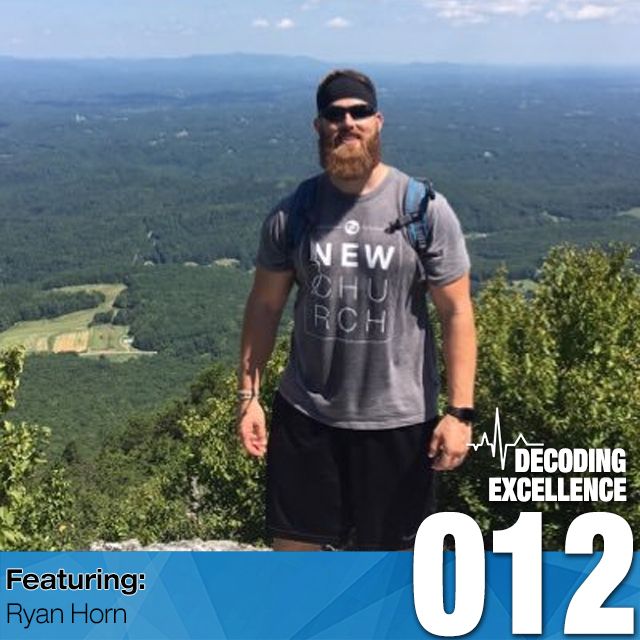
In this episode of the Decoding Excellence Show, I am speaking with Coach Ryan Horn, Wake Forest's Director of Performance for Men's Basketball.
Ryan and I discuss:
- His journey into coaching
- The lessons his mentors taught him
- The role of technology in coaching
- The management of key performance indicators
- Importance of continuing education clinics
Key Takeaways
1. Technology serves coaching, never the reverse. The role of technology in coaching is one of the most misunderstood topics in our field. Tools do not coach. Coaches coach. Every piece of technology in your program should answer one question: does this help us make a better decision on Tuesday? If the answer is no, it is decoration. Athlete development requires more than a program on paper or a dashboard full of numbers.
2. Pick a few KPIs and protect them fiercely. Managing key performance indicators is about discipline, not data collection. Most programs track too much and use too little. Choose three to five indicators that actually connect to performance and readiness in your sport. Measure them consistently. Communicate them clearly. And let the rest go. Chase clarity, not complexity.
3. Mentors shape careers more than certifications. Every great coach I know can name the mentors who bent their trajectory. The lessons that stick are rarely about sets and reps. They are about standards, about how to treat people, about what to do when things go wrong. Find mentors. Then become one. Leadership is a skill that can be taught, and it needs to be practiced often.
4. Never stop being a student. Continuing education is not a box to check for recertification. It is the job. Read the literature. Attend clinics. Buy coffee for coaches smarter than you. The field moves fast, and the coaches who stop learning get left behind quietly. Curiosity is a competitive advantage.
5. Build the whole operation, not just the weight room. Directing performance for a high-major basketball program means connecting strength coaching, sport science, nutrition, and medical into one aligned system. That takes more than expertise. It takes communication, trust, and a shared mission. Organizational success is a team sport.
6. Measure what matters, then communicate it simply. The best KPI in the world is useless if the head coach does not understand it. Data must be translated into plain language and clear decisions. A single readiness number that everyone trusts beats a twenty-tab dashboard that nobody opens. If you cannot explain the metric in one sentence, it is not ready for the program.
7. Your journey is your credibility. Every coach's path into this profession shapes how they lead. The mentors who invested in you, the mistakes that taught you, the programs that formed you, all of it becomes the foundation you coach from. Honor that journey by passing it on. The coaches coming up behind you need what your mentors gave you.
You can catch up with Ryan on Twitter at @RyanHorn45
This episode of the Decoding Excellence show is brought to you by Vald Performance, the makers of the NordBord, DashBord, and the GroinBar.
They can be found at ValdPerformance.com
Stay updated with the podcast by following me on Twitter via @AdamRingler
In addition to those social mediums, you can head over to AdamRingler.com/Newsletter and sign-up for my weekly newsletter. This is a newsletter for the curious. It's chalked full of interesting articles I've read through the week, things I'm exploring and finding fascinating through my week, and a collections of thought experiences and resources I've cultivated.
It's essentially a Birchbox newsletter for performance-related articles, research, and daily musings.
Thanks again for listening to the Decoding Excellence Show! I appreciate all the support growing this Sport Science, Strength & Conditioning, and High-Performance Coaching resource. If you have taken anything away from the show, please login to iTunes and navigate to the Decoding Excellence page and leave us a review.
Key Takeaways
- Technology serves coaching, never the reverse. Every tool in your program should answer one question: does this help us make a better decision on Tuesday? If not, it is decoration.
- Pick a few KPIs and protect them fiercely. Choose three to five indicators that connect to performance and readiness, measure them consistently, and let the rest go.
- Mentors shape careers more than certifications. The lessons that stick are about standards, how to treat people, and what to do when things go wrong.
- Never stop being a student. Read the literature, attend clinics, and buy coffee for coaches smarter than you. Curiosity is a competitive advantage.
- Measure what matters, then communicate it simply. A single readiness number everyone trusts beats a twenty-tab dashboard nobody opens.
About the Guest
Ryan Horn is the Director of Performance for Wake Forest men's basketball. He and Adam discuss his journey into coaching, the role of technology, managing key performance indicators, continuing education, and building an aligned performance operation.
Listen and Subscribe
Find this episode of the Decoding Excellence Show on Apple Podcasts and Spotify, or use the player above.
Go Further in This Episode
Enjoyed this conversation? Here is how to get more from it:
- Read the transcript below to revisit key ideas at your own pace.
- Share this episode with a coach or colleague who would benefit.
- Subscribe to the Decoding Excellence Show on Apple Podcasts, Spotify, or your favorite app.
- Join the newsletter at adamringler.com/newsletter for weekly insights on human performance.
Episode Transcript
This transcript was automatically generated. While we strive for accuracy, some words or phrases may be misheard.
[00:00:00] Coaches shouldn't underestimate the impact that you have life long on these kids when they come back and they reminisce and they visit. We have a very crucial time during their lives to have a resounding and long lasting impact on them. So don't take that for granted. There's not too many people to have this type of opportunity to mentor young athletes
[00:00:22] And men and women on a daily basis and it can truly make a big difference in their life. Sports Science, Strength and Conditioning, High Performance Coaching. Welcome to the Decoding Excellence Show. Today's show is brought to you by VOD Performance. If you haven't checked out the website yet, stop this show immediately, head over to the
[00:00:49] Website VODPerformance.com and begin immediately looking through the resources, they're the makers of the Nordboard, the dashboard, the groin bar and there are some incredibly smart minds in the world of performance technology, tools, rehabilitation and performance evaluations. Whether it is performance training, testing, evaluation screening or just simply return to play protocols from a pre-bench marking, pre and post injury, check them out. They are incredibly smart guys and they will equip your facility with the tools that you
[00:01:25] Need to be successful. Thank you again for the support and please check out their website VODPerformance.com. Today on the Decoding Excellence Show, we have Coach Ryan Horn, Athletic Performance Coach for Wake Forest Men's Basketball. In this episode, we discuss everything from technology to performance training, to basketball specific training, to mentoring and growing a staff and various lessons that Coach Horn
[00:01:57] Learned in his coaching journey from different stops all along his coaching pathway. This was a great show, personally I took four pages worth of notes and still reflect that on them. There was some really resounding and resonating topics that he shared so I know you don't want to miss this show, this was a great one and you're going to be a better coach for listening to what Coach Horn has to say.
[00:02:24] So without further ado, here is my conversation with great coach, Ryan Horn. Coach, welcome to the show. Thanks for having me on, I really appreciate it. I guess some tough acts to follow, you've been doing a great job with this podcast so I'm looking forward to try to contribute here to help everybody out. Yeah, look, I appreciate you're a tough man to track down and certainly a busy guy especially
[00:02:48] With sort of off season, postseason basketball and sort of the demands that all entails. But I'm finally glad that we could connect online and share a conversation I've been looking forward to have an yarn. For everybody that is living under a rock or you know, isn't online for any sort of social media standpoints or just haven't been to a conference which you tend to go to a lot of them, can you give an updated background to what you're currently up to and sort of
[00:03:21] Paint the picture for a young coach getting into the field that's trying to figure out more about who this Ryan Horn coach is. Yeah, so I'm currently the director of basketball performance at Wake Forest University. Work primarily with men's basketball and also oversee our facilities here so that that's my current role, oversee one assistant, AJ Kerr who's phenomenal, who's our assistant director of basketball performance that works directly with me as well.
[00:03:49] So I believe we have a young, hungry, passionate staff that's trying to progress and move forward and do everything we can to make our athletes better. Before I arrived at Wake Forest, I was an assistant director of strength edition at University of Tulsa, worked with the gamut of teams all the way from football to men's, women's basketball, soccer, softball, so on and so forth. So that was a pretty, pretty unique experience to have an opportunity to work with the multitude
[00:04:14] Of teams, had coaching personalities, so on and so forth. So that was a pretty impactful time of my career that kind of ultimately led to this position here. And then before that, I was at Virginia Commonwealth University, was there for five years. I did my master's there, received my master's there, also did my graduate assistantship and was a full-time assistant, so that was kind of an organic process as well.
[00:04:39] And before that, I interned at Robert Morris University and Liberty University. So that's kind of been my past, so to speak. I've been blessed to not have a ton of stops. I've been blessed not to have been fired yet. I've heard that you're not a real coach until you get fired. I hope I'm never a real coach.
[00:04:58] But I've been lucky to kind of be in spots that allowed me to kind of grow along as I became more of a professional and more experienced in my craft. I think those stops have fostered that growth. So that's kind of my updated bio. Certainly a comprehensive resume, if you will, but to fill in the pictures a little bit, I'd love to hear about your journey going from VCU to finding your opportunities at
[00:05:24] TASA and how the TASA experience changed and eventually led you to the time that you spent now here working at Wake Forest. Could you paint the picture for that? So basically, how it worked is when I was at Virginia Commonwealth University, I never really worked directly or had any oversight of a basketball program. I assist with both men's and women's basketball during my time at VCU and then what actually
[00:05:48] Happened was there was a job that opened up at the University of TASA to work with football and men's basketball primarily. So then I had the opportunity to take that position. When I actually worked for my first head coach, that was a basketball coach at the University of TASA, then he was actually fired and then Coach Manning came in my second year at TASA and that's kind of, it's all history from there.
[00:06:11] So Coach Manning took me to Wake Forest with him and I'm blessed that he made that decision. I am just fascinated with the work that you've been doing and the thing that really resonates with me is just the transparency in what you share and what you show to other coaches in the industry, which is sometimes I think, if there's any sort of trade secrets, if we want to even call them that, that you're one of the good guys in the field that literally, this is what we do, boom, here it is, right on the table and you can sort of be invited
[00:06:44] Into training sessions, you know, and that's sort of my first foray into some of the work that you've been doing at Wake Forest, and we're going to get into that, I think, throughout this show, but I'd really love to start to explore a little bit about the coach behind the coach, the person behind the whistle and how you became interested as we all share a similar journey into physical preparation or strength and conditioning. What, if you can remember, I mean, anything from high school to your own sort of collegiate
[00:07:17] Careers, like, how did you first become interested in strengthening conditioning? And what was the genesis behind that idea? I actually decided I want to be a strengthening coach, my freshman year high school. I went to a football camp at the University of Kentucky and while I was there, you had an opportunity to spend time in the weight room with the coaching staff and my brother had been a bodybuilder and hadn't been in the weight room, and so I kind of caught that iron bug early. But I remember speaking to that coach and I was like, so this is kind of what you do for a living,
[00:07:52] And he's like, yeah, it's awesome. I love what we do, blah, blah, blah, so on and so forth. So even though it was a very brief conversation and a very brief moment in time, that moment created a lot of momentum and motivation moving forward to pursue this field and really pursue this profession. So I've known what I wanted to do since I was 14 years old, and everything from that point on was to try to get me to this point, to call myself a coach, and to be blessed and have the opportunity to be a strengthening coach has been something I've wanted for as long as I can
[00:08:30] Remember. So that was kind of a pivotal moment in my career. And then from that point forward, I love training. I embrace the preparation side of things all throughout high school, even during my short collegiate career. And I kind of came to the conclusion that this is what I was built to do. And once I kind of made that decision, the rest has kind of been history and that's kind of been my motivation moving forward. That's, you know, the more people I chat with and have these conversations about sort of the genesis of how they got into strengthening conditioning and what was that driving
[00:09:00] Motivation. It's always, you know, it's the similar theme or thread in that, you know, there's someone in their life pretty early on that sort of expose them to the opportunity of pursuing a career in strength conditioning. And I'm no exception. You know, I went to a junior prep wrestling camp at Ohio State and Anthony Glass walked out and showed us how to clean for the first time. Brief introduction like we probably all have participating in strength conditioning or sport specific camps. And we invite the strength coach out. He's going to share a little bit about
[00:09:35] Nutrition or training and and maybe show you a couple of developmental lifts. And at that time, it was the snatch and clean and jerk for me. And I was like, I didn't even know strength conditioning was a pathway that people could go down that people could develop a professional career in this. And that's that's fascinating that we sort of share that same that same story and some respects. When when you think back to your sort of high school and just athletics or, you know, as you're developing, I mean, what were what were the thoughts? So you said that you were, you know, like you
[00:10:16] Gravitated to the performance and the training aspects from it. Did performance training like did the actual sport performance, did that come natural? Did you use training to help supplement your talent levels? I mean, what really sort of inspired you to pursue the developmental aspects of it? And I have my own stories, but I'm just I'm fascinated to hear about sort of your your pathway into it. I think for me, the preparation point not only served and improved my abilities to play the variety of sports that participated in, but it was also a place for me as everybody knows during
[00:11:00] High school, you're trying to find yourself all throughout college and you're doing that, but it was somewhere where I it just felt right to me. It made me feel whole. It was a passion of mine and it was something that I derived self-confidence from and how I felt and how I increased my strength and my power. It was something that I could control and can completely immerse myself in and it was consistent from day to day. It didn't lie to me and never backed out on me. It was always there. It was something that I can depend on to really give me, you know, give me a level of comfort with
[00:11:35] Being uncomfortable, so to speak. So it filled a spiritual void and emotional void not only physically and helping me play my sport, but it was something I just gravitated towards. I was relatively strong and I say that relatively because we know how strength is, but I kind of gravitated towards it and people with the little high school that I was in in West Virginia, you know, I was the strongest one in the room and that makes you feel good. At that age and those types of things, people like doing what they excel at. So I think that alone was crucial not only in my development as a young
[00:12:12] Man but just the confidence that I derived from it and that carried over to the field. I mean, it helped me play. It helped me perform, but also it filled and checked a lot of voids and checked a lot of boxes for me as a human being as well. So it's something I still do now. It's my therapy. It's my release. It's how I remain balanced and centered and it's just something that I do. So it is definitely a lifelong passion for sure. Yeah, no doubt. And you know, the thing I think about when you were sharing that is that, you know, a similar threat as well. I mean, like you're trying
[00:12:43] To control for what is otherwise the non-controllables in, you know, youth sport and that's that seem to be an environment that a lot of coaches and a lot of other professionals gravitated to help sort of provide some stability in a very chaotic time of a period of an athlete's life or a person's life. I'd love to kind of continue to try to dive down this rabbit hole a little bit and sort of explore, if you will, I mean, if you feel comfortable for it. But if we were to sort of explore, I mean, like, did you have parents that really fostered that environment, that work ethic,
[00:13:20] That drive? Was it, you know, initially them sort of pulling, pushing you in that environment in the beginning or facilitating sort of that process of, hey, you know what, like here's this weight room, you know, like, hey, kiddo, this is going to be a good thing for you. What was the, what was sort of the conversations, the dialogues between your parents and the way that they might have pushed you or promoted it or championed it, or if they didn't at all? Like I referred to earlier with my brother, my dad and my mom were already kind of comfortable with that lifestyle.
[00:13:53] And I remember my brother for Christmas, he used to get the metrics, you know, packets of protein powders and shakes and flex magazines and muscle mags and Arnold Schwarzenegger's encyclopedia of bodybuilding was laying around the house. So we've always, I'd always been exposed to that and my parents were well versed in an experience of how to deal with that subculture at the time, so to speak. So my parents always fostered and cultivated an environment that really allowed their children to really pursue and chase their dreams. Both my mom and my dad, my grandfather,
[00:14:30] My grandmother, they all worked in factories. They worked at auto-planet for general motors, blue collar jobs, hard jobs, jobs that require, you know, a lot of physical activity and a lot of grit and a lot of toughness. And they worked long, hard hours to give their kids the tools they needed to be successful. So when you have someone doing everything in their power to try to help and mold and help you grow, the only thing you can do in return is work and be grateful and honor that commitment they had to you. And we did that by committing and having high levels of character
[00:15:06] And trying to, you know, be the best kids we could be, whatever that was, whether it's baseball, softball, lifting weights. So I mean, that was kind of a driving force to have that type of support system. I'm truly blessed to have that because I deal with athletes on a daily basis that never had that and their motivation and their internal drives a little bit different to level of resilience and grits a little bit different because of environment and upbringing. So I think I'm truly grateful that I had that type of support growing up so they did foster that.
[00:15:34] No, no. And certainly as a compliment, what I really admire from you not only as a coach, but just as a person really is the same sort of drive, the same sort of open environment that you've created. And you shared quite a bit as far as on Instagram and Twitter and elsewhere, just about that promotion, that acceptance with your own family. And I think that's just an awesome environment as a father to be able to promote and, you know, I have a four-year-old daughter and a one-year-old son. And it's that same sort of environment of not pushing, promoting,
[00:16:15] Championing, encouraging, helping them pursue what they want to pursue, but providing sort of that work ethic that you get from your parents and, you know, not knowing that sort of family background, you know, by everything that you're saying, it seems representative of you passing that same worth ethic that your parents taught you to your own family, which is admirable and probably the very best thing that we could do more so than coaching athletes, but being great fathers, being great husbands for the family and the children that we have. Definitely. And I agree with
[00:16:51] That. And that's a great point. I think for me personally, to get a vibe of where I'm coming from, you know, faith and family are the two most important things in my life. And those are the things that drive me as a human being and as a servant to not only my athletes to my family. So my wife and my kids are the most important thing to me. They're the reason I'm able to do what I do. They've taught me patience. They've, you know, taught me to be persistent with what I'm doing. And they've also provided me with perspective to understand that, you know, I'm always undefeated
[00:17:25] In my daughter's eyes. They win and lose with us. They make sacrifices. My wife's a single mom, nine to ten months out of the year because we're on the road. So I can't do anything without being extremely grateful of the support and the unconditional love that my family has. So with the minimal time that I do have with them, I think it's important that we maximize the time that we do have. And that's my legacy. My wife and my children's, my legacy, my athletes are my legacy long after the rings and everything else fades. That's what's going to be, you know, kind of left over. So I
[00:17:59] Think it's important that we acknowledge that and understand that's kind of, you know, we say it all the time, you know, to get the highest result at the least cost possible in training. But I think that applies to our life outside of coaching as well. I signed up for this. They did. So I think it's important to acknowledge that. Yeah. And that's, you know, that was the point I was just going to illustrate is that, you know, it's it's pretty common place to point back at yourself as a practitioner as a coach and sort of say, hey, you know, I'm self-made or, you know, all of this
[00:18:29] Come at the hard work I do without acknowledging the sacrifices that people around you, friends, family, children, your faith, everybody that that ultimately goes into allowing each of us, whether it's an athlete or a coach to perform at their highest level. And I know that's an ultimate, ultimate sacrifice that a lot of families and people make and one that's certainly, I think needs illustration, you know, especially as young coaches get into this field about the the dedication and the sacrifices and that full transparency of what it takes in some respects. But
[00:19:03] I want to shift this a little bit because I, you talked, you know, faith and family first. And I think sort of driven and the humbleness of what your family kind of keeps you as a coach. But were there any other sort of instrumental mentors in your life that helped sort of guide your path or shape your path that led you into strength and conditioning that taught you some lessons that really resonate to you today and helped you essentially arrive at the position that you are at right now? I mean, we're all limited by our experiences and we're all at the role that we're in
[00:19:39] As a result of someone taking a chance on us. And I've had a lot of great mentors along the way. And I'm currently coaching under the influence of those mentors and these gentlemen and and going back to Todd Hammer who gave me my first opportunity without Todd Hammer answering the email that no one else would. I wouldn't be in the position I am now because he led me to Tim Conto said, VCU, who hired me as a GA and then hired me as, you know, as a full-time assistant, the first one in the program's history. And then from that standpoint, I'm at Daniel Rousse
[00:20:12] And Shaka Smart and Anthony Grant. And then that relationship motivated me and gave me the opportunity to pursue a position at the University of Tulsa. Another reason why I was able to pursue the University of Tulsa was because Landon Evans, a guy at the time I'd only spoke with on the phone and talk shop recommended me for that position. Then I get there, wrote Coach Lowhiresme who's now at Missouri. He hires me, he takes another job. Our basketball coach gets fired, Adam Davis comes in from Baylor. He molds me. He makes me a better coach. He allowed me to make another jump.
[00:20:47] And then Coach Manning came in, who's had some of the biggest impact on my life. That's not only a great professional and a great coach or just an outstanding man. Just a man that makes me better as a human being. That's been 100% supportive of what we do. So in the turn, they've prepared me for the path. But my mentors along the way, they never held my hand. They allowed me to make mistakes. They allowed me to kind of find myself as a coach. And they cultivated almost like a gardening approach to kind of leadership. They planted a seed and they let it grow and they
[00:21:23] Tended to it. But they never were overbearing. They made me comfortable with being uncomfortable. And at each stop, I've been able to kind of work on a certain aspect. And when I was at VCU, I became a better coach. I could experiment. I could train. I had 100% support and freedom in what I was doing. When I got to the University of Tulsa with Roark Coach Lowhires and Adam Davis, Adam Davis made me a better administrator. He made me a better tactician. He made me more organized, more detailed, more consistent and committed to the process. And demanding a standard that was
[00:21:56] Reflective of our head coach's vision and values. And then getting here and then coach Manning has supported me 100%. I'm allowed to do the things that I do because of our love and respect and support for each other. So I'm telling you what, I wouldn't be here without anybody else. I'm not self-made. I've been a lot of people take chances on me. I remember way back and I tell this to my assistant now. I had a lot of phone calls and emails that went on the answer and unread and no one replied back. So I take a lot of pride in responding to people, to sharing information,
[00:22:29] And to help fuel the future of this profession. I think that's the only way you need to pay it back and pay it forward. So that's a very important aspect of my life as a mentor, as a leader, as a coach, and as a servant. It sort of parallels my own sort of pursuit in that. I think my first position, there was 65 applications that went out and maybe had a response from four of them and then two offers. That's three more than I got, so congratulations, right? I get it being on the other end of it, how the work demands can set you up. I think a lot of people in our profession can
[00:23:14] Accept that. But I think those that respond and those that make that communication and reach out, even if it's to say, hey, we failed the position, but appreciate your time, your support, your effort, and applying, or whatever it might be. Those are the people that you remember and those ones that certainly resonate. As you share your own pathway of the influences through your career, from various stops and people that sort of stuck their neck out for you, to juxtapose all of that with maybe a little foreshadowing, if you will. If AJ was, let's say he's at the same position
[00:23:55] That you're at, and it's now 10 years, 15 years into his career, and he's answering that same question, and he's going back and talking about, hey, this is my time at Wake Forest with Coach Horn. What would that conversation do you think would pertain to? I mean, what would you hope that is shared way that you've sort of mentored him and continued to allow his coaching career to blossom and to learn? I mean, what might that conversation look like? No, I think when AJ gets to that point, and he reflects back on his time that he's spent with
[00:24:32] Our staff and spent with me. Number one, I hope I made him a better man, a better professional. I hope he understands that and I hope he feels the fact that we love and support, and we are invested in his growth and development. Not only as a coach, but as a human being, and as a person that we provided tools, and we had a relentless commitment not only to our athletes' success, but to his professional development and his growth. So I think when he looks back at his time, he spent here. I hope it goes back to him learning that his profession is not about him.
[00:25:09] It's about the athletes that we have to be grateful for those athletes and those sport coaches because without them, we wouldn't have our role, we wouldn't have our position. I hope that his reach and his net that he has casted during those 10 to 15 years reaches far outside the weight room. I hope that he continues to give back and to serve and to really promote the profession for the phenomenal things that are happening on a daily basis. I hope he continues to do that as well, and I hope he looks back and understands that everything that we did had a purpose,
[00:25:43] And it was driven by passion and driven by commitment to him as a coach. So I think that if he understands anything from leaving here is to pay it forward, is to give another person that opportunity. If you can give a person an opportunity that we gave him, he came in as a summer intern. Now he's a paid intern. I'm going to do everything on my power to make sure we can make him a full-time coach to have him buy my side. But one thing I want to make sure that he knows is the fact that I hope that he looks up to me because I never look down on him. And I hope he
[00:26:15] Understands that. So that's an emotional thing, that's an attachment, but that's the type of investment I think we need to have in the people around us, and can we make them better, and we can we serve and help them grow. What really resonated with me is just that that personal investment, and more so than just developing him as a coach, but developing him as a full person, which I think is, you know, you look a lot of university opportunities around the country, and it's very easy to see sort of how this profession can be a
[00:26:46] Thinkless job, and that, you know, like we've all, at some points in our career, has done things that, you know, it's part of the process of whether it's cleaning or maintenance or this or that, or whatever, that seem to go unnoticed. And then when you reflect back on it, and you recognize how much those mentees and mentors really invested in you outside of those opportunities, I think that is the ultimate privilege that a person can give, and then to be able to take that and the lessons that you've learned as a coach and be able to pass it forward, and do the same for someone
[00:27:21] Else and help pass that baton is our sort of ultimate responsibility as well. And you know, that idea of paying it forward, and I, you know, again, one of the reasons I wanted to have yarn, because you've helped me tremendously in the past, is we were going through some technology acquisitions here at Wichita State, and you were one of the first persons that I reached out to as far as getting sort of a better understanding of some of these tools and some of this technology, just because of the sort of participation and the investment from a university standpoint
[00:27:55] Into utilizing some of these tools on these tech. So, you know, I'd love to kind of maybe go down that road a little bit, because I do think what you're doing as a coach is amazing, but at the same time, I, you know, I would be remiss if I didn't think that the technician aspect of what you're doing at Wake Forest is equally impressive. So, there's a lot of touch points we could talk about in this, but, you know, for someone that hasn't tuned in and seen your facility or, you know, I believe you guys are maybe breaking ground or already have broke ground at a new basketball facility as well.
[00:28:32] So, you know, what if you could just sort of paint the picture of what Wake Forest looks like this year from a sort of training perspective and maybe some of the tools, the things that you're sort of looking at, but maybe big picture, you know, like where, where is Wake Forest basketball preparation, strength conditioning going in the next couple of years as well? Yeah, I think along those lines, you know, it's been an organic process in our department and our program, our facility, our support and our resources are reflective of the head coach's vision.
[00:29:08] And before we can go any further, if the head coach is not on board and completely invested in that aspect of preparation when it comes to monitoring, monitoring, excuse me, tracking technology, it's more likely to fall on deaf ears. It needs to be a driver in the decision-making process in order for that to work. One, we have to have a level of respect between coaches as far as credibility is concerned and support is concerned. Then two, it has to be a part of our, the big C word everybody talks about, but part of our culture. And by culture, what I mean by that is
[00:29:47] It's a pattern of a behavior or a pattern of action that is expressed daily that ultimately leads to a greater purpose or a greater goal for what we have shared wise in our staff. So I think number one, our head coach is extremely important. We do not have the things we have if it wasn't for his relentless commitment to our athletes and to their preparation. And our motto for athletic training staff that works with Ms. Basketball and Greg Collins has been here for a long time and our coaching staff and our performance staff as we want to protect and prepare these
[00:30:20] Student athletes and protect not only their safety and their longevity and their availability and focusing on that but also too and having all the tools that have no excuse what I can get better here. When we tell people when they come on recruiting trips, if you can't get better here, you can't get better anywhere. You have two coaches that are completely invested in your success and your commitment and you have a coaching staff that fosters that growth as well. So from a technology standpoint, whether it comes down to catapult tracking or utilizing gym aware force plate
[00:30:52] Technologies, so on and so forth, these are just tools. And we all know that the brush doesn't make the artist. We are coaches first. I would consider ourself dual threats because we have experience and exposure to some modern sport technologies, but that's not who we are. It's a part of our ecosystem. It's something that we do. We try to make sure that those types of tools and what we use are as non-invasive as possible that are a part of our atmosphere and a part of an environment that doesn't serve as a distraction to what you've said already in this podcast. The number one
[00:31:28] Tool and the greatest asset we can provide to our student athletes is ourselves, both as coaches, as practitioners and as professionals. So when it comes to technology, we're not trying to necessarily add anything right now. We're just trying to get better at the things that we're doing. We're trying to maximize and learn from our mistakes. I've made a lot of mistakes down the way. I now have a little bit of experience early on. It was just exposure. But we've made a lot of mistakes, but we've tried to learn and maximize those mistakes to generate progress and momentum
[00:31:59] Moving forward. But we want to maximize the mundane. We want to make sure we attack the simple things, savagely, and we do that on a day-to-day basis that our standards consistent. If the standard isn't right in the weight room and the standard isn't right on the practice floor and within your staff, within your players, then all the tools and the gadgets and everything else isn't going to make a difference. I think it's very important that we don't overlook that. So there's a lot of guys out there. I'm not a sports scientist. And there's a lot of guys out there that are way
[00:32:24] Better at data visualization, data mining, aggregation on those types of things. But I think I know I think we know who we are and we do that to the best of our abilities. And we're confident of that. We know which hats fit. And I'm not trying to wear 50 different hats. I know where my lane is. I check my blinders. I know where I'm at. But the same token, I understand what we're good at. And I understand what we do really, really well. And we try to maximize that. So I think that's an important piece moving forward when you look in type any type of technology or anything else is to
[00:32:57] Have that background in it. But I think those are things that we look at. Well, you know, and I think you said it brilliantly, too, because I don't know. I think it's being used sort of ambiguously. But or as maybe a buzzword at this point, as things come in and out of vogue, if you will, but culture. And what I think that when you said that you guys are kind of a dual threat and that, you know, at first you have sort of the exposure to it. Now you've developed the experience using some of these technologies and tools that what you guys appear to do really,
[00:33:32] Really well is to blend the culture into the the techniques and the tools to make it less invasive. And I think that's that's an art. There's a skill to doing that as well where to be able to facilitate both whether it's workload monitoring or readiness testing or training modalities in a way into your training session that allows for it to be organic, that allows for it to grow, that allows for it to be innovative. And I think you've done that incredibly well. And I think one, two, like people that aren't on the front lines don't really
[00:34:09] See that in this environment, you know, we're looking at workload monitoring. We're more monitoring training stress balance. We're looking at, you know, fatigue and fatigue management. We're tracking. We're usually we're using velocity based training, but the tools that are we are using, we have an understanding of them. We continue to get better with them. But the the analogy I like to use is basically when you're driving your car. We see technology and monitoring and tracking as a way to reveal issues. But training is what removes them. So we've got a case of
[00:34:42] Reveal and remove. I mean, training is still the foundation of what we do to prepare these kids so they can perform and then we can in turn protect them. But technology is nothing more than the dashboard and a car. It's your panel. When I'm driving my automobile and my truck, I'm not staring at the speed the entire time. I'm not looking at my fuel gauge the entire time. I'm I'm I'm I'm intermittently checking those things as I drive as I navigate and as I kind of immerse myself into the environment. And then from that information now I can make more into form decisions and have
[00:35:16] More actionable insight. But I think that's important. I think coaches have to be, you know, creatures of context. We have to be able to provide context to these head coaches and provide them with quantifiable information and quantifiable benchmarks along the way to to serve them and help them device practice plans, return to play guidelines, return to performance guidelines. They're more conducive. They're more, you know, beneficial to the student athletes. That's all we're really doing. You know, and I think that's something that it often gets overlooked. We can't
[00:35:48] Forget the development and the preparation side. We've revealed what the information is. We know what the cost of doing businesses. Now, how are we going to remove that and how are we going to improve the student athlete to make them more robust and resilient not only physically, but also mentally, spiritually and emotionally? You know, one of the things too that I think you guys do well and again, from an outsider looking in perspective is you nailed it with the analogy with kind of the reveal and remove and training will never or technology will never take the place
[00:36:21] Of great training. I mean, it is certainly the paintbrush, if you will, but the artist that wields it ultimately dictates the art that gets painted on the canvas. But one of the things I think you do well and you've alluded to it and you said it already is that it takes a willingness of a head coach to understand to embrace these tools or to be able to first understand what it is. And I think having those conversations with coaches to help sort of start that sort of either passive or very active education of what this means and how we can use this and what does this information reveal
[00:37:00] To then allow it to become actionable sort of information with things that can actually make an intervention or a change to a training program. And I think as we start to see younger sport coaches, I say younger, right? But doesn't necessarily mean that they have to be young. I mean, everybody can learn if they have that willingness to. But I believe, you know, and you've shared on other podcasts that you have a coach that's very willing and very sort of understanding and the willingness to learn that you can share a conversation with what this information that you're
[00:37:35] Assessing, gathering, collecting, and evaluating what that means and how that translates to basketball performance or to push a little harder and find a window of opportunity or to then maybe have to pull back. I think that's a very important concept that a lot of people miss. And it seems like in your history at Wake Forest and elsewhere, other stops. I mean, what has that always been a case? Was it just an interest from head coach to you or was it a passive sort of education as a team? Can you describe a little bit of that sort of process? Yeah, I think it's been, you know,
[00:38:13] We've learned together. Our head coach and myself, I think a lot of times what motivates that vision is either great success or some type of life altering kind of traumatic thing. If you have a rash of injuries where you have an unfortunate event, that motivates people to push the envelope and step outside their comfort zone and find ways from keeping that from happening again. If you have great success, that fuels future successes. And maybe that inspires or motivates them to kind of take that leap and invest in those type of products or those type of technologies or that
[00:38:45] Relationship. But I think it's important to understand that, you know, relationships are going to become, are going to become, are going to come before results. I think that's important too. You have to build that relationship. You have to build that level of trust, respect, and credibility. And then understand your head coach. How we handle data, technology, monitoring here might not work elsewhere. We've always tried to work to improve, not to impress with our head coach. And it's been an organic process. You know, we're not walking in the office and telling him what to do on a daily
[00:39:17] Basis. We're trying to give him thresholds and a framework for which to work in. But he, we have to allow them to really invest and make a commitment to it. We can't nag them, but believing is just the beginning. And I think they have to continue to become more comfortable with as a coach in each year. We have become more efficient. We became more effective. Because we've seen more things. We've experienced more things. We've made mistakes. We've had success as we've had failures. And those things have kind of built and generated this momentum along the way. But,
[00:39:49] I mean, it's been that type of process. We actually had an athlete and I've talked about every podcast. I think it's important. We had an athlete actually collapse and die in the court during a pickup game. His, his team H watched him die. And luckily, they were able to resuscitate that student athlete. But that was a conversation. I think that was the turning point. I look back at a pivotal moment that really resonated with our head coach. And that was it. That near death experience or actually the dying come in resurrect experience. That's what motivated him to come to,
[00:40:22] To us to sit down and say, what can we do? This is bigger. I have a great responsibility. He has a great responsibility. Now, what can we do? Where can we invest? How can we really make a commitment daily and be disciplined with our approach to protect and prepare our student athletes and put their livelihood in their well-being at the forefront? I think he's done a phenomenal job. We still have emotional days. We still have days where I walk in the office. And it's like, hey, today we need to do this. And okay, all right. And then we'll play damage control and we'll clean it up later. But we've
[00:40:52] Completely immersed ourself in the staff. We've completely immersed ourself as a part of this this organization and a part of this structure. And we've done our best to try to educate and disperse that information in a way that makes sense to the to the coaches and provides a sticky dialogue needed to foster that future change and growth. You don't have to look too far, especially in America as far as programs that are doing things incredibly well. And I think you're humble to say that certainly. But you don't have to look too far away from to recognize that. Real recognizes
[00:41:26] Real and wake force is certainly doing a tremendous job. And with that, I think it sort of lends itself to my next series of questions. But in your experience, I guess, what is maybe some of the potential downsides of being perceived as successful? I think as a young coach or as a person in the field, that equates technology to having all the various tools in your toolbox that you have available for you. What are the unintended consequences? What are the things that you know, someone that isn't privy to these resources might not understand that maybe the grass
[00:42:12] Isn't greener on the other side? I think one thing we got to start off with and I think people, you know, it's important for me to for coaches to understand this. If the power went out today and we couldn't use catapult and we couldn't use Jim aware and we couldn't do those things, we'd still be okay because we've never used it as a crutch. We've never let it define us as who we are as coaches. It's a part of what we do, but it's not what we do. And in success at anything, even with the season we had this year, we had two years that we were not very successful on the floor. And
[00:42:48] Ultimately, as a strength conditioning coach, how are we evaluated? How are we deemed successful because from the outside, from the strength conditioning world, they might say because of the resources or the tools that we have that we are successful, but from the inside, you know, I'm more likely to get reassigned or fired based on win percentage and I am player availability. So how are we defining success? And then with any type of success, the potential downfalls of success, you know, are simple just like with our athletes coming back now. I mean, you don't want to be too
[00:43:21] Satisfied. You don't want to become complacent. You don't want to become comfortable. You don't want to have so much success that you lack the resilience to deal with future adversity because we are going to fail. We are going to have issues. We are going to have speed bumps. Now, what have we done to prepare ourselves for that understanding that we need to acknowledge it and then attack it? And that's what we do daily. We need to understand that what we don't attack will attack us. We need knowledge those potential downfalls on a continuous basis and then keep our standard and keep
[00:43:50] Elevating our standards. So we're at, I mean, the excellence podcast. I mean, this is kind of like excellence decoded like what is excellence? Excellence is operating above the standard on a daily basis with great commitment and high character. I mean, that's what success is and that's what excellence is. It's doing things the way they need to be done when they need to be done and not only when you feel good about it. It requires that type of accountability that requires that type of discipline. So I think those are potential downfalls and success in any field. It's just
[00:44:20] Becoming full, you know, lacking the humble, you know, not being humble, not being hungry and just being satisfied with where you're at. We can be content. I'm happy to be at Wake Forest. I love being here. I want to be here. I'm invested in this program. But at the same time, I can't become complacent. We have to continue to be relentless and push the envelope and we're doing that. We're not great at everything. I just did our conference schedule yesterday. We got eight clinics lined up from the time May comes all the way to August. We're speaking. We're attending clinics. We're doing
[00:44:47] Certifications. We're pushing ourselves and we're, you know, we're periodizing our development as coaches as well. So we can better serve our student athletes. And that's the thing I think people don't really understand at times is if you serve your student athletes, you serve your staff, you will get everything you need to be in return because in the end, it's not about you. So then you have to have that type of perspective that we get to coach every day. I woke up this morning, fired up because I get an opportunity to come in and train in this
[00:45:13] Weight room that I have this logo on my chest and I can do that. And that's important to me. And that's what drives my consistency and my commitment and our staff's commitment to being the best we can be on a daily basis and holding these athletes to that standard. And I think you said it what what really resonates is that you get the opportunity. You have the opportunity to come in and be blessed with the resources, the opportunity to train athletes and be at a great place like that. It's not that you you have to, right? And I'm just changing the the paradigm shift or the the
[00:45:45] Conversation from that you that you're you're blessed to have the opportunity of not that you necessarily have to do it is is is important. Yeah, but even that word humble. I mean, what does humble mean? I mean, you know, humble being humble is not a self-defeated type attitude. Being humble is giving gratitude and giving thanks and credit to the people that are responsible to where you're at now. That's what being humble is. And I don't think it's the thing where you lack self-worth. It's an understanding that you're going to acknowledge and give credit to the people that allow
[00:46:19] Those things to happen. So I think just that simple tweak and perspective can generate, you know, big dividends. You talked about sort of your own staff development, puritization, and your your busy conference schedule, like many professionals have at the end of the year. I would love to hear. I mean, I know that your staff is traveling around, you're presenting, which is a nice little segue into talking about the basketball high performance symposium that the great crew out there does. But do you have any sort of sneak peeks as far as
[00:46:52] Something that the audience listening to this decoding excellence podcast can anticipate when you guys head out there and chat? I think our biggest thing and we go to clinics and we go to symposiums and seminars and we present and we speak. If we're presenting, our main goal is to basically show people what we do when we do it, how it gets done, and presented in a way that's genuine and that's generous with information. And in the end, we're just as transparent as honest as possible. So we go in to a clinic to present or to speak. That's our staff's goal.
[00:47:29] We don't have all the answers. All we can do is provide a window into the house that we've built so you can walk around and take a look. And then you got to take that information and apply it to your own program and your own situation. But it's our job to open the door, not to utilize the people. So people door open analogy. Let's just open the door. Let's let people in. Let's be inviting and let's be hospitable with the attendees or with the people that visit our facility. Our door is always open. I think that's our goal. When we share and we present, that's what we're doing. We're sharing.
[00:48:00] We're teaching. We're trying to help others grow. And then it also makes us better as coaches. Can we get to our thoughts and our ideas down on paper? So when we teach, we learn twice. But if we're attending the conference, I'm going there to be pushed. A.J. Is going there to be pushed. I want to be uncomfortable. And I want to be in a situation where it forces me to grow. Without a little bit of friction, you don't get fired. So I want to go somewhere that frustrates me. That makes me dig deeper for myself from a professional development standpoint. So I think even the Vegas, one of the
[00:48:32] Best aspects about going out to Vegas every year with Charles Stevenson and the crew out there is that it's practical and it's open. And it's a great experience. You leave feeling a part of a group that is completely invested in what you want to do. You know, I'm doing a practical demonstration. So we'll cover some training aspects there. But I want to give something people can take home and utilize in their program almost immediately. You're speaking there. Coach Bonnetau is speaking there for do. It's a phenomenal lineup. Daniel Ruse from Texas. I mean, there's a ton of
[00:49:02] Coaches that are going to be there that are open, that are honest, and that I have, I mean, I respect you guys a ton. And I'm humbled and honored to be on the floor with you. So I think it's going to be a great event. We have a lot of conferences coming up. But that's our goal. We look at professional development. That's what we're trying to do. We're trying to build relationships, not network. Networks basically having a business card. Relationships are having a phone call and having a memorable lasting impact on somebody in that 30 seconds or that hour and that
[00:49:30] Dinner and that you're with them. So that's the overall tone when we hit the seminar road and it becomes conference seasons. Likewise. And one of the things you've said in the past, whether it's I don't know if it was on Instagram or on Twitter or elsewhere, but really resonated so much so that I have it in my journal that rising tides raise all ships. And when you go out to the conference, I just want as one coach to another to say that the work that you do raises all the ships. So continue champion that. And I appreciate the work you do and the information you share.
[00:50:06] And as you said, the people of our store open analogy, if this audience isn't already following and it's again, not necessarily about the follow, but just to understand the behind the scenes look at what you're doing. I think you're a and Brett Bartholomew on the show shared this. You know, if you're doing it in a goodhearted position to share, to reveal, to help, to educate, to push, to challenge, then that's great intentions. And that's what we should have as coaches. And I look at the work that you share in the same intentions as anybody else would. It's
[00:50:45] To share, it's to educate, it's to provide a glimpse into the hard work and what you guys are doing and and provide an opportunity to see something done a little bit different in a different context. And you know, I know you've hosted a couple Instagram lives and, you know, I popped in on a couple of them in between training sessions and you're answering Q and A's for as far as internships goes and things go from facilities. And I just don't think that that there is as many people in the profession that does it as well as you, that champions helps educate, helps push
[00:51:18] Young coaches and helps raise the professional standards of our industry. So from one coach to another, thank you. And for those that are listening to this, you can follow Coach Horn at Ryan Horn 45 on Twitter and Instagram. You throw some good stuff and great materials on both.
[00:51:40] As we as we wrap this up, do you have any sort of last sort of request of anybody that's that happened to listen through us sort of work our way through 55 minutes or so of this podcast in the show? Any sort of resounding takeaways or requests of the audience? No, I think when we look at the show and before we got on this call and you and I are kind of discussing, you know, what was our goal with this discussion and its podcast? And I think for me, is you have to understand what drives a man or a woman, you know, what's their driving force?
[00:52:14] You know, who are they? You know, what wakes them up in the morning? What keeps them going? What type of personality and what type of conviction do they have for what they do? So when we look at this podcast, and I've done, you know, numerous podcasts on different subjects and different topics, and I know we didn't get too technical into a lot of training modalities, whether it's fly-wheel training, whether it is technology. And we stayed away from some of those points for reason to kind of get a measure of who the staff is as people, who we are as humans and kind of what drives us.
[00:52:47] And I think overall, when all is said and done, you know, that's going to be our legacy. And that's reflective of what we do from a social media standpoint. You know, I'm just trying to put information on there. I'm trying to pay it forward and answer as many questions and messages and emails and visits and things that I can to maximize the platform that I have. I'm not going to have this platform forever. You know, it could be taken away from me tomorrow. Who knows? But while I have it, I want to be able to utilize it to touch and affect as many people that we can in that short amount
[00:53:19] Of time. So I think that's definitely, you know, something I want people to take away from this is that, you know, that we truly respect and are grateful and thankful for all the support, all the followers, all the kind messages. Those little messages that, hey, you know, this means to world to me or coaches staying, thank you. I love this. Thanks for putting this out. I mean, that really, that really makes my day and that really allows me to take a step back and realize, you know, the type of impact we can utilize as profession for and have on people. And that's always
[00:53:49] Been, you know, my goal and our goal as a staff and as a unit. So I think that's important to recognize moving forward. I've met so many people without social media. You and I probably never would have discussed. I don't write articles. I don't do studies, things of that nature. So this is my way of giving back, but I've met so many people. I've visited so many places and developed so many long lasting relationships as a result of this platform and these people. So I think it's important that people understand that attitude and gratitude and how much it's had impact on us, not even the people that
[00:54:19] Are following. So thank you very much. Yeah. Yeah. No doubt and thank you for just the willingness to share what you do. And like you said, I mean, social media I believe is sort of the vehicle, the first vehicle that gets you to be exposed to a certain person. And then from there, it's the conversations and the relationships that you build, not the networking, but the relationships and the phone calls and the site visits that go that expand outward from that first initial reaction, interaction. So yeah. And I hate to cut you off. But one more thing, I think too, like
[00:54:52] Before we get out of here, like you talked about our past as coaches, I think, you know, we're preparing these athletes not only for the path they're currently on, but also when that for us, when that ball stops bouncing, I think coaches should underestimate the impact that you have life long on these kids. When they come back and they reminisce and they visit, we have a very crucial time during their life to have a resounding and long lasting impact on them. So don't take that for granted. There's not too many people to have this type of opportunity to mentor young
[00:55:25] Athletes and men and women on a daily basis.