#021 Dr. Joe Eisenmann

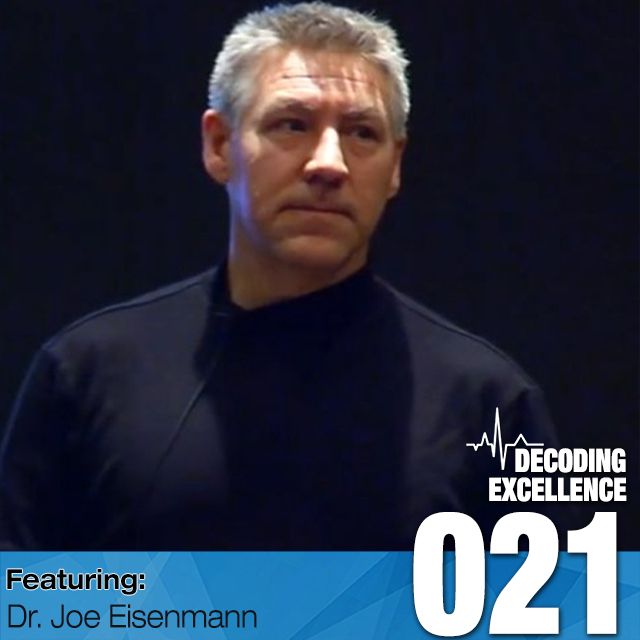
In this episode of the Decoding Excellence Show, I am joined with USA Football's Director of High Performance and Education, Dr. Joe Eisenmann.
Dr. Joe Eisenmann is a currently the director of High Performance & Education at USA Football. In this role he oversees the development & implementation of the American Development Model, long-term athlete development, coach education, and athlete health & safety. Prior to joining USA Football, Dr. Eisenmann was the Director of Spartan Performance in East Lansing, MI. Spartan Performance is a youth training facility dedicated to providing athletes a holistic, integrated, evidence-based approach to sports performance and athletic health through testing, training, sports nutrition, research and community outreach.
Dr. Eisenmann has held academia-centric and research positions at Helen Devos Children's Hospital, Michigan State University, and Iowa State University.
On the show, Dr. Eisenmann & I discuss:
- His background into high performance and USA Football
- Application of Translational Sport-Science
- Strong influences and mentors in his journey
- Predictions on Performance Technologies
- Intelligence Quotient vs. Emotional Quotient
- Importance of Coach Wellness & Health
You can catch up with Dr. Eisenmann on Twitter at @Joe_Eisenmann.
This episode of the Decoding Excellence show is brought to you by Vald Performance, the makers of the NordBord, DashBord, and the GroinBar.
They can be found at ValdPerformance.com
Stay updated with the podcast by following me on Twitter via @AdamRingler. In addition, you can also subscribe to my Facebook page at Facebook.com/AdamRingler to receive real-time access to high-quality articles, my daily thoughts, live broadcasts, and much more.
In addition to those social mediums, you can head over to AdamRingler.com/Newsletter and sign-up for my weekly newsletter. This is a newsletter for the curious. It's chalked full of interesting articles I've read through the week, things I'm exploring and finding fascinating through my week, and a collections of thought experiences and resources I've cultivated.
It's essentially a Birchbox newsletter for performance-related articles, research, and daily musings.
Thanks again for listening to the Decoding Excellence Show! I appreciate all the support growing this Sport Science, Strength & Conditioning, and High-Performance Coaching resource. If you have taken anything away from the show, please login to iTunes and navigate to the Decoding Excellence page and leave us a review.
Key Takeaways
- Translational sport science is the whole game: research only matters when it can be applied, so learn to carry ideas from the lab to the field.
- Emotional quotient matters as much as intelligence quotient in high performance: how you connect with athletes and staff determines whether the science ever gets used.
- Coach wellness and health are not optional: you cannot lead athletes well if you are running yourself into the ground.
- Long-term athlete development is a systems problem: models like the American Development Model show that progress comes from coordinated coach education, health, and safety, not isolated training tweaks.
About the Guest
Dr. Joe Eisenmann is the Director of High Performance and Education at USA Football, where he oversees the American Development Model, long-term athlete development, coach education, and athlete health and safety. He previously directed Spartan Performance in East Lansing and has held research and academic positions at Helen DeVos Children's Hospital, Michigan State University, and Iowa State University.
Listen and Subscribe
Find this episode of the Decoding Excellence Show on Apple Podcasts and Spotify, or use the player above.
Go Further in This Episode
Enjoyed this conversation? Here is how to get more from it:
- Read the transcript below to revisit key ideas at your own pace.
- Share this episode with a coach or colleague who would benefit.
- Subscribe to the Decoding Excellence Show on Apple Podcasts, Spotify, or your favorite app.
- Join the newsletter at adamringler.com/newsletter for weekly insights on human performance.
Episode Transcript
This transcript was automatically generated. While we strive for accuracy, some words or phrases may be misheard.
[00:00:00] Check the blue panel, story and wake up in your bed at the least, whatever you want. Check the red bill, you stay in Wonderland and I'll show you how deep you're rabbit hole. Sport science, strength conditioning, high performance coaching. Welcome to the Decoding Excellence Show. Today's episode of the Decoding Excellence Show is brought to you by VOD Performance. VOD Performance is the makers of the Nordboard, the dashboard and the growing bar. Whether it's return to play,
[00:00:55] Performance testing or rehabilitation, VOD Performance has the tools you need. So you might be asking yourself, who's actually using this performance technology? I don't know, say 14 different NFL teams, over 19 NCAA teams, 15 different English premiere teams, five MBA, six MLB teams and many more. They have the tools you need to get the very best out of your athletes. Check them out at VODPerformance.com.
[00:01:25] Today on the show, I have my good friend, Dr. Joey Eisenman coming on from USA Football to discuss a lot of different topics today, including long-term athletic development, translational sport, science, what we need to be doing in the field to really bring together the laboratory to the playing field. This was an exciting conversation, finally great to catch back up with my good friend, Joey Eisenman, and discuss a little bit about the current industry of strength conditioning, what we need to do
[00:01:58] Better, how can we improve, how can we continue to bring the science to the playing field. And like always, on the Decoding Excellence Show, we're going to dive deep into his coaching background, his research background, and what got him involved in athletic performance at this level. We'll discuss some of the best pieces of advice that Dr. Eisenman received along his own journey. We'll discuss some of the failures as he had and how he navigated those pitfalls so that you, the listening audience, can avoid some of those
[00:02:30] Same mistakes. We'll discuss some of his mentors and some of the advice that he received along his journey so that you can take those and use them in your own context. We'll talk about some of the investments that he's made, some of the usual habits and absurd things that he loves and finds interesting. And we'll just discuss essentially the intangibles behind what makes him a great practitioner and what brings out his very best and not only his work, but in also his play. I am so excited to bring this audio to you. It is my great
[00:03:05] Pleasure. And without further ado, here is my conversation with Dr. Joey Eisenman. Dr. Eisenman, welcome to the show. How are you? I'm well, Adam. Thanks for having me on. I am so excited to be able to get you on the Decoding Excellence show because this has been something I felt like it's been maybe over a year since we've been trying to connect and just between the various sort of relocations and roles and responsibilities. We haven't been able to find just an hour's worth of time
[00:03:36] To be able to connect, but I'm so excited that you are you're here and we have the opportunity to chat because I feel like it's been forever. Yeah, absolutely. Maybe even since my first Twitter tutorial with you as well, we were trying to plan this out. I think you have certainly become a master of utilizing social media. And you are one that I follow and constantly look to see what you're publishing and what you're retweeting because you're a source of great high quality information and you continue to spread that information and share
[00:04:08] Those materials with everybody in the strength conditioning and performance realm. So I want to just thank you for participating in utilization of social media because you're getting great content out there for the masses. Well, I have you to thank because you were my mentor and my tutor to get started. I was a lagerd, you know, not starting until 2017. I want to start with you giving maybe a brief update of what you've been currently doing, what what your various roles, responsibilities and and your tasks have been lately because you
[00:04:43] Have gone through your sort of own transition as well. Yeah, first of all, you were kind of kind of using the word transition. I call it midlife crisis. So yeah, currently I'm at USA football. I'm the director of high performance and education. Prior to that, I'd spent 20 years in academia as a professor at a few different universities, most recently Michigan State University, where I was in kinesiology and then I moved over to sports medicine and founded and directed Spartan performance. So while I was at Spartan performance, that program was a holistic
[00:05:24] Sport performance program for young athletes, basically you through high school who either trained at our facility or we went out into the community with clubs and high schools and provided strengthen conditioning and sports nutrition and sports psychology along with coach education. And things are going quite well, but I just thought to myself, you know, we could be doing this on a national level and making an impact on long-term athlete development on a national level. And the position at USA football came open and I made the move from academia to the national
[00:06:03] Governing body world where in the past year, I've been overseeing our implementation and continued development of long-term athlete development and coach education strategy. So that's, you know, where I'm at right now and we have other programs that are going to be in place in the next year that continue on with long-term athlete development, coach education and high performance efforts in the American football space. So you've had sort of over the last year, obviously a huge impact on USA football and just through a number of different initiatives. But I want to rewind the tape
[00:06:41] A little bit because, you know, through the various years within academia and then the initiative to create Spartan performance in East Lansing, to bring that sort of collegiate holistic model to what is otherwise youth athletes that might not have those various support staffs. What maybe was your thinking? What was the genesis behind the beginning of Spartan performance and why you found that so crucial to bring that to that market, that demographic? Yes. So again, I'm trained in pediatric exercise science and really between 2000 and 2012.
[00:07:25] When I found its Spartan performance, I was focusing most of my efforts on childhood obesity, youth fitness and cardiovascular risk factors because I was at a large research intensive university and when you're at those places there's a lot of pressure to bring in, you know, federal grant dollars. However, I've always had a passion in youth athletic development and I think, you know, again, I use the word midlife crisis, but I kind of really thought when I was about 40 years old, what I really want to do with the rest of my time and there's actually links
[00:08:02] Between youth athletic development and youth physical activity and fitness because most youngsters get a good amount of physical activity through youth sport and it provides a great avenue for the enhancement of both physical activity and fitness because we know a lot of these youngsters aren't going to go on to play at the collegiate professional level. So let's use that as a vehicle for lifetime healthy habits. So again, kind of using that as a springboard and really wanting to do what I wanted to do for the last part of my career and that's impact the holistic
[00:08:38] Development, the positive youth development of youngsters through the sporting experience. You know, and I know that it was maybe last year or maybe the year prior that I went back to my alma mater, went back to Michigan State and obviously one of the places I wanted to visit was Spartan Performance and we've gotten back together and we've chatted about sort of what you've built there. So I wanted to see it with my first, you know, with my own eyes and I was amazed at the services and sort of the structure of what you built the system that you built over at Spartan
[00:09:16] Performance. And I think rather than just discussing that, I mean, you've essentially made this sort of microcosm where you acted as the director of performance and you were using science, you were using evaluation and assessment to really try to test evaluate and then holistically train and provide support service to these, you know, student athletes to these young athletes as they're going through their own sort of LTAD modeled regimen. I'd be curious to sort of see, I mean that experience of Spartan Performance had to set you up for the success that you're having at USA
[00:09:57] Football in sort of the role that you're at. What similarities, what differences that you might have felt from the experience of directing Spartan Performance have you seen now that you've sort of translated what you've learned there to USA Football? Yeah, I think there's a lot of parallels maybe I'll start with, you know, I was the director of Spartan Performance, so oversaw it happened in our clinic, but also at 18 schools and clubs, so on a daily basis, we were probably serving about 2100 athletes and I felt like, you know, it was my responsibility to make sure that they were
[00:10:34] Physically prepared and also to a certain degree, mentally prepared, the tactical and technical aspects that was left to the sport coach. And so when I came to USA Football, that expanded from, you know, 2000 or so athletes to, you know, the three million or so boys who play youth and high school football and girls as well. So it's just a matter of scalability and obviously the implementation aspect has its own challenges because we're going across the United States. We have to get lead commissioners and coaches and parents within those leagues to buy in to a long-term
[00:11:15] Athletic development model. So again, a lot of parallels between the microcosm at Michigan State and Spartan Performance and now what we're trying to do on a national level. Yeah, what's now to kind of rewind that tape as well. I mean, when you talked about long-term athletic development and just some of the parallels from Spartan Performance to now servicing and scaling that from 2100 athletes to essentially three million or so, what has been maybe a two-part question? What has been some of the early successes that you've seen in your current role? And then maybe what are some of the
[00:11:57] Challenges, whether it's with USA Football or just the scalability from, you know, 2100 to three million, trying to implement a long-term athletic development, whether it's for American Football or for any other sport? Yeah, so in terms of successes, what we did this past year, so again, I started here in February and was kind of tasked with, you know, overseeing the implementation of long-term athletic development or what the USOC calls the American Development Model or ADM. And we piloted a modified game that we call Rookie Tackle in 10 leagues across the United States.
[00:12:39] So Rookie Tackle is played with six to eight players on a modified field, 40 yards or 60 yards long and then to the top of the numbers. And then there's some other rule modifications that are done, but it's meant to be a bridge game between Flag Football, which we believe is a great entry point for a youngster, and then moving into the modified Rookie Tackle game, which is a small-sided game, and then on to a full 11 player. So again, we focused on implementing the Rookie Tackle game into leagues that were playing an 11 player. Ten sites across the US went through some data
[00:13:22] Collection and actually just are finishing up data collection, which includes GPS technology to get at movement characteristics, physical demands during the game. We did some observation and ethnography throughout the season and then administered survey to parents and coaches along with some semi-structured interviews and focus groups with coaches and then lead commissioners. And, you know, I'm just getting to the tail end of finishing up data analysis. And I would say, especially from the focus groups and semi-structured interviews with coaches and lead commissioners, it was an overwhelming
[00:14:02] Success. A lot of really positive comments from those key stakeholders in those leagues. So we're, you know, right now very happy with, you know, this pilot study this year in terms of the implementation. Because as you can imagine, football has an old school traditional mentality in most places in the United States. It's actually one of the last sports to kind of adopt a modified game. Like, if you think about baseball, you start with T-ball, you go to a coach pitch and then you go to play your pitch, but even when you go to play your pitch, you know, you start like a little league
[00:14:42] Dimensions and then you start backing up the bases and backing up the pitching mound. And, you know, tennis, they're using, you know, a modified court, basketball, lowering the rim, maybe playing 3v3 soccer, of course, has done a wonderful job. LaCrosse is doing a great job right now as well in terms of implementing modify, but football was really a laggard if you will as well. So, again, getting to your question about challenges, you know, a challenge moving forward as we roll this thing out next year on a national level is, you know, if we use diffusion of innovations theory,
[00:15:24] We're going to get those early adopters, those folks who they're not going to ask any questions. Like, I go and I talk to, you know, a lot of different groups and some I go in the room and I start explaining our long-term athlete development model with this modified game and then the flag to modify to 11 model along with quality coaching education and skilled development as a focus and they're like, yeah, this makes a lot of sense. Let's do it. They're going to sign up. But, again, the challenge is going to be, you know, wide-scale implementation, adoption
[00:16:02] Of this model and then the last part, accountability. You know, we can make the materials available, we can do the education either online or in-person and then those individuals are going to implement it. But, again, how well are they implementing it? What's the fidelity of it? What's the accountability? Who's holding them accountable to make sure that we have proper skilled development and, you know, all the best practices? No, yeah, I think the accountability piece is obviously a critical challenge that is going to definitely need to be faced because, you know, we've seen it and whether
[00:16:39] It's sports science, whether it's in strength conditioning research, that the research is out there and it's already exists and there's some really great quality work being done. It's just never finding its way to the basketball court or to the strength conditioning facility. So, we have this great sort of divide right now, what is from otherwise the laboratory to the competitive field. And I think this is a great sort of point in time to discuss because you have obviously had a lot of experience bringing that science and bringing that aspect of
[00:17:14] What the research says to that environment. You've done it both at Spartan Performance, but you've also been sort of a key instrument in not only sharing great high-quality information, but in your latest article, at least I believe today, the translational gap between laboratory and playing field, you discussed many of those challenges and it was a great piece of information, something that I shared with both performance staffs, both at Wichita State and now here at University of Colorado, because I think this is something that we obviously need to do
[00:17:50] A better job of building that relationship, building that contextual awareness of the sort of laboratory and the rigors of what it takes to be done there, but bringing that into sort of an otherwise messy environment where it's not as clean, it's not as precise, it's not as exact. So, I'd love for you to maybe talk a little bit about this paper and discuss some of the challenges and what you've found and maybe the recommendations for those that haven't read the paper, the recommendations that you've provided at the end of the paper moving forward.
[00:18:31] Well, I think the first thing I need to say is it's not an original thought. That paper was definitely written with a few other individuals and papers in mind. David Bishop wrote a great paper related to bridging the gap. Obviously, Dr. Mike Stone and his group at East Tennessee State and the collection of individuals writing about bridging the gap and the challenges in the strength and conditioning field. So, again, it's just kind of a collection of thoughts that went into that, but also the incorporation
[00:19:13] Of some other areas that I think are really important for our field to grasp. And then number one is knowledge management and knowledge translation. Like, you can actually get a degree in knowledge management. You can get a degree in knowledge translation and then the other piece is implementation science. So, I've already kind of talked about that and if you really want to get into the implementation science and our field, Caroline Finch from Australia is doing some really great work in implementation
[00:19:43] Science. But yeah, kind of going back to knowledge management and knowledge translation. Like, I really just consider myself to be a knowledge broker, an intellectual middleman and a knowledge translator. And, you know, again, it's one reason why I made this move from academia into the national governing bodies. It's, you know, I've published nearly 160 papers, but, you know, again, are they finding their way to where they really need to be? Are they really making an impact? You know, who reads those papers? My colleagues and pediatric exercise science
[00:20:21] Read those papers. Okay, so they cited it again in another paper and who read those papers? Another academic did, right? Like, we need to get this hands, we need to get this material into the hands of the practitioner. And again, you know, Adam, you're, you're a brilliant practitioner. And maybe we can use this term, this term, academic, right? But what about these volunteer sport coaches that I have to go do a workshop with a two, three hour workshop, you know, they're, they're a plumber, they're a lawyer, they're a lot of different occupations. And then, you know,
[00:20:59] Their, their son or daughter is playing youth sport and they raise their hand and they're like, hey, I'm going to be the coach. Yeah. You know, like, that's the other part where we need to be a really good knowledge translator as well. But the other piece of the paper, you know, kind of speaking at your level at the university, setting that I really like to talk about is this concept of the living lab and or quality improvement. So number one, if we go to quality improvement and you go to a hospital setting, they have individuals who basically do quality improvement. So they're
[00:21:34] Always collecting data, right? They're collecting data on who washes their hands, they're watching, they're collecting data on infection rates, so on and so forth. There's, there's data all around at the hospital, electronic medical records, right? That quality, that quality improvement officer manages that data, makes sense of it and goes and reports back to the nursing staff or the sur, or the surgical team to see how they can improve processes and outcomes. It's no different, going what you do, Adam, right? And the same with the living lab, the living lab comes from telecommunications.
[00:22:09] I mean, we have this thing that is attached to our hand the whole day, a cell phone, right? And it's it's it's transmitting all kinds of data in terms of, you know, social media, phone calls, where you're at, where you're located, when you spend money, whatever it is. So the telecommunications industry is is using is using that data along with other kind of, you know, urban planning kind of stuff. And it made us call the concept the living lab. So again, you think about the strength of conditioning room and the university athletic facility or high school athletic facility or
[00:22:46] Your professional, there's a potential to collect data all the time. I mean, we're using all kinds of gadgets now to quantify stuff, right? And again, we now we talk about applied sport science, that's not in the laboratory anymore, is it? You're not, you're not necessarily having to come into the laboratory, get all wired up, stand on the force plate and the way you go. You know, you could be using any kind of instrumentation to do velocity based training or whatever other kind of outcome put that you want. And we already have folks like yourself and other support scientists who are
[00:23:20] Collecting that information. And so obviously there's only so much time in a day and can you really analyze it, analyze it properly, report it and we're doing the reporting through data visualizations that we're giving coaches and athletes, right? But if we take composite statistics and or the individual, which basically become case studies, that's what your athletes are anyways, right? So again, we're, we just need to maybe re-conceptualize what we're doing and think of it as translational sport science. Yeah, I think, you know, one of the things you hit the nail on the
[00:23:52] Head is that obviously over the last five, but maybe even more so, 10 years, I mean, the landscape of the performance world has changed dramatically. What used to be sort of dedicated to just the laboratory are now finding its common place within a weight room just next to a barbell or to a bumper next to a dumbbell. You know, in our own facility, we have dual force plates that are literally 10 feet away from me. We have GPS units that are one building over and Dari, motionless biomechanical screenings, another building over and it's, it's mixed intertwined with our performance metrics. And I
[00:24:33] Think that is a, that's a great sort of aspect of of where the field is going. And I love the fact prior to that, you, you discussed and I know this was a little early on just your role of being sort of this knowledge manager, this knowledge broker, because again, you, you said it. This is another thing that I think what really resonated to me. I mean, we have coaches and we see it with intern coaches certainly and our job is to help empower them and educate our interns so that they can do their best work. But in national governing bodies where you have volunteer coaches, that might
[00:25:12] Be that said plumber that raises his hand so he can coaches sons or daughters soccer team. I mean, the challenge for that I would imagine is trying to give them the information of what's on the cutting edge or at least what is best practices, right? The best practices I, in a hospital to, to broker the information that washing your hands between surgeries is a good idea and, you know, cuts the risk of infections down. How, how have you found the best strategy as far as reaching these guys, reaching these, these men and women that are volunteer coaches and giving them the right information
[00:25:51] That is what is latest best practice for their coaching sport, but not also so overwhelming that they avoid it. High tech high touch. I mean, again, this is a national level issue, right? I can't go out and do a coach education for every youth and high school football coach in America. So obviously we need to rely upon online tools. And again, it's not just play a video for 45 minutes and take a quiz. I mean, there's some fantastic advances that have been made in online education. And we can kind of think about, you know, micro teaching as well, taking it in small
[00:26:33] Bites and making it meaningful and interactive as well. But really it's high touch. So in those 10 pilot leagues that we had, I went, I traveled the US went to all 10 sites and conducted an in-person high touch coach education session for the coaches who were going to coach their rookie tackle game. And again, it's it's being able to sit in that room and read the room and establish a relationship established by end and just really make a connection with them and be highly interactive and answer their questions and show them that you care about the young athletes that they're going to teach
[00:27:16] The coach. So, you know, obviously a combination of both. And again, all learners are different as well, right? Some people can really thrive on the online. And they get a lot out of it whereas some need to be in person. But, you know, again, I think with the volunteer coaches, we really do need to spend more time out in the field with them and showing and demonstrating because in a lot of ways they're inexperienced as well. Because, yeah, because again, there's the education, but then there's the implementation. They will score off the chart so they'll nod their head and they say that they
[00:27:56] Understand it and they'll tell you that, hey, I'm implementing this tackling drill and then you go out and you watch them do it and it's like, boy, they need a little help, right? I mean, we're all like that as well. So, I'm big on the high touch stuff like getting out and being in the field with them and modeling for them. So, are there any resources that you're optimistic of that you think that might be, you know, to the betterment for sports scientists, for strength conditioning coaches or even for, you know, technical, tactical coaches, whether it's the football coaches or
[00:28:36] D-line coaches, things that they could utilize that's simple, that's easy to use, that would bring a lot of value to what they're doing. Yeah, I'm going to say virtual reality. So, I've been to a few demos now with virtual reality and I think number one when people hear virtual reality, it's a big price tag. There is a vendor, it's Go Army Edge and they're working in the football space right now and you can actually buy a cardboard piece that fits the goggle and, you know, again, we're in the physical preparation space, right? And so, the kids are going to do their strengthen conditioning
[00:29:25] Aspects, but the other thing that happens, and again, I'm thinking high school football now, but obviously this could be college or professional as well, you know, in football, you don't put your pads on in the off season and go out and practice, right? You go through your strength and conditioning for the most part, but with virtual reality, you can practice technical and tactical aspects of it, and it's a piece that's so often missed. Again, I just think about my postseason consults that I do with high school football coaches, and I take them through a report card,
[00:30:01] Grade your kids in technical, tactical, physical, and mental, you know, and they're like, well, the kids strong enough, they're fast enough, but they keep missing their assignments. Okay, so why do we need to spend an hour and a half of this kid in the weight room if you're telling me he's already fast enough and strong enough, but miss his assignments all the time. Let's spend more time teaching that kid the tactical aspects of the game. So virtual reality, and again, this affordable piece with Go Army Edge is a phenomenal tool, and you know, I haven't done enough searching of published studies on,
[00:30:38] You know, the impact that VR has on decision making, and you know, potential performance enhancement aspects, but again, it's a technology that I'm very interested in learning more about and looking at its implementation in the sport of football. And that is something, too, where I know with the utilization of technologies like Oculus Rift, Red Bull, and what they've done from a high performance standpoint has utilized a number of different things, both with VR and direct current neuro stimulation and using neurosurfer or neural racer, which is an application where participants
[00:31:19] Have utilized what is otherwise their mind and their ability to concentrate to visually move objects on virtual reality and augmented reality device like the Oculus Rift. I think VR can be a tremendous way of helping bridge the gap from technical tactical development without necessarily the external loads, and it can be a tremendous tool in the rehabilitation, post surgery, or post injury of continuing to keep those movement patterns refined, at least in a sort of simulation standpoint. You talked about high touch and just the ability to really coach and form relationships
[00:32:07] And build that by and to have that interaction. And I think unless you know you, right, unless somebody actually gets to know you, you might not think that, right? But initially, I look at you and I have known you over the course of years where I consider you a phenomenal coach and to have that interaction. And I think that's something that we all need, right? We all need a coach. We all need somebody to continue to help refine the skill, whatever it might be. And that might be a coach to help you coach and to better understand pedagogy and how to deliver and how to
[00:32:47] Connect with somebody, how to build that by and I'd be curious for you. I mean, what have been maybe some of the, and I'm sure there's many, but what have been some of the materials or resources that has helped you develop into a coach or help you develop that emotional awareness or emotional intelligence so that you can build that by and you can form that relationship and have a rich interaction with the people that you work with. Well, I'm going to admit right now Adam, up until oh, I don't know four or five years ago, I had a very low emotional IQ. You know, I was a
[00:33:28] Academic professor and just didn't I had poor people skills. Let's just leave it at that. And then that's when I really formed a great relationship with, you know, somebody that you've already mentioned in one of your mentors, Tim Redwakum. And you talk about somebody who really understands people skills and emotional intelligence and what he calls neck up coaching and getting the athlete to trust you form a relationship or another coach for that matter and build buy-in. I mean, I think it started right there and, you know, Red and I continue to have conversations and
[00:34:07] I would say 90% of the time it's about neck up coaching and 10% of the time it's about physiology and biomechanics. So Red is one obviously, Brett Bartholomew, you know, he and I have established a relationship over this past year. His book, Conscious Coaching, hits the nail on the head for sure in terms of building buy-in and trust with your athletes and going through that process. And, you know, you were kind of talking about coaching the coaches and there's a whole system. It's called a coach development system. Soccer probably does it for best right now. They have a
[00:34:46] Director of coaching, right? If you go to a youth soccer club, they have a director of coaching who coaches the coaches. So another person who I've learned a lot from is Wade Gilbert. So Wade has a book right now called Coaching Better Every Season and he's probably be leading coaching scientist, coach developer in the United States, if not the world right now. And so, you know, just reading through his book and having conversations with him about, you know, coach development connecting with coaches who obviously impact the athletes. So those are definitely three individuals
[00:35:21] Who I've learned a lot from. And then, you know, again, just just my own my own reading like my reading's gone from 100% you know, physiology to now maybe 10% physiology to 90% you know, emotional intelligence or, you know, made the stick or switch or ego is the enemy.
[00:35:48] You know, books in that genre, you know, I'm just continually reading and gaining personal development from. We both share, I mean, some very common influencers in our own development from an emotional intelligence standpoint. And Brett was, you know, one of the short list of people that I first brought on the Decoding Excellence Show. I think red was probably the first telephone call I made to have a show. And that's hopefully going to be scheduled soon. I know we're both sort of crazy busy. But you've you've talked about two masterful people that really understand
[00:36:31] How to connect and how to read a room and how to read a person and get the best out of them and to truly empathize and to learn. And, and in that of your response, I mean, I you and I, I think are quite similar in some respects. I mean, even my own reading was again, very much like you, very deep in the science, very deep in the physiology. And, you know, there was a point in my life too, where I realized once you continue to go down that path and you can really be an expert in that, that when it comes to the daily interactions, especially in the collegiate 18 to 22-year-old
[00:37:07] Demographic, it's about the relationships that you, you form with athletes. It's about the development and the investment that you make. So I am, I absolutely, I think those are some key resources for sure. In, in bridging on that, I, I'd love to kind of hear from you, you know, you, you talked about some of the changes from reading physiology to to maybe more books like the, the Heath Brothers and some of the emotional the business readings where how to manage other people. In the last five years or so, has there been any other sort of changes, whether it's beliefs or
[00:37:48] Behaviors, things that you've done in your sort of day to day practice, right? We'll get away from LTAD and we'll get away from sort of the X's and O's of what you do, but are there anything that you've done or changed that's really brought out your best work in the last couple years? Yeah, take care of yourself. I mean, things aren't getting trivial for me. I'm nearly 50 years old, right? You only have one life to live. So you got to take care of yourself. You got to find time during the day, you know, to get a good dose of physical activity in and eat well and
[00:38:26] Relieve some stress and meditate or whatever you need to do. I think that's really important. And I think that's another thing I've been talking to coaches a lot about as well. I mean, obviously, you folks in, you know, strengthen conditioning with all the hours that you put in in the time of days that you're there and some of the stresses that you're under, I think it applies to you guys, but, you know, the sport coaches as well. You know, obviously it's football season now and I'm ingrained in football and, you know, some of these high school football coaches, they're in the playoffs
[00:38:55] And I mean, they're putting some long days and some long hours. I like to talk to them about, hey, you understand if you go, you know, for a 10 minute walk periodically, you're probably going to come back and you're going to see the film a little bit differently because your brain's going to be working a little bit better and it's going to impact your metabolism and your overall health and your immune system. So, you know, again, I think, you know, really taking it to heart and finding time for yourself with a healthy lifestyle, with activity, diet and stress management is really key.
[00:39:29] One of the things that your response makes me think of is that, you know, we've already talked about Brad a little bit on the show, but Brad had a masterful few minutes on the Pacey Performance podcast where he talked about and discussed coach's health and especially about, you know, the prevenalcy of being the first man in or first woman in and the last one out and just the coaches' health is about being, you know, chocked up on energy drinks and stimulants throughout the day to get you through these long days and just the ramifications over the seasons of what
[00:40:02] Happens when you invest so much of your time, your effort, your energy in others and neglect your own. I mean, it's essentially you're rotting from the inside out and then eventually it's going to affect the day-to-day interactions, the way you perceive rather emotions or behaviors or body language. Dr. John Sullivan at the Brain Always Wins talked a lot about that on his episode on the show, talking about how brain health and the the detriment of inactivity and poor dye and poor sleep and how that affects our ability of perceiving emotional behaviors and emotional
[00:40:44] Steps in our athletes. So I definitely think that's something that's pretty neglected in the coaching industry, especially with the high pressure in the long hours. Um, what about if I were to kind of twist that question around a little bit more and say, you know, in the last five years or so, what have you become better at saying no to? I know especially in your position, right, where you have so many different key stakeholders that you have to account to, uh, people that are asking for seminars for clinics that you have to go to.
[00:41:18] What about throughout your work day? Why have you been better at avoiding or, or simply delegating through those days so that you can focus more on the deep work that you're involved in and less on the mundane sort of distractions that we all have? Adam, that's a tough question for me to answer right now. I'm not, I'm not really sure if I have gotten better at saying no all the time. I mean, obviously since I've had a shift, um, you know, there's some academic things that I am saying no to, uh, in terms of, you know, writing papers or, you know, a book chapter here, there. Um,
[00:41:58] So I, I would say, you know, I, I am saying notice some academic things because I do need to turn my focus here on some of these practical, um, aspects that, you know, we're trying to roll out, um, do, do our, uh, programs. But it's tough, it's a tough question. I mean, I, uh, I, I think we all struggle with that one, don't we? Saying no, yeah, you know, like, especially I find in my own, and that the reason I ask these things, I mean, this is sort of a twofold, right? Like there is, I am just naturally inquisitive about what people that have achieved a level of success like you,
[00:42:39] How they've gone through their day and positioned their day and what they've done through their habits and their routines that brings out the very best in their work. And I think, you know, even for me, I have a lot of difficulty saying no to things. And that's why this is sort of a common question I like to ask because, uh, I do sometimes feel like, you know, at the detriment of doing the best work that I can in, in whatever it might need to be done, that we all struggle with the sort of the, uh, allocation or the, the build up of these sort of micro tasks that sort of distract us
[00:43:17] From doing our, our deepest work, our best work. Just sitting here thinking about that question, again, like, this past year has been a little bit different for me because I haven't had as many people to manage. I mean, if I go back to, you know, when I was at Spartan Performance and I was the director, um, I did say no to things. And I said no to things because I had a staff that I trusted, um, you know, Teddy Roosevelt hired, hired the right people and get out of their way and let them do their jobs. So, you know, there would be things that would come up and I would say no,
[00:43:50] I'm not going to do that. I'm going to have person A do it or person B do it because I trust them and I know that they can do a good job. So I think that's more, you know, the delegation part, but it was also me saying no to something that I was asked to do, but I knew I had somebody on my staff that I trusted, um, and just, you know, delegated it to them. And I, and I think, I mean, that's important, right? Like, again, oftentimes we see people in directorships or leadership kind of positions and they just take a lot on themselves. And, you know, they have a staff underneath them. And again,
[00:44:27] You got to hire the right people, right? But then you have to trust them for what you hire them to do. And they're going to make mistakes once in a while. Yeah. Um, as, as, as you do as a, as a, as a leader, as well, as well, it's just, it's just part of what happens, right? And we need to learn from those mistakes and our failures as well. But again, getting back to saying no, I think, you know, if you do have a staff underneath you, it's saying no and passing along maybe to somebody else and giving them the opportunity. I think even in my own sort of transition for sure is that, you know, coming from
[00:45:01] One institution that maybe didn't have all of the resources or all of the specialties, if you will, within performance, whether it's, you know, the, the clinical sports psychologists or the recovery expert or the RDs or, you know, all the various different sub disciplines that go into performance and what it takes to perform at the highest level to a position where we have these things that, you know, very much I felt like prior to, to arriving here that it's, it's sort of being a jack of all trades and really having to know a lot about all of these disciplines. And I am so fortunate
[00:45:42] That I had the opportunity to do that. However, coming here, it is sort of that, well, there's already a position that does that. And it's really now sort of comforting to understand what those roles are, but to also be able to say, you know, that's not on my plate, but we have a specialty, we have a specialist that actually does that. So that's, that's been something for me that I've really sort of had to say no more, say no more to that, uh, that I haven't otherwise of foreseen. So I appreciate that response. And, and sort of the, uh, in these shows, I like to
[00:46:22] Sort of dive a little bit deeper. I know this seems maybe crazy or different, but, you know, I love to sort of expose the lens behind people. And I think people that read your research have seen the high quality information that you share, uh, on social media and Twitter and elsewhere, they get to know one perspective of you. And that's been something I felt like as people have seen what I've done, they get this one perception of me. And as they get to meet me, they get to know the coach, they get to know the person and the sort of the goofy person that I am behind the microphone
[00:46:55] If you will. But are there anything that you, you know, unusual habits or sort of the absurd or things that you just enjoy that other people, you know, like books that you like to movies that you like, things that people wouldn't otherwise commonly associate with Dr. Joey Iseman that make you who you are. And that's in your DNA. Yeah, my wife describes it as work Joe and fun Joe.
[00:47:23] Most people know me as, as work Joe. And then, you know, there's, there's, you know, fun Joe who likes to pull practical jokes and watch, you know, funny sitcoms and, and, uh, you know, just kind of take life as it is and have fun with it. And again, I think, as I mentioned before, it's taken care of yourself and, you know, laughter is a big part of that as well. You know, just finding ways that that you laugh, whether it be with TV sitcoms or a group of friends who you can just hang out with and, you know, just kind of do nonsensical silly stuff once in a while.
[00:48:02] I think that's been something, you know, when I kind of juxtaposed that question back around to me is that one thing that I've really taken common place for is friends. And you set it in your response, which is the only reason why I'm parroting it is that that is such a great outlet for me, especially, you know, when we all, like yourself, work incredibly along hours and you going through your own sort of, uh, as you call it midlife crisis, I call it a tremendous opportunity to just spread awareness of, of what USA football is doing. But it, it, it takes a toll. And I think
[00:48:40] The more that you can be around friends and family and people and, and break bread with other people, the more you have that sort of around the campfire type feel and storytelling and, and good times, really brings us sort of it grounds us and allows us to do our deepest quality of work. And, and you and I both, I think as introverts sort of, we have that work persona that is hard to sort of, to break out of. So I'm so glad that, you know, you have that other side, that fun joe side of you. If someone wanted to pick your brain, they wanted to connect with you. And I really honestly
[00:49:18] Think they're missing out if they haven't already. But what is the, the easiest way for somebody to get in contact with you and maybe pick your brain about some of the specialties and things that, that you discussed on the show? Uh, best way is probably by email. So J Eisenman, E-I-S-E-N-M-A-N-N at USAFootball.com. Um, and, you know, I, I welcome, you know, people to the email and connect with me and, uh, share conversation. Um, it's going to get me, uh, better as well. So I always welcome that. Oh, perfect. And now I'll make sure that, you know, at least in the show notes as we go through it,
[00:50:01] You know, we'll highlight some of the things that we've discussed and talked about. And, certainly, I'll, uh, I'll link your social media that way. They have access to, to some of the different ways of, uh, and the resources that you've shared. Well, Dr, uh, Dr. Eisenman, my good friend, I am so glad that I can borrow and, uh, and steal some of your time this evening and just get an opportunity to catch back up with you. I know that the listening audience will take a lot of away from this. And I really appreciate your time tonight. Yeah, thanks for having me on the show
[00:50:35] Out of my. I appreciate it. That's going to be a wrap for this week's episode of the Decoding Excellence Show with my good friend, Dr. Joey Eisenman. I took a lot away from this conversation. I have about three pages worth of notes on long term athletic development. The rookie tackle initiative that he and USA football are bringing to grand scale with the general population trying to bridge the gap between what is otherwise flag football to 11 on 11 football. Just the conversation aren't how to develop skills and how to reach coaches and utilizing technology and meeting people
[00:51:21] Where they're at. I know this was a great conversation, one of which that really resonated with me when he started to discuss his reasons for getting into athletic development and transitioning away from academia to this initiative where he can really spread awareness and use his skill set at a grand scale. Like always, the Decoding Excellence Show is an exploration. It's a medium where high performers can come on and share the tools, the tactics, the resources and the habits that they have that really go into what it takes to be an excellent performer and to perform at the
[00:52:00] Highest level. So there are similarities between all of us and it's a matter of really just trying to distill and decode what those similarities are and really try to utilize what is otherwise best practices to bring out our greatest work and Dr. Eisenman was certainly an example of such. If you've enjoyed the show, there's several different things you can do to continue to help spread the show's awareness and to help support the show. The very easiest thing to do is to go on to iTunes and leave us a five star review that is Apple's way of just allowing us to move up the
[00:52:39] Chain so that we can have greater exposure and for other people that's new to the Decoding Excellence Show, to be aware and to discover some of the great people and the great guests that we bring on the show. So please, I implore you, please go into iTunes and leave us a five star review that would really help us out and it will help us bring more high quality guests like Dr. Joey Eisenman onto future shows in the in the future. But last but not least, I just wanted to thank Dr. Joey Eisenman for coming onto this show. I really appreciate it as time and the investment and the
[00:53:15] Commitment that he's made to spreading this awareness and sharing some of the lessons and tactics and the wisdom that he's gathered through his long career in academia and athletic development. Hey everybody, I wanted to remind you that today I'm sending out my weekly newsletter and what this newsletter consists of is just a couple sentences, a few paragraphs that is describing some of my favorite things. Some of the things I've been finding interesting online could be research, it could be things I'm exploring, books I'm reading, things I'm listening to. I think you're going
[00:53:50] To get a lot of value out of it. It won't spam your inbox, it comes out once a week and it's a great way to stay connected into the world of what I'm thinking and what I'm exploring. So head over to AdamRingler.com, pop in your email and you'll begin receiving the weekly newsletter immediately. And if you haven't already, please pop over to facebook.com, start to follow Adam Ringler or you'll receive any of the updates and the latest podcast and decoding excellence show materials online. So check it out at facebook.com forward slash Adam Ringler.